Vocabulary enhancement Rhyming Worksheets for Ages 4-6
6 filtered results
-
From - To
Discover our engaging Vocabulary Enhancement Rhyming Worksheets designed specifically for children aged 4-6! These interactive activities help young learners develop essential vocabulary skills through the power of rhyme. Each worksheet is tailored to make vocabulary acquisition fun and enjoyable, encouraging kids to play with words while strengthening their understanding of phonetics, word patterns, and meanings. With appealing illustrations and age-appropriate exercises, these worksheets foster creativity and linguistic growth in early learners. Perfect for parents and educators alike, our rhyming worksheets provide the foundation for future reading success, ensuring that children grasp the joys of language in a playful and effective way.
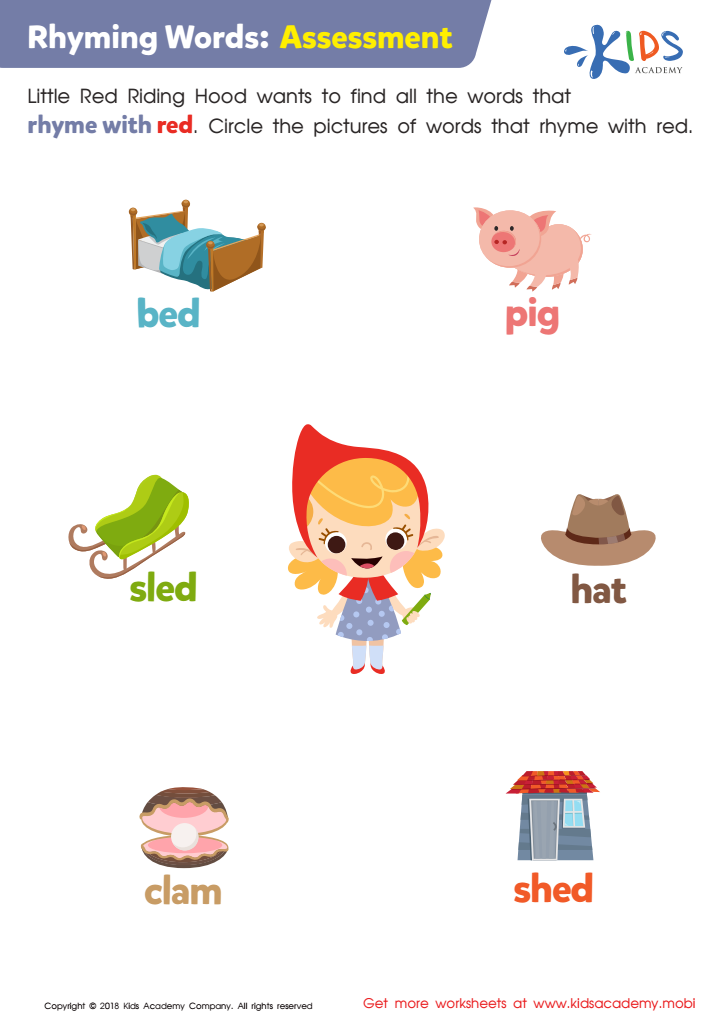
Rhyming Words: Assessment Worksheet
 Assign to My Students
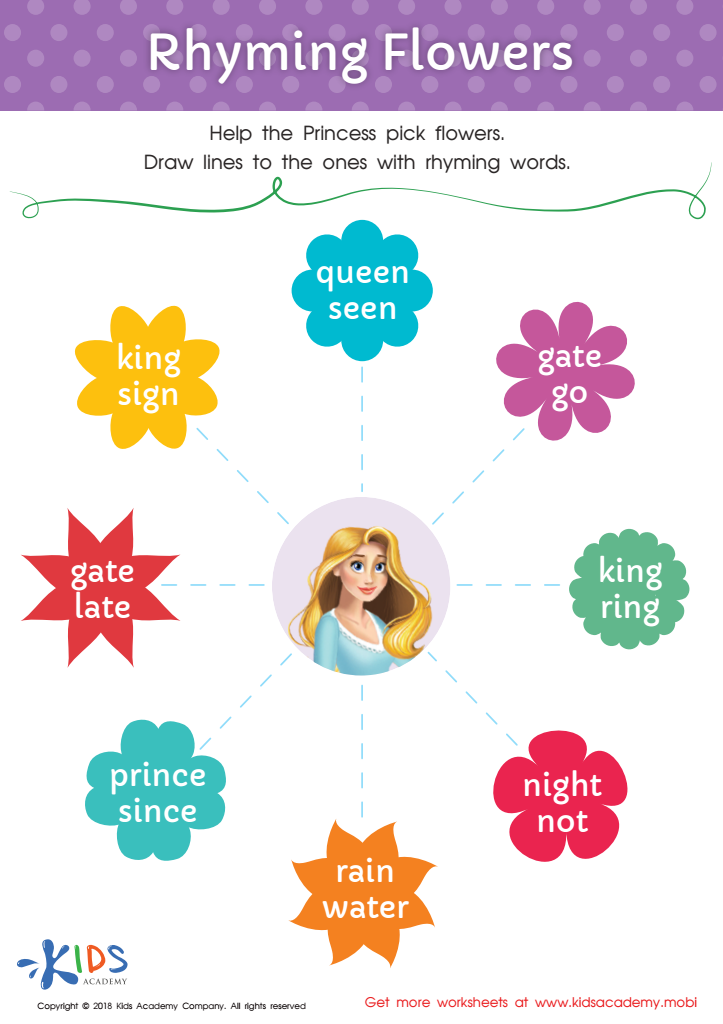
Rhyming Flowers Worksheet
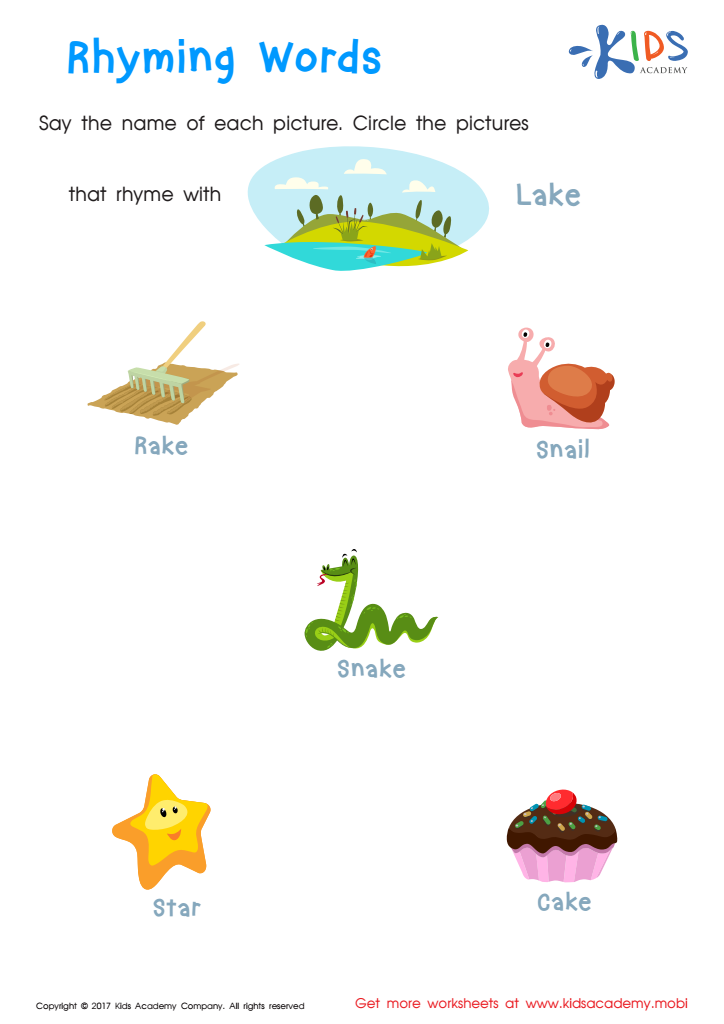
Rhyming Words Rhyming Worksheet
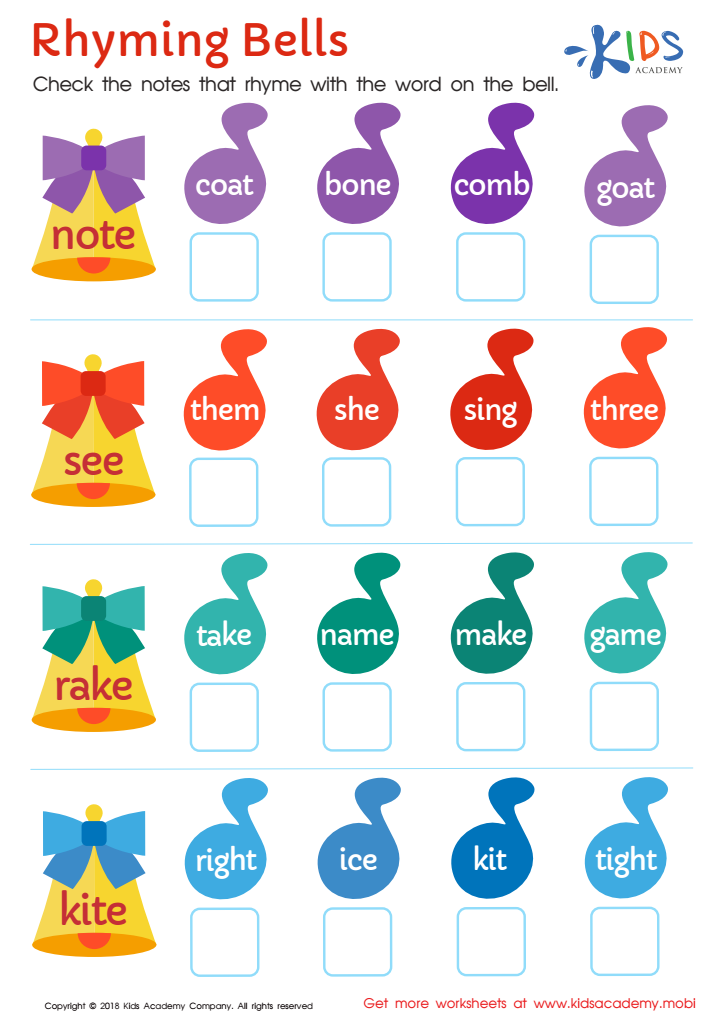
Rhyming Bells Worksheet
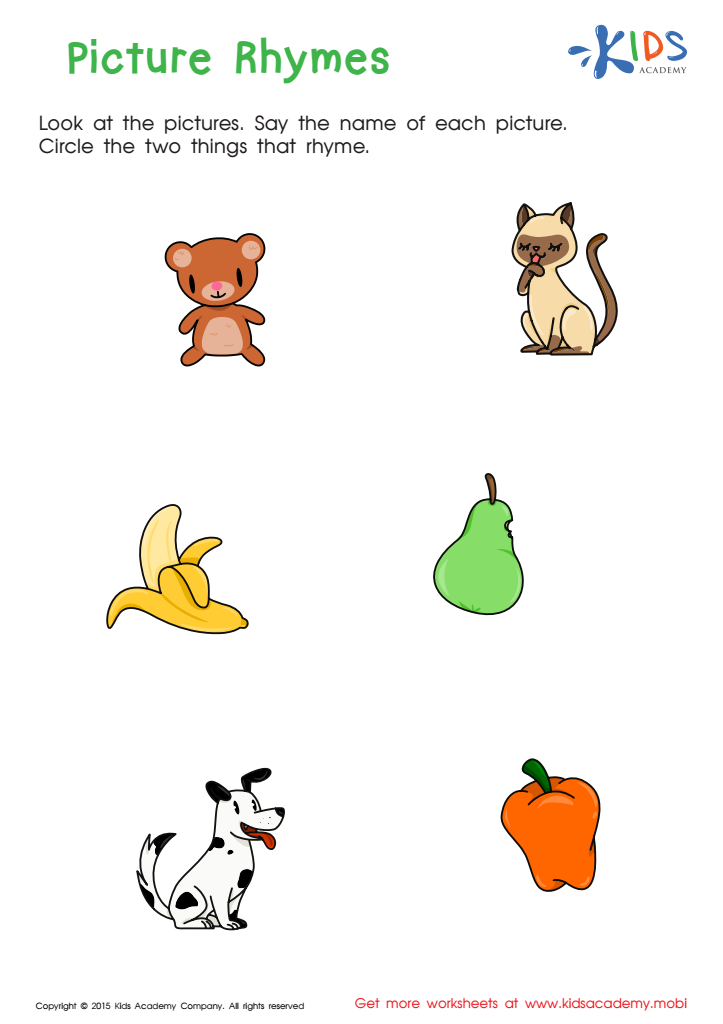
First Words: Picture Rhymes Worksheet







Vocabulary enhancement through rhyming for children aged 4-6 is crucial for their language development and overall literacy skills. At this stage, children are inherently curious and naturally absorb language, making it an ideal time for them to engage with new words and sounds. Rhyming activities introduce children to phonemic awareness—the ability to hear and manipulate the sounds in words—laying a strong foundation for reading.
When children participate in rhyming exercises, they explore language patterns, which not only helps with word recognition but also fosters creativity. Rhyming can transform learning into a fun and engaging activity, making it easier for children to remember new vocabulary. Moreover, the repetition found in rhymes enhances memory retention, allowing kids to internalize the words better.
Additionally, rhyming helps develop listening skills and encourages oral language development, as children learn to articulate sounds and experiment with their own speech. For parents and teachers, incorporating rhyming into play, stories, and songs enriches the educational experience, creating a joyful learning environment that promotes early literacy and lifelong love for language. Thus, emphasizing vocabulary enhancement through rhyming is vital for preparing children for academic success and effective communication.







