Letter recognition Tracing Letters Worksheets for Ages 4-6 - Page 2
26 filtered results
-
From - To
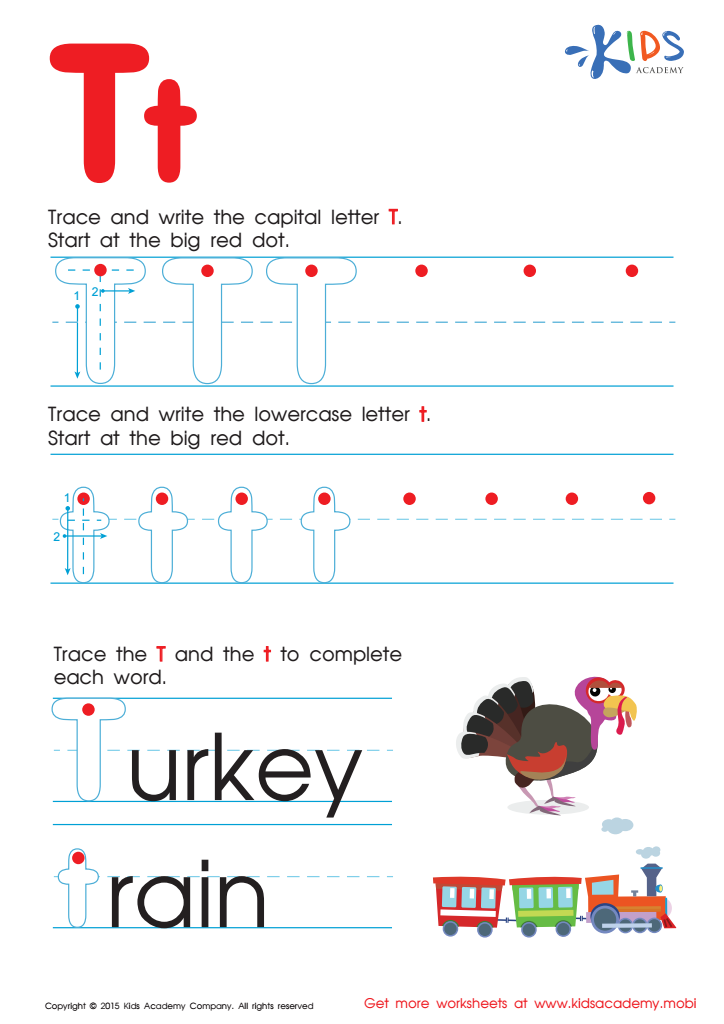
Letter T Tracing Page
 Assign to My Students

Letter D Tracing Page







Letter recognition and tracing letters are foundational skills for young children aged 4-6, playing a vital role in their literacy development. Parents and teachers should prioritize these activities as they foster essential cognitive and motor skills that aid in reading and writing.
Firstly, letter recognition helps children identify letters in different contexts, which is crucial for developing reading fluency. When children learn to recognize letters, they build the groundwork for phonics, allowing them to make connections between sounds and written forms of language.
Tracing letters enhances fine motor skills and hand-eye coordination, as children practice the physical motion of writing. This practice not only boosts their ability to write legibly but also improves their confidence and willingness to engage in writing tasks. Engaging in tracing activities can be fun and promotes an enjoyable learning environment.
Moreover, early familiarity with letters and sounds can ignite curiosity and a love for reading, setting the stage for continuous literacy growth. When children feel empowered in their writing and reading abilities, they are more likely to thrive academically.
In essence, nurturing letter recognition and tracing skills helps pave the way for successful literacy development, making it an essential focus for educators and parents alike.








