
Letter-sound association Tracing Letters Worksheets for Ages 4-6
5 filtered results
Difficulty Level
Grade
Age
-
From - To
Subject
Activity
Standards
Discover our captivating "Letter-Sound Association Tracing Letters Worksheets for Ages 4-6." Thoughtfully designed to blend fun with learning, these worksheets guide young minds in tracing letters while recognizing their corresponding sounds. Perfect for preschoolers and kindergarteners, the activities aim to enhance fine motor skills and phonemic awareness, paving the way for successful reading and writing. Engaging and interactive, our resources provide a love for language mastery through child-friendly themes and entertaining illustrations. Nurture early literacy skills with our expertly crafted tracing letter worksheets, an ideal support tool for teachers and parents alike on their educational journeys.
Favorites
With answer key
Interactive
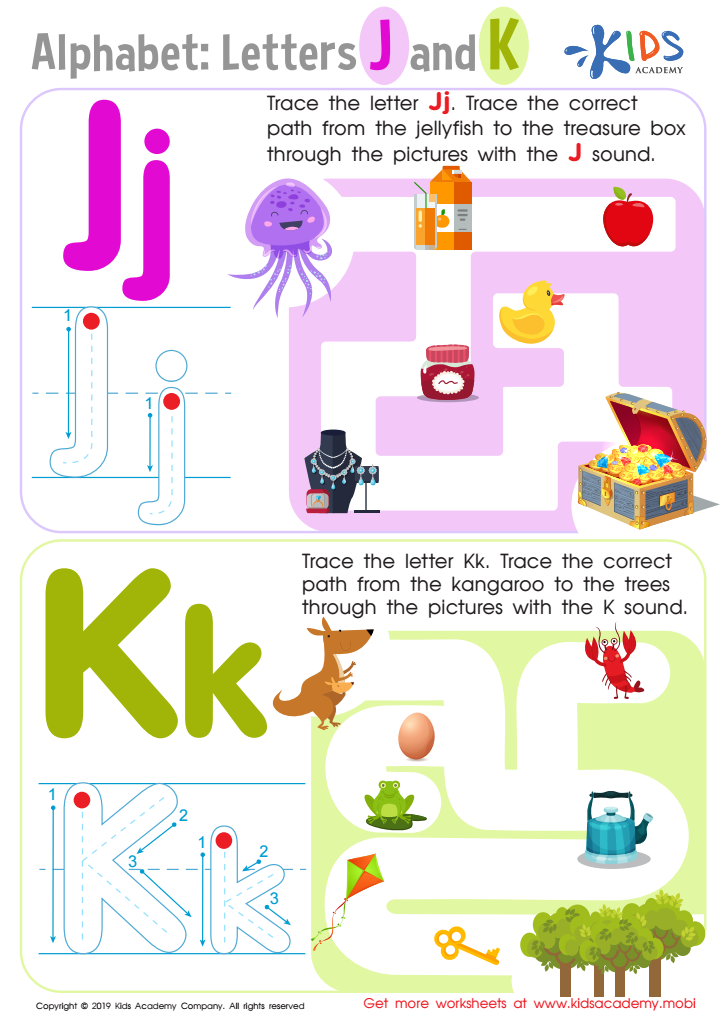
Letters J and K Tracing Worksheet
Tracing the letters «J» and «K» is the first step. Help the jellyfish find a path to the treasure chest with pictures of the «J» sound, and assist the kangaroo in finding a path to the trees with pics of «K». Fun, educational and enjoyable for children!
 Assign to My Students
Letters J and K Tracing Worksheet
Worksheet
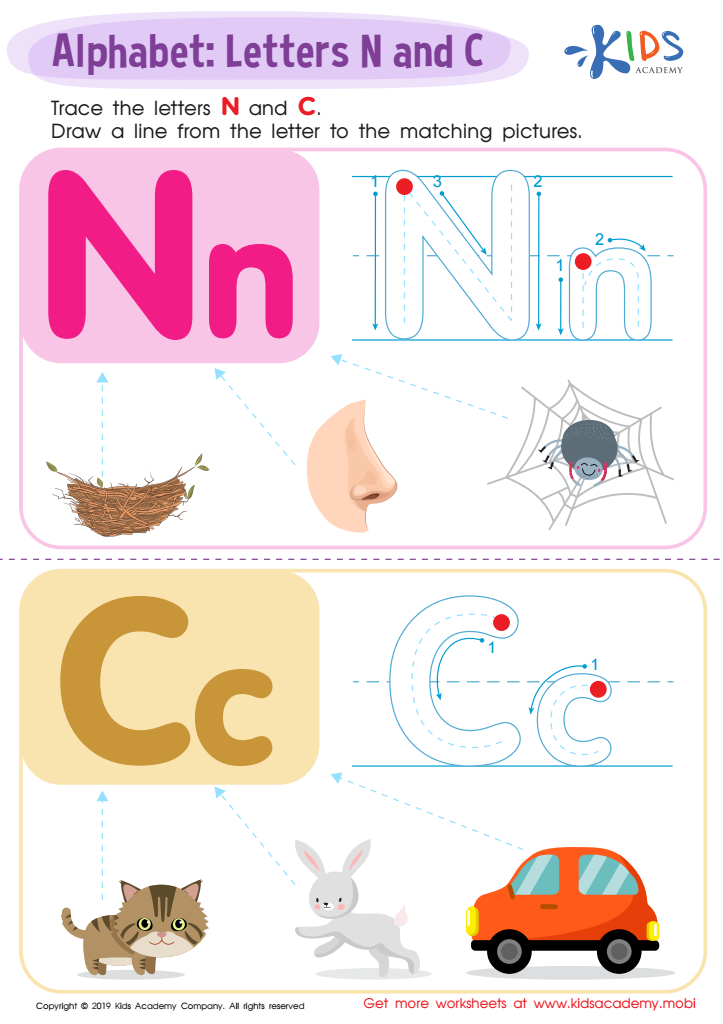
Letter N and C Tracing Worksheet
Kids can trace the letters N and C, then draw a line to the words starting with each letter. This worksheet helps them practice letter writing, distinguish capital and lowercase letters, and match pictures with the right letter. It also teaches essential skills for learning letters efficiently.
Letter N and C Tracing Worksheet
Worksheet
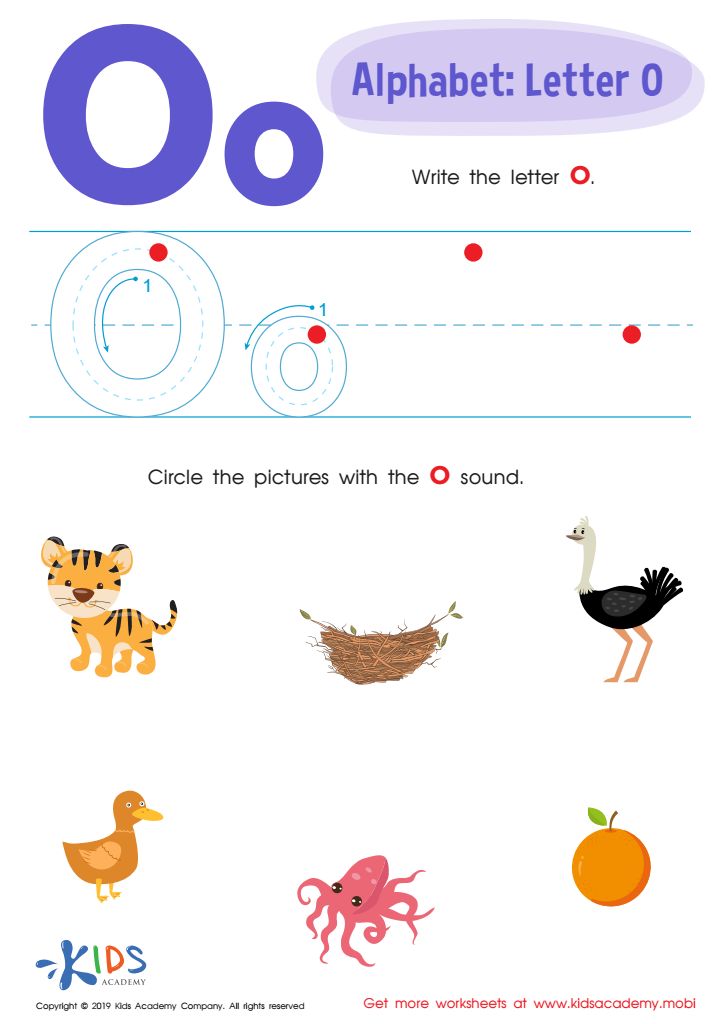
Letter O Tracing Worksheet
This worksheet gives kids the chance to trace the letter "O" while also circling pictures that have the "O" sound. Visual and hands-on learners will benefit from the visuals and tracing, helping them learn the letter "O" with ease. It's the perfect way to learn what "octopus" and "ostrich" start with!
Letter O Tracing Worksheet
Worksheet
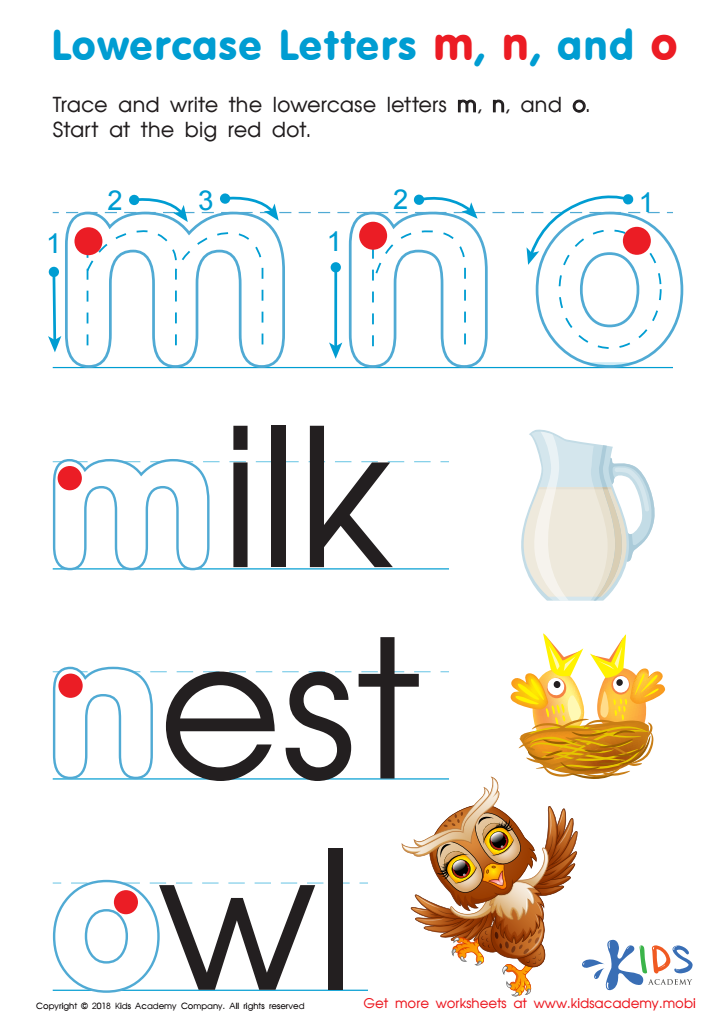
Lowercase Letters m n o Worksheet
Help your child learn the alphabet with letter tracing. Show them the difference between uppercase and lowercase letters by working through this free worksheet, tracing and writing lowercase m, n and o.
Lowercase Letters m n o Worksheet
Worksheet
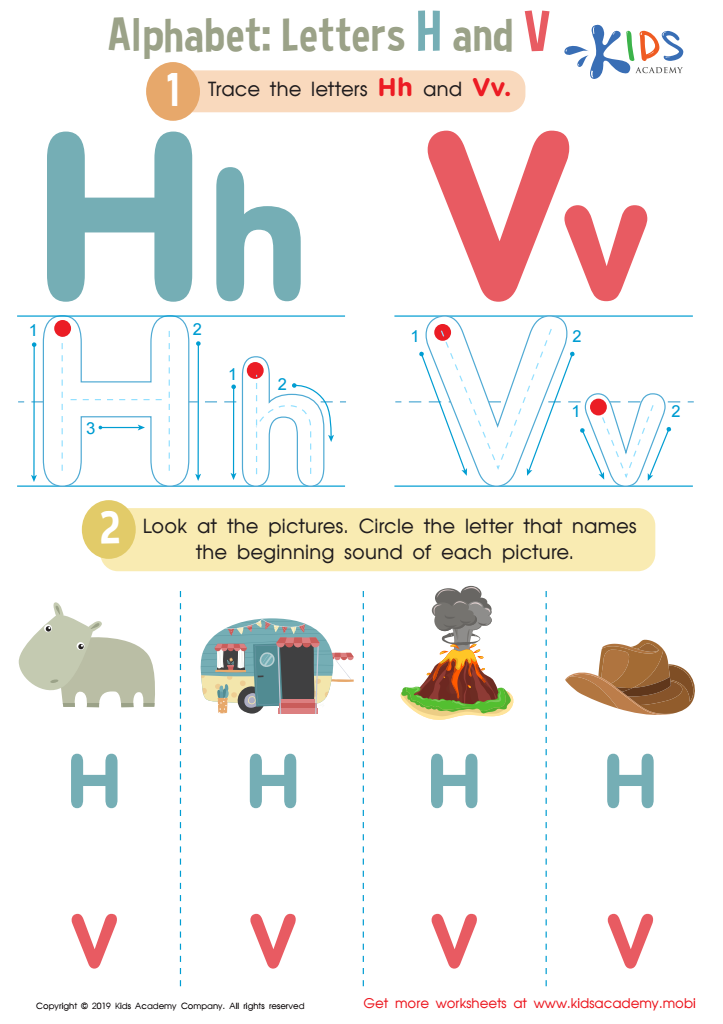
Letters H and V Tracing Worksheet
Kids will trace the letters H and V and circle the letter of the beginning sound of each picture. This helps strengthen writing and identify objects with their beginning sound, with two letter options to choose from.
Letters H and V Tracing Worksheet
Worksheet
Join Kids Academy for Free
Who is primarily going to use this learning content?








Parents and teachers should place significant emphasis on letter-sound association and tracing letters for children ages 4-6 because these skills form the cornerstone of early literacy development. At this developmental stage, young minds are highly receptive to learning foundational concepts that will support future reading and writing proficiency.
Letter-sound association, where children learn to connect letters with their corresponding sounds, is critical for decoding words during reading. When children understand that the letter 'B' makes the /b/ sound, they can begin to blend sounds together to form words like 'bat' or 'ball,' which enhances their ability to read independently.
Tracing letters, on the other hand, helps in fine motor development and improves handwriting. It reinforces the connection between visual recognition of a letter and the physical motion required to write it, solidifying memory and cognitive processing of letter shapes and sounds. Engaging in this tactile activity also supports visual-motor integration—a crucial skill for more intricate tasks later in life.
Furthermore, when children grasp these concepts early, they build confidence in their abilities to tackle more complex literacy tasks. This head start in phonemic awareness and fine motor control directly impacts their academic success and overall eagerness to engage with learning, making letter-sound association and tracing pivotal components of early childhood education.








