Lowercase letter writing Upper & Lowercase Letters Worksheets for Ages 4-6
3 filtered results
-
From - To
Enhance your child's literacy skills with our "Lowercase Letter Writing Upper & Lowercase Letters Worksheets for Ages 4-6." Designed for young learners, these engaging worksheets help kids develop fine motor skills, letter recognition, and penmanship. Our carefully crafted activities include tracing and freehand writing exercises, ensuring children gain confidence in forming each letter. Perfect for preschool and kindergarten students, our worksheets complement early education curriculums, providing a fun and effective way to master both uppercase and lowercase letters. Spark a love for learning and writing in your child with our expertly designed resources.
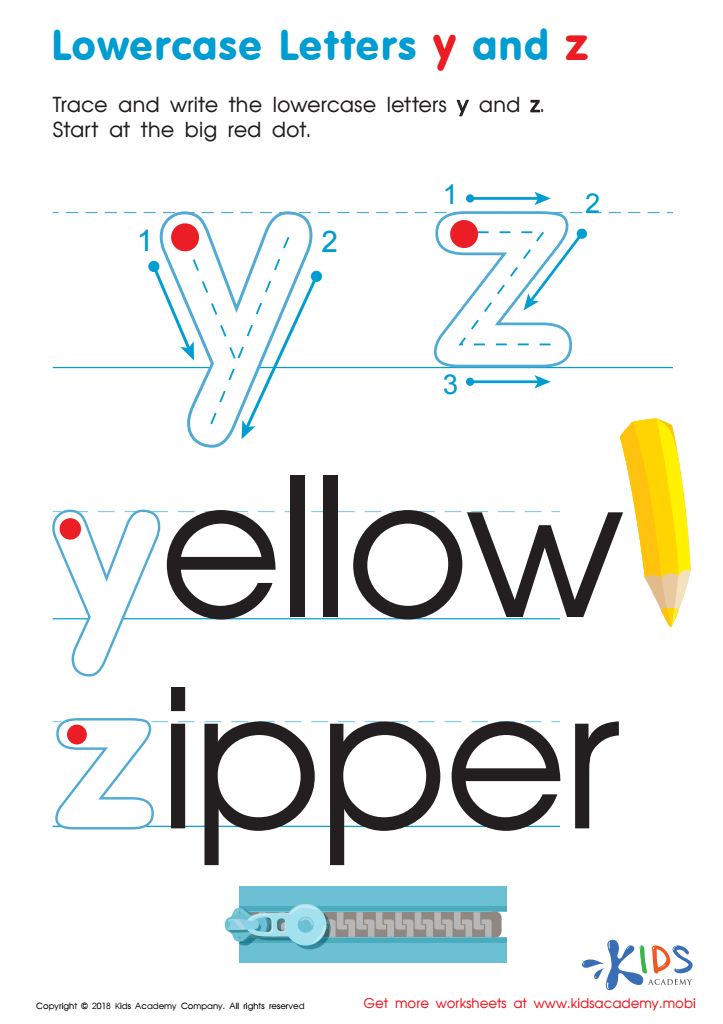
Lowercase Letters y z Worksheet
 Assign to My Students

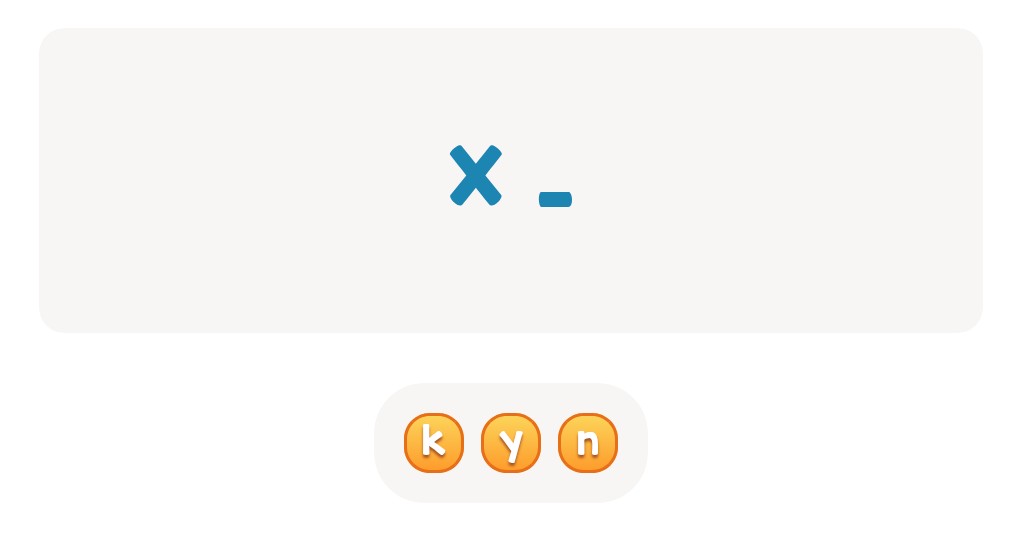
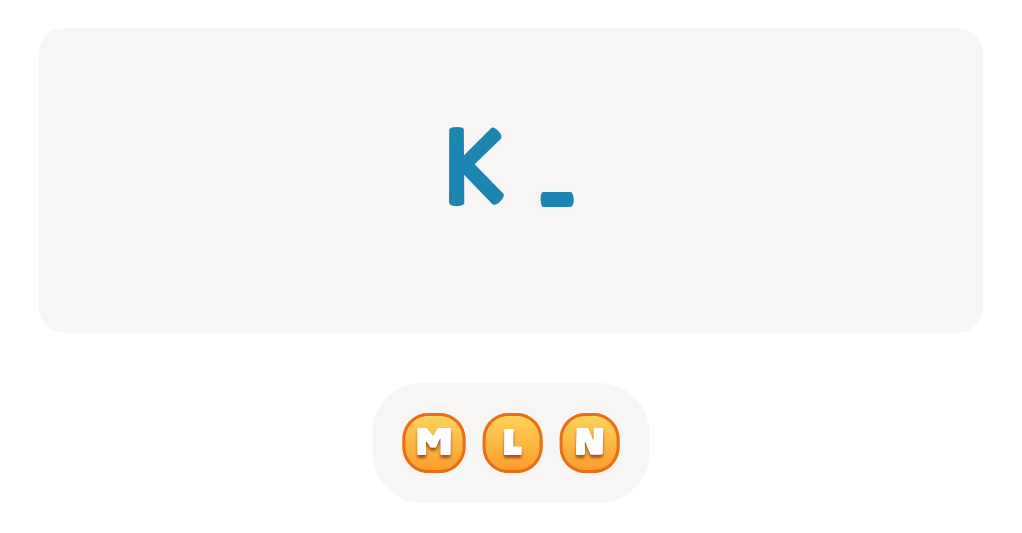
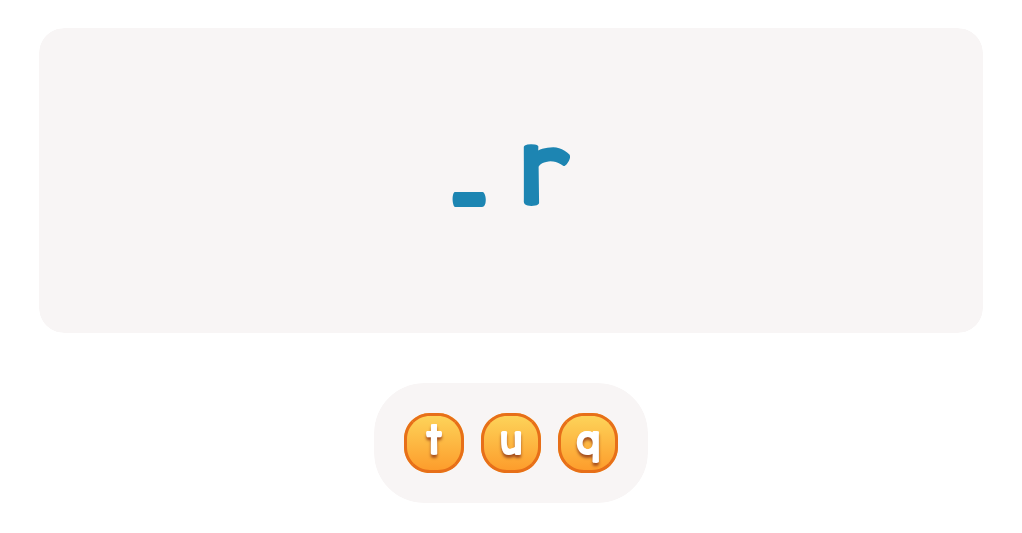
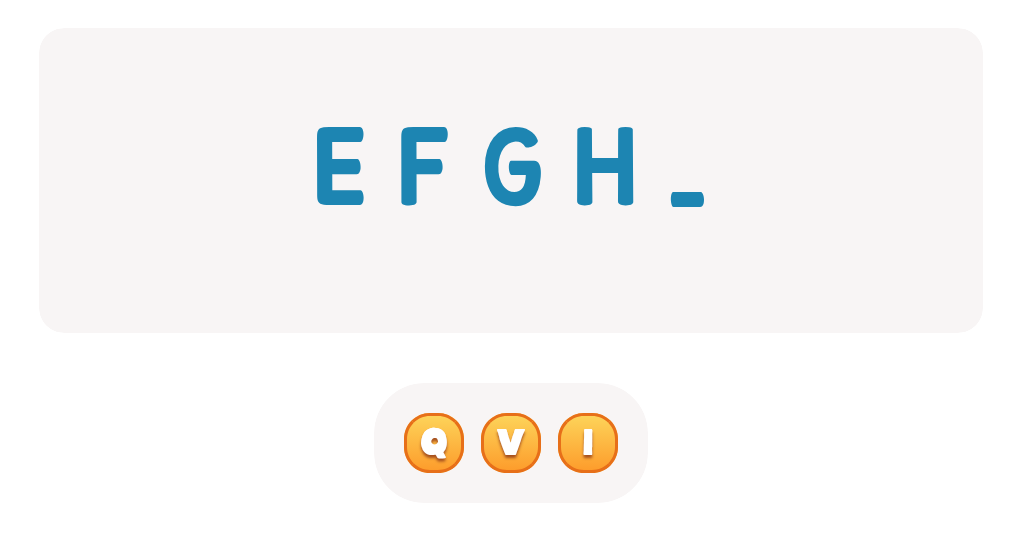
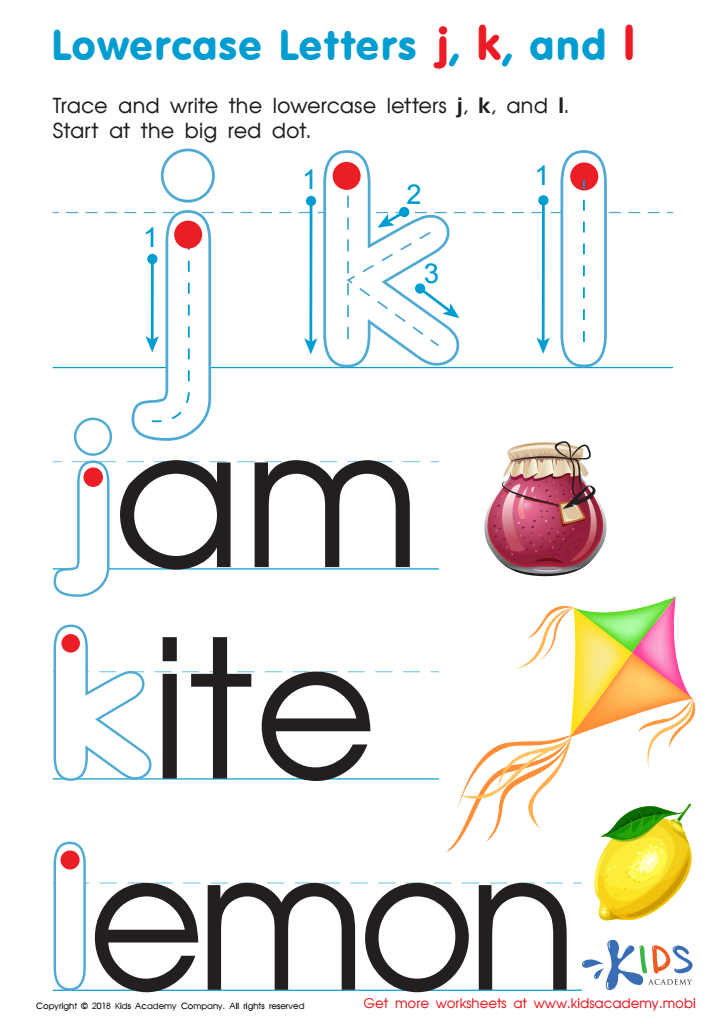
Lowercase Letters j k l Worksheet
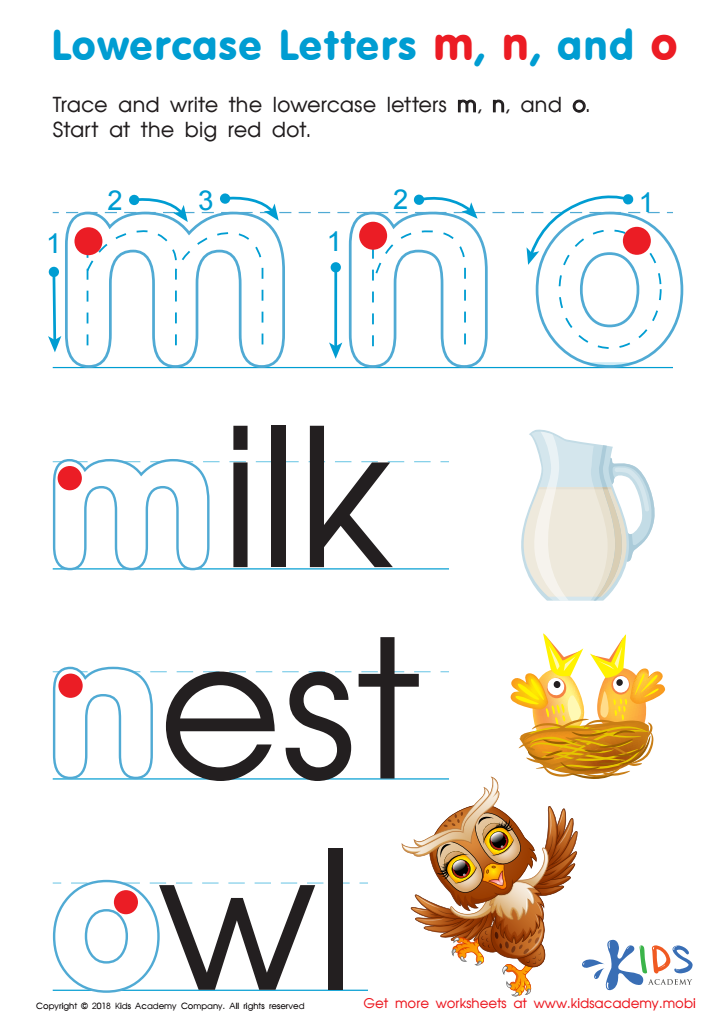
Lowercase Letters m n o Worksheet






Ensuring young children ages 4-6 master lowercase letter writing alongside uppercase letters is crucial for foundational literacy development. As an early grade teacher or parent, fostering this skill should be a priority because it significantly impacts a child's future reading and writing capabilities.
Firstly, lowercase letters are more prevalent in texts, making familiarity integral for reading fluency. Knowing both uppercase and lowercase letter forms enables children to recognize words quickly, thus enhancing their reading comprehension. Additionally, learning lowercase forms improves fine motor skills. The various curves, lines, and complexities of lowercase letters, compared to the often simpler uppercase letters, provide ample practice in hand-eye coordination and muscle control, essential for all writing tasks.
Moreover, writing lowercase letters correctly from an early age encourages proper letter formation and spacing within words, paving the way for legible handwriting. This skill is not just about neatness; clear handwriting boosts a child's ability to communicate ideas effectively. Additionally, proficiency in both uppercase and lowercase letters supports spelling and vocabulary expansion as children can more easily decode and encode words. Additionally, blending these practices within a playful, engaging setting fosters a positive relationship with written language, retaining children's natural curiosity and eagerness to learn. Prioritizing this holistic literacy development nurtures confident, capable readers and writers.







