Uppercase identification Upper & Lowercase Letters Worksheets for Ages 4-6
5 filtered results
-
From - To
Welcome to our Uppercase Identification Worksheets for Ages 4-6! These engaging resources are designed to help young learners master their uppercase and lowercase letters. With a variety of fun activities, including tracing, matching, and coloring, children will develop essential letter recognition skills while enhancing their fine motor abilities. Our worksheets are skillfully crafted to keep little ones motivated and excited about learning. Perfect for early childhood classrooms or home use, these interactive tools promise an enjoyable educational experience. Explore our collection today and watch your child's confidence soar as they navigate the world of letters with ease!
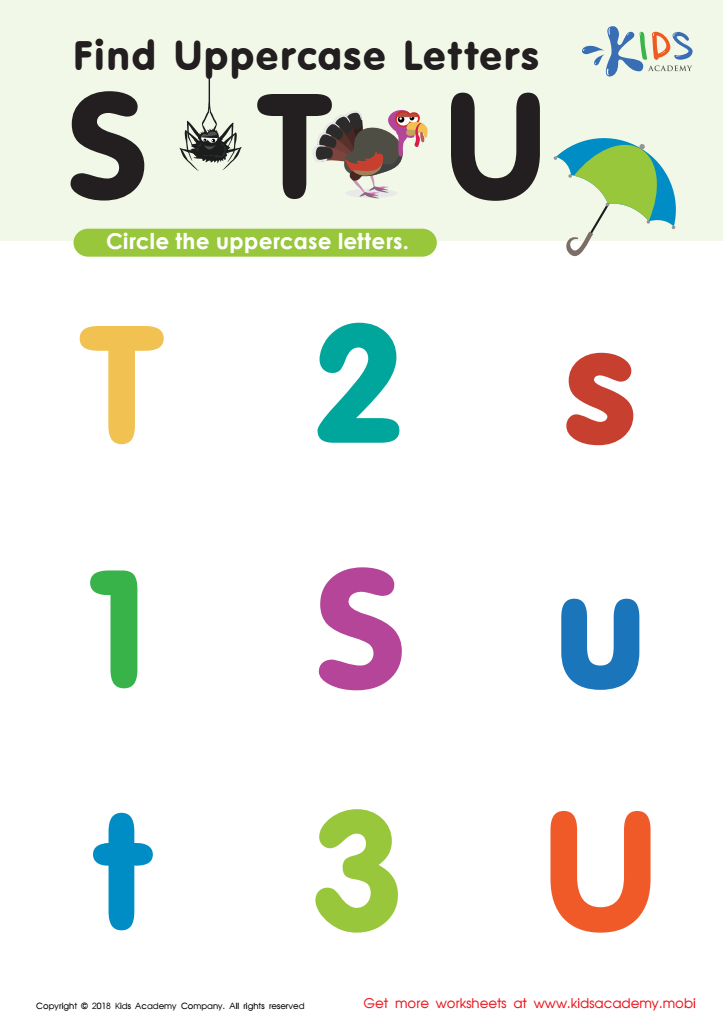
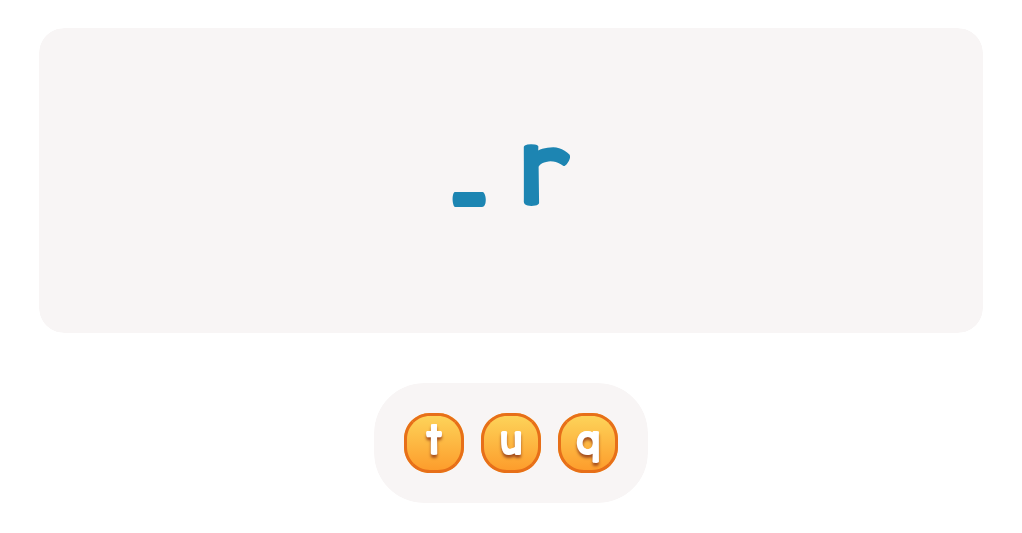
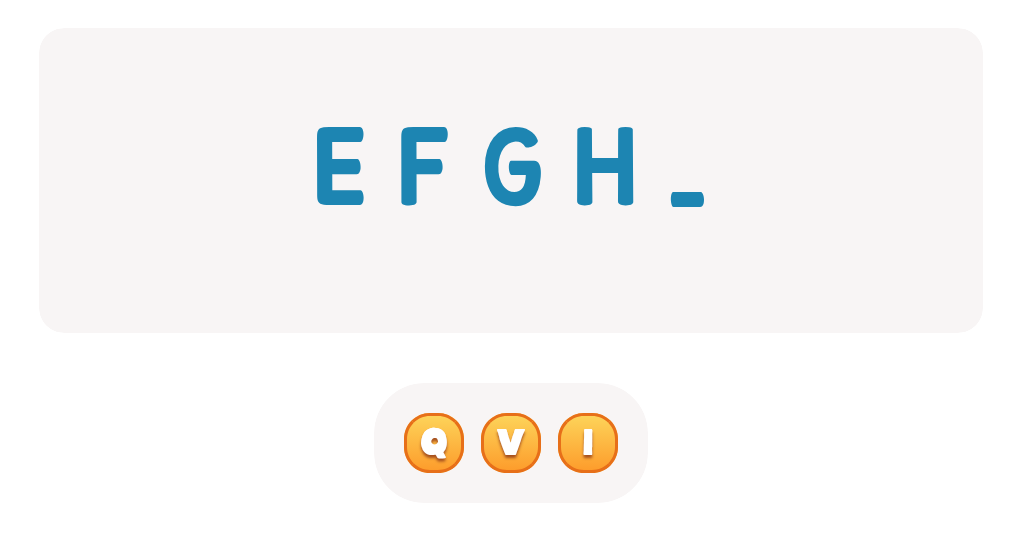
Find Uppercase Letters Worksheet
 Assign to My Students
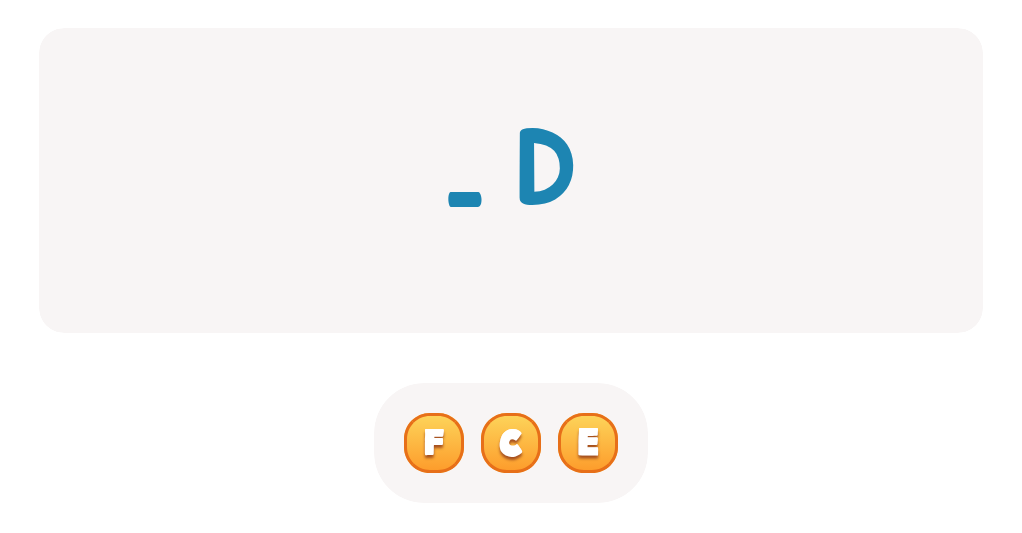

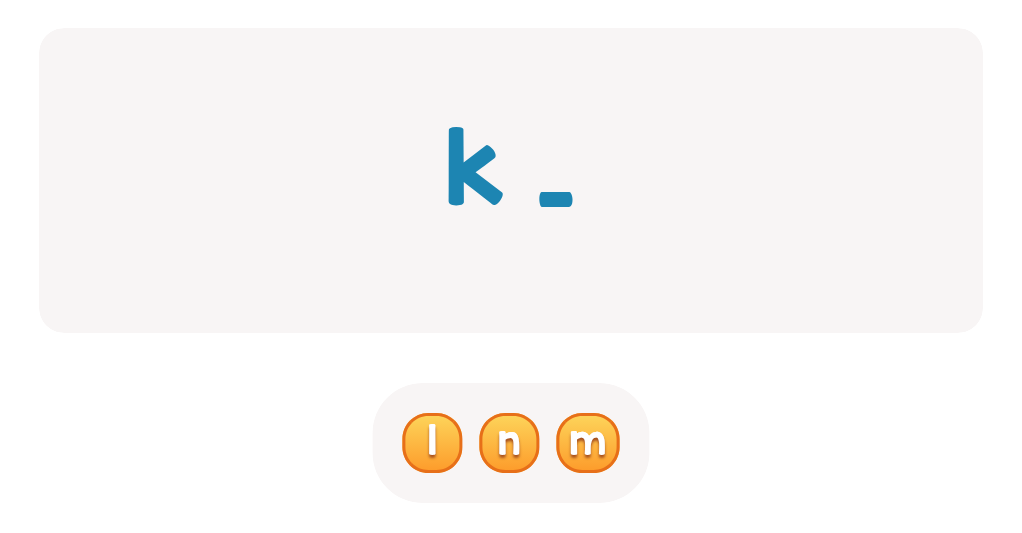
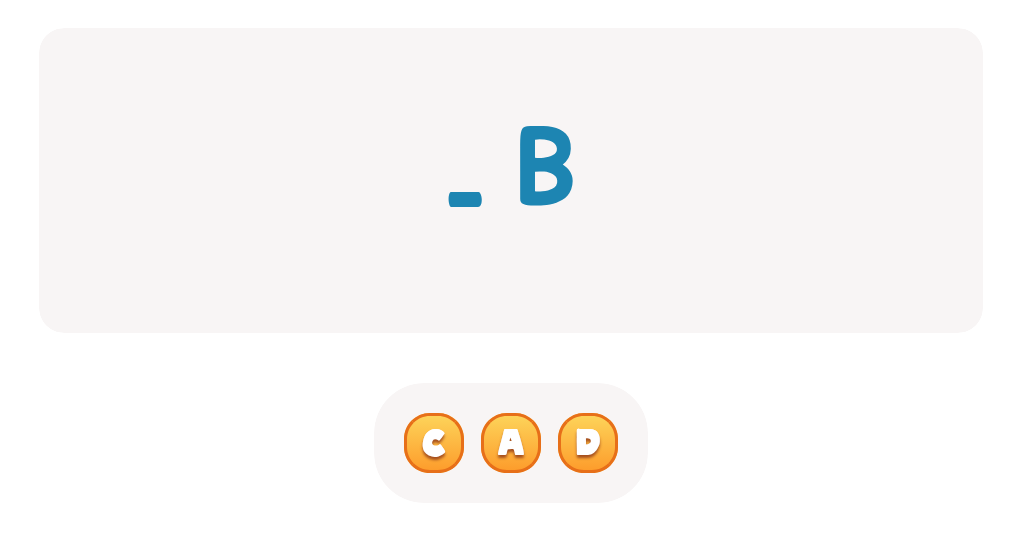
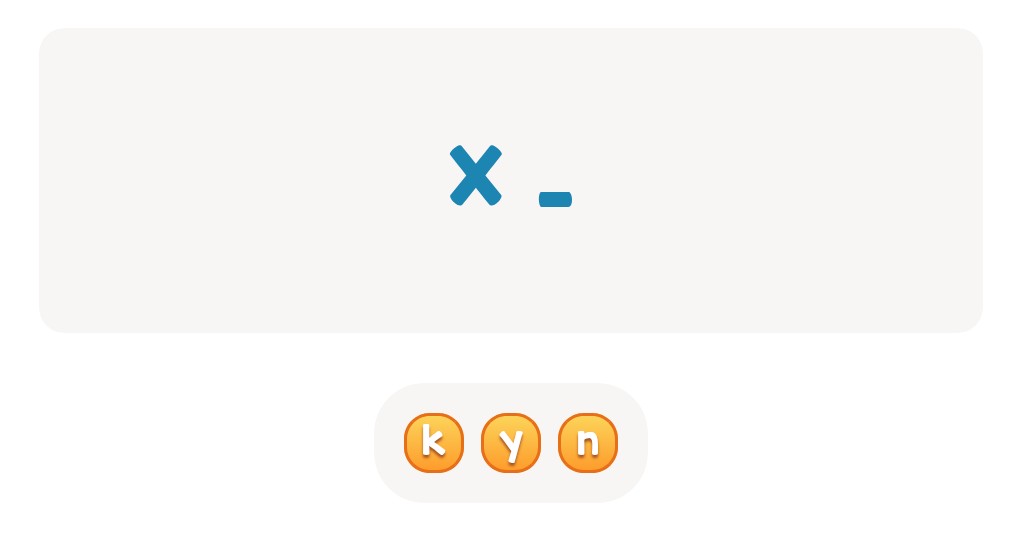
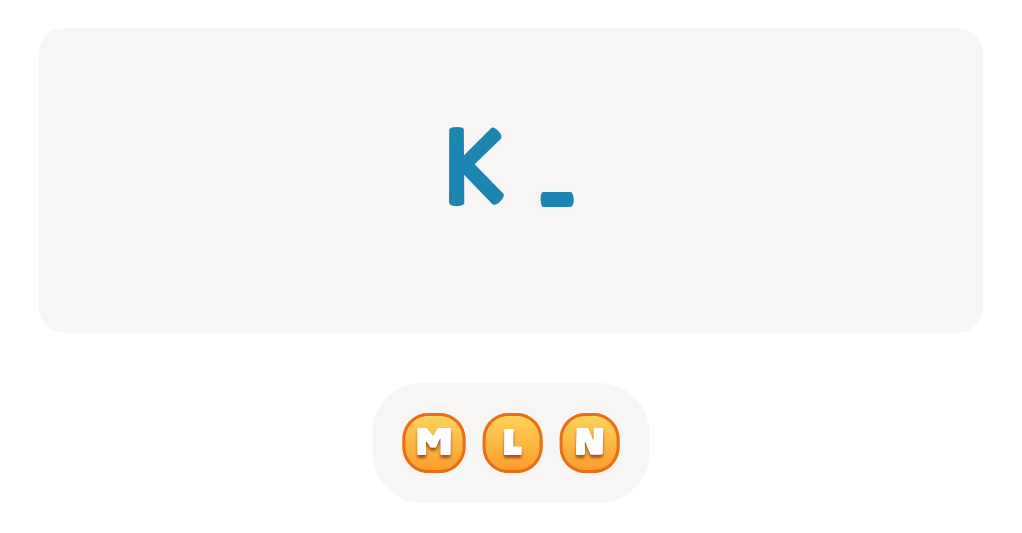
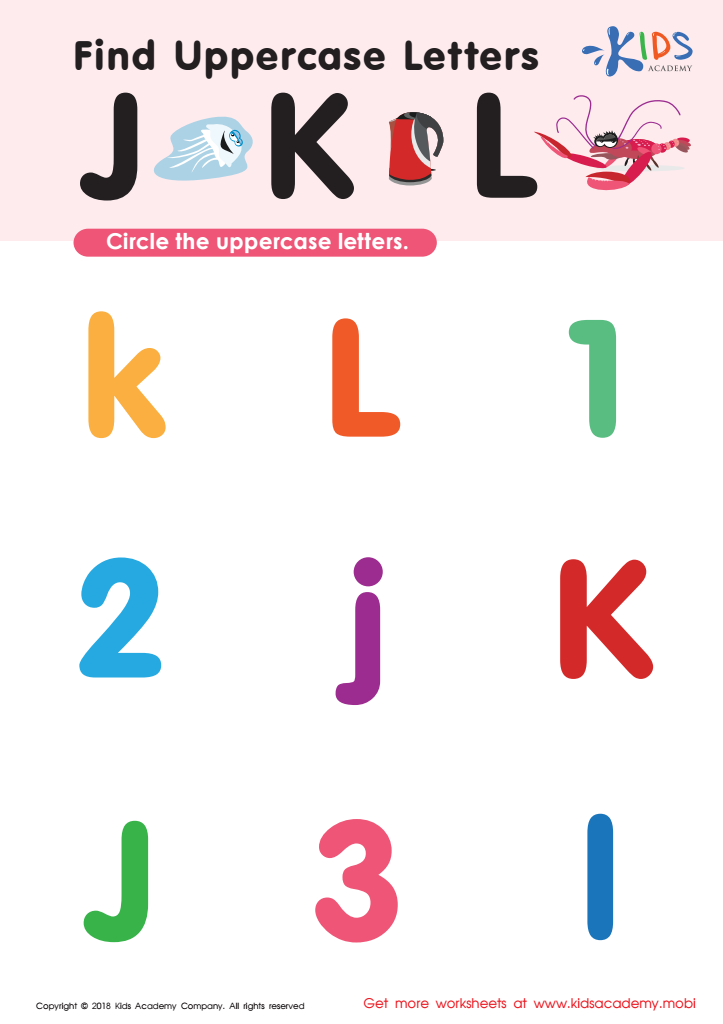
Find Uppercase Letters J, K, and L Worksheet

Find Uppercase Letters A, B, and C Worksheet
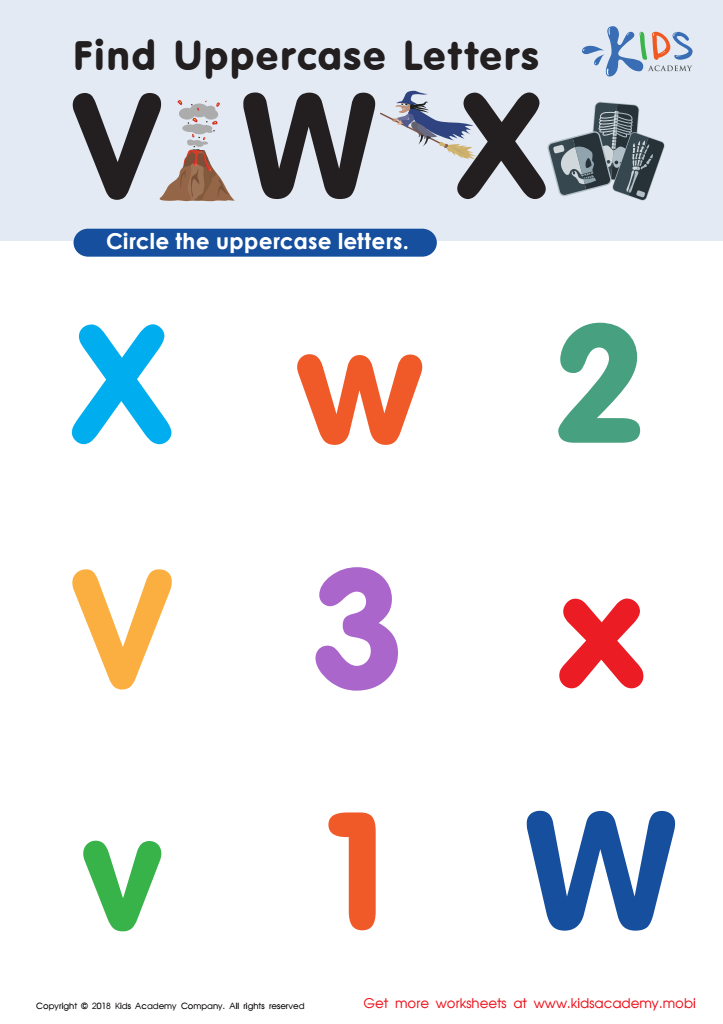
Find Uppercase Letters V, W, X Worksheet
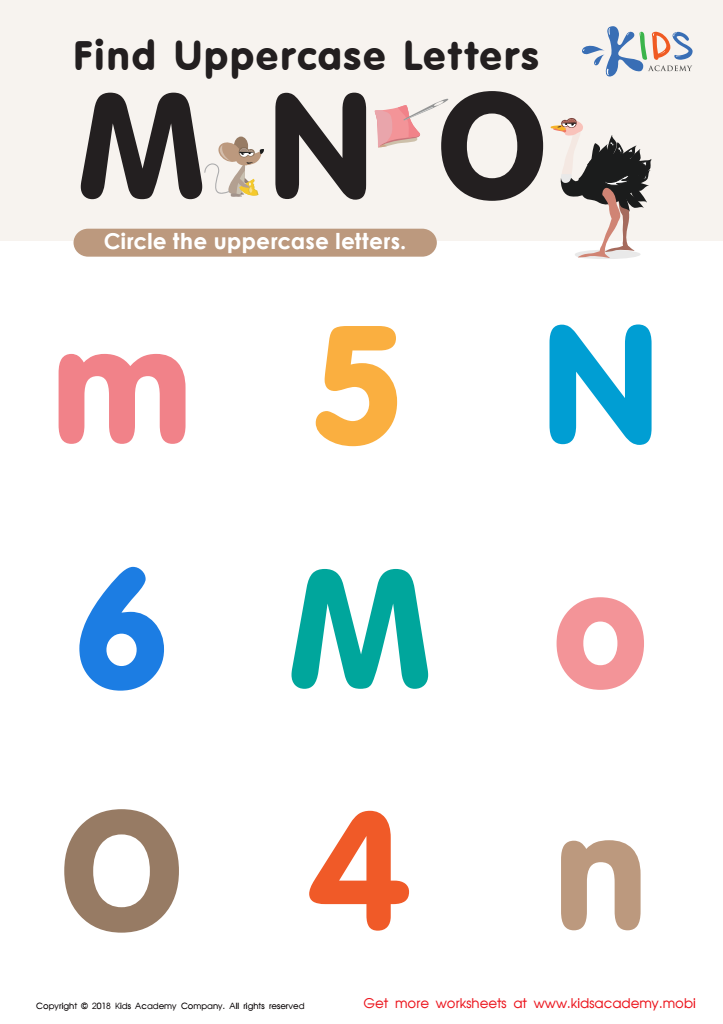
Find Uppercase Letters M, N, and O Worksheet






Understanding uppercase and lowercase letter identification is crucial for children ages 4-6 as it lays the foundational skills for literacy. Recognizing uppercase and lowercase letters helps children develop phonemic awareness, which is the ability to hear, identify, and manipulate sounds in spoken language. This skill is vital for reading and writing since children use these letters to form words.
Additionally, the distinction between uppercase and lowercase letters is pivotal in early writing development. Children learn that uppercase letters are often used at the beginning of sentences and for proper nouns, which instills grammatical conventions and enhances their writing clarity.
Moreover, engaging with letters in a variety of meaningful contexts—like reading books, playing word games, or participating in writing activities—helps reinforce retention and comprehension. When children articulate the letters and connect them with sounds, vocabulary expands and self-confidence builds.
Finally, fostering uppercase and lowercase identification enables children to engage more fully with written material. As they progress through educational milestones, a strong grasp of these concepts will assist them in transitioning smoothly into more advanced literacy tasks, ultimately setting the stage for lifelong learning and academic success. Parents and teachers play a pivotal role in this foundational stage, cultivating a love for language and literacy.







