Phonics Skills Vowels and Consonants Worksheets for Ages 4-6
4 filtered results
-
From - To
Discover engaging "Phonics Skills Vowels and Consonants Worksheets for Ages 4-6" designed to make learning fun and effective! These educational worksheets help young children grasp the fundamental concepts of vowels and consonants, essential building blocks for reading and writing. Featuring vibrant illustrations and interactive exercises, kids can easily recognize and differentiate between vowel and consonant sounds. Perfect for preschoolers and kindergarteners, these printable activities foster early literacy skills while maintaining interest and enthusiasm. Empower your child's phonics journey and lay the groundwork for a lifetime of successful reading with our thoughtfully crafted resources.
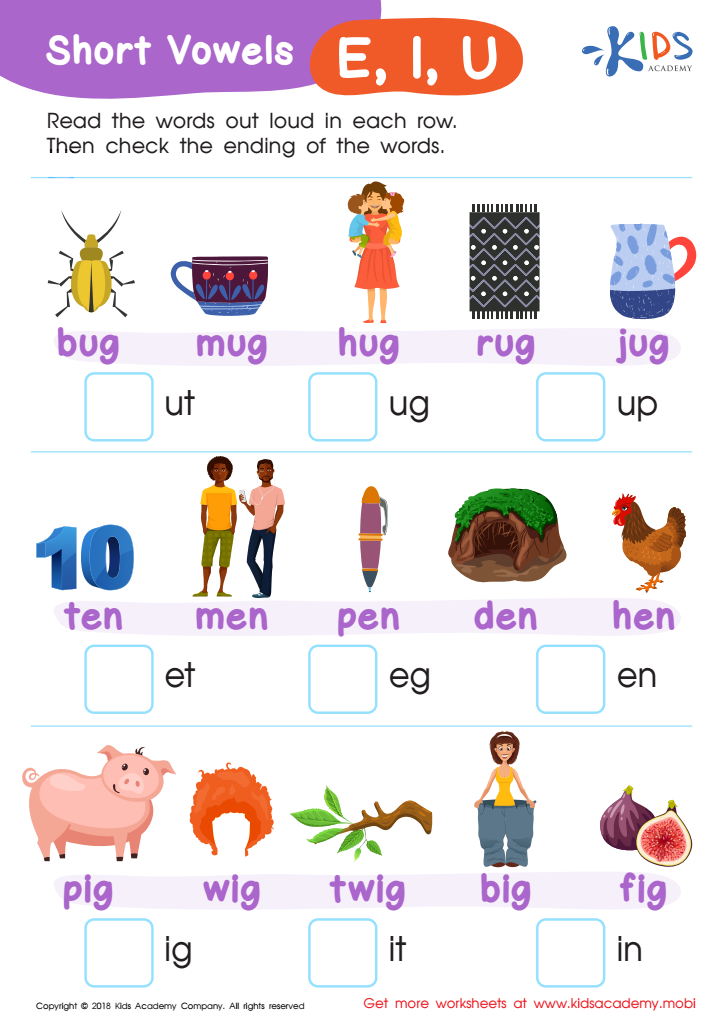
Short Vowels /e/, /i/, and /u/ Worksheet
 Assign to My Students
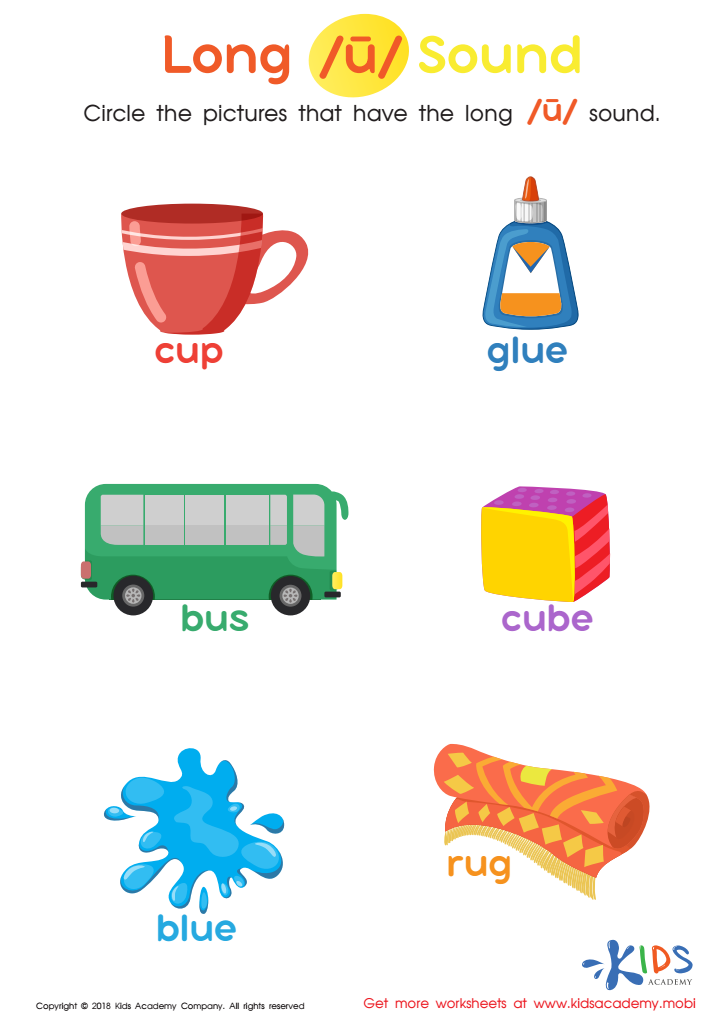
Long «u» Sound Worksheet
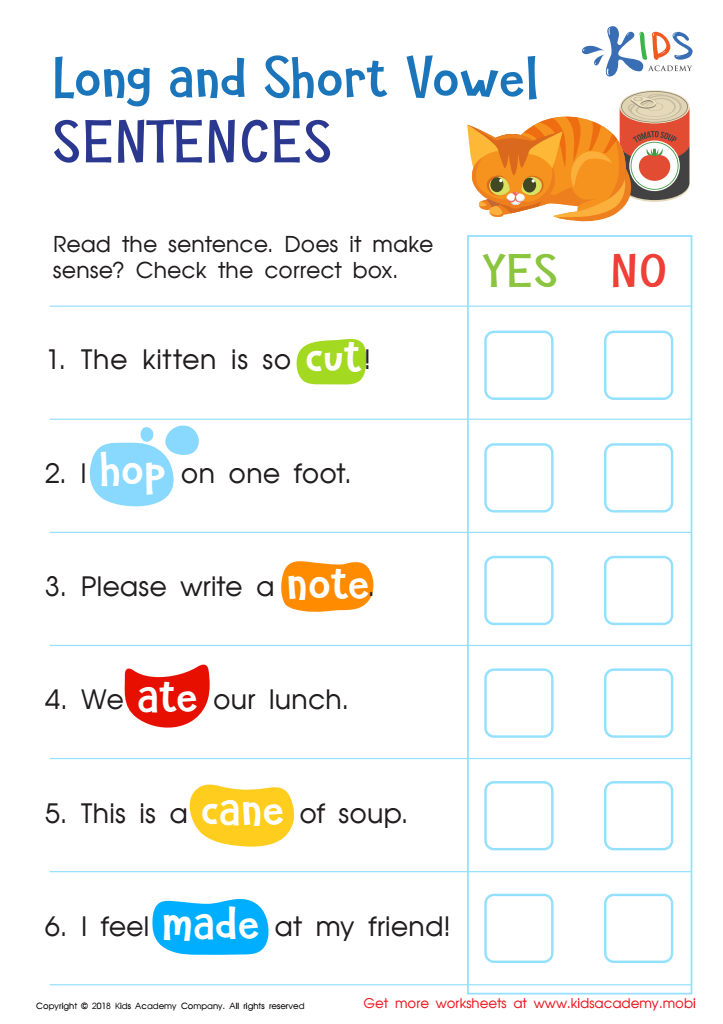
Long and Short Vowel Sentences: Assessment Worksheet
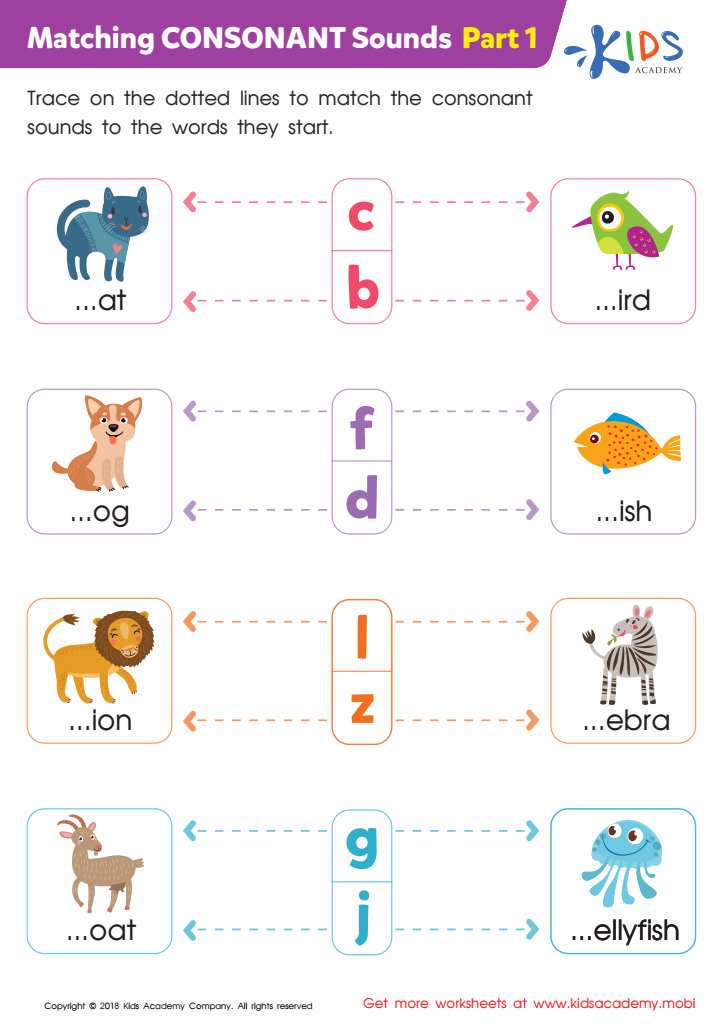
Matching Consonant Sounds: Part 1 Worksheet



Phonics skills, particularly the understanding of vowels and consonants, lay the foundational stones for a child's reading and writing abilities, making them crucial for children aged 4-6. During these formative early years, the brain is exceptionally receptive to language learning. Understanding phonics helps children decode words by sounding them out, which is essential for reading proficiency.
Learning phonics, the relationship between letters and their sounds, enables young learners to recognize patterns and predict how words are pronounced. It empowers them to tackle new and unfamiliar words more confidently and independently, fostering a sense of achievement and reducing reading frustration. For instance, knowing that "cat" is formed by the sounds of the consonants "c" and "t," coupled with the short vowel sound "a," helps children systematically approach word recognition.
Additionally, strong phonics skills support spelling and writing development. When children understand that "map" and "cap" share a similar structure, they begin to grasp spelling patterns and word construction. This phonemic awareness is instrumental in their overall language development, critical thinking, and academic success.
Teachers and parents who prioritize phonics equip children with these essential tools, paving the way for lifelong literacy and cognitive development. Early mastery of vowels and consonants fosters a love for reading, curiosities, and confidence, creating a solid educational foundation.







