
Hand-eye Coordination Vowels Worksheets for Ages 4-6
4 filtered results
Difficulty Level
Grade
Age
-
From - To
Subject
Activity
Standards
Boost early learning with our "Hand-eye Coordination Vowels Worksheets for Ages 4-6"! Perfectly designed for young learners, these engaging worksheets combine fun vowel exercises with activities that enhance fine motor skills and hand-eye coordination. Each page is filled with vibrant illustrations and simple tasks that not only teach vowels but also support essential development for reading and writing readiness. Ideal for home or classroom use, these worksheets will keep little ones entertained while helping them develop critical learning skills. Start your child's educational journey with our expertly-crafted resources today!
Favorites
With answer key
Interactive
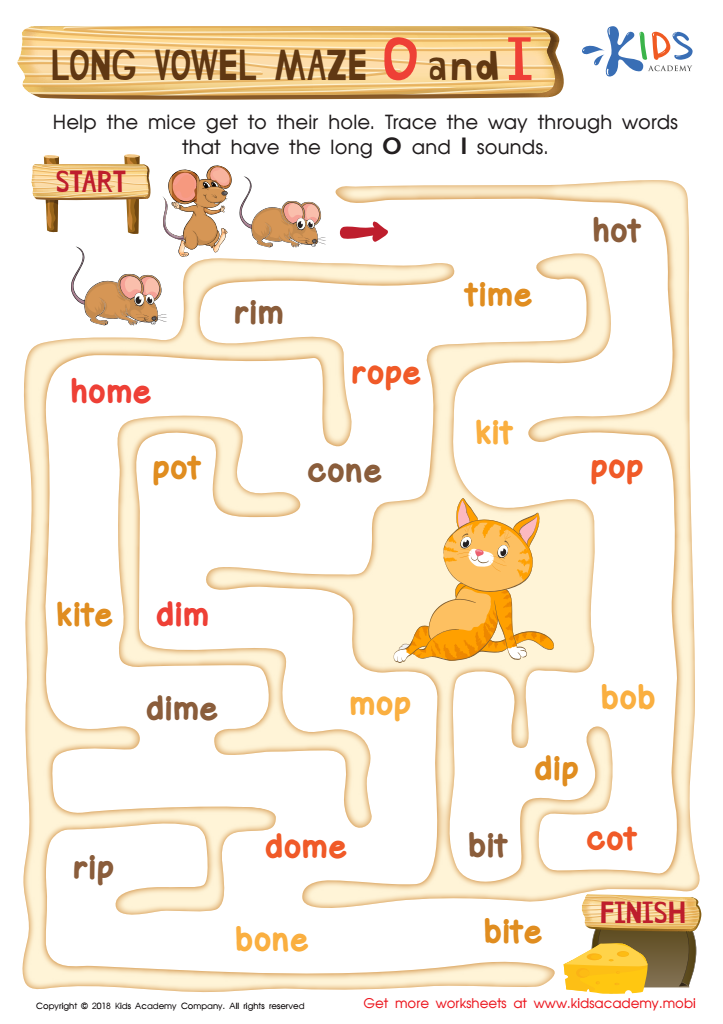
Long Vowel Maze /o/ and /i/ Worksheet
Help your new readers have fun and build their sight word vocabulary! Guide the mice to their prize cheese by having them trace the route on the worksheet, using words with the long o and long i sounds. But watch out for the kitty!
Long Vowel Maze /o/ and /i/ Worksheet
Worksheet
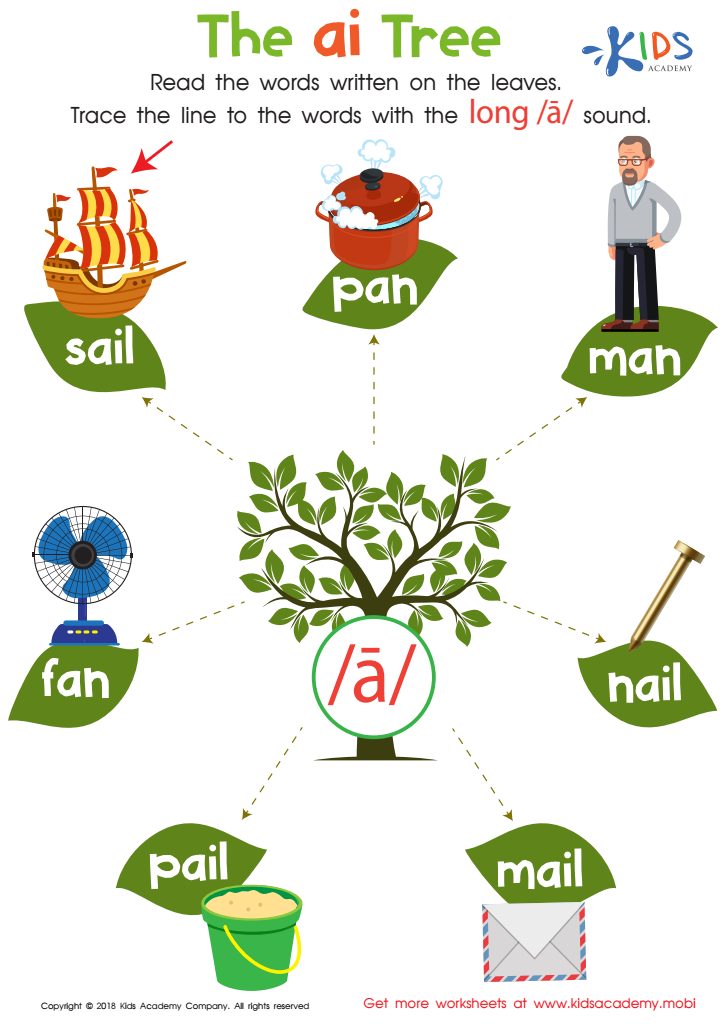
The AI Tree Worksheet
Help your kids learn to read better with this worksheet! Introduce the vowel pair 'ai' and give them familiar examples. Ask them to give you some in return. Then, have them read the words on the leaves and help them trace the ones with the long /a/ sound.
The AI Tree Worksheet
Worksheet
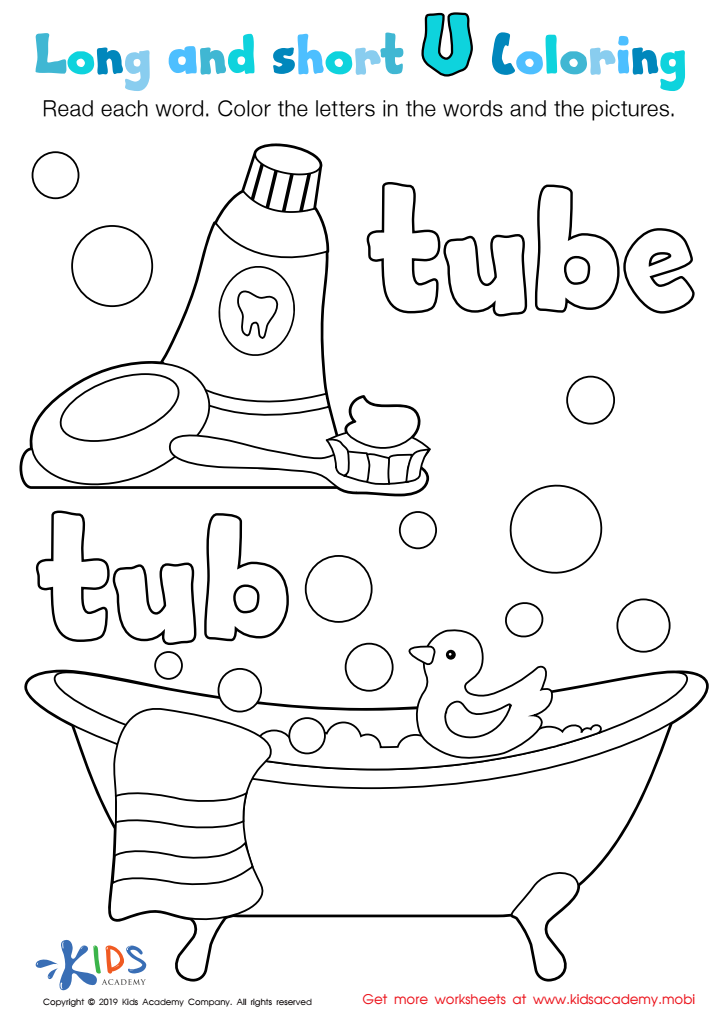
Long and Short U Worksheet
Revised: Spice up your lesson on long and short vowels with this fun printout! Kids read the words "tube" and "tub," then reinforce the sound by coloring in the words and pictures. It's a great way to make phonics class enjoyable!
Download (PDF)
 Assign to My Students
Assign to My Students
Long and Short U Worksheet
Worksheet
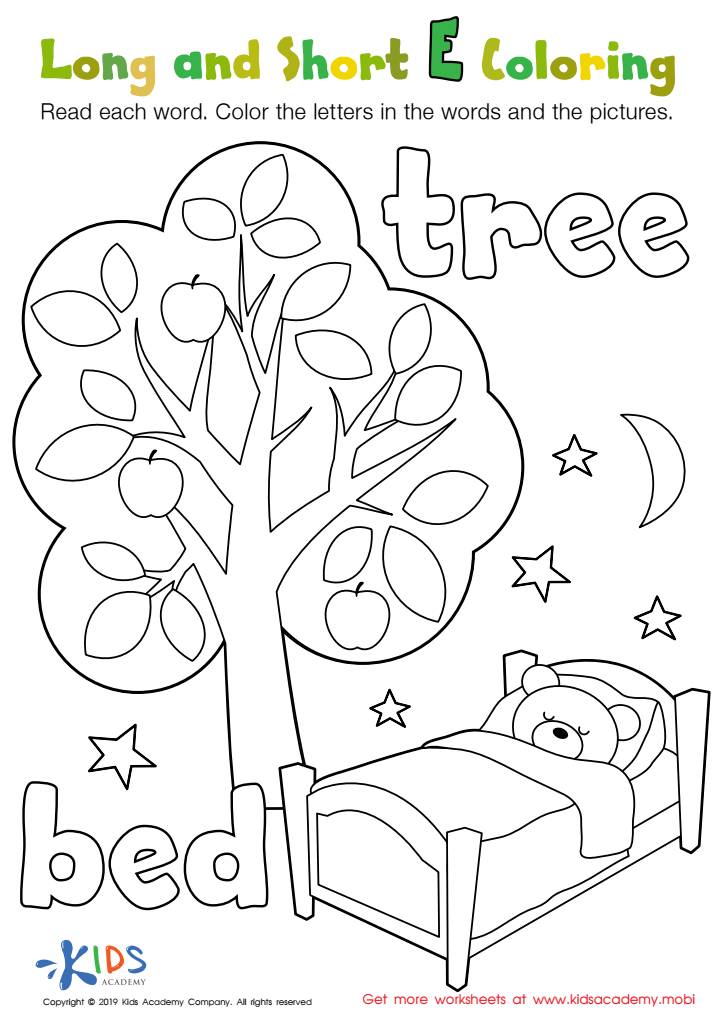
Long and Short E Worksheet
This fun printout makes learning phonics enjoyable for Grade 3 students. Get them to read the words “tree” and “bed” to recognize the different sounds of the letter “E”. After hearing the words they can color the words and the pictures to understand differences between long and short vowels.
Download (PDF)
Assign to My Students
Assign to My Students
Long and Short E Worksheet
Worksheet
Join Kids Academy for Free
Who is primarily going to use this learning content?





Hand-eye coordination activities centered around recognizing and working with vowels are crucial for children aged 4-6, as they lay the foundational skills necessary for both academic and daily life success. At this pivotal age, children's brains are rapidly developing, and engaging in tasks that require them to connect visual information with physical actions can significantly enhance their cognitive, motor, and literacy skills.
First and foremost, hand-eye coordination is essential for fine motor skills, which are critical for writing and other tasks that will be vital throughout a child's education. Practicing with vowels, which are central to reading and speaking, helps solidify their understanding and recognition of these key letter sounds. As children manipulate objects, like using magnetic letters or tracing vowel shapes, they refine their ability to control their movements with precision.
Simultaneously, these activities bolster cognitive development by improving focus, attention span, and the ability to follow instructions. When children successfully complete vowel-based hand-eye tasks, it fosters a sense of accomplishment and confidence which further motivates them to participate actively in learning exercises.
Moreover, mastering vowel sounds and production is the gateway to reading fluently— a skill that will greatly influence a child's academic trajectory. In essence, focusing on hand-eye coordination through vowel recognition and usage not only enhances mechanical and perceptual skills but also sets young learners on a path toward academic achievement and lifelong learning.







