Phonics Skills Vowels Worksheets for Ages 4-6 - Page 2
25 filtered results
-
From - To
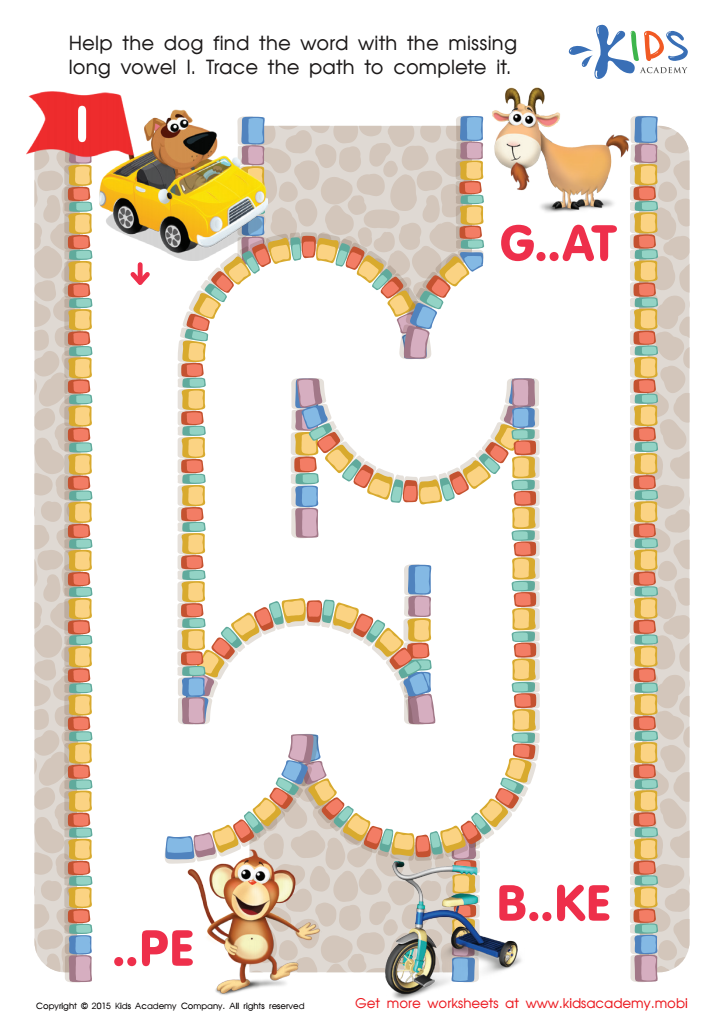
Long Vowel Sound I Worksheet
 Assign to My Students





Phonics skills, particularly regarding vowels, are crucial for children aged 4-6, as they form the foundation for reading and writing. Understanding vowels helps children decode words, which is essential for their literacy development. Vowels represent fundamental sounds in the English language, and recognizing them allows novice learners to read phonetically. Moreover, mastering vowel sounds aids in spelling and pronunciation, enhancing their overall language skills.
Parents and teachers should prioritize phonics instruction because it fosters confidence in young learners. As children gain familiarity with vowel sounds, they can tackle new words independently, encouraging a love for reading. Phonics also supports the development of critical cognitive skills, such as auditory discrimination and memory, which can benefit other areas of learning.
Additionally, ensuring children have a strong grasp of vowel sounds can help prevent reading difficulties later on. Early intervention in phonics can address potential challenges in literacy before they escalate. Overall, by emphasizing phonics skills, specifically vowels, parents and teachers are equipping children with essential tools for successful communication and lifelong learning. This early focus will not only pave the way for academic achievement but also inspire a lifelong love for reading and language exploration.







