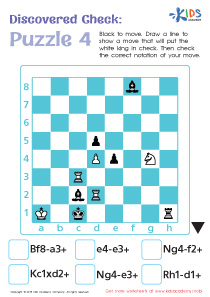
Decision making skills Chess Worksheets for Ages 4-6
3 filtered results
-
From - To
Welcome to our Decision Making Skills Chess Worksheets for Ages 4-6! Designed to introduce young learners to the strategic world of chess, these engaging worksheets help develop critical thinking and decision-making abilities in a fun and interactive way. Each activity is age-appropriate, featuring colorful visuals and simple instructions that encourage kids to analyze situations, weigh options, and make informed choices. Perfect for both classroom and homeschool settings, our worksheets not only enhance cognitive skills but also foster a love for the game of chess. Start building strategic thinking skills early with our delightful resources designed for future chess masters!
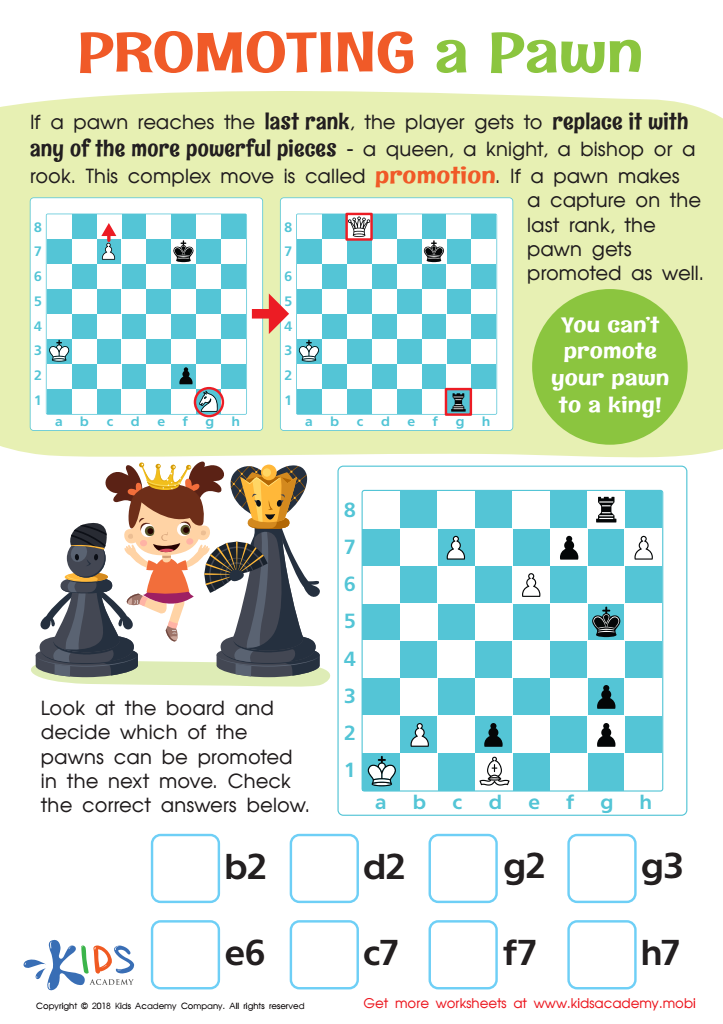
Promoting a Pawn Worksheet
 Assign to My Students
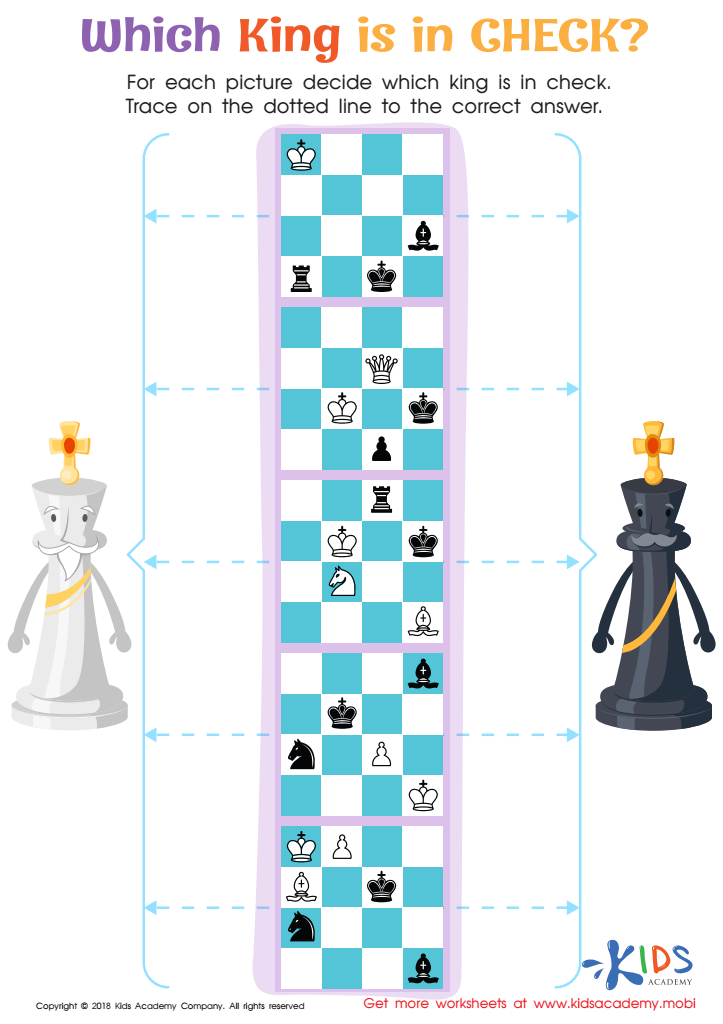
Which King is in Check? Worksheet
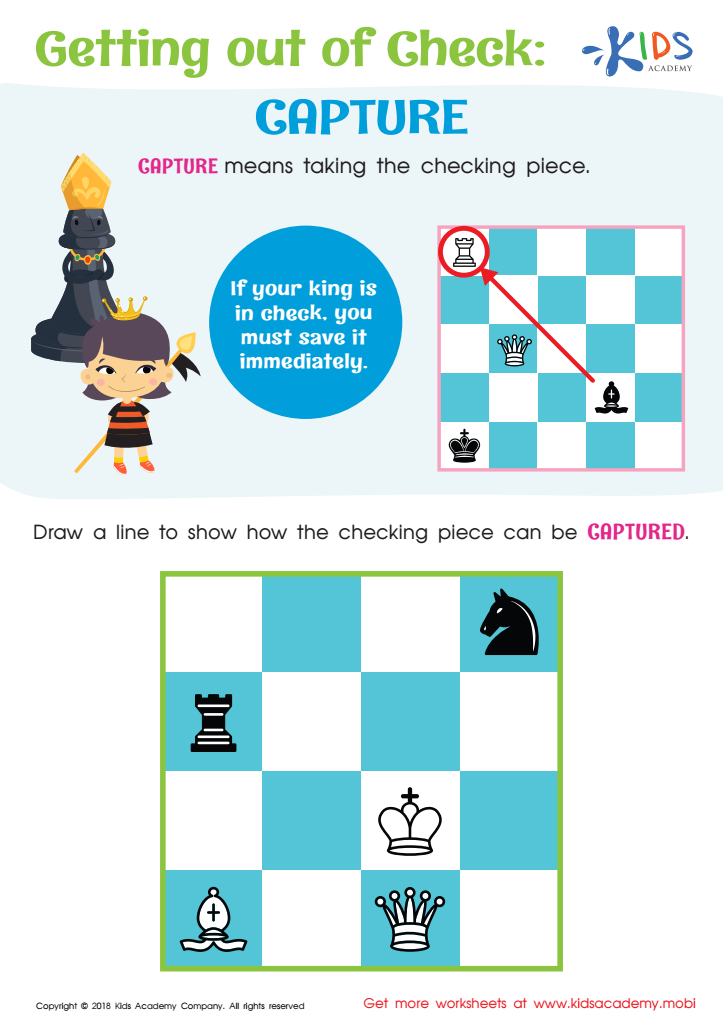
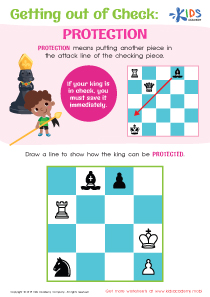
Getting out of Check: Capture





Parents and teachers should prioritize decision-making skills developed through chess, especially for children aged 4-6, for several compelling reasons. First, chess is a strategic game that encourages critical thinking. As children navigate through various scenarios on the chessboard, they learn to analyze situations, consider multiple options, and foresee potential outcomes. This foundation is crucial for their development, as proficient decision-making becomes essential both in academic settings and everyday life.
Additionally, chess enhances patience and concentration, qualities that may not come easily to young children. Each move requires them to think ahead and weigh their choices carefully, fostering a mindset geared toward thoughtful decision-making rather than impulsive reactions.
Moreover, incorporating chess into early education encourages social skills such as sportsmanship and cooperation. Kids learn to respect their opponents and celebrate victories graciously or accept losses with dignity. These lessons in resilience and adaptability are vital components of making informed decisions.
Finally, mastering decision-making through a structured game like chess stimulates cognitive development, laying a strong foundation for later academic success. By engaging children in chess, parents and teachers provide a fun and meaningful way to cultivate essential life skills that will benefit them throughout their lives.