Strategic thinking Chess Worksheets for Ages 4-6
3 filtered results
-
From - To
Enhance your child’s critical skills with our "Strategic Thinking Chess Worksheets for Ages 4-6." Tailored to spark curiosity and cognitive growth, these engaging worksheets introduce young learners to the exciting world of chess. Through playful activities, kids will develop strategic thinking, problem-solving, and decision-making abilities. Designed for beginners, our comprehensive sheet collection simplifies chess concepts, guiding kids step-by-step in mastering fundamental strategies. Perfect for at-home learning or classroom use, these worksheets make it fun and easy for children to develop important early learning skills while enjoying the timeless game of chess. Set them on the path to success today!
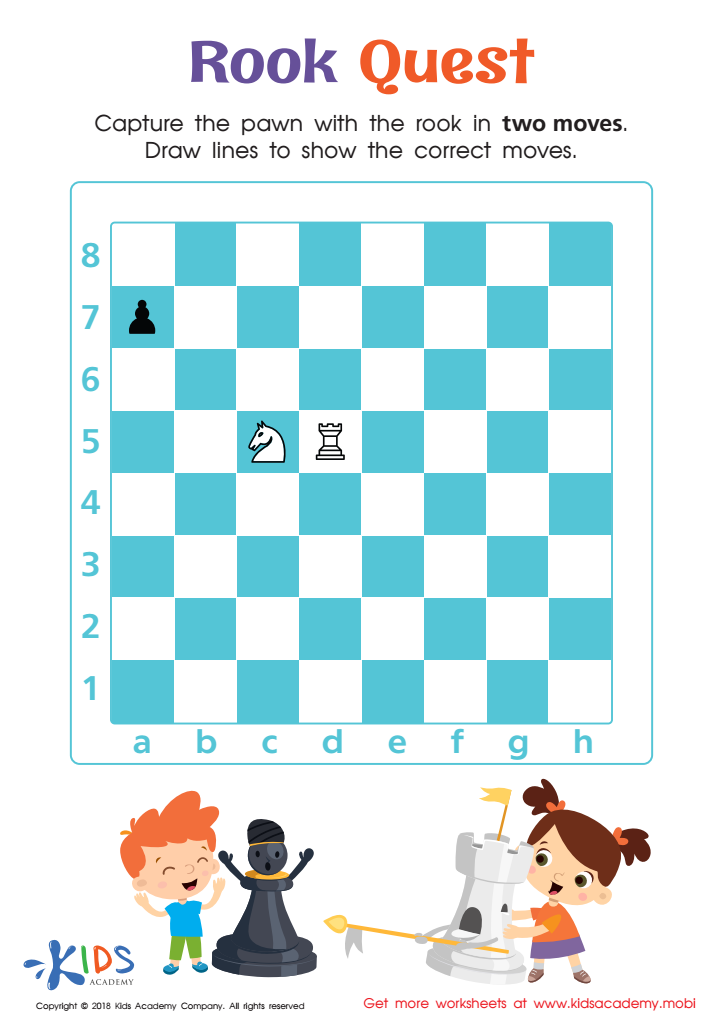
Rook Quest Worksheet
 Assign to My Students
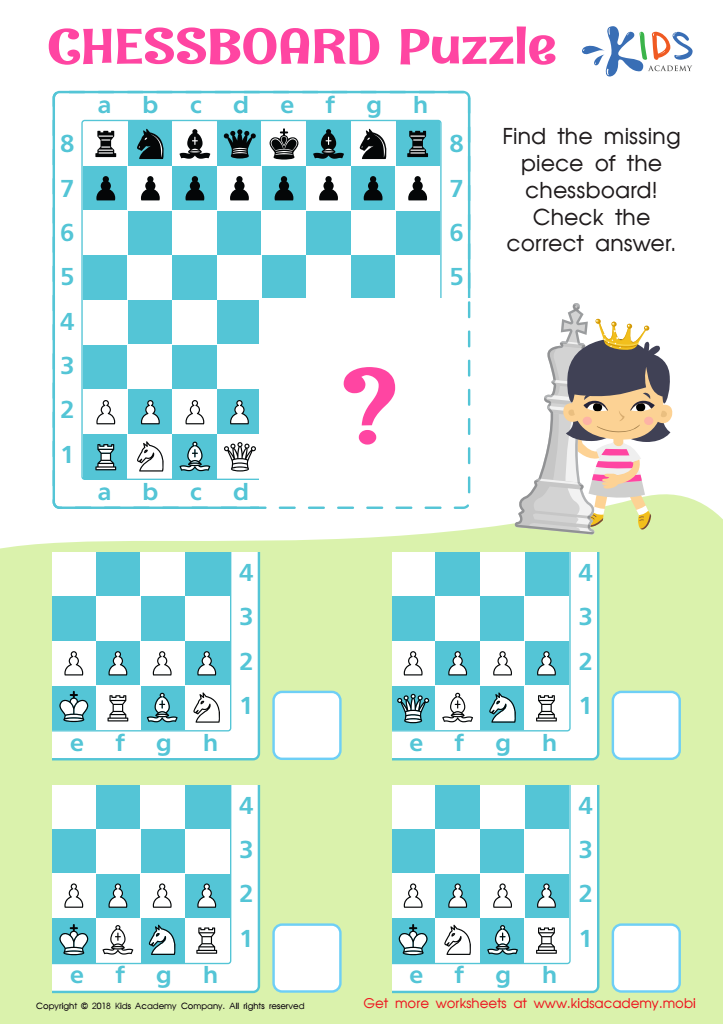
Chessboard Puzzle Worksheet
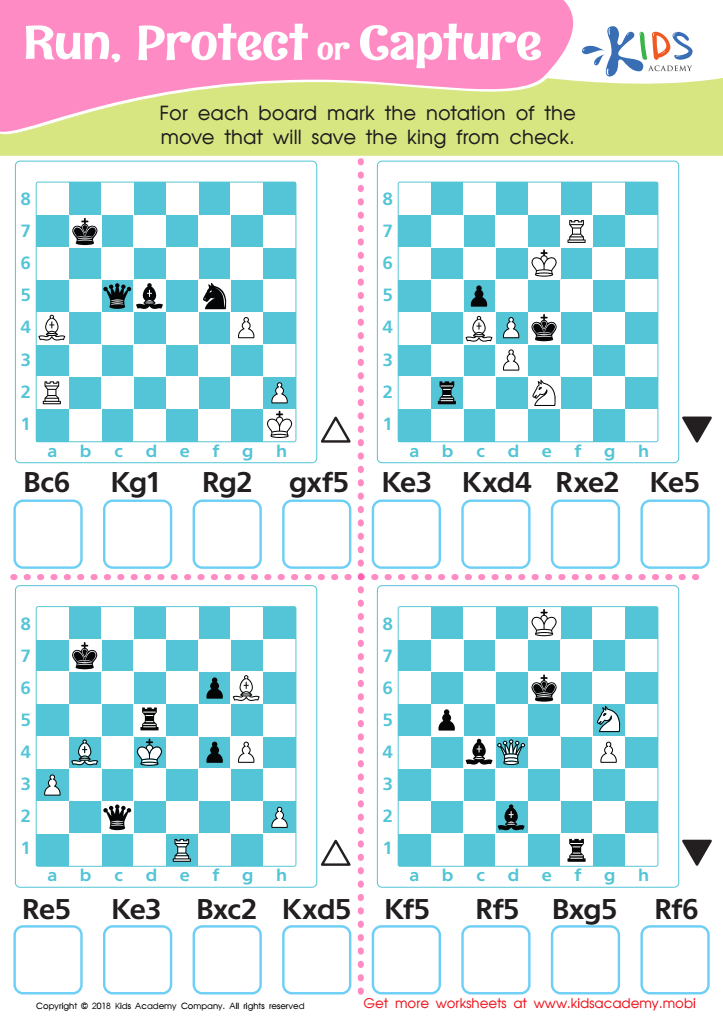
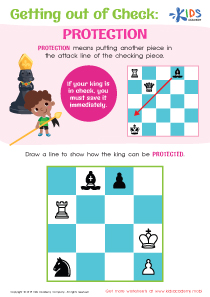
Run, Protect or Capture Worksheet








Introducing chess to children aged 4-6 offers profound benefits that can influence their cognitive and social development positively. Chess is a strategic game that encourages critical thinking, planning, and problem-solving skills. For young children, being exposed to these kinds of mental exercises early can set the foundation for advanced cognitive abilities as they grow. Specifically, chess can help improve memory, concentration, and logical thinking.
Parents and teachers should care about chess for young children because these foundational years are critical for brain development. Engaging in strategic thinking through a fun and interactive game helps kids develop patience and the ability to think ahead. Chess also teaches important social skills such as taking turns, handling winning or losing gracefully, and respecting others' abilities and strategies. These are crucial qualities that extend beyond the game and positively affect broader social interactions and academic pursuits.
Moreover, introducing chess in a playful and age-appropriate manner can spark a lifelong love for analytical thinking and learning. Teachers can use chess to complement lessons, making abstract concepts more tangible and understandable. Overall, incorporating chess into a child's early development framework can foster a well-rounded intellectual and social development, providing a valuable head start in a variety of life skills.