Fine motor skills development English for Beginners Worksheets for Ages 4-6
4 filtered results
-
From - To
Introduce your child to the world of learning with our "Fine Motor Skills Development English for Beginners Worksheets" tailored for ages 4-6. These engaging and educational resources are designed to strengthen fine motor skills while teaching basic English concepts. Our printable worksheets offer a variety of activities, including tracing, cutting, and coloring, to help young learners enhance their hand-eye coordination and precision. Perfect for early learners, these worksheets seamlessly integrate fun and learning, laying a solid foundation for academic success. Unlock your child's potential with our expertly crafted materials from Kids Academy!
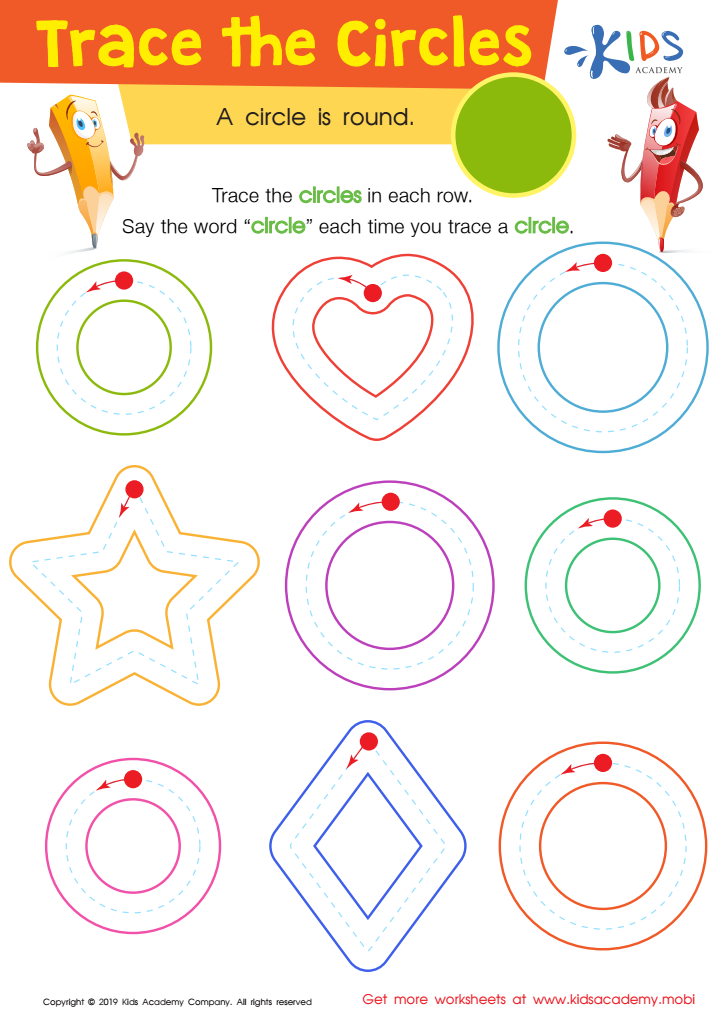
Trace The Circles Worksheet
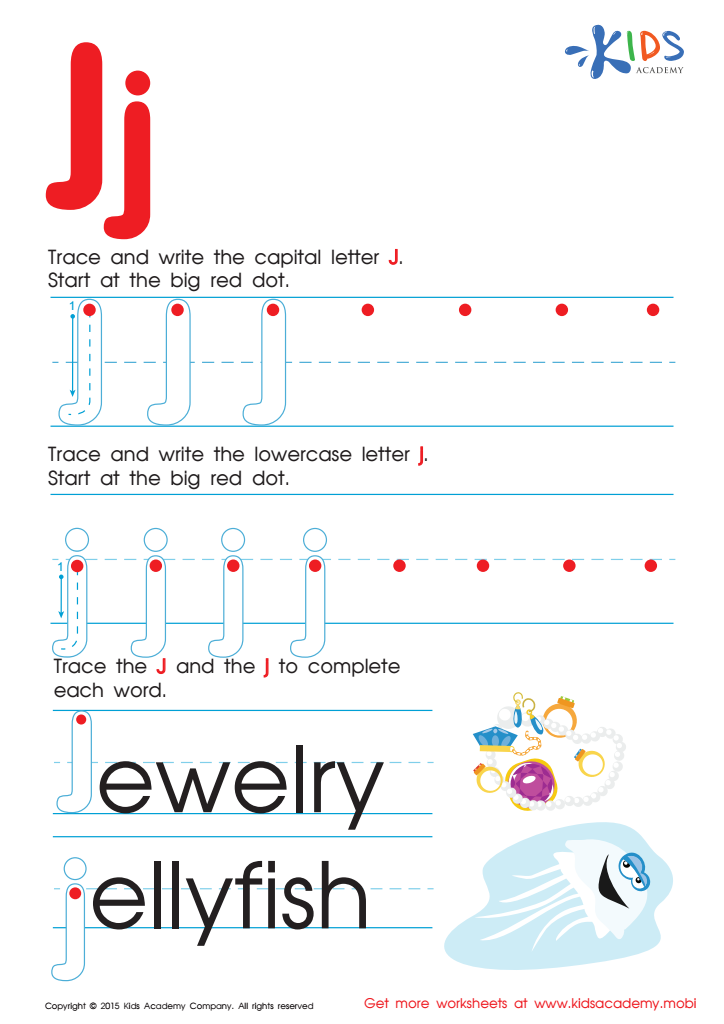
Letter J Tracing Page
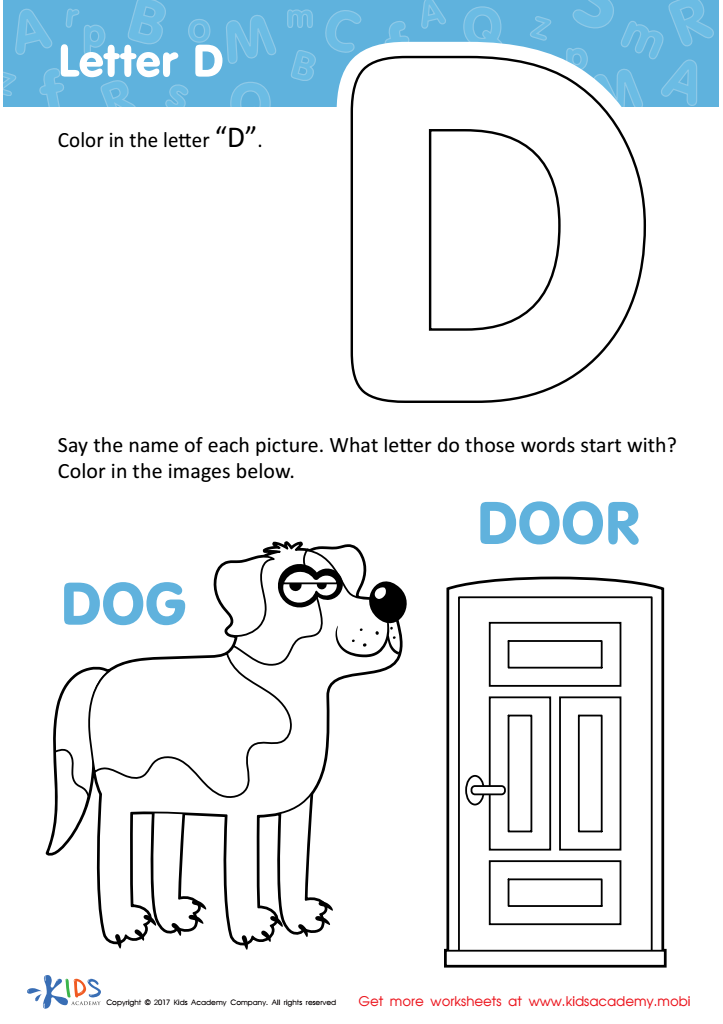
Letter D Coloring Sheet
 Assign to My Students
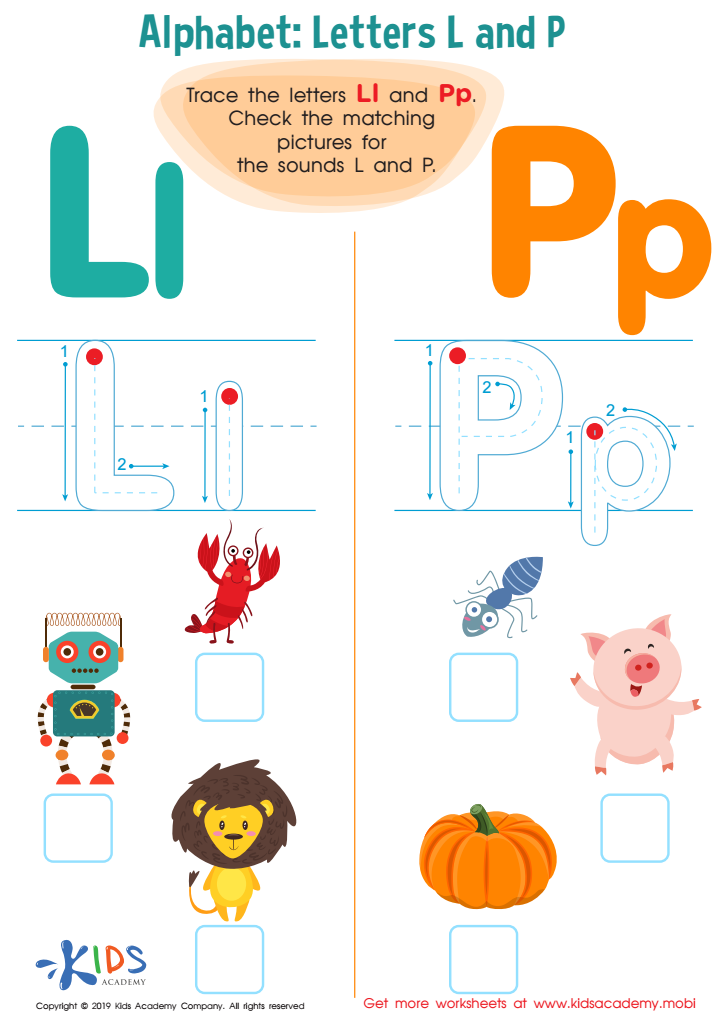
Letter L and P Tracing Worksheet




Fine motor skills—tasks that involve the small muscles of the hands and fingers—are essential for young children's overall development, particularly for ages 4-6. During this critical period, children learn foundational skills that they will use throughout their lives. Parents and teachers should care about fostering fine motor skills because these abilities are closely linked to other areas of development, including cognitive and academic progress.
Firstly, proficiency in fine motor skills is crucial for young children to manage daily activities independently, such as dressing, eating, and personal hygiene. These skills bolster a child's self-esteem and confidence as they successfully perform tasks on their own.
Secondly, fine motor skill development directly impacts a child’s ability to succeed in educational settings. Activities such as writing, drawing, cutting, and manipulating small objects require well-developed hand-eye coordination and fine motor control. For instance, children with well-developed fine motor skills are better prepared to hold pencils correctly, form letters, and ultimately learn to read and spell, laying a foundation for future academic success.
Finally, motor skills development encourages critical problem-solving and cognitive functions. As children engage in fine motor activities, they learn to plan, execute, and adjust their actions, which enhances their thinking and adaptability.
By prioritizing fine motor skills development, parents and teachers provide children with tools for independence, academic success, and cognitive growth, setting the stage for lifelong learning and achievement.