Letter tracing skills English for Beginners Worksheets for Ages 4-6
3 filtered results
-
From - To
Welcome to our "Letter Tracing Skills English for Beginners Worksheets" designed specifically for ages 4-6! These engaging and interactive worksheets are perfect for young learners embarking on their English language journey. Through fun activities, children will practice tracing letters, which enhances their fine motor skills and letter recognition. Each worksheet is carefully crafted to maintain students' interest while developing foundational writing skills. Ideal for home or classroom use, our resources support ESL learning and build confidence in young learners. Start fostering your child's language abilities today with our delightful and educational letter tracing worksheets!
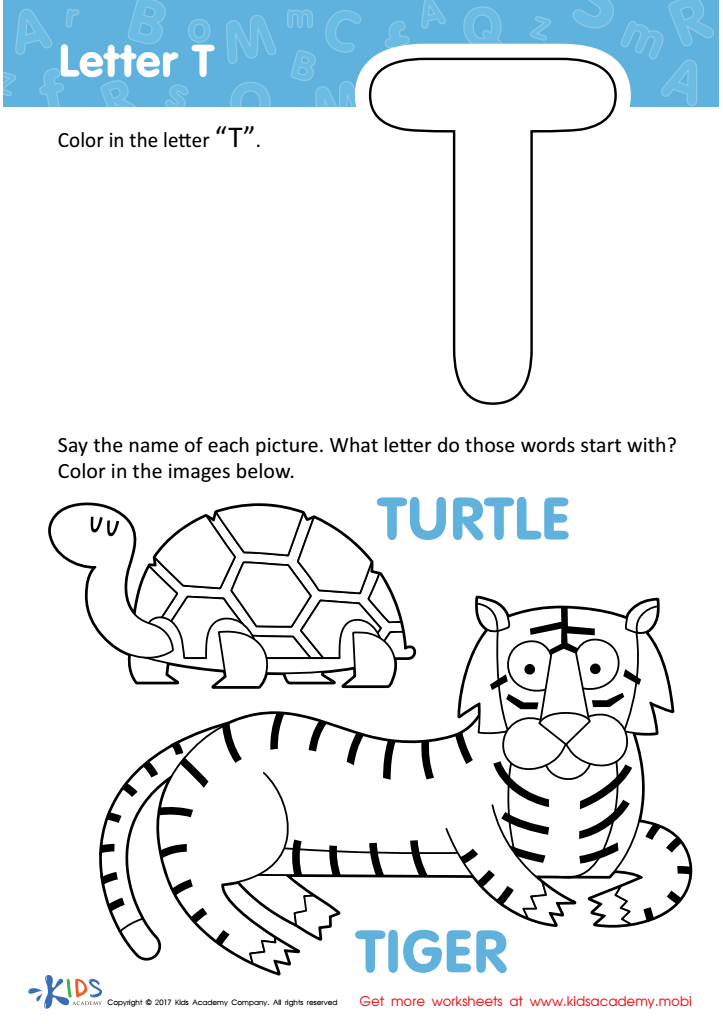
Letter T Coloring Sheet
 Assign to My Students

Letter C Tracing Page
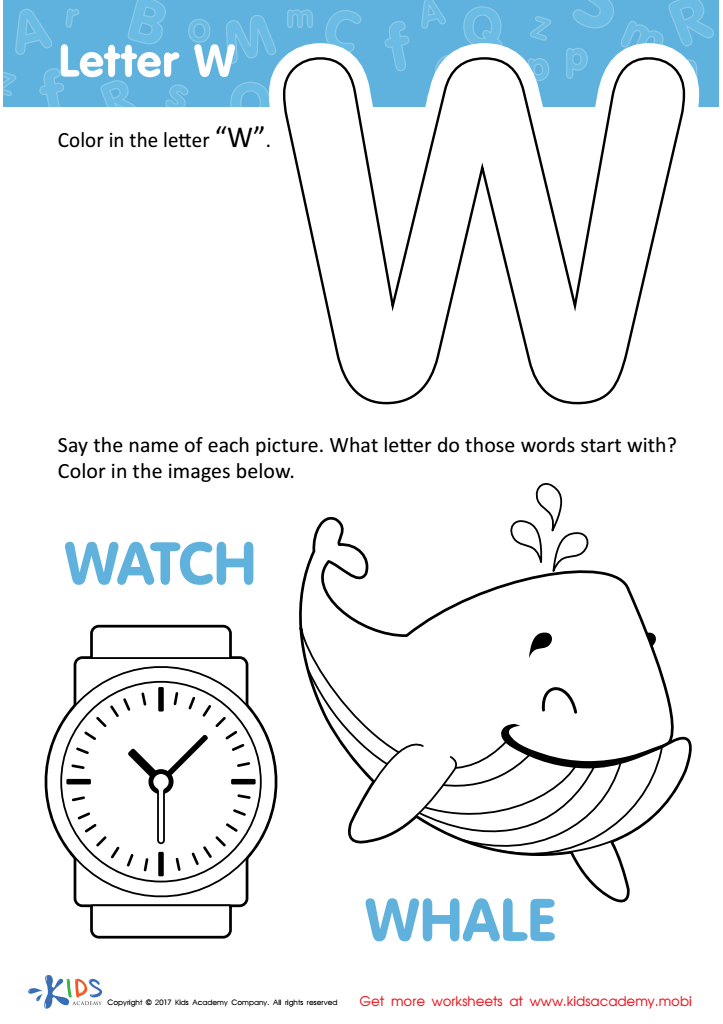
Letter W Coloring Sheet
Assign to My Students




Letter tracing skills play a crucial role in the early development of reading and writing abilities for children ages 4-6. Parents and teachers should be particularly attentive to these skills because they lay the foundation for literacy. Tracing letters helps young learners develop fine motor skills, which are essential for holding a pencil and controlling hand movements. As they practice tracing, they become more familiar with the shapes and sounds of letters, fostering their phonemic awareness.
Moreover, learning to trace and recognize letters boosts children's confidence as they see their progress. This early mastery builds a sense of achievement, encouraging a positive attitude toward learning. Additionally, letter tracing can enhance their ability to recall letters quickly, facilitating reading and writing down the line.
Also, this activity can be fun and engaging when turned into games or included in arts and crafts, making learning enjoyable. Involving parents in tracing activities at home strengthens the parent-child bond and creates an enriching environment for literacy development. In a world where literacy is crucial for success, nurturing these skills early on is an investment in a child's future. Overall, supporting letter tracing skills is significant for overall cognitive and social-emotional growth.