Addition and subtraction Worksheets for Ages 4-6
4 filtered results
-
From - To
Welcome to our Addition and Subtraction Worksheets for Ages 4-6! These engaging worksheets are designed to help young learners develop essential math skills in a fun and interactive way. Tailored for preschool and kindergarten students, our activities promote early numeracy through colorful illustrations and playful exercises. Children will practice counting, basic addition, and subtraction in bite-sized lessons that capture their attention. With varying levels of difficulty, our worksheets cater to different learning paces, ensuring every child gains confidence in their mathematical abilities. Download and print these resources today to support your child's early learning journey in a vibrant, supportive environment!
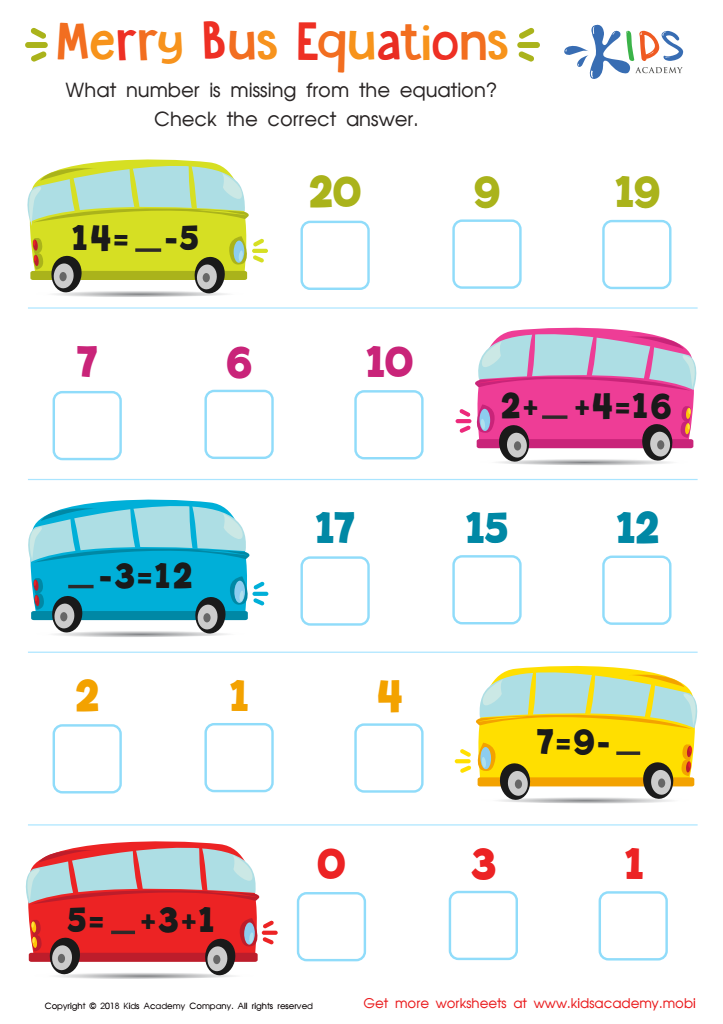
Merry Bus Equations Worksheet
 Assign to My Students
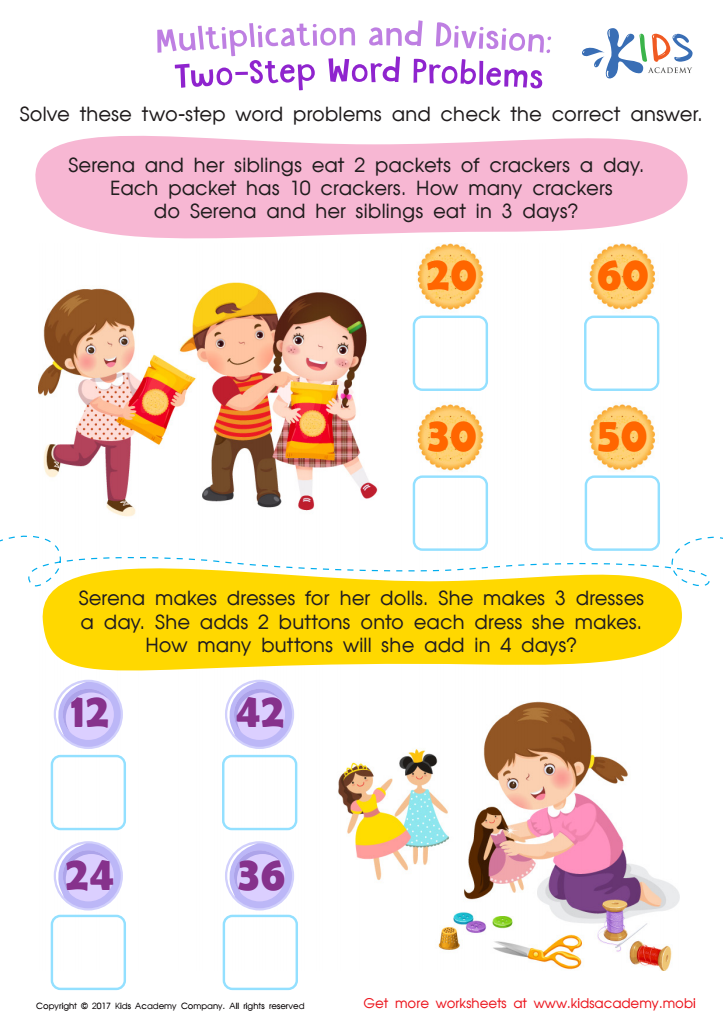
Two Step Word Problems Worksheet
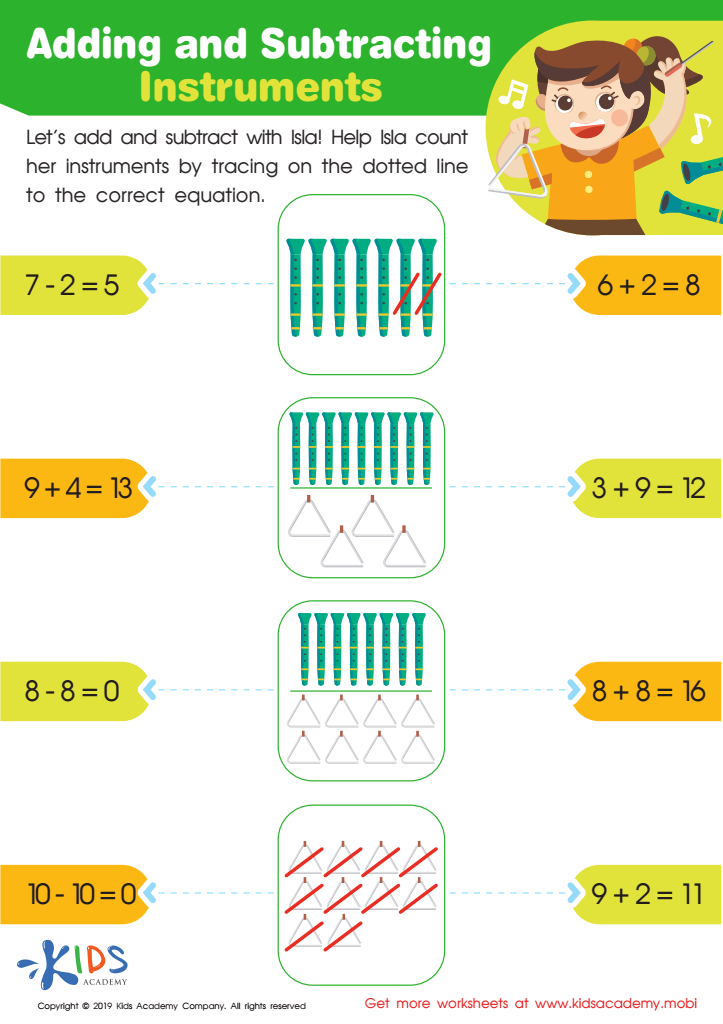
Adding and Subtracting: Instruments Worksheet
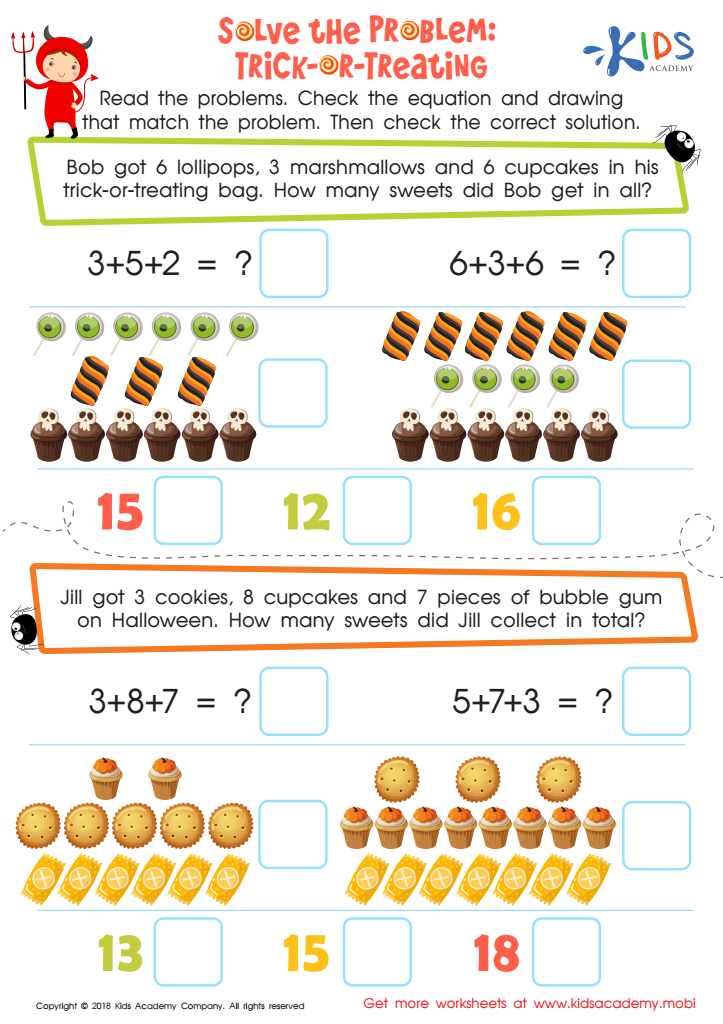
Solve the Problem: Trick–or–treating Worksheet








Understanding addition and subtraction is crucial for children aged 4-6, forming the foundation for their mathematical skills and overall cognitive development. At this age, children are naturally curious and eager to explore concepts, making it an ideal time to introduce these basic math operations. Mastery of addition and subtraction fosters critical thinking and problem-solving abilities, as they begin to understand relationships between numbers.
Moreover, these skills are not only vital for math classes but also for daily life. They help children make sense of everyday situations, such as sharing items, counting objects, or understanding simple financial transactions, reinforcing their sense of autonomy and competence. Engaging children in fun and interactive activities related to addition and subtraction can enhance their excitement for learning while solidifying their understanding.
Additionally, developing a strong foundation in these skills encourages confidence in future math challenges. It promotes a positive attitude towards mathematics, reducing anxiety around the subject later on. By focusing on addition and subtraction, parents and teachers play a pivotal role in supporting children through their early academic journey, setting them up for success in higher-level math and instilling lifelong learning habits. Thus, prioritizing these foundational skills is essential for holistic development.








