
Basic math abilities Worksheets for Ages 4-6
3 filtered results
Difficulty Level
Grade
Age
-
From - To
Subject
Activity
Standards
Explore our "Basic Math Abilities Worksheets for Ages 4-6" designed to help young learners master essential math skills. These engaging and educational worksheets focus on fundamental concepts like counting, addition, subtraction, shapes, and patterns. With fun activities and colorful visuals, children can develop a strong mathematical foundation while enjoying the learning process. Perfect for both classroom and at-home learning, these printable worksheets are created to support early cognitive development and foster a love for math. Dive into our collection today and watch your child’s confidence and abilities in math grow exponentially!
Favorites
With answer key
Interactive
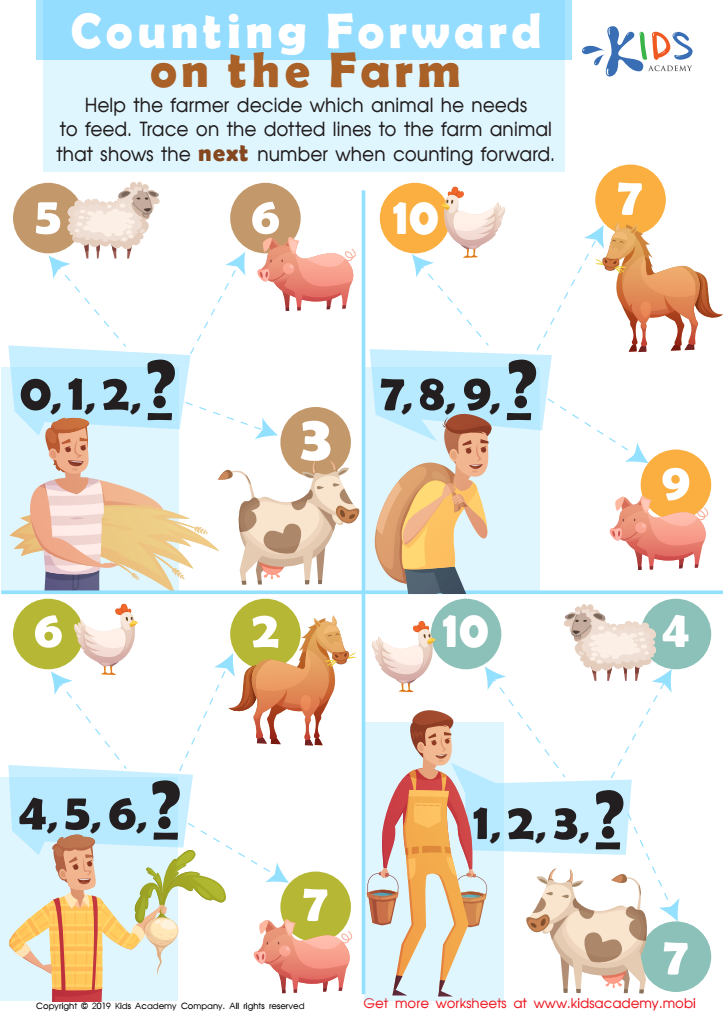
Counting Forward On the Farm Worksheet
Help your child practice counting with this fun worksheet. Have them help a farmer feed the right animal by counting on from a starting point. This activity will help them build number line thinking and refine fine motor skills.
 Assign to My Students
Counting Forward On the Farm Worksheet
Worksheet
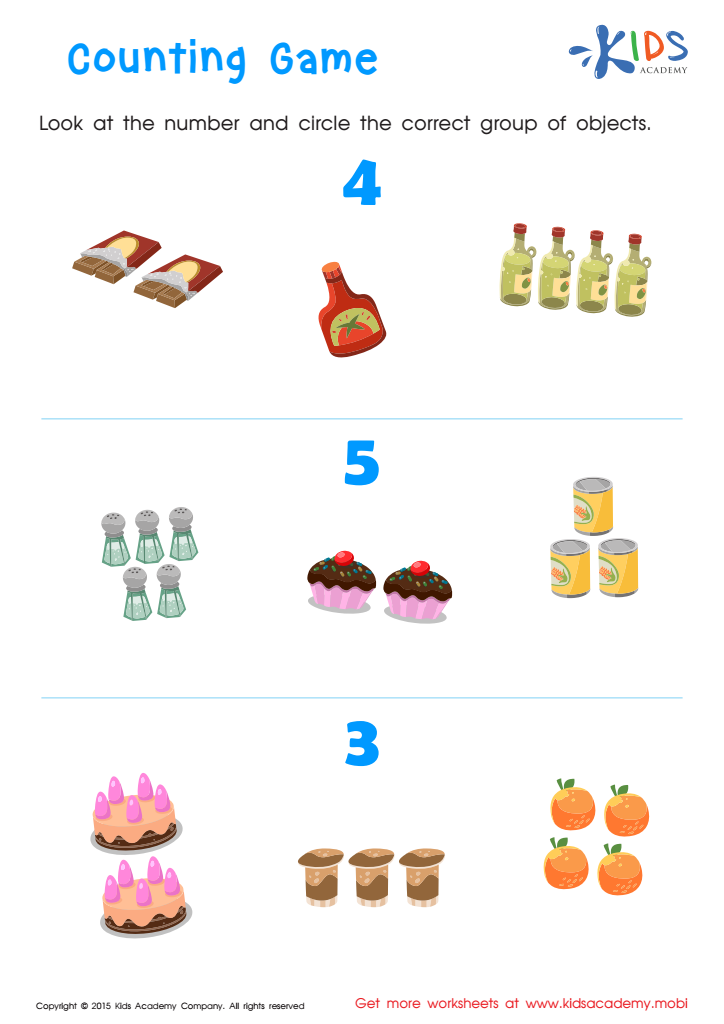
Counting Worksheet
Kids can connect printed numbers to groups of objects on this worksheet, helping them learn math by visually seeing item groups. Give your preschooler a fun, interactive way to learn counting!
Counting Worksheet
Worksheet
Join Kids Academy for Free
Who is primarily going to use this learning content?







Basic math abilities for ages 4-6 are crucial for several reasons, and parents or teachers should care deeply about fostering these skills. First, early math competence serves as a foundation for future academic success. Simple skills like counting, recognizing numbers, and understanding concepts such as more or less prepare children for more advanced math topics. Additionally, these abilities are closely linked to problem-solving skills and logical reasoning, important not just in math but across various subjects.
Math skills also heavily contribute to a child’s confidence and independence. When young children can solve basic problems and understand numerical concepts, they gain a sense of accomplishment and self-esteem. This confidence can lead to a positive attitude toward learning in general, creating a solid educational base.
Moreover, early math skills often predict later achievement, not only in mathematics but in literacy and general knowledge. Activities like sorting, patterning, and measuring develop children’s cognitive and fine motor skills, essential for comprehensive brain development.
Finally, basic math is integrally linked with daily life skills, such as telling time, handling money, and following recipes. Starting math education early prepares children to navigate the world more effectively. Given these reasons, it’s clear that parents and teachers have a crucial role in emphasizing basic math abilities in early childhood education.








