Comparing lengths Worksheets for Ages 4-6
9 filtered results
-
From - To
Welcome to our engaging "Comparing Lengths Worksheets" designed for children aged 4-6! These fun and interactive worksheets help young learners develop essential measurement skills while fostering their understanding of length comparison. Each worksheet features colorful visuals and simple activities that encourage kids to identify, compare, and order objects based on their lengths. By participating in these playful exercises, children will enhance their critical thinking abilities and strengthen their foundational math skills. Perfect for home or classroom use, our resources are tailored to make learning about lengths enjoyable and effective. Start exploring the world of measurement with us today!
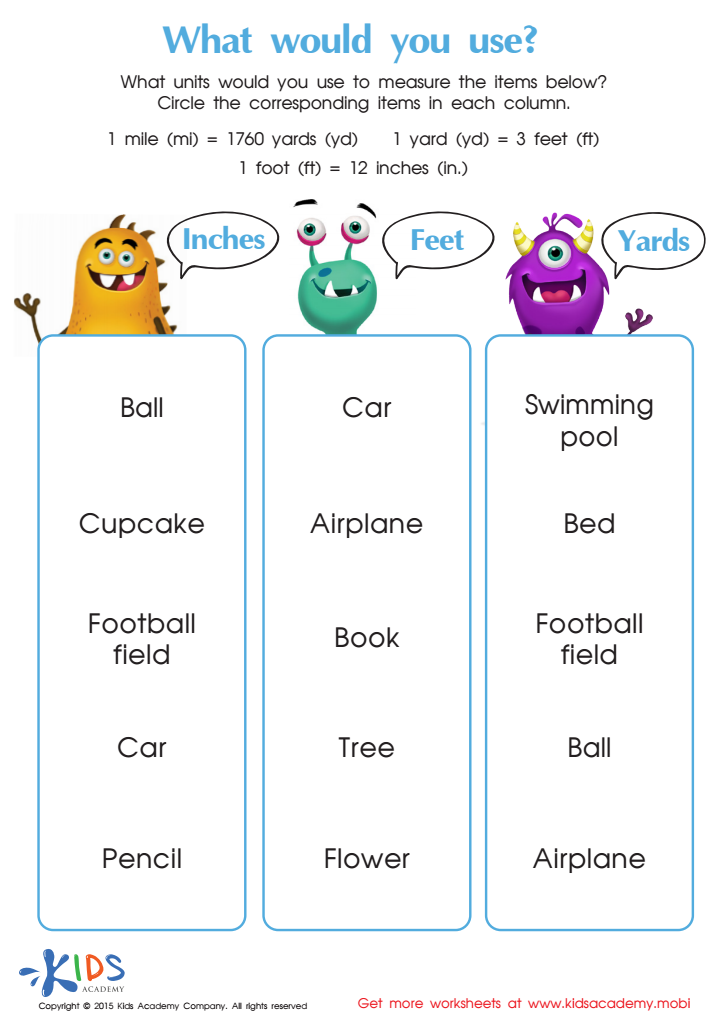
Learning about measuring objects in inches, feet and yards Worksheet
 Assign to My Students
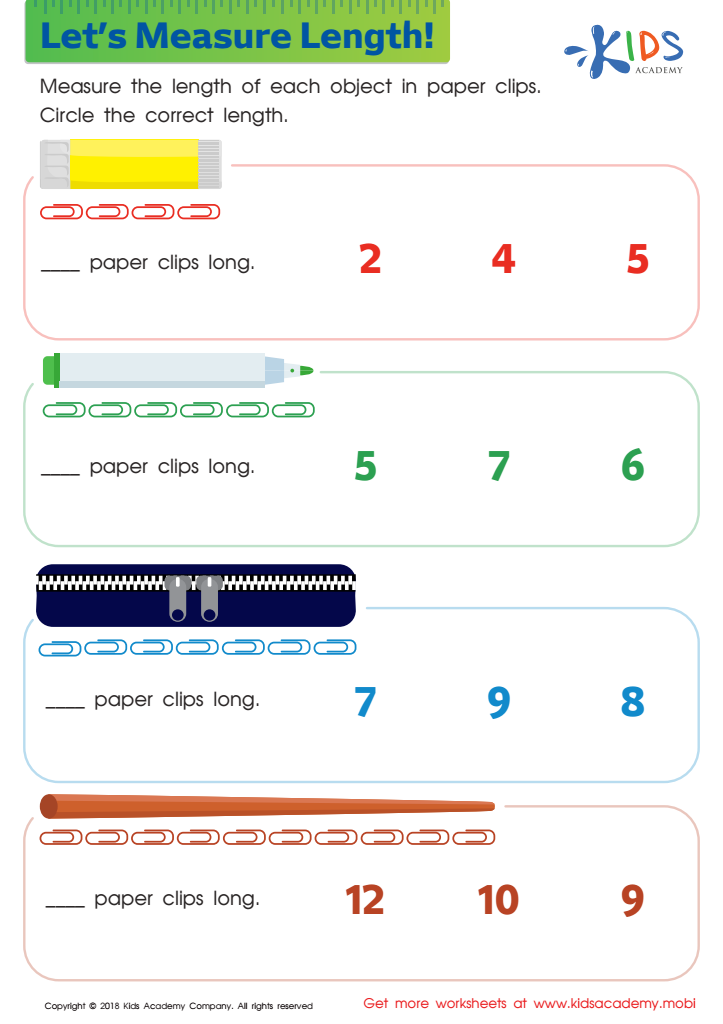
Lets Measure Length Worksheet
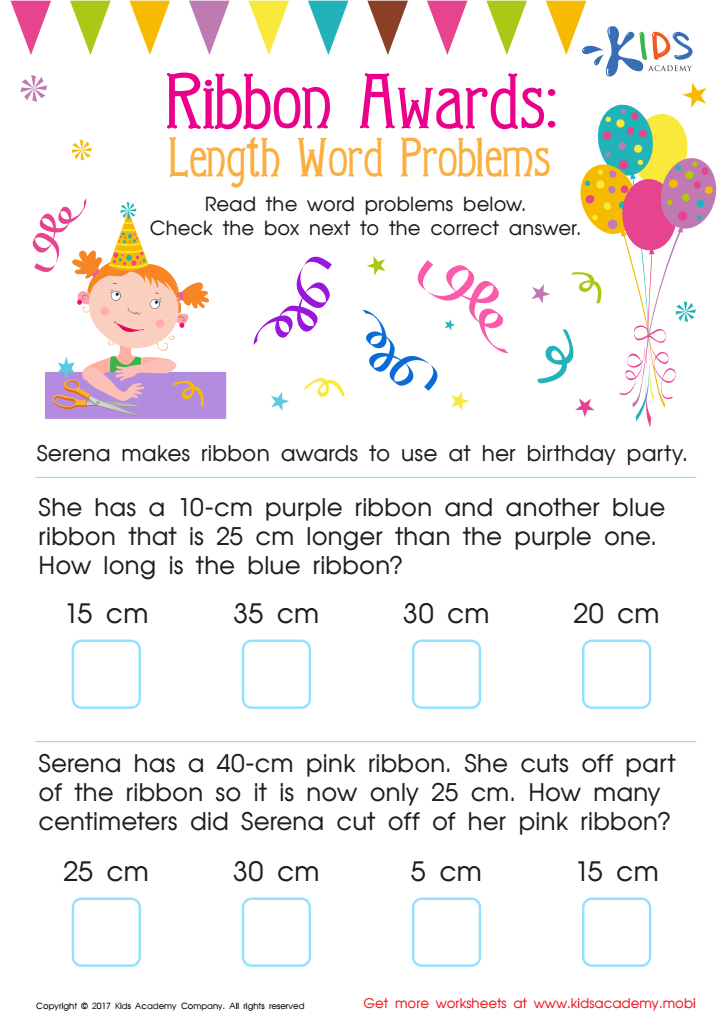
Length Word Problems Worksheet
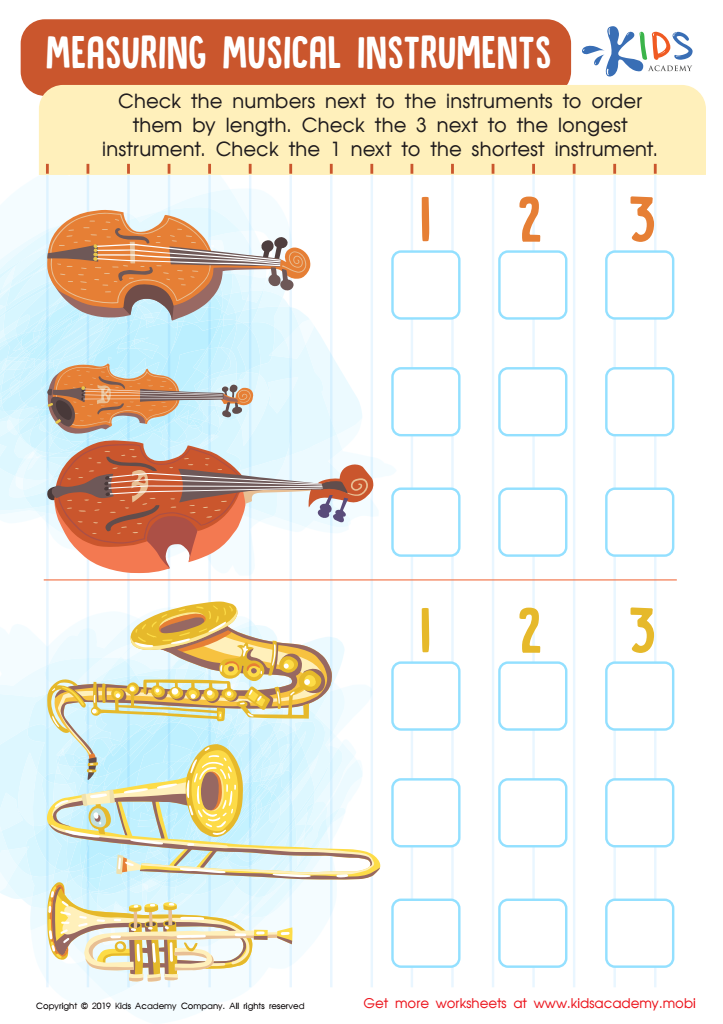
Measuring Musical Instruments Worksheet
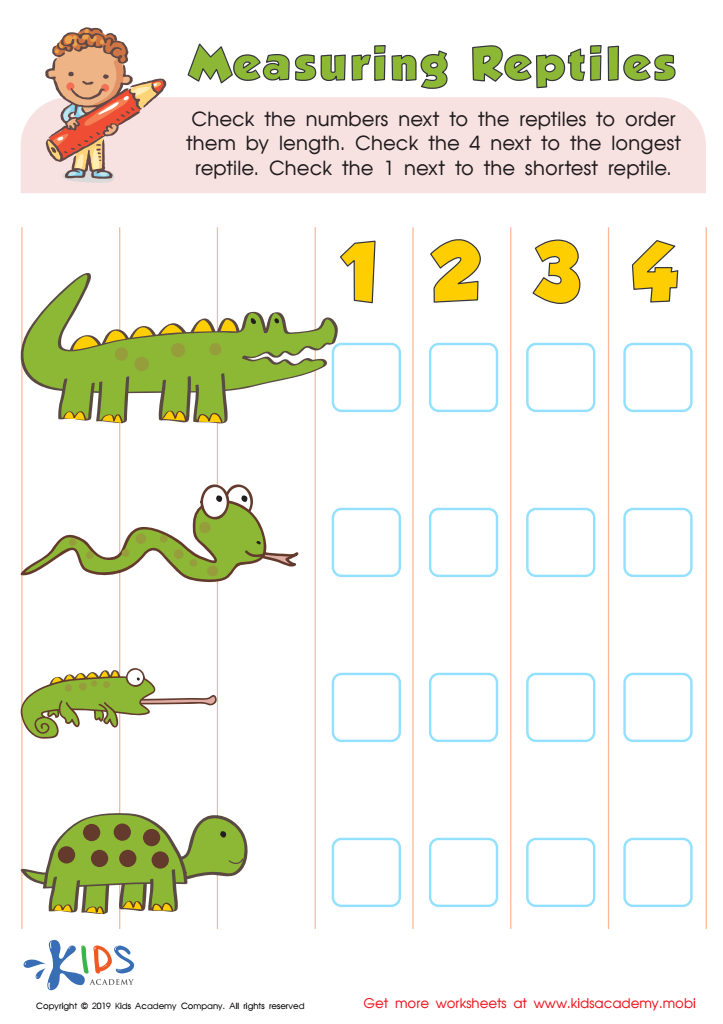
Measuring Reptiles Worksheet
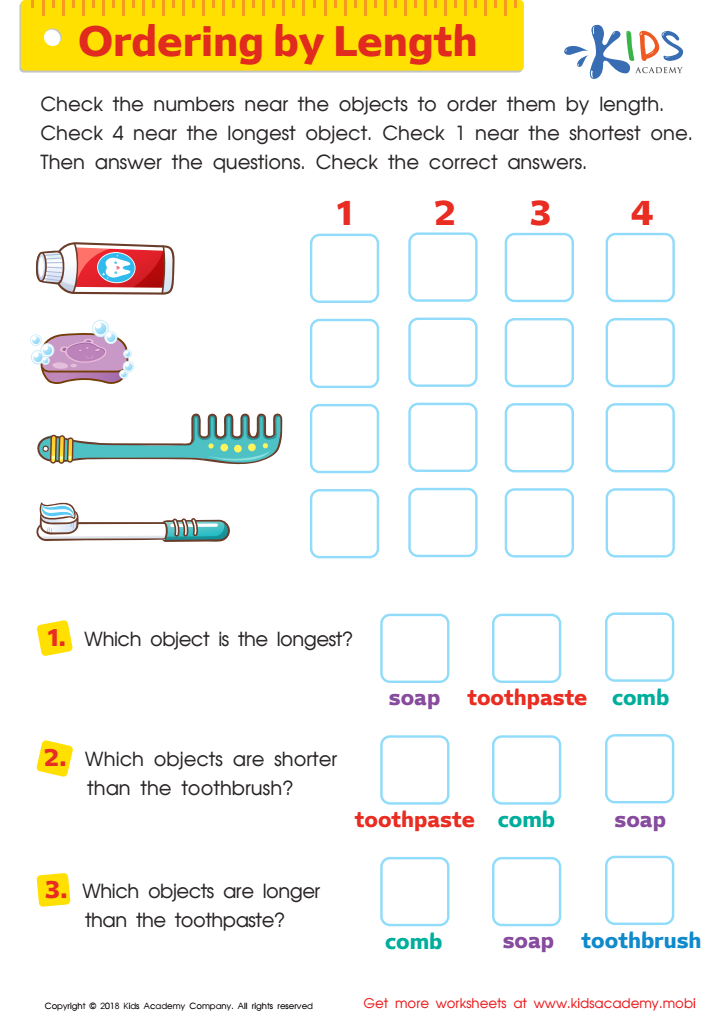
Ordering by Length Worksheet
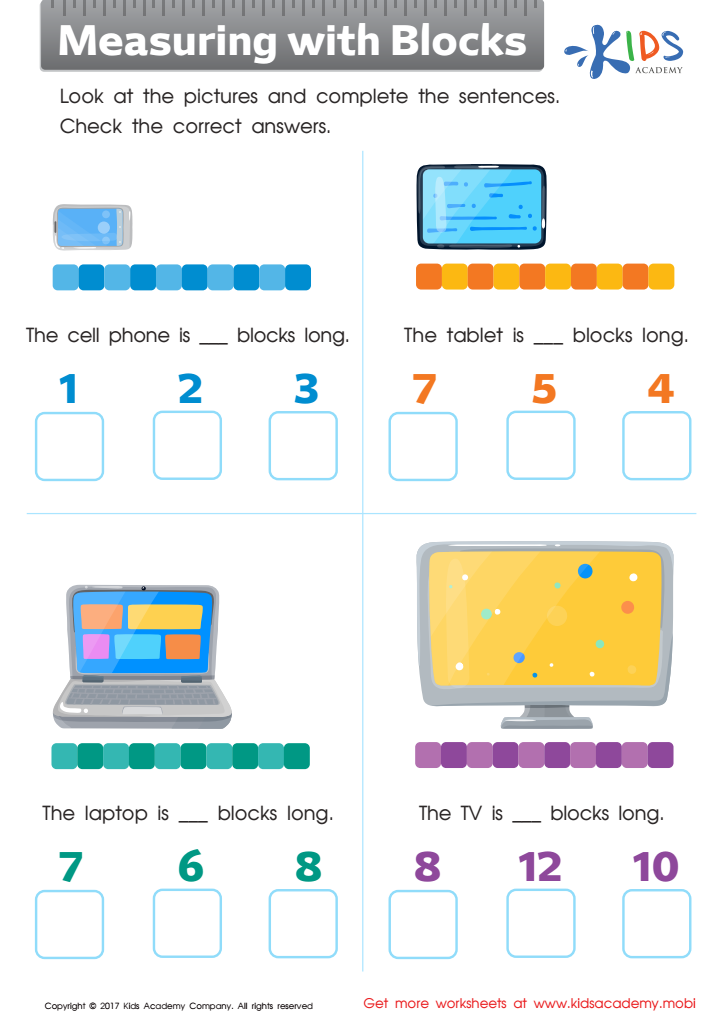
Measuring with Blocks Worksheet
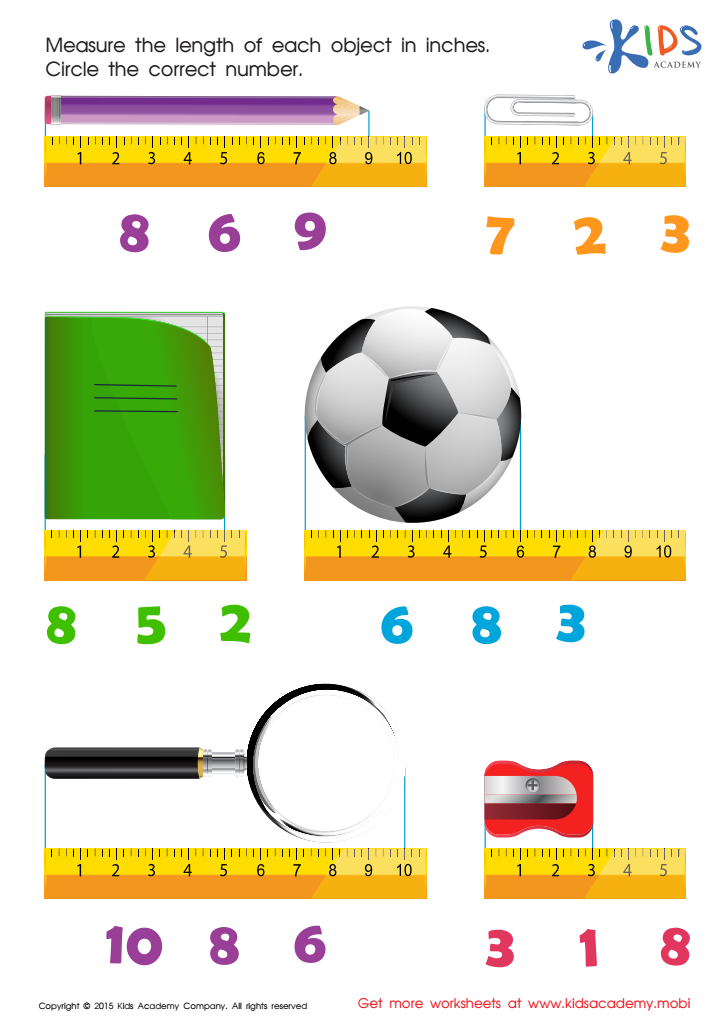
Learning measuring objects in inches Worksheet


.jpg)




Teaching young children about comparing lengths is crucial for their cognitive development and foundational math skills. At ages 4-6, children are naturally curious and eager to explore their surroundings, making it an ideal time to introduce concepts of measurement. Understanding lengths helps them develop critical thinking and problem-solving abilities as they learn to identify differences and similarities in size.
Engaging in activities that involve comparing lengths can also enhance fine motor skills and improve their hand-eye coordination. Use everyday objects—like toys, crayons, or even their own hands and feet—to measure and compare, making learning relatable and fun. This hands-on approach not only reinforces their understanding of length but also creates a strong basis for more complex mathematical concepts in later years.
Furthermore, comparing lengths provides opportunities to build vocabulary. Terms such as "longer," "shorter," "tall," and "wide" enrich their language skills. Finally, early measurement activities promote collaborative play, encouraging interaction among peers and adults, which fosters social skills and communication. Overall, incorporating length comparisons in early learning environments prepares children for future academic success and gives them the confidence to explore math in everyday life.








