Counting skills improvement Worksheets for Ages 4-6
3 filtered results
-
From - To
Enhance your child's counting abilities with our specialized Counting Skills Improvement Worksheets for ages 4-6! Our meticulously designed printables help foster early numeracy through engaging activities, making learning fun and effective. Featuring colorful illustrations and diverse exercises, these worksheets cover counting objects, number recognition, and sequencing. Each activity is crafted to build confidence and pave the way for smoother academic progression. Suitable for young learners at various skill levels, they are perfect for both classroom and home use. Download now and help your child master essential counting skills effortlessly!
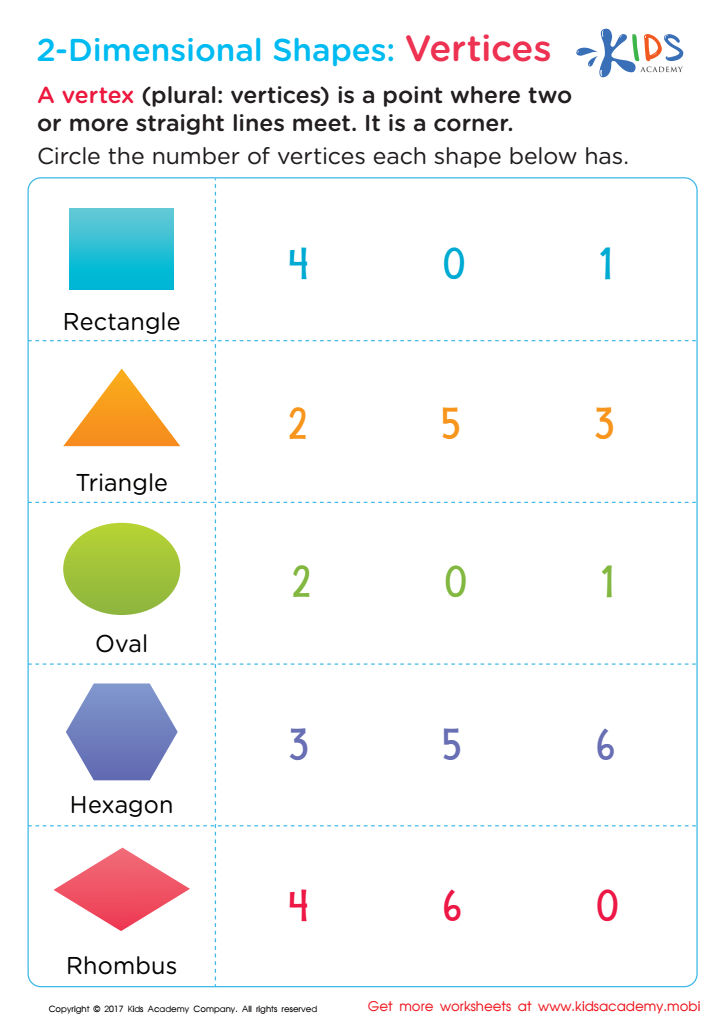
Two–Dimensional Shapes: Vertices Printable
 Assign to My Students
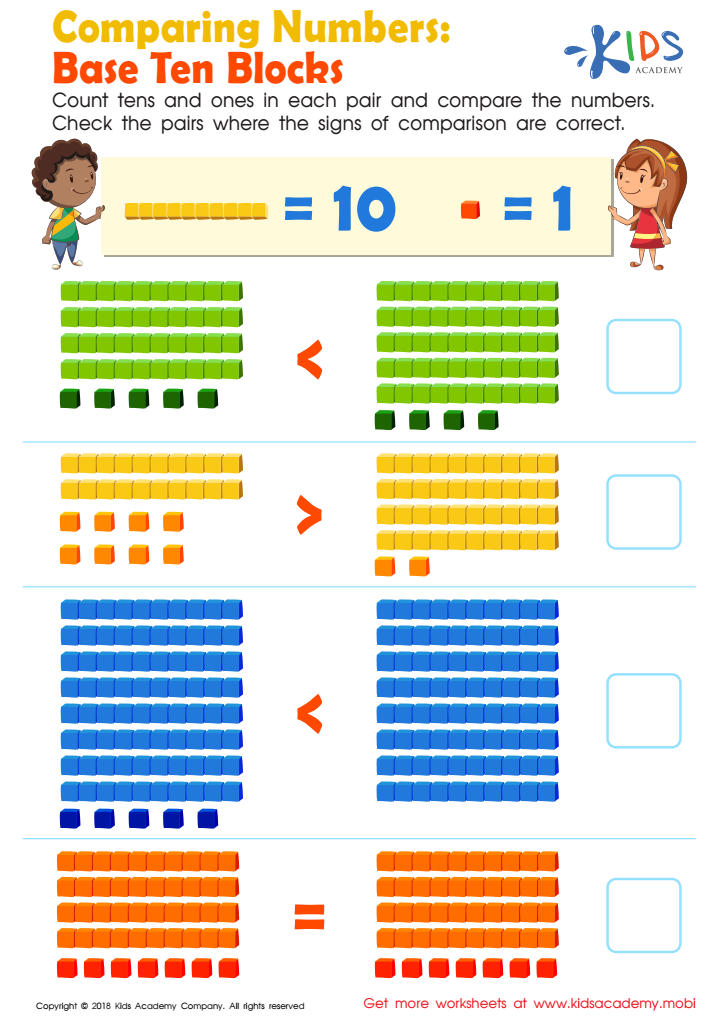
Comparing Numbers: Base Ten Blocks Worksheet
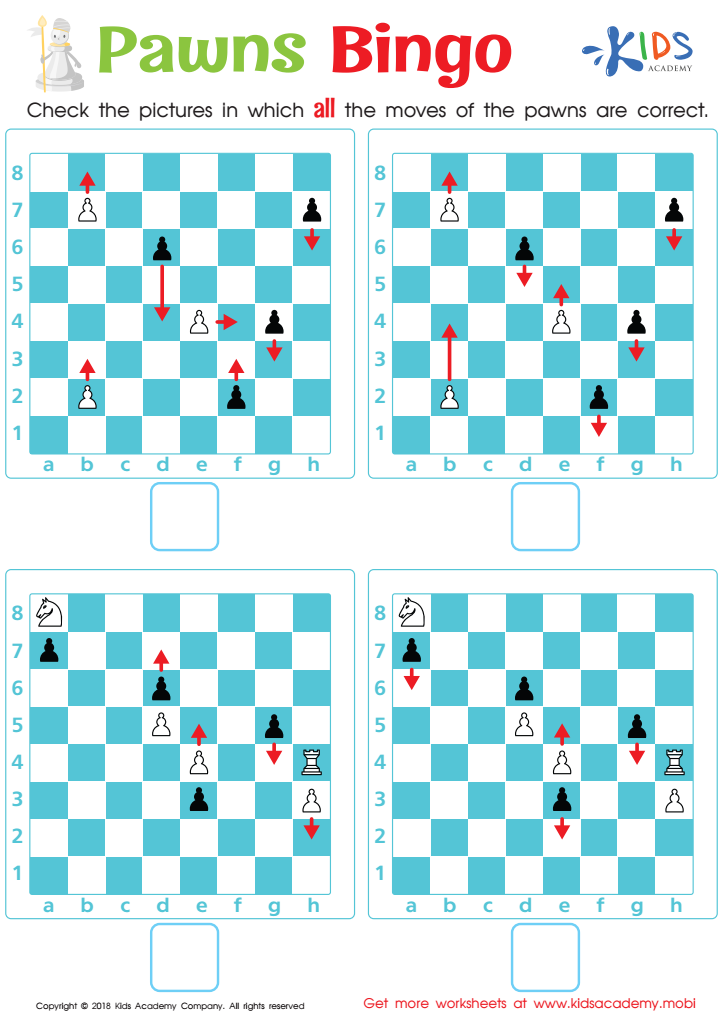
Pawns Bingo Worksheet








Counting skills are foundational to a child's mathematical development and play a crucial role in their overall cognitive growth. For children aged 4-6, enhancing counting skills goes beyond merely learning numbers; it boosts critical thinking, problem-solving abilities, and early numeracy—skills that are fundamental in everyday life.
Parents and teachers need to pay attention to counting skills because they serve as the building blocks for more complex mathematical concepts such as addition, subtraction, and place value. Mastering these skills at an early age fosters a positive attitude towards math, reducing future math anxiety. When children counting objects, they develop one-to-one correspondence and an understanding of quantity, reinforcing their ability to think logically and systematically.
Furthermore, counting helps young learners develop fine motor skills when using physical objects to count, which in turn refines their coordination and attention to detail. It also enhances their verbal abilities and memory by encouraging the practice of number sequences and patterns.
Moreover, early success in counting boosts a child's confidence and encourages a curious attitude toward learning new things. Therefore, by focusing on improving counting skills, parents and teachers not only aid in children’s academic achievement but also contribute greatly to their overall cognitive, emotional, and social readiness for future educational endeavors.








