Developing critical thinking Worksheets for Ages 4-6
5 filtered results
-
From - To
Enhance your child’s cognitive skills with our "Developing Critical Thinking Worksheets for Ages 4-6." Designed specifically for young learners, these engaging worksheets encourage creativity and problem-solving through age-appropriate activities. Each worksheet focuses on critical thinking concepts, helping children learn to analyze, evaluate, and make thoughtful decisions. Activities are fun and interactive, making learning enjoyable while laying the foundation for logical reasoning and analysis. Use our worksheets to foster your child’s curiosity and confidence, preparing them for future academic success. Browse our collection today and support your little one's journey in developing essential critical thinking skills!
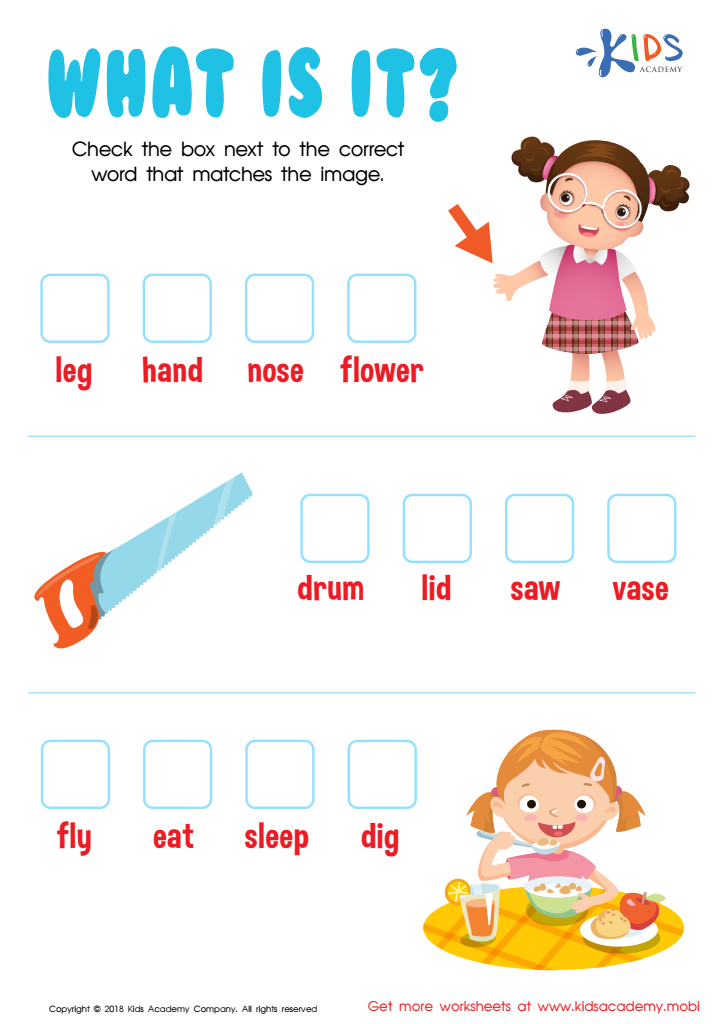
What Is It? Worksheet
 Assign to My Students
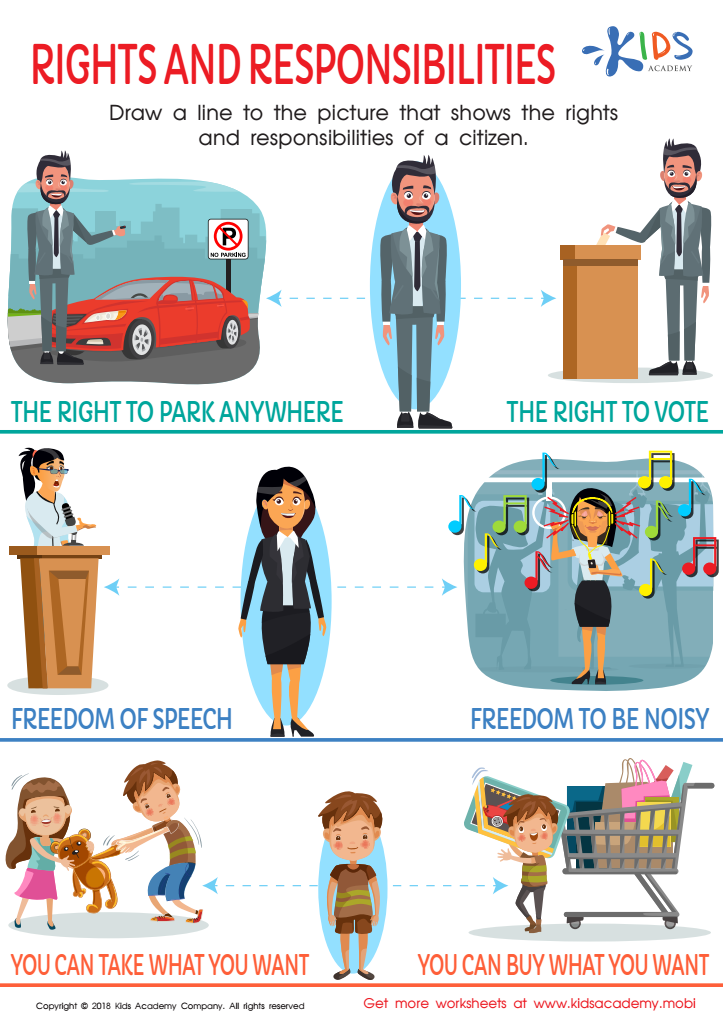
Rights and Responsibilities Worksheet
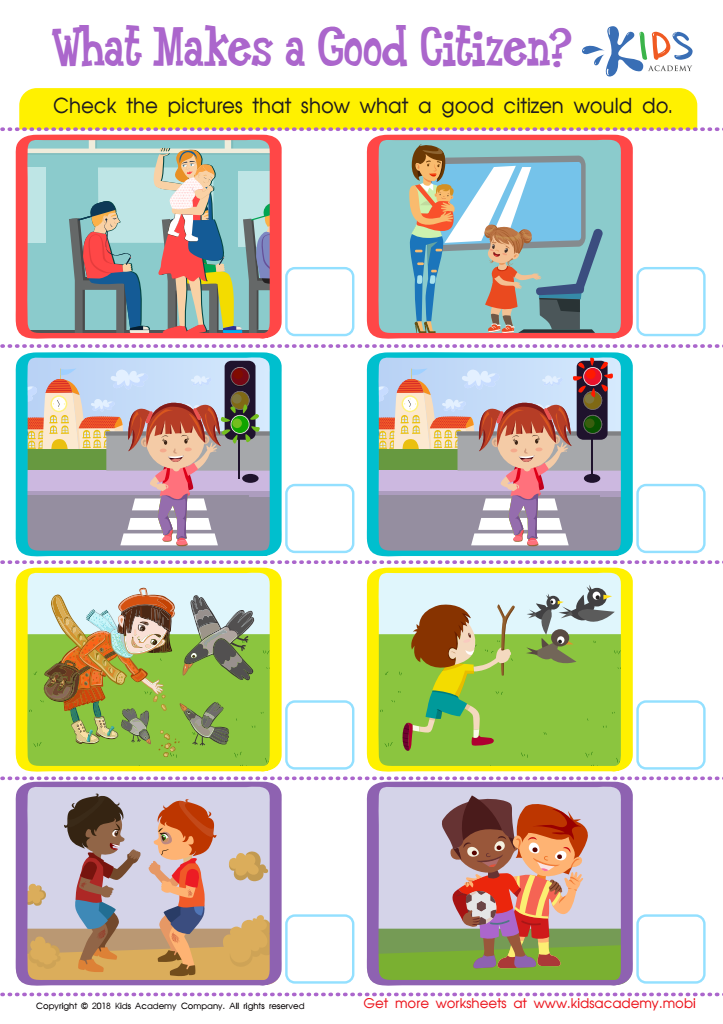
What Makes a Good Citizen? Worksheet
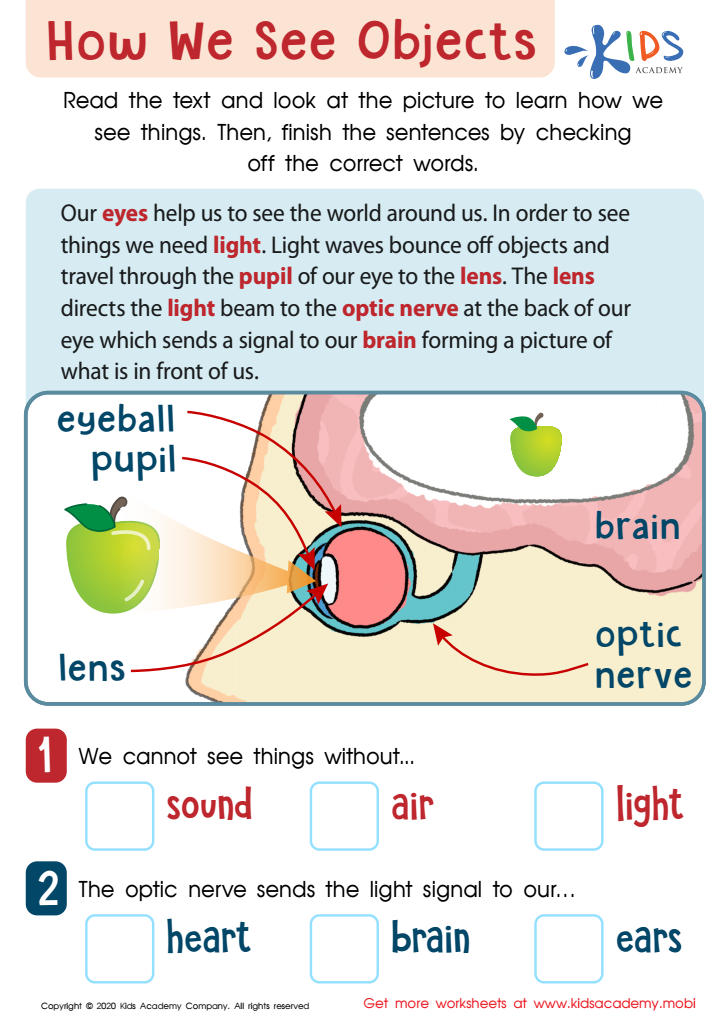
How We See Objects Worksheet

Man-Made or Natural? Worksheet





Developing critical thinking skills in children aged 4-6 is essential for their overall cognitive and social development. At this early stage, children are naturally curious and inclined to ask questions about the world around them. By fostering critical thinking, parents and teachers can help children learn to process information, analyze situations, and develop independent reasoning.
Critical thinking enhances problem-solving abilities, encouraging children to approach challenges with confidence and creativity. It empowers them to make informed decisions and understand the consequences of their actions. Moreover, early critical thinking experiences are linked to improved literacy and numeracy skills, which are foundational for lifelong learning.
Engaging in critical thinking activities—such as open-ended questions, discussions, and hands-on explorations—fosters a growth mindset, allowing children to understand that effort and persistence are important for success. Additionally, these skills promote effective communication and collaboration, as children learn to share their ideas and consider others' viewpoints.
Ultimately, when parents and teachers prioritize critical thinking development, they equip young learners with the necessary tools to navigate an increasingly complex world. Future success in academics, employment, and interpersonal relationships hinges on these early competencies, making this development a crucial investment in a child's future.








