Developing fine motor skills Worksheets for Ages 4-6
5 filtered results
-
From - To
Discover our engaging "Developing Fine Motor Skills" worksheets designed specifically for children aged 4 to 6! These expertly crafted resources promote essential hand-eye coordination, dexterity, and manipulation skills through fun and interactive activities. From tracing shapes to connecting dots and using scissors, our worksheets make learning enjoyable while helping young learners master vital motor skills needed for tasks like writing and crafting. Each worksheet is colorful and age-appropriate, encouraging creativity and independent learning. Perfect for both classroom and home use, our worksheets are an excellent tool for parents and educators looking to support early childhood development. Start fostering your child's fine motor skills today!
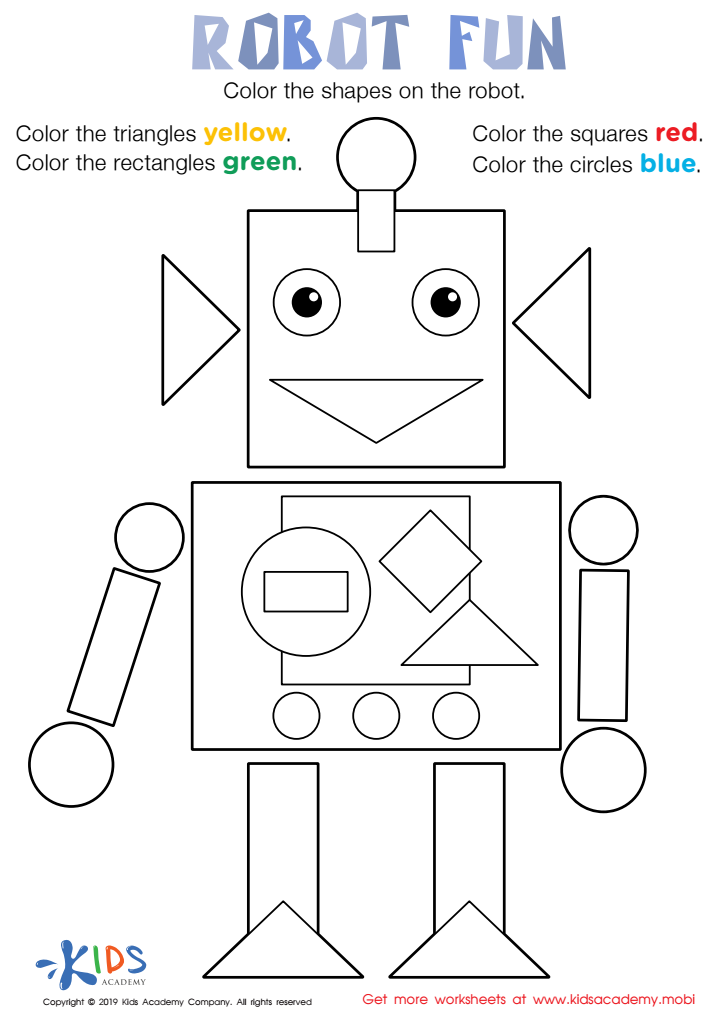
Robot Fun Worksheet
 Assign to My Students









Developing fine motor skills in children aged 4 to 6 is crucial for several reasons, making it an essential focus for parents and teachers. Fine motor skills involve the small muscles in the hands, fingers, and wrists, enabling children to perform tasks such as writing, cutting, buttoning, and using utensils. Mastery of these skills not only fosters independence but is also foundational for academic success.
At this stage, children are rapidly developing their cognitive, social, and emotional abilities. Strong fine motor skills enhance hand-eye coordination and dexterity, laying the groundwork for engaging in classroom activities and daily life tasks. For instance, being able to manipulate writing instruments influences a child's ability to express their thoughts through writing, a skill vital for future learning in reading and literacy.
Moreover, fine motor skill development is linked to self-esteem; as children master these tasks, they gain confidence in their abilities. This sense of achievement encourages a positive attitude toward learning. Lastly, parents and teachers working together to promote fine motor activities—like drawing, crafting, or playing with building toys—fosters a supportive environment, vital for a child’s holistic growth and development. Investing time in these skills during these formative years reaps long-lasting benefits.








