Developing math skills Worksheets for Ages 4-6
4 filtered results
-
From - To
Welcome to our "Developing Math Skills Worksheets for Ages 4-6" page! Designed for young learners, our collection of printable worksheets provides engaging activities that cultivate essential math skills, including counting, addition, subtraction, and number recognition. Tailored to meet the developmental needs of preschool and kindergarten-aged children, these worksheets use vibrant illustrations and interactive exercises to make learning fun. With our resources, children will build confidence in their math abilities while exploring foundational concepts through playful and educational experiences. Perfect for both classroom use and home practice, our worksheets ensure that learning math is an enjoyable journey for every young mathematician!
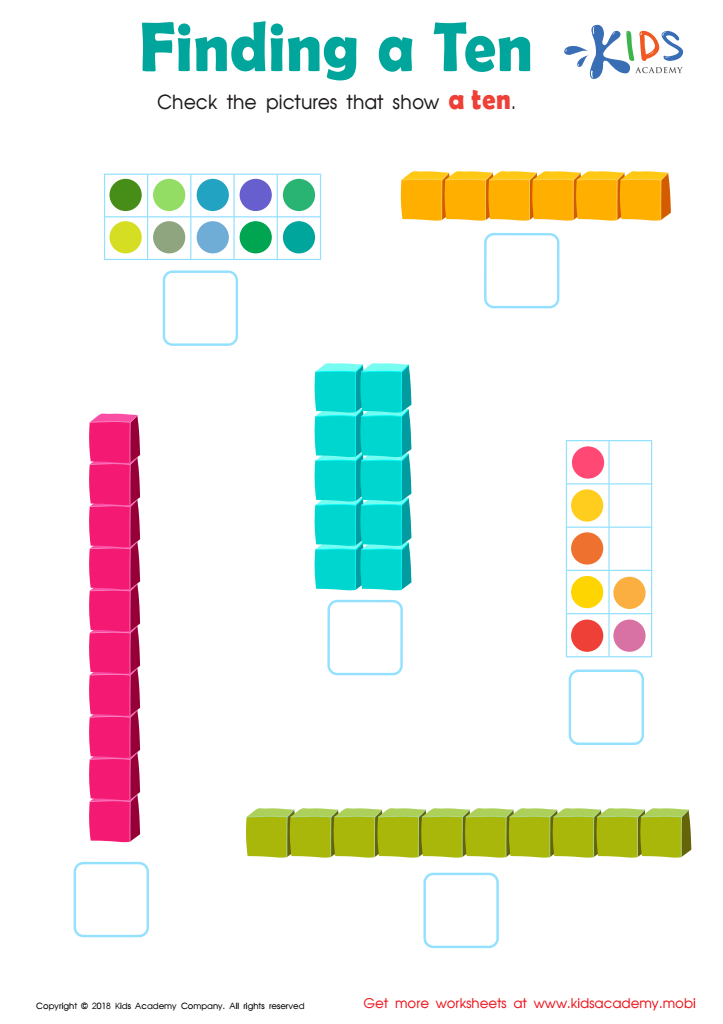
Finding a Ten Worksheet
 Assign to My Students
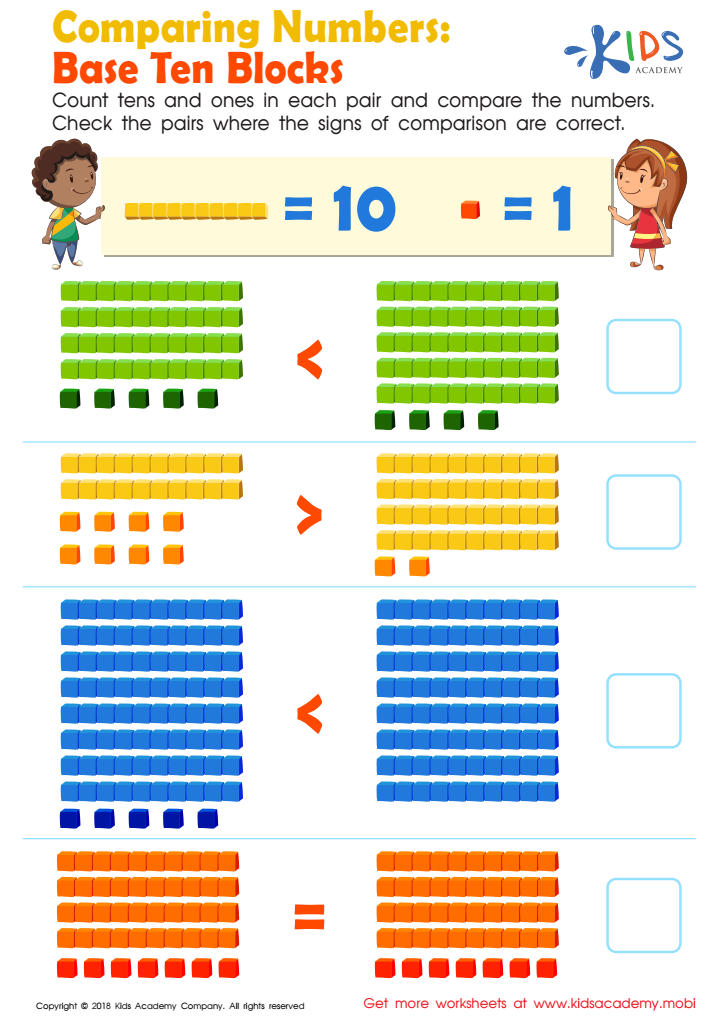
Comparing Numbers: Base Ten Blocks Worksheet
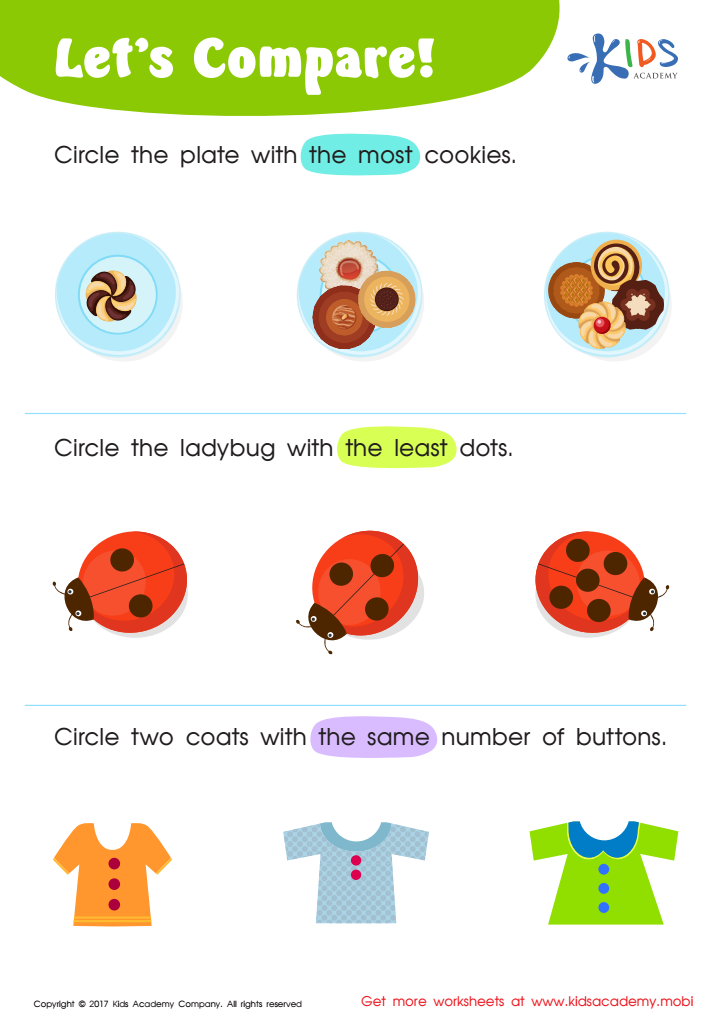
Matching: Classifying Toys by Size Worksheet







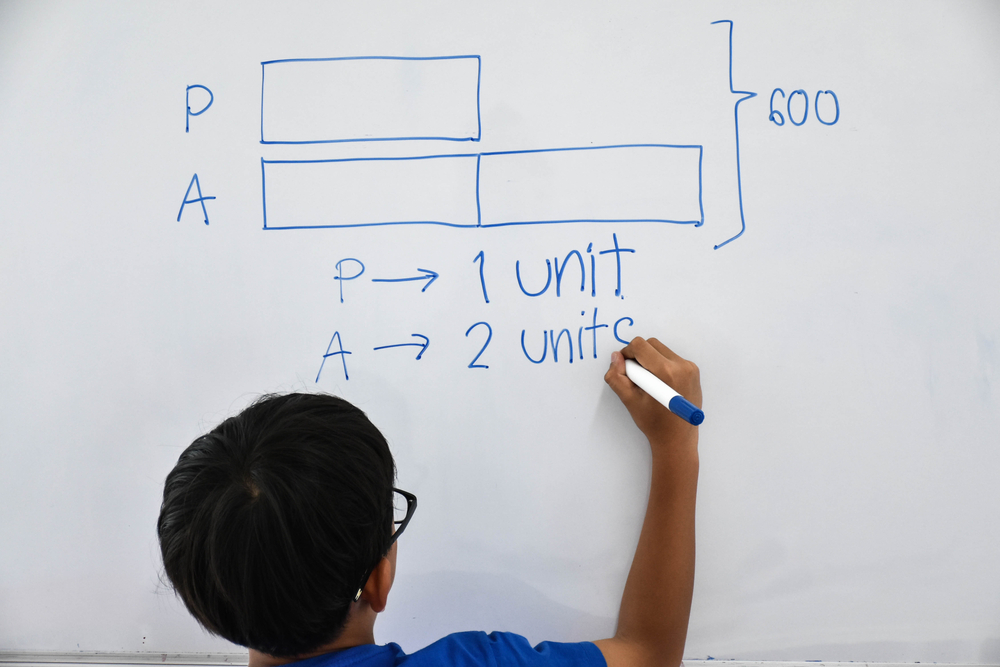
Developing math skills in children ages 4-6 is crucial for several reasons. First, this developmental stage is foundational; children's brains are highly receptive to new concepts, making it an ideal time to build a strong base in math. Early math skills, such as counting, number recognition, and simple addition and subtraction, are directly linked to later academic success in mathematics.
Moreover, math skills foster problem-solving and critical thinking abilities. Engaging young children in mathematical concepts helps them learn to analyze situations, identify patterns, and make comparisons—skills that are not only applicable in math but also enhance overall cognitive development.
Additionally, incorporating math into everyday activities makes learning relatable and enjoyable. When parents and teachers emphasize math in practical contexts, like cooking, shopping, or playing games, they help children see math as a useful tool rather than a subject to memorize, fostering a lifelong positive attitude toward mathematics.
Finally, strong early math skills support social-emotional development. Children gain confidence as they master new concepts and recognize their abilities, which cultivates a growth mindset that can assist them in many areas of life. In summary, prioritizing early math development equips children with essential skills for academic and personal success.








