
Differentiating push/pull Worksheets for Ages 4-6
3 filtered results
Difficulty Level
Grade
Age
-
From - To
Subject
Activity
Standards
Discover our engaging "Differentiating Push/Pull Worksheets" designed specifically for children aged 4-6! These worksheets offer a fun way to teach essential concepts of physics and movement through interactive activities. Tailored to various learning levels, our resource supports skill development in problem-solving, critical thinking, and fine motor skills. Each worksheet encourages kids to explore the differences between pushing and pulling objects, promoting both focus and creativity. Perfect for classroom use or at-home learning, our worksheets cater to diverse learners, making them an essential tool for early childhood educators and parents alike. Bring fun, discovery, and learning into your child's educational journey!
Favorites
With answer key
Interactive
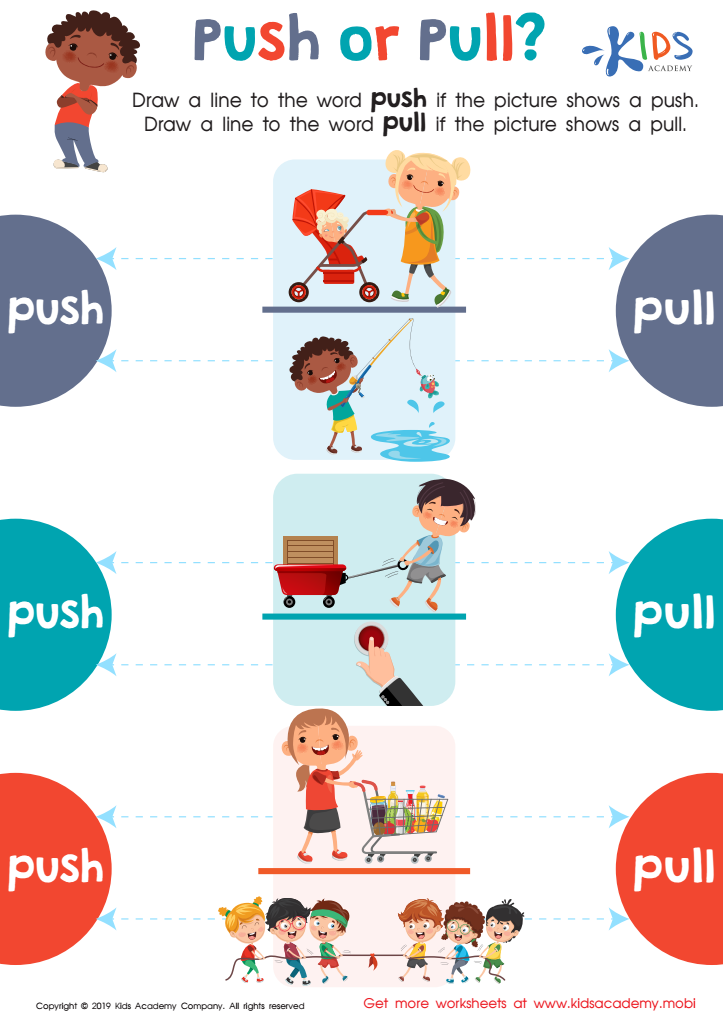
Push or Pull? Worksheet
Young kids may struggle to differentiate push and pull. When they start writing, they may use them interchangeably and wrongly. This worksheet clarifies the concepts: pushing means moving something away, pulling means bringing something closer. It provides pictures and traceable lines for kids to connect each image to the correct word. This helps them understand and remember the difference for future writing and reading.
 Assign to My Students
Push or Pull? Worksheet
Worksheet
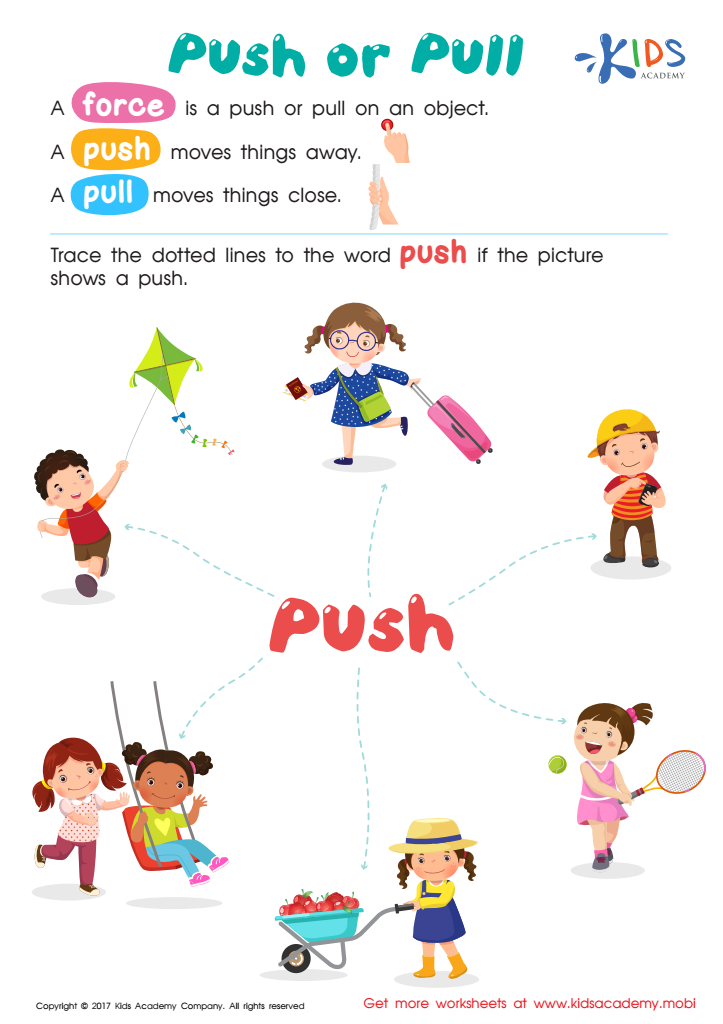
Push or Pull Worksheet
and which involve pulling! With this fun worksheet, your child will learn about force and its simple application in everyday activities. Get them started with Push or Pull! (80 words)
Push or Pull Worksheet
Worksheet
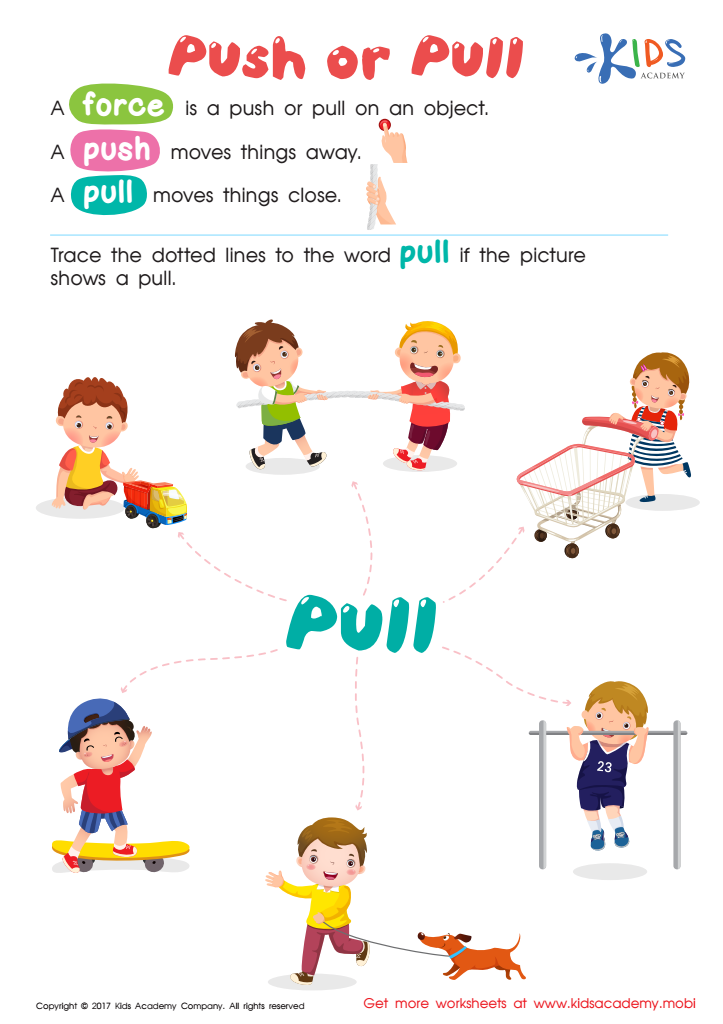
Pull or Push Worksheet
With this fun worksheet, they'll explore physics by sorting objects into categories according to their mode of motion. It's a great way to get them interested in science.
Pull or Push Worksheet
Worksheet
Join Kids Academy for Free
Who is primarily going to use this learning content?






Differentiation between push and pull teaching strategies is crucial for children aged 4-6, as it can greatly affect their learning experience and development. In a push approach, educators might deliver content directly and uniformly, assuming that all children will absorb it the same way. This method can stifle creativity and fail to engage all students, particularly those who learn differently.
In contrast, a pull approach encourages interaction and discovery. It promotes inquiry-based learning, where children explore concepts through hands-on activities and guided questions. For young learners, who are naturally curious and varied in their abilities, pulling in their interests ensures that they are not merely passive recipients of information but active participants in their education.
Teachers and parents must recognize the developmental diversity at this age; some children thrive with structured guidance (push) while others need room to explore (pull). By balancing these strategies, educators can nurture a love for learning, boost confidence, and support the growth of critical thinking skills. Ultimately, applying differentiated push/pull strategies fosters an inclusive classroom environment, meeting the diverse needs of young learners, and lays a strong foundation for their future educational journeys.








