Emotional identification Worksheets for Ages 4-6
4 filtered results
-
From - To
Discover our engaging Emotional Identification Worksheets designed specifically for children aged 4-6. These worksheets help young learners recognize and express their emotions through fun activities tailored to their developmental stage. Using colorful illustrations and relatable scenarios, kids will enhance their emotional literacy while honing vital skills such as self-awareness and empathy. Perfect for both home and classroom settings, these resources foster meaningful conversations about feelings, enabling children to identify their emotions and those of others. Support your child's emotional growth and resilience with these interactive and visually appealing worksheets, setting the foundation for a brighter emotional future!
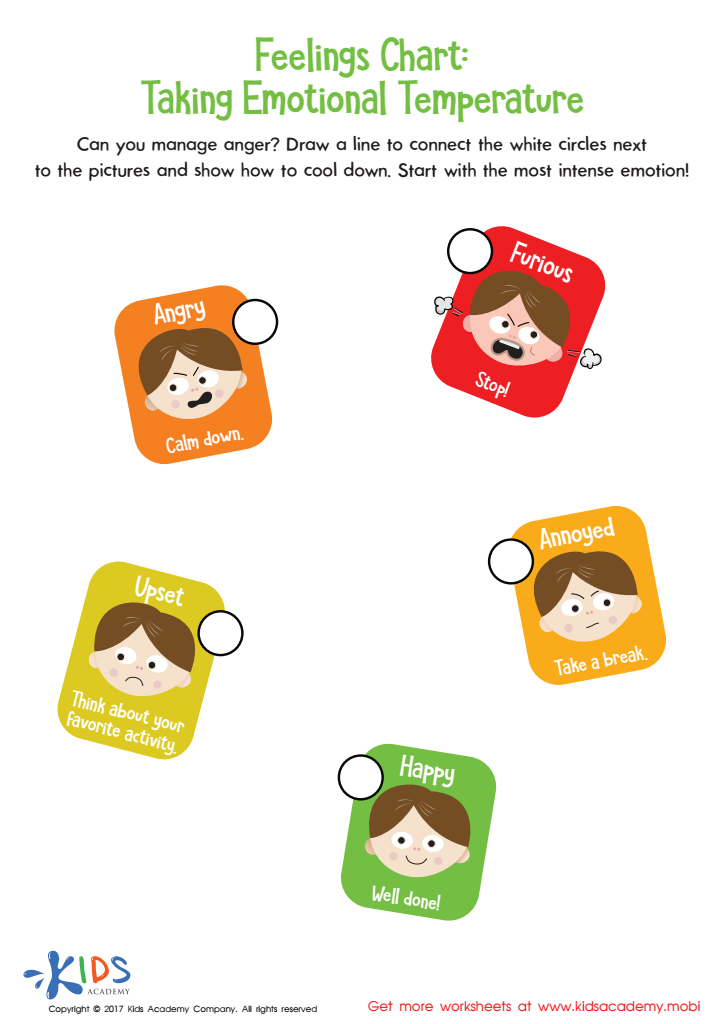
Feelings Chart Worksheet
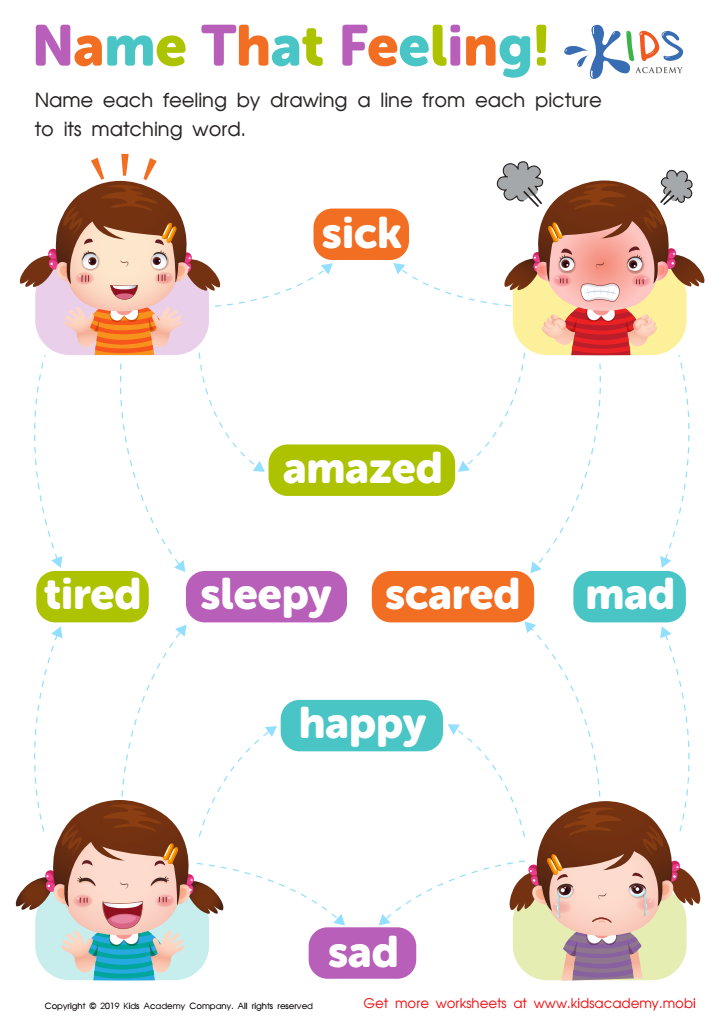
Name that Feeling Worksheet
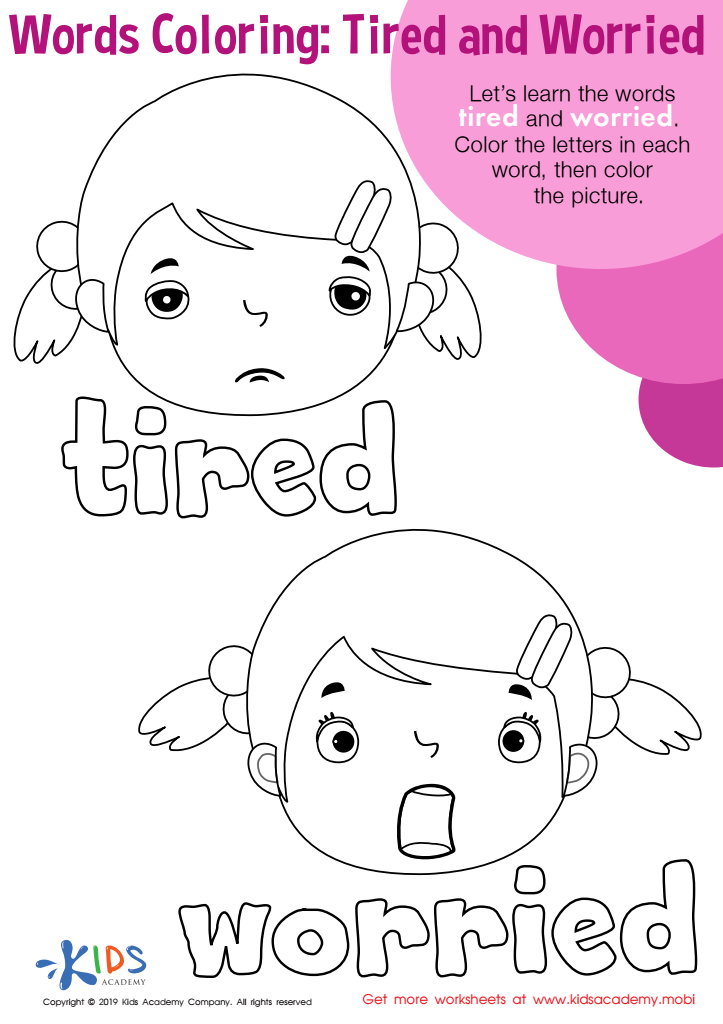
Tired and Worried Words Coloring Worksheet
 Assign to My Students
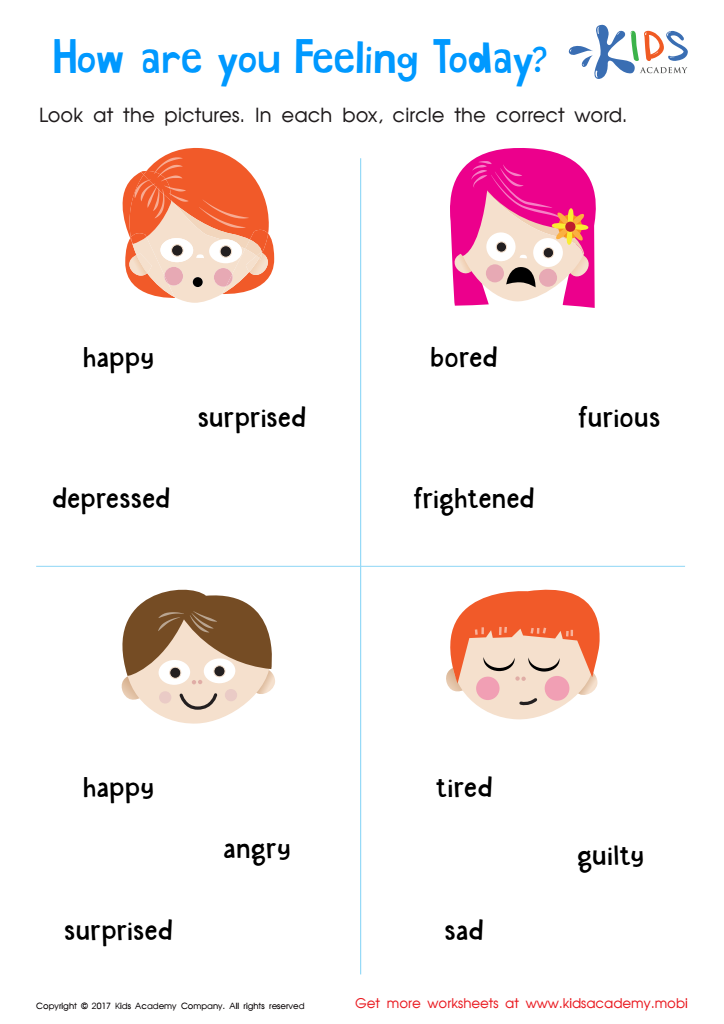
Understanding Feelings Worksheet








Emotional identification for children aged 4-6 is crucial for several reasons. At this developmental stage, children are beginning to navigate their feelings and understand the emotions of those around them. By teaching emotional identification, parents and teachers can help children recognize, label, and express their emotions in healthy and constructive ways. This foundation is vital for developing emotional intelligence, which is linked to future success in interpersonal relationships, academic achievement, and overall well-being.
Moreover, understanding emotions allows young children to engage in empathetic interactions with peers, promoting social skills and reducing instances of bullying or conflict. It assists in building resilience; children who can identify their emotions are better equipped to cope with stress and make positive choices when faced with challenges.
Incorporating emotional identification into everyday activities makes learning fun and relatable. Utilizing stories, art, and play allows children to experiment with expression in a supportive environment. By prioritizing emotional identification, parents and teachers not only foster a positive learning atmosphere but also equip children with the crucial tools to navigate their feelings and relationships throughout their lives. Ultimately, supporting emotional understanding in early childhood promotes healthier communities and empowered future generations.








