
Enhancing problem-solving abilities Worksheets for Ages 4-6
4 filtered results
Difficulty Level
Grade
Age
-
From - To
Subject
Activity
Standards
Unlock your child’s potential with our "Enhancing Problem-Solving Abilities Worksheets" designed for ages 4-6! These engaging activities foster critical thinking and creativity, helping young learners develop essential problem-solving skills. Each worksheet promotes logical reasoning, encourages exploration, and provides diverse challenges suitable for early learners. From simple puzzles to fun scenarios, your child will enjoy honing their abilities while building confidence. Perfect for parents and teachers aiming to supplement learning through interactive play. Explore our collection today and watch your young problem solvers thrive! Transform learning into a fun adventure, empowering children to tackle challenges with enthusiasm and resilience.
Favorites
With answer key
Interactive
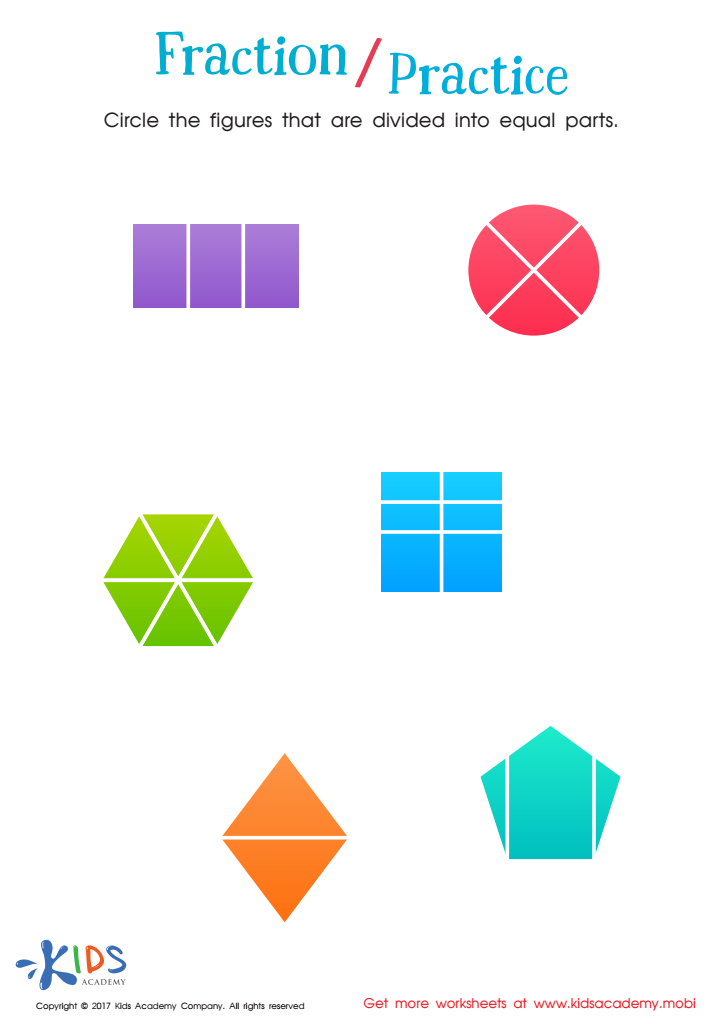
Fractions: Shapes Worksheet
Get your printable now.
Kids learn math differently today than you did in school; understanding concepts rather than memorizing facts. Help your child understand fractions with this printable worksheet. It'll help your child recognize parts of a whole, identify equal parts and build a foundation for numeracy. A better understanding sets kids up for math success! Get your printable now.
 Assign to My Students
Fractions: Shapes Worksheet
Worksheet
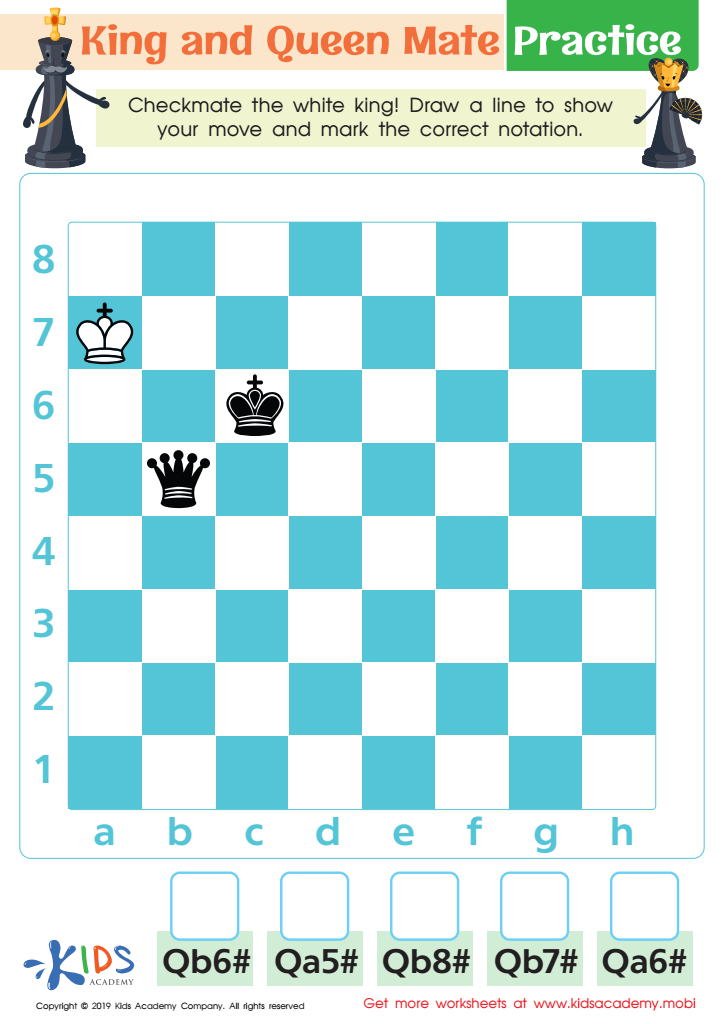
King and Queen Mate Practice Worksheet
Learning chess can open up a world of strategy, problem-solving and reasoning for your child! Our free worksheet gives them the opportunity to practice checkmating with their king and queen pieces. It also helps them develop fine-motor skills, as they draw lines to show the right moves and check off the correct notation. All without screens!
King and Queen Mate Practice Worksheet
Worksheet
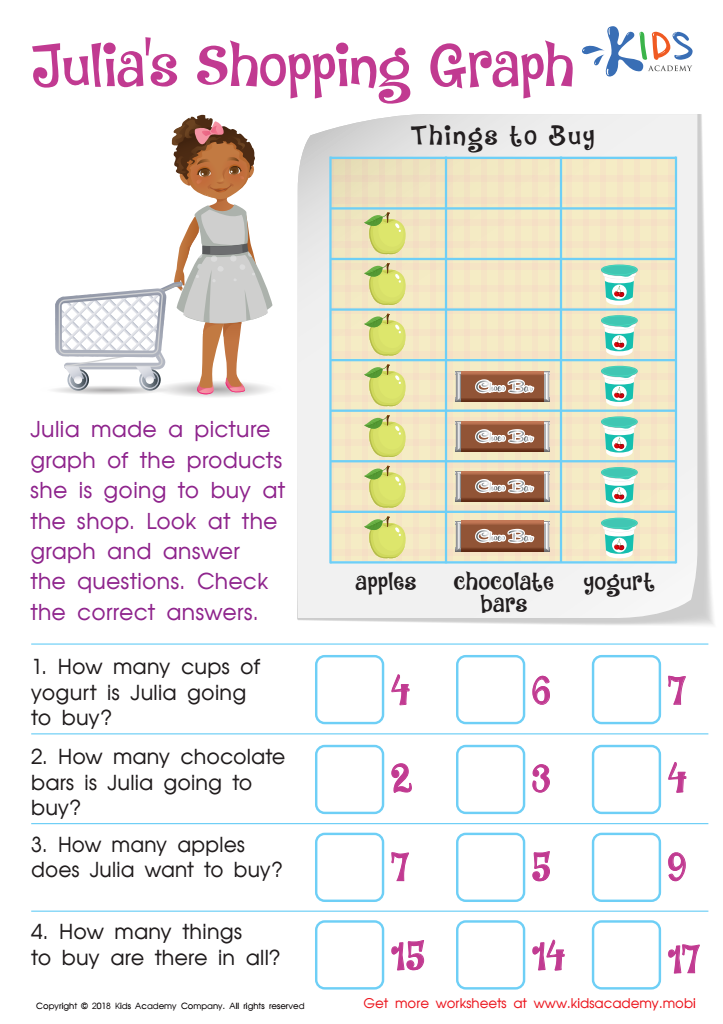
Julia's Shopping Graph Worksheet
This fun PDF worksheet provides little mathematicians with practice using pictographs. They will answer questions about Julia's graph, helping to assess their understanding of reading and interpreting data. Counting and choosing the correct answer is sure to be an enjoyable experience!
Julia's Shopping Graph Worksheet
Worksheet
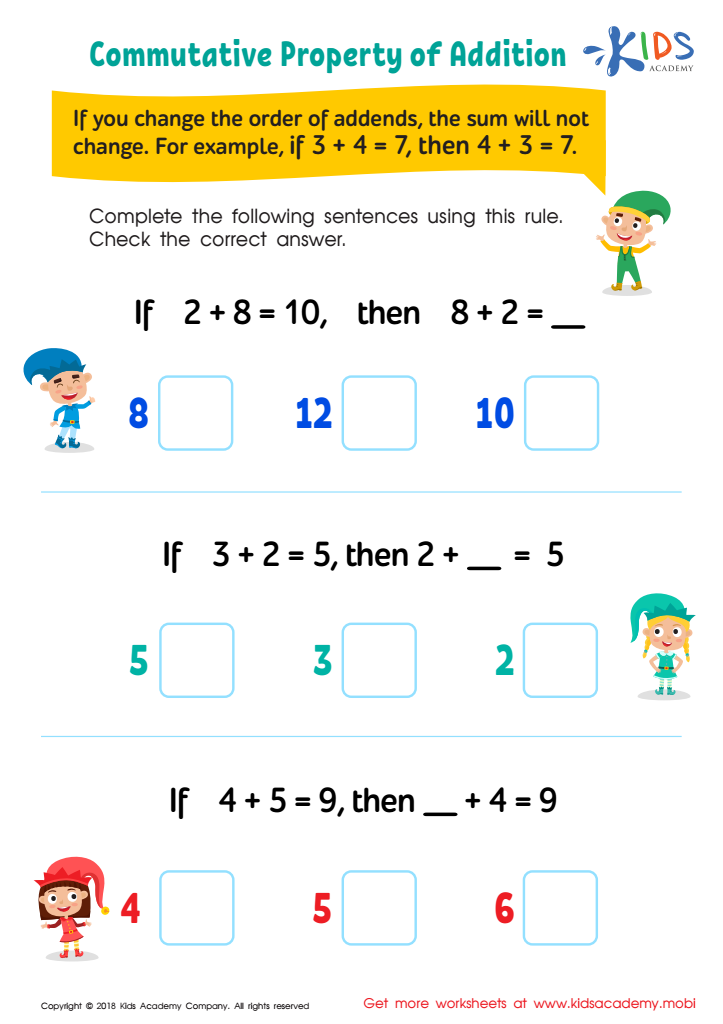
Commutative Property of Addition Worksheet
Master the commutative property of addition with Kids Academy's worksheet! Kids will have fun with silly elves as they complete the rows, switching or adding the addends. Observe that the sum stays the same no matter the order of the numbers!
Commutative Property of Addition Worksheet
Worksheet
Join Kids Academy for Free
Who is primarily going to use this learning content?








Enhancing problem-solving abilities in children aged 4-6 is crucial for their overall development and future success. At this age, children are naturally curious and eager to explore the world around them. By fostering their problem-solving skills, parents and teachers can help them learn how to think critically, approach challenges with confidence, and devise creative solutions.
These early problem-solving experiences lay the foundation for essential life skills, such as resilience and independence. When children tackle problems, they not only develop cognitive skills, but also learn to manage frustrations and navigate setbacks, which builds emotional strength. Engaging in problem-solving activities encourages collaboration with peers, enhancing social skills and communication.
Furthermore, strong problem-solving abilities are linked to academic success. As children progress in school, they will encounter increasingly complex challenges that require analytical thinking, teamwork, and adaptability. By nurturing these skills early on, parents and teachers can ensure that children are better prepared for future learning.
Ultimately, investing in early problem-solving skills creates a positive cycle of curiosity and exploration, promoting a lifelong love of learning. This not only benefits the individual child but also fosters a supportive educational environment for all.








