Improving observation Worksheets for Ages 4-6
3 filtered results
-
From - To
Discover engaging and educational observation worksheets designed for children ages 4-6, aimed at enhancing their attention to detail and critical thinking abilities. Our carefully crafted activities promote visual discrimination, pattern recognition, and memory skills, making learning fun and effective. Each worksheet is thoughtfully created to suit young learners' developmental levels while fostering their curiosity and excitement for exploration. Perfect for parents and educators, these printable resources support early development in a playful yet purposeful way. Visit Kids Academy to explore our collection and give your child the tools to sharpen their observation skills. Start your journey towards improved learning today!
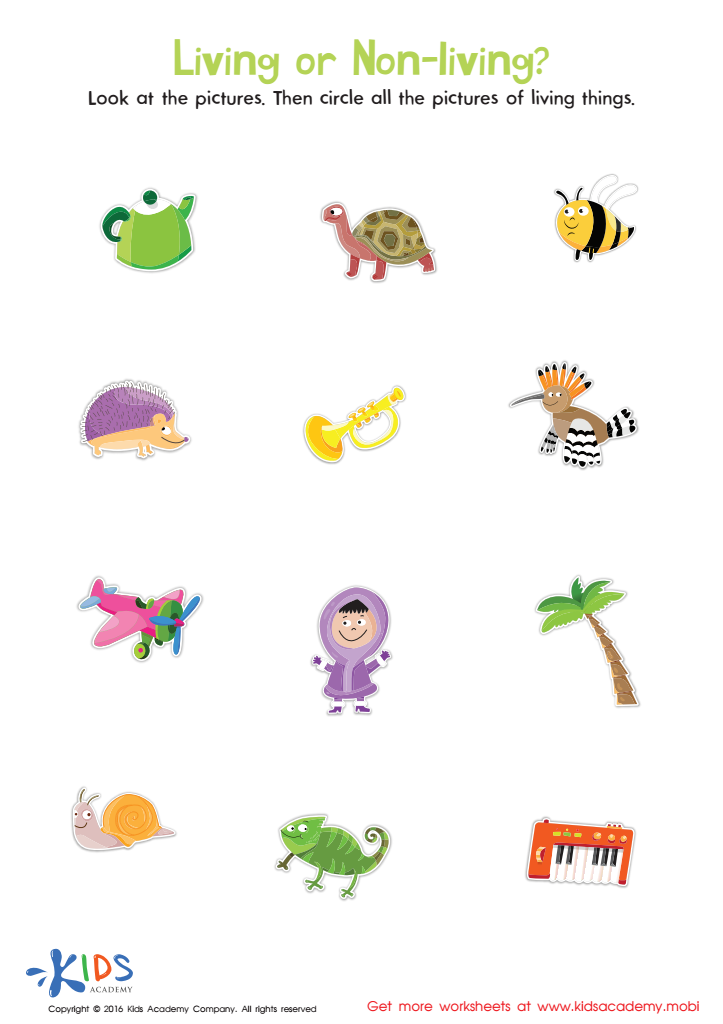
Identifying Living and Non–living Things Sorting Worksheet
 Assign to My Students
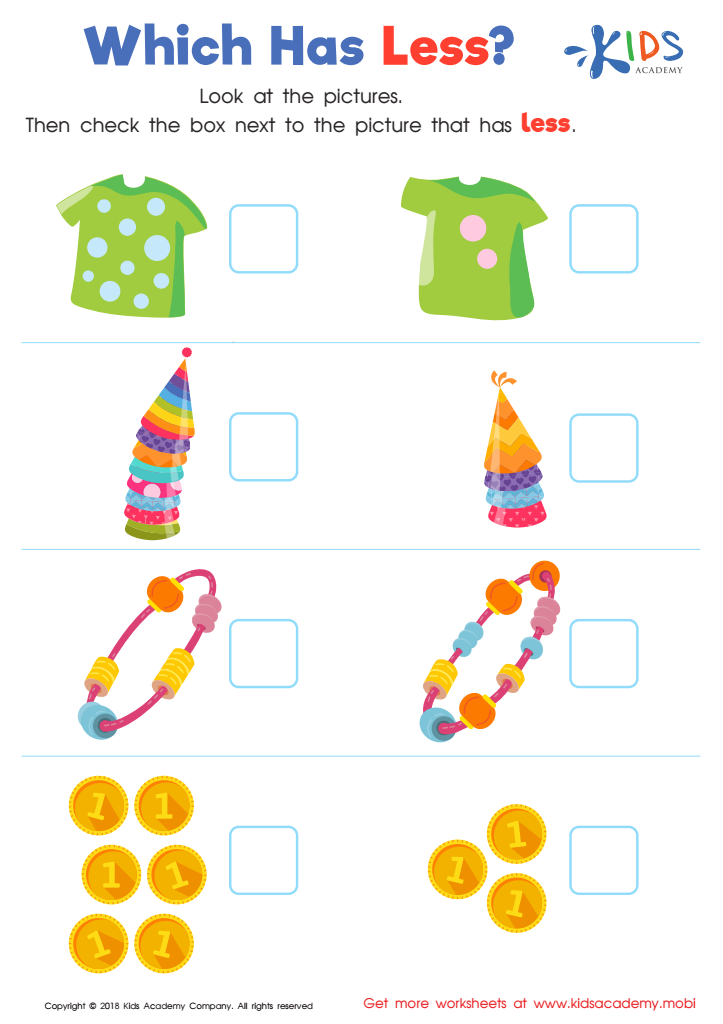
Which Has Less? Worksheet
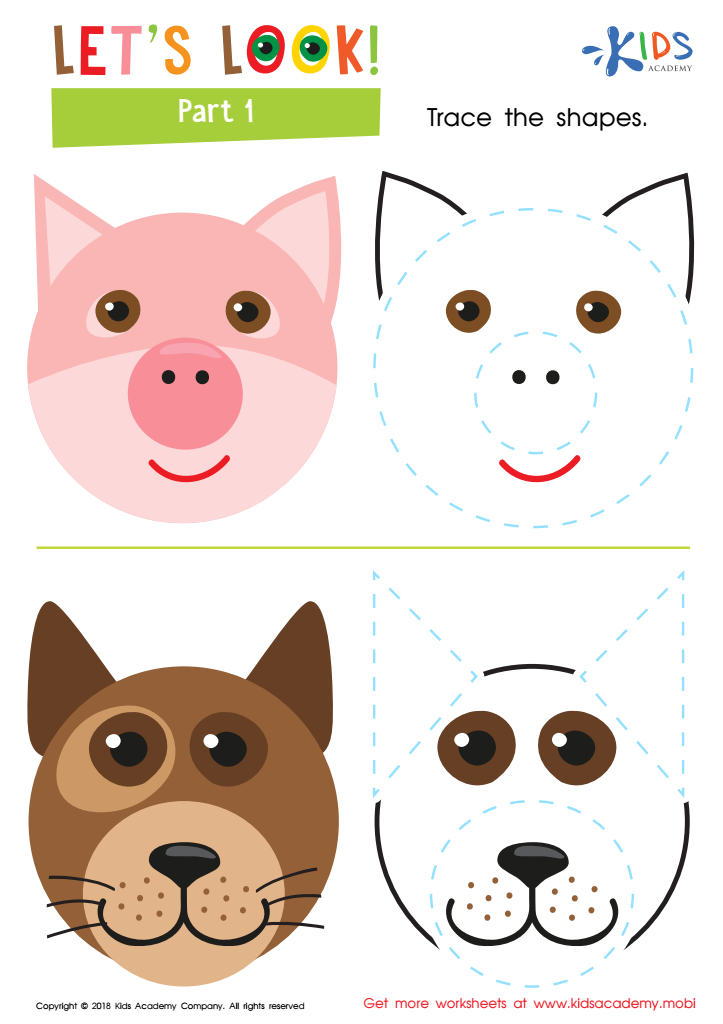
Let's Look! Part 1 Worksheet



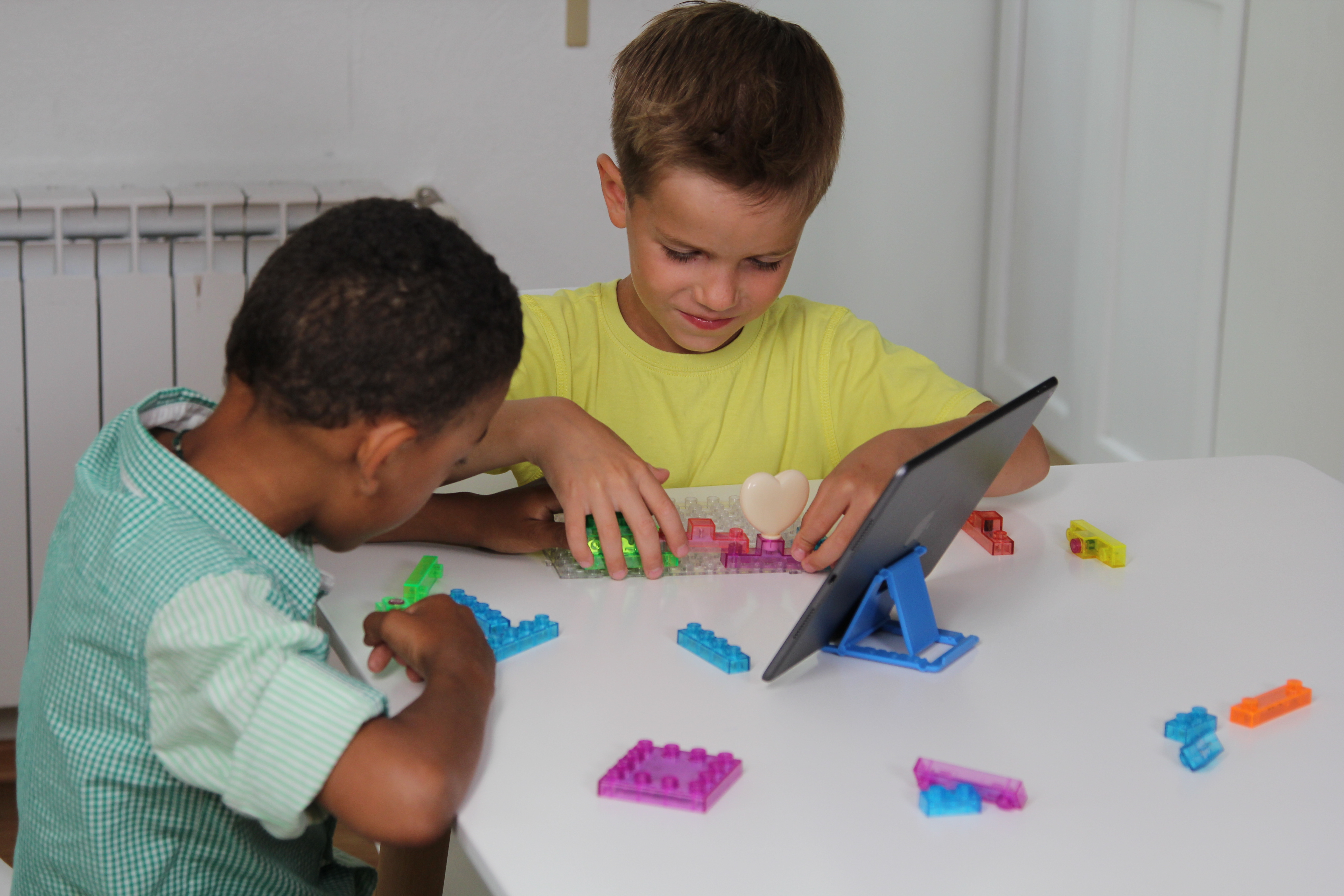




Improving observational skills in children aged 4-6 is crucial for their cognitive and social development. At this formative stage, children's brains are rapidly developing, and their experiences shape how they perceive and interact with the world. By enhancing their ability to observe, we sharpen their attention to detail, which is fundamental for learning across subjects, from reading to science.
Good observational skills help children become better learners. For instance, in reading, recognizing letters and understanding pictures require keen observation. In science, observing changes, patterns, and behaviors of objects enhances their investigative and analytical skills. Beyond academics, observational skills foster creativity and imagination as children begin to notice details that can inspire stories, drawings, and inventive play.
Socially, children with strong observational skills are more empathetic. They learn to notice others' feelings and reactions, which helps them respond appropriately in social situations, building better relationships with peers and adults. Moreover, keen observation aids in safety awareness, as children become more mindful of their surroundings and potential hazards.
Parents and teachers play a pivotal role in nurturing these skills. Providing opportunities for focused observation, whether through nature walks, interactive games, or simple activities like "I spy," can significantly contribute to a child's holistic development. Ultimately, these efforts lay a solid foundation for lifelong learning and meaningful interactions with the world.








