Number Matching Worksheets for Ages 4-6
4 filtered results
-
From - To
Introducing Number Matching Worksheets, tailored for children ages 4-6! These engaging worksheets from Kids Academy are designed to develop number recognition, counting skills, and fine motor coordination. Brightly colored and filled with fun illustrations, they make learning numbers a joyous experience. Perfect for preschoolers and kindergarteners, these resources support early math confidence and help young learners practice matching numbers with objects. Give your child a head start in math with our expertly crafted, easy-to-download, and printable worksheets. Unlock their potential and watch them blossom! Visit Kids Academy for top-notch educational resources!
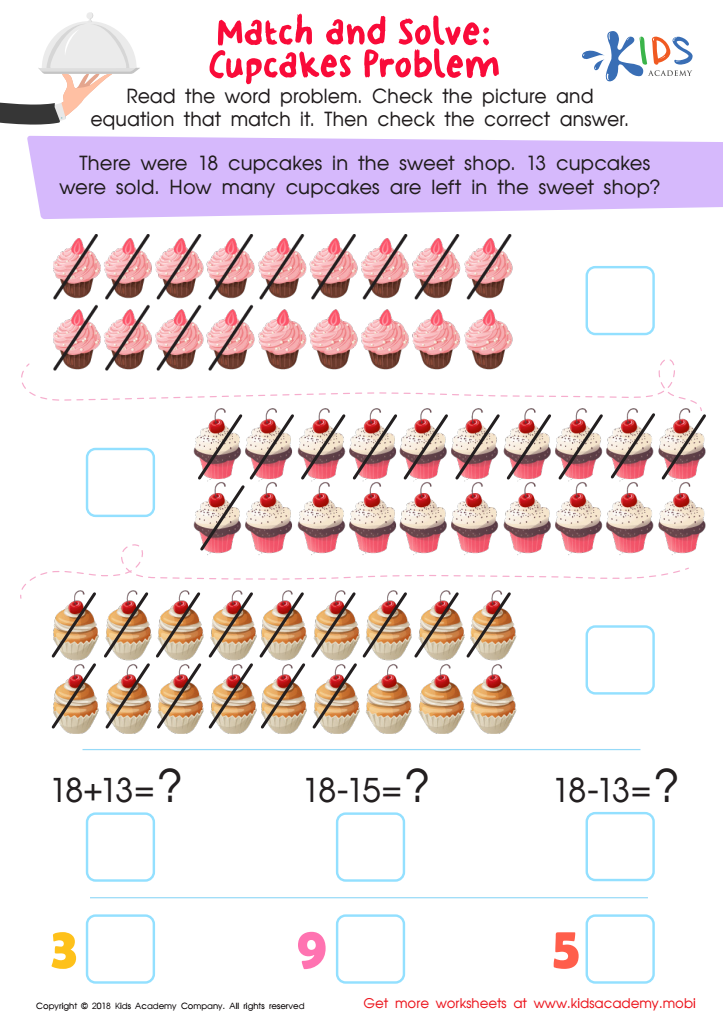
Match and Solve: Cupcakes Problem Worksheet
 Assign to My Students
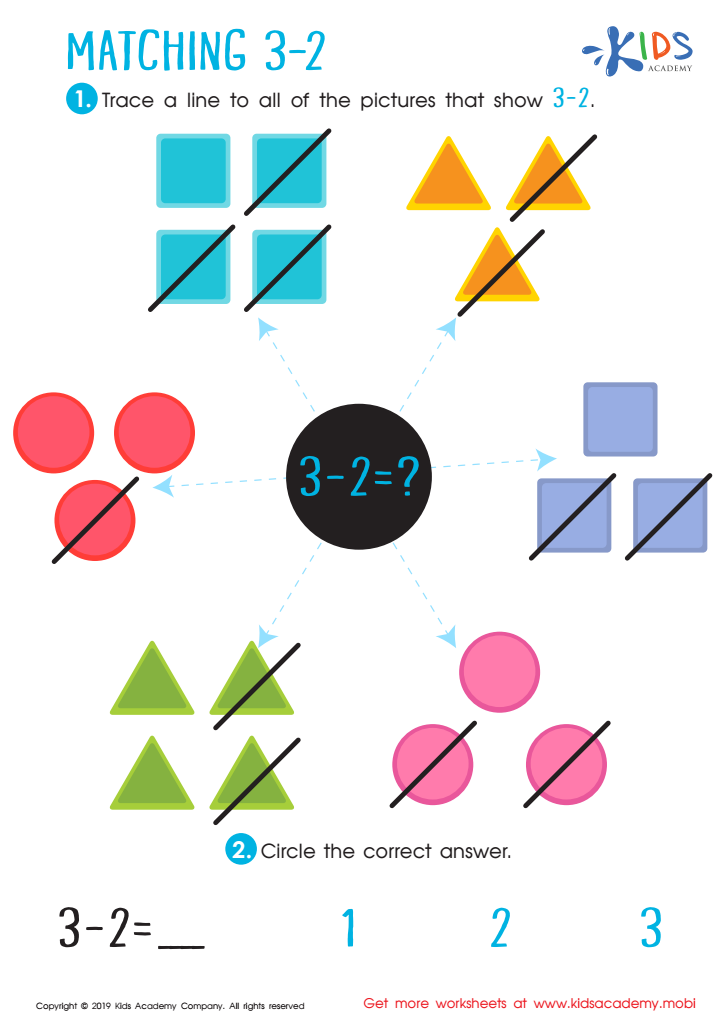
Matching 3-2 Worksheet
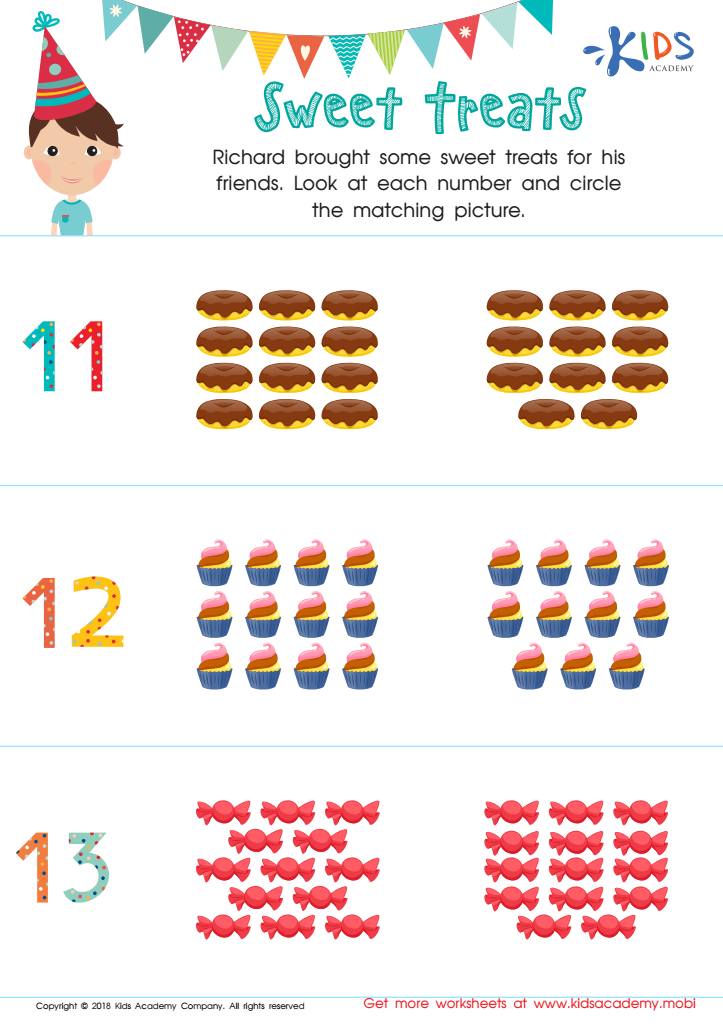
Kindergarten Math Worksheet Matching Numbers
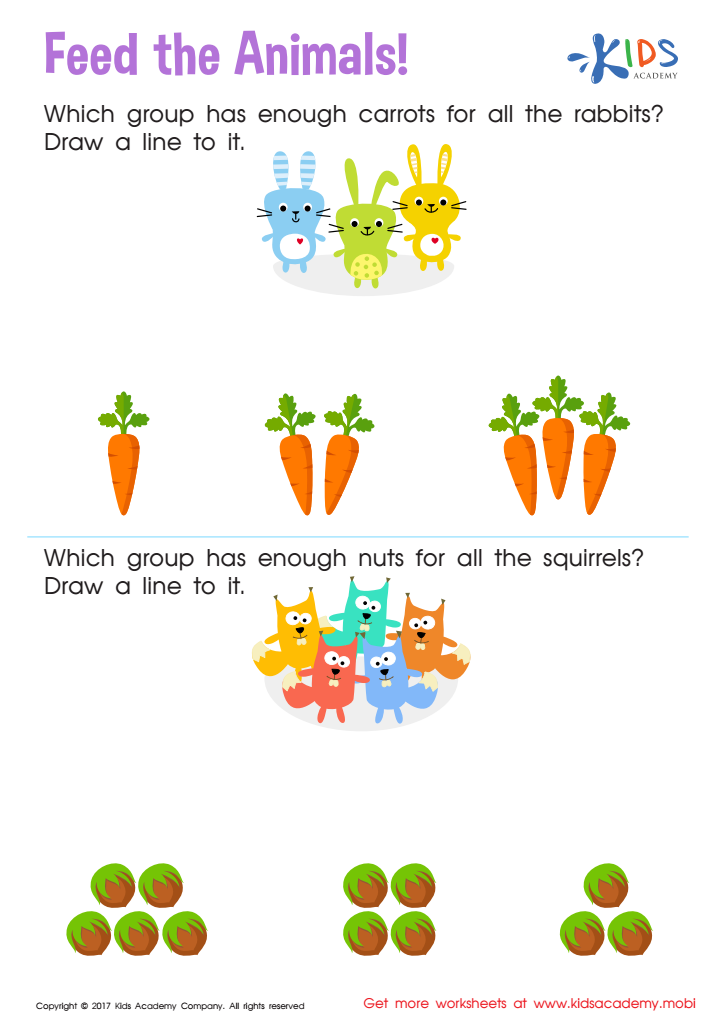
Count and Match: Feed the Animals Worksheet








Number matching is a fundamental skill crucial for the cognitive development of children aged 4-6. At this stage, children transition from recognizing numbers to understanding their values and relationships, laying the groundwork for more complex math concepts.
Firstly, number matching activities enhance numerical literacy by helping children associate symbols (numerals) with quantities. This understanding is critical for grasping basic arithmetic operations such as addition and subtraction. For example, matching the numeral "4" with a group of four objects reinforces the concept that the numeral represents that specific quantity.
Furthermore, number matching fosters critical thinking and problem-solving skills. Children learn to identify patterns, make comparisons, and note differences, which are foundational skills for higher-level math and logic tasks. When a child successfully matches numbers, they confirm their understanding of these numeric relationships, building confidence in their abilities.
Additionally, number matching exercises can improve fine motor skills and hand-eye coordination when manipulatives or interactive materials are involved. These physical activities can be particularly engaging, turning learning into a playful experience that keeps young minds interested and motivated.
Parents and teachers should value number matching for its role in making early math learning enjoyable and meaningful. By incorporating these activities into daily routines, adults can significantly support a child’s educational journey, ensuring they build a strong numerical foundation for future academic success.








