
Practicing addition Worksheets for Ages 4-6
3 filtered results
Difficulty Level
Grade
Age
-
From - To
Subject
Activity
Standards
Discover a fun and engaging way for your young learners, ages 4-6, to practice addition with our printable worksheets! Designed to make learning math enjoyable, these worksheets include colorful illustrations and challenging exercises that cater to various skill levels. Each activity aims to build foundational addition skills while enhancing critical thinking and problem-solving capabilities. Perfect for homeschooling or classroom use, our addition worksheets provide opportunities for hands-on practice and reinforce essential math concepts. Help your child develop confidence in their abilities with our expertly crafted resources that make practicing addition a joyful experience! Access them now and watch your little mathematicians thrive!
Favorites
With answer key
Interactive
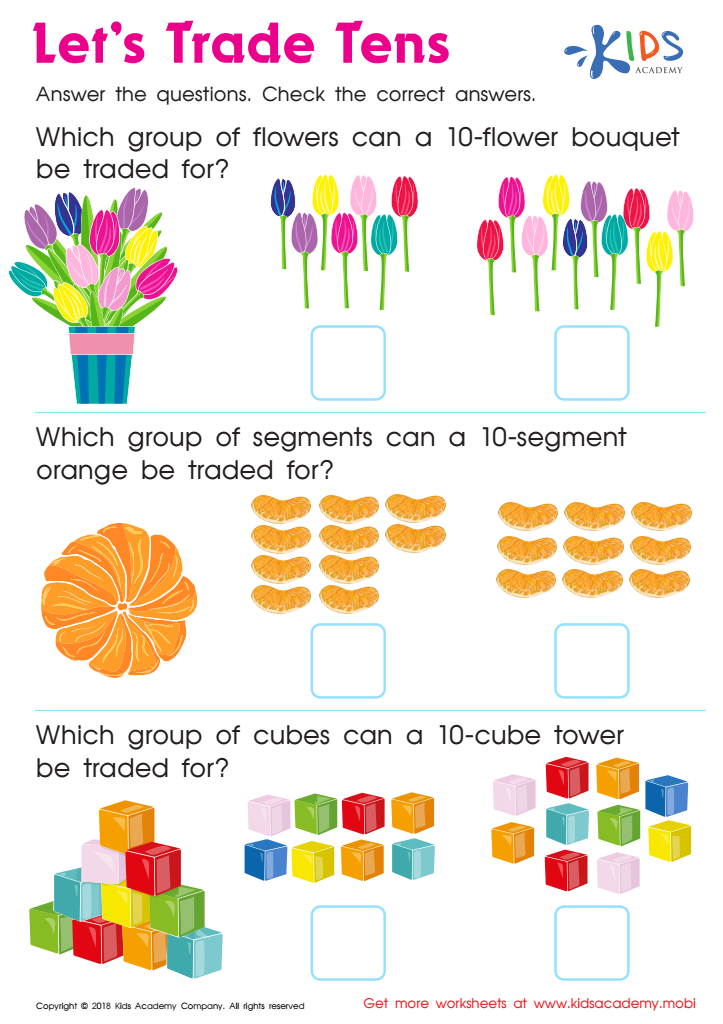
Lets Trade Tens Worksheet
This free worksheet strengthens counting and logic skills. Kids will enjoy exchanging flowers for bouquets, orange slices for a whole fruit, and cube towers for individual cubes. Combining numbers and problem solving is essential for first grade math. Seeing two options helps them understand how 10s look.
 Assign to My Students
Lets Trade Tens Worksheet
Worksheet
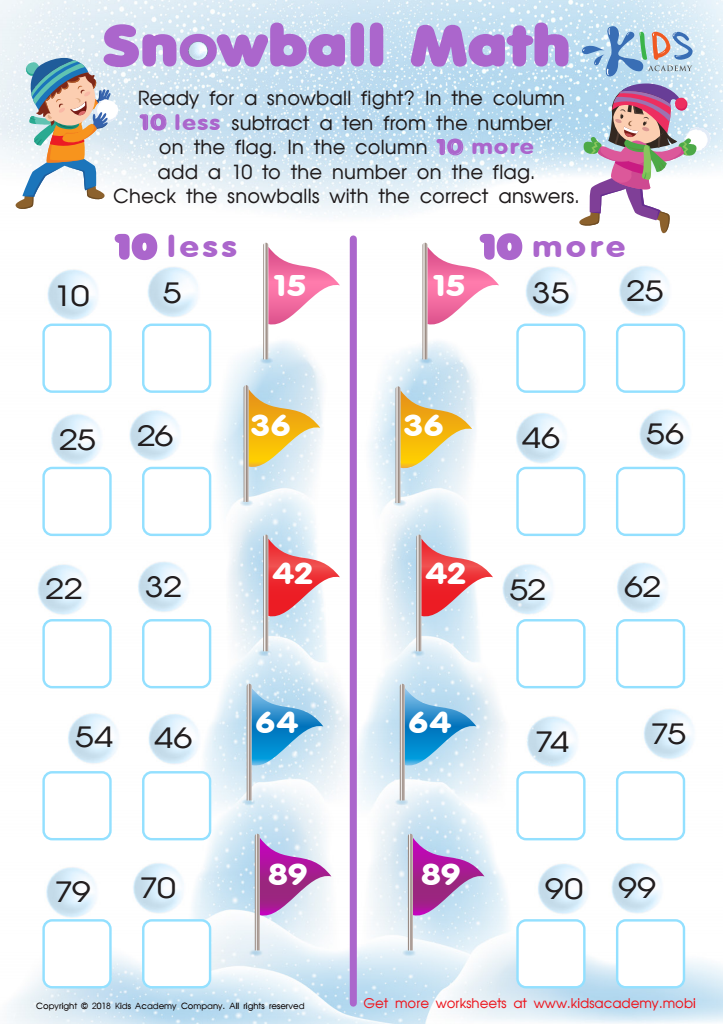
Snowball Math Worksheet
Kids can have a snowball fight and build math skills at the same time with this free worksheet. Kids can use tens to add and subtract for quick math equations and select the correct answers. No need to worry about getting cold either - these snowballs won't chill you!
Snowball Math Worksheet
Worksheet
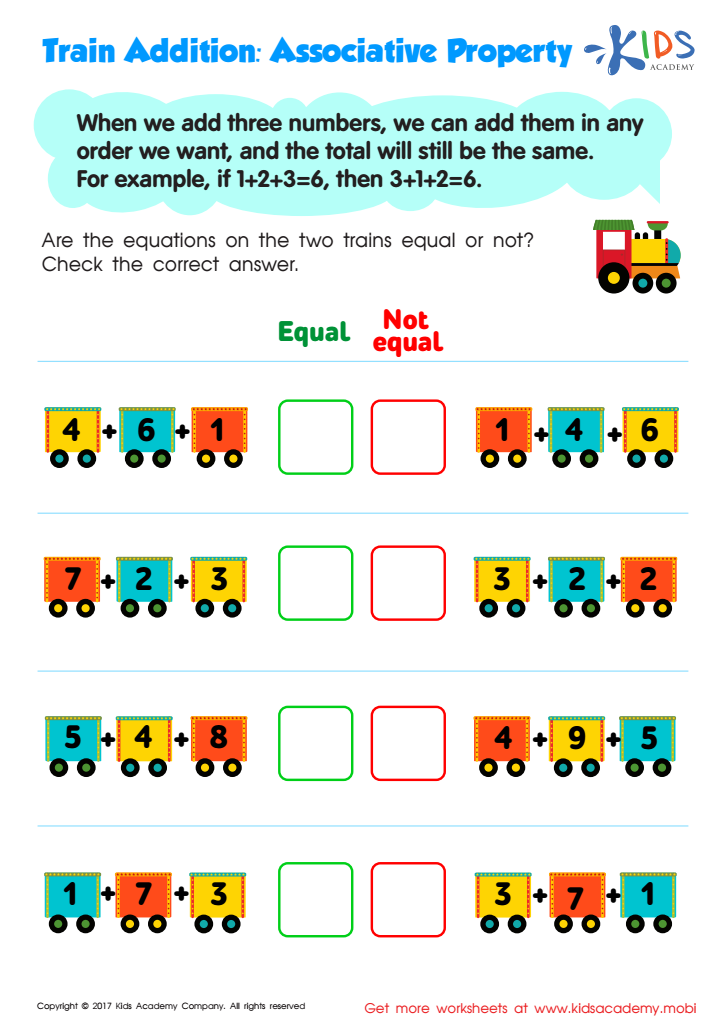
Train Addition: Associative Property Worksheet
The associative property of addition lets us add numbers in any order. Total will remain the same. Help kids practice this pre-algebra skill with a train-themed worksheet. It will help them understand if the equations are equal using this property.
Train Addition: Associative Property Worksheet
Worksheet
Join Kids Academy for Free
Who is primarily going to use this learning content?








Practicing addition for children aged 4-6 is crucial for several reasons. At this developmental stage, children are naturally curious and eager to learn. Introducing basic math concepts like addition in a fun and engaging way sets a solid foundation for their future learning.
Understanding addition helps young children develop critical thinking and problem-solving skills. It encourages them to make connections between numbers and the world around them. For instance, when children count fruits or toys during play, they not only learn numbers but also grasp the concept of quantity and relationships.
Moreover, practicing addition enhances children's confidence. Mastering basic math skills can lead to a positive attitude towards learning as they progress in their education. When children feel successful at an early age, they are more likely to embrace challenges in subjects like math later on.
Additionally, early math skills impact overall academic success. Research shows that students who are proficient in basic math concepts tend to perform better in more complex math tasks in the future. Therefore, by incorporating addition practice into daily routines through games, songs, or hands-on activities, parents and teachers play a vital role in fostering children's early numeracy skills.








