Punctuation usage Worksheets for Ages 4-6
3 filtered results
-
From - To
Explore our fun and educational punctuation usage worksheets designed specifically for children ages 4-6. These engaging activities help young learners grasp the basics of punctuation, including periods, question marks, and exclamation points. Perfect for home or classroom use, our worksheets use colorful illustrations and simple exercises to make learning punctuation enjoyable and accessible. Aligned with early grade learning standards, these printable resources support literacy skills and early writing development. Enhance your child’s understanding of sentence structure and communication with our expertly crafted materials. Visit Kids Academy to download and start learning today!
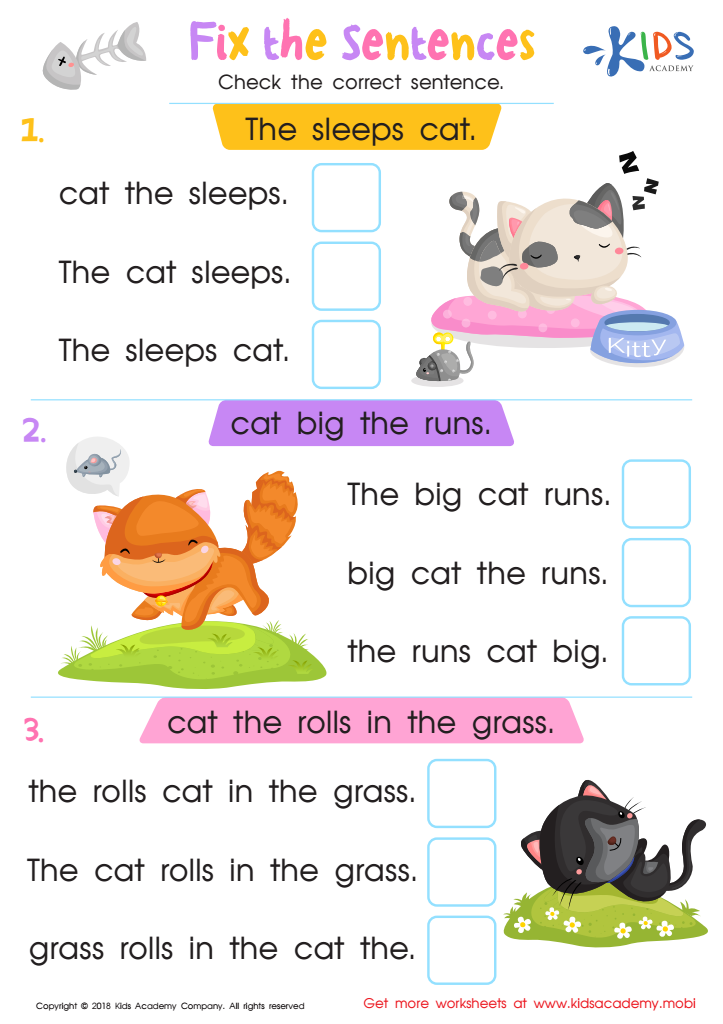
Fix the Sentences Worksheet
 Assign to My Students
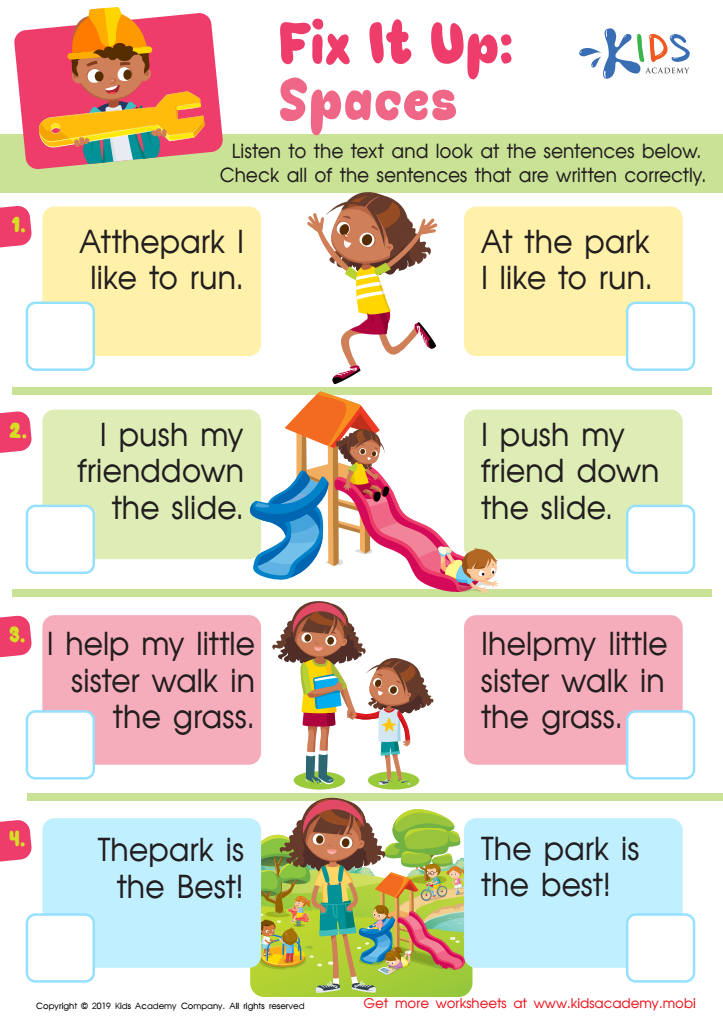
Fix Spaces Worksheet

How to Capitalize Worksheet



.jpg)



Punctuation usage is crucial for early learners, ages 4-6, as it lays the foundation for clear communication and effective reading and writing skills. During these formative years, children begin to understand and appreciate the role punctuation plays in structuring sentences and conveying meaning. Proper use of periods, commas, question marks, and exclamation marks makes written language more understandable and engaging. This early exposure helps children not only recognize punctuation marks but also comprehend their purpose, enhancing their ability to read fluently and to break sentences into comprehensible chunks.
For parents and teachers, teaching punctuation at this stage is essential because it impacts overall literacy development. Children who understand punctuation are better equipped to interpret and write sentences, thereby expressing themselves more clearly. This skill is the cornerstone of effective communication and critical thinking, allowing young learners to explore thoughts and ideas more independently and accurately. Additionally, early mastery of punctuation bolsters confidence as children progress in their education, making future, more complex language concepts easier to grasp.
Neglecting punctuation in these early years can lead to confusion and misunderstandings, both in learning and in everyday communication. Therefore, prioritizing punctuation instruction for young children sets them up for long-term academic success and a strong command of language.








