Reading clocks Worksheets for Ages 4-6
4 filtered results
-
From - To
Introduce time-telling to your little learners with our „Reading Clocks Worksheets for Ages 4-6”. Specially designed for preschoolers and kindergarteners, these engaging activities help children grasp the basics of analog and digital clocks. Through vibrant visuals and simple exercises, kids learn to identify hours and minutes, read different clock types, and match times. Enhance their learning with fun, colorful worksheets that instill confidence in telling time while boosting cognitive and fine motor skills. Ideal for classroom or home use, our worksheets make mastering this essential skill both enjoyable and intuitive. Let's make time-telling a fun adventure!
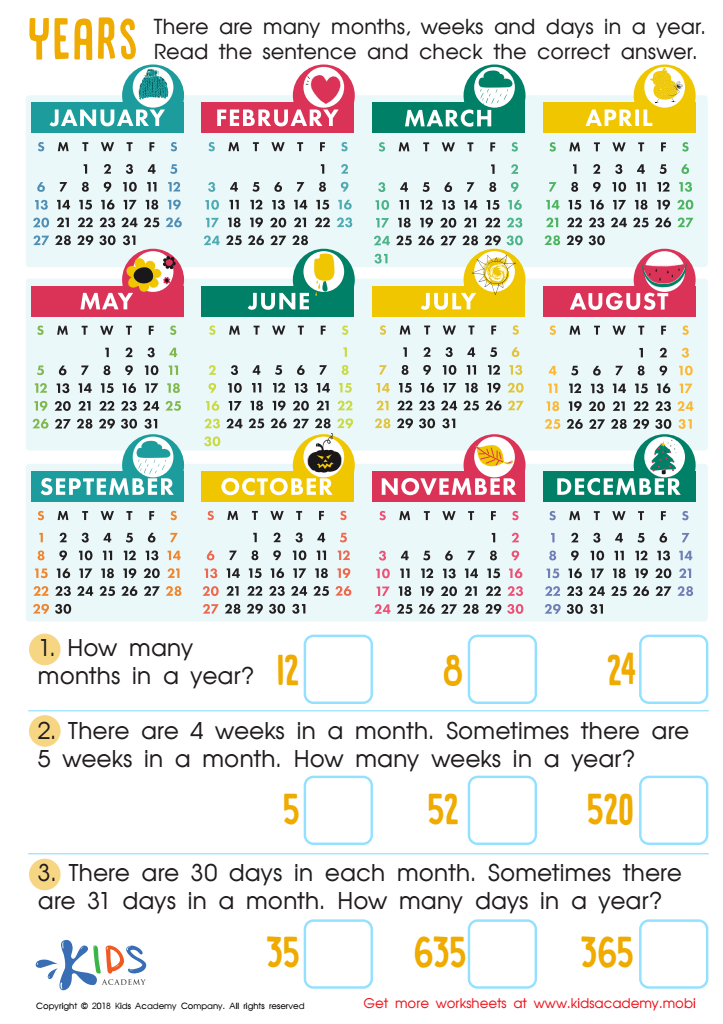
Years Worksheet
 Assign to My Students
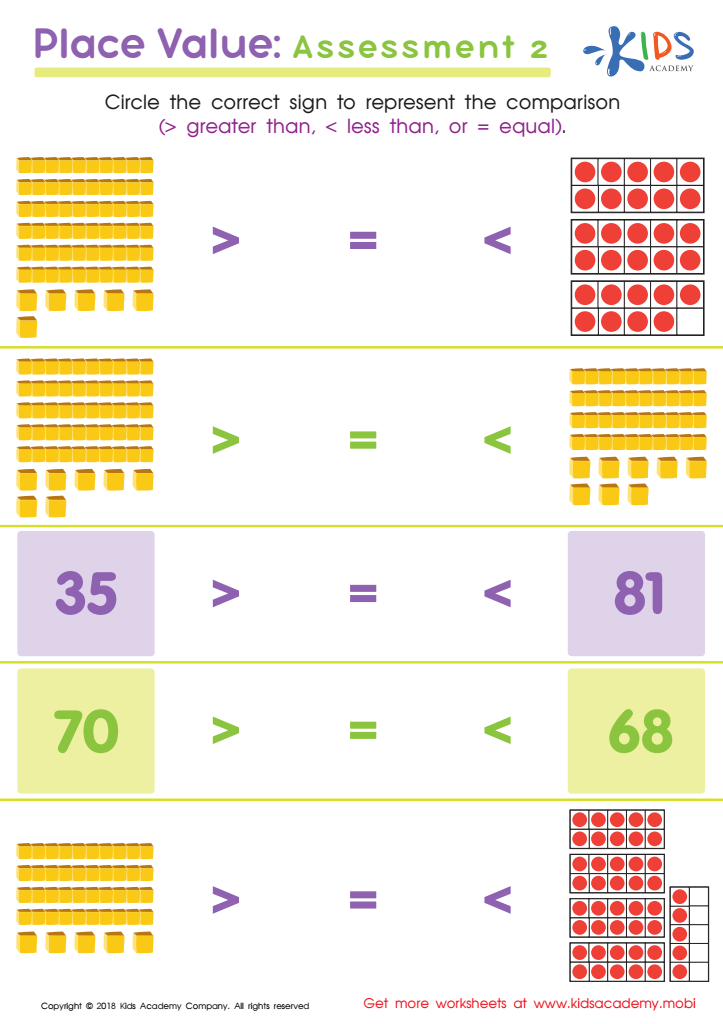
Place Value: Assessment 2 Worksheet
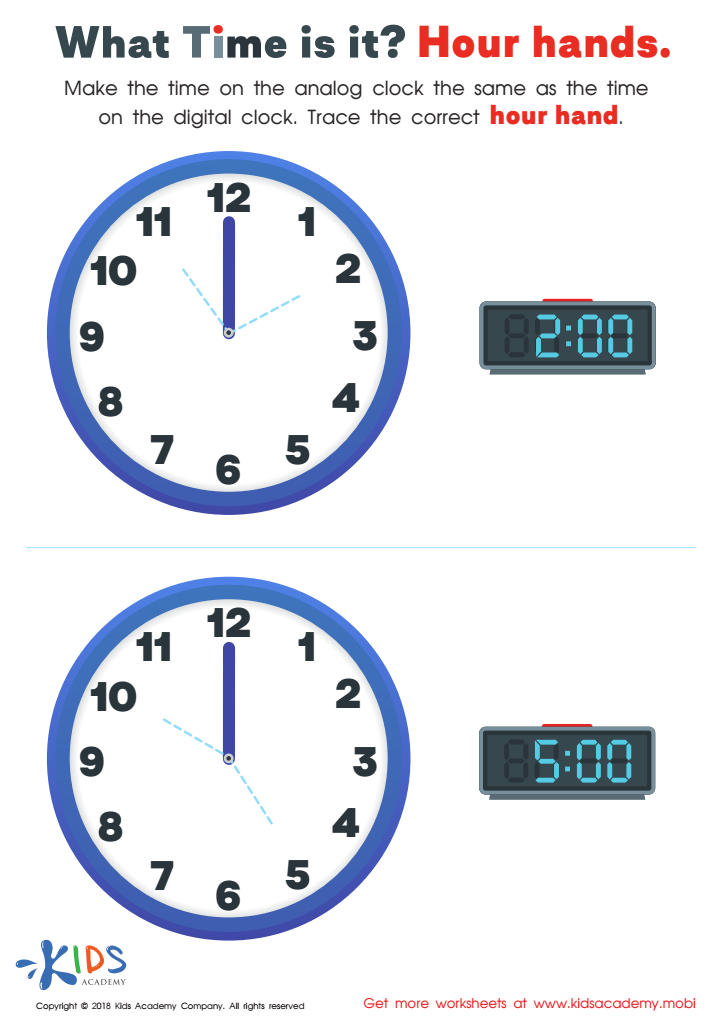
What Time Is it? Hour Hands Worksheet
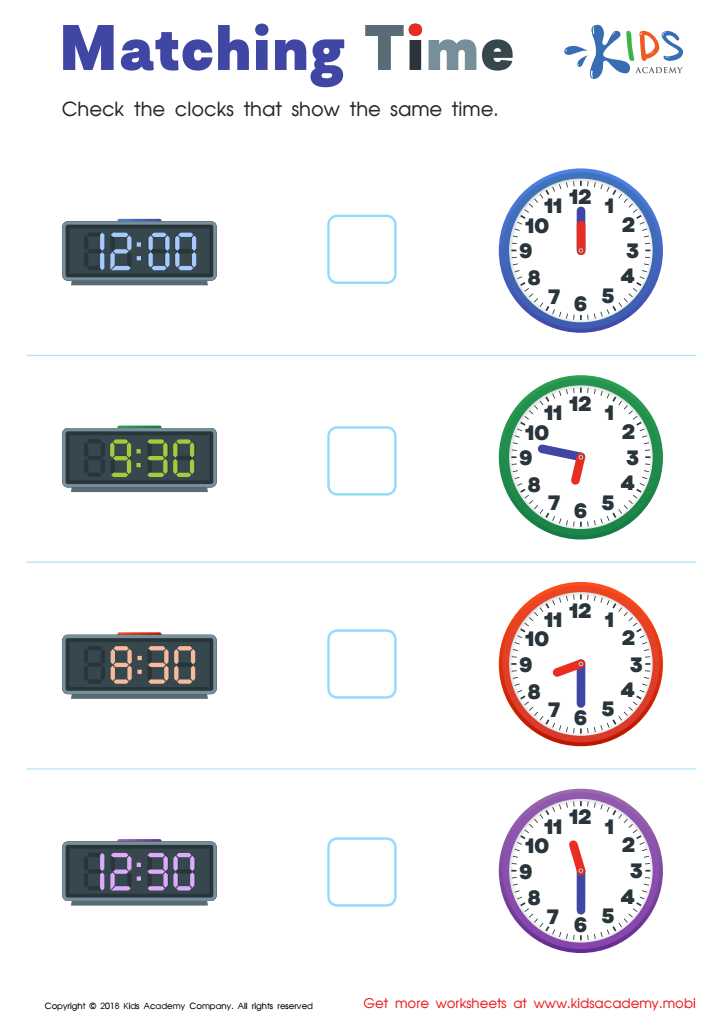
Matching Time Worksheet




Teaching young children how to read clocks is essential for their daily lives and cognitive development. At ages 4-6, children are in a prime developmental stage for grasping fundamental concepts of time, which benefits their overall learning process. Understanding how to tell time helps kids develop important skills like sequencing, which means understanding the order of events, and early literacy and numeracy.
Reading clocks instills a sense of routine and punctuality, crucial for their future academic and professional success. For parents and teachers, building these skills early on encourages responsibility and helps children manage their day independently, making them more prepared for the structure of school.
Moreover, learning to read both analog and digital clocks fosters the development of fine motor skills (as they manipulate clock hands in learning activities) and enhances cognitive skills through pattern recognition and the ability to understand and use abstract symbols.
In addition, a strong understanding of time concepts enables children to better grasp days, weeks, and months, reinforcing their ability to plan ahead. Acquiring these skills prepares kids not only for academic requirements but also for the demands of everyday life, hence making it a crucial focus for early education.








