
Real-life application Worksheets for Ages 4-6
6 filtered results
Difficulty Level
Grade
Age
-
From - To
Subject
Activity
Standards
Discover our engaging Real-life Application Worksheets designed specifically for ages 4-6! These printable activities help young learners connect school lessons with everyday situations, enhancing problem-solving and critical thinking skills. Each worksheet is interactive, colorful, and tailored for little hands, ensuring a fun, educational experience. From counting money and telling time to understanding community roles, our worksheets foster practical knowledge your child will use daily. Ideal for home or classroom use, these resources promote confident, well-rounded learners ready to navigate the world. Explore now and give your child the tools they need to succeed!
Favorites
With answer key
Interactive
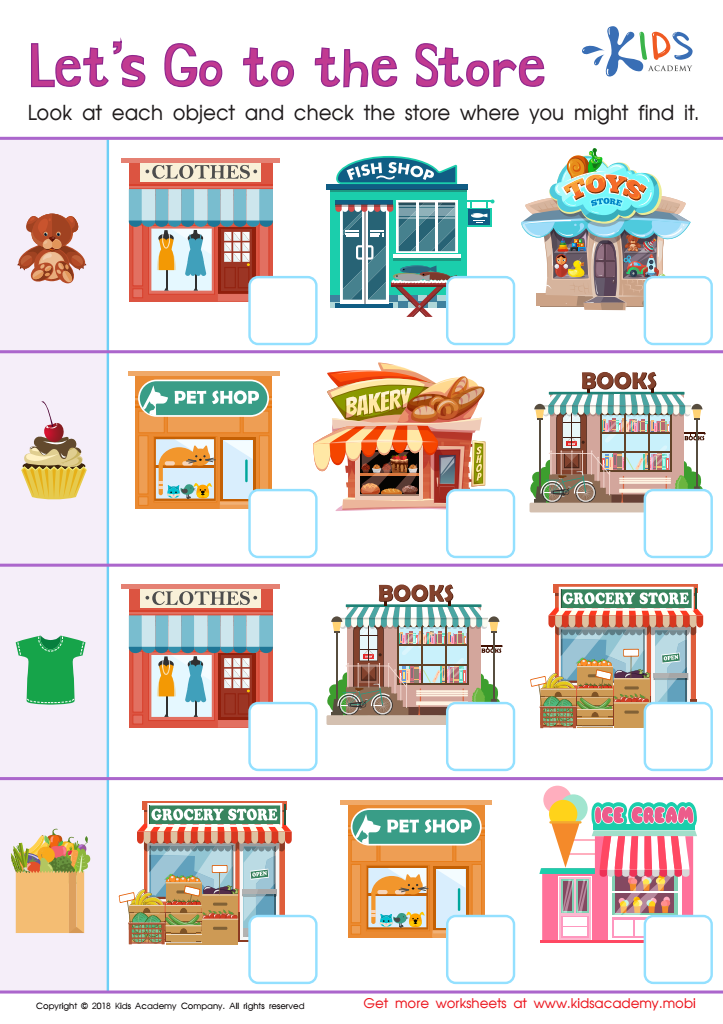
Let's Go to the Store! Worksheet
Take your kids along for errands and shopping. Ask them to identify items on this worksheet and the store where you'd buy them. See how much attention they were paying! Have fun and find out with this fun worksheet.
 Assign to My Students
Let's Go to the Store! Worksheet
Worksheet
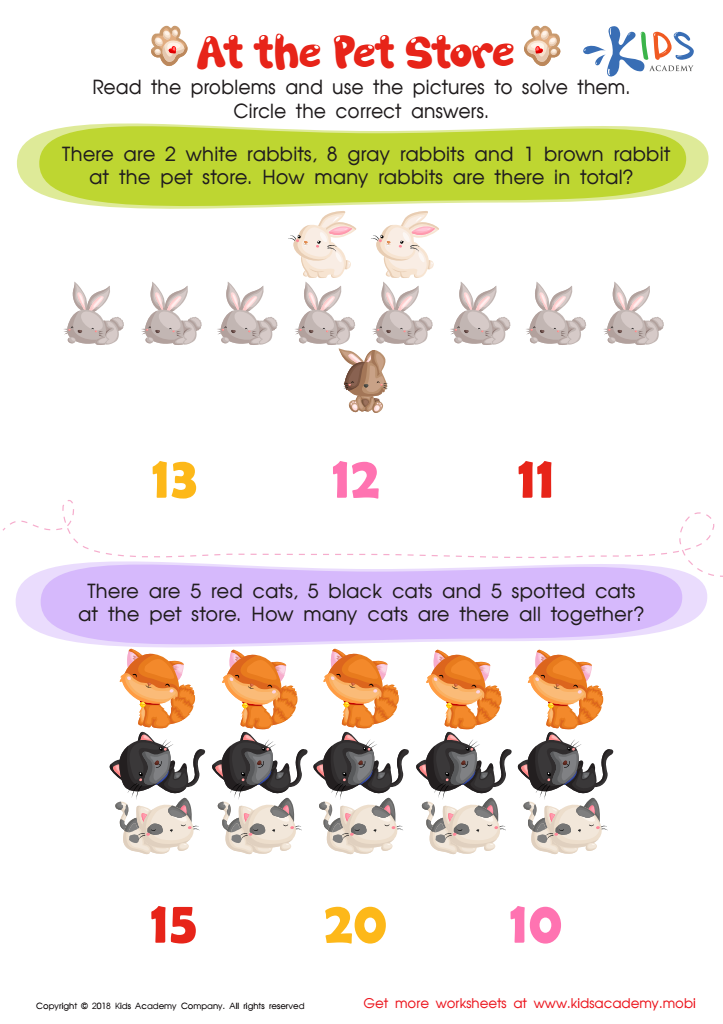
At the Pet Store Word Problems Worksheet
Kids love pet stores! This free, fun PDF worksheet engages little learners to solve word problems with counting and addition. With adorable animals to focus on, your child will practice arithmetic with three addends to find the sum! Help them gain success with word addition word problems.
At the Pet Store Word Problems Worksheet
Worksheet
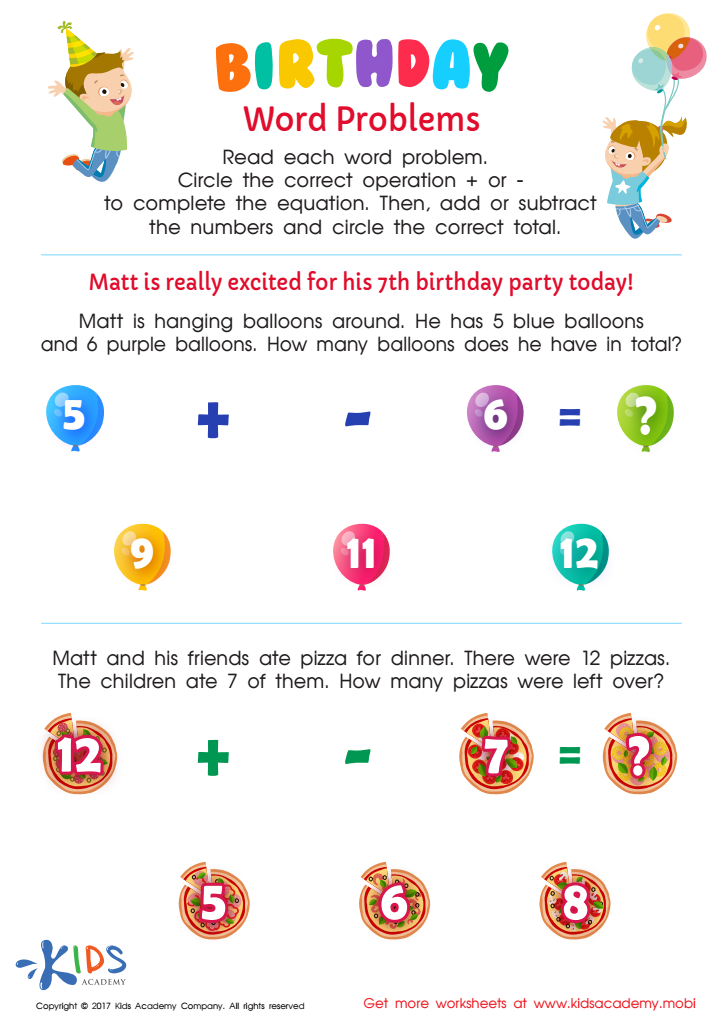
Birthday Word Problems Substraction Worksheet
This worksheet, Birthday Word Problems, is a great way to improve your child's math and literacy skills. It features tricky subtraction equations based on a birthday celebration - perfect for kids who love birthdays!
Birthday Word Problems Substraction Worksheet
Worksheet
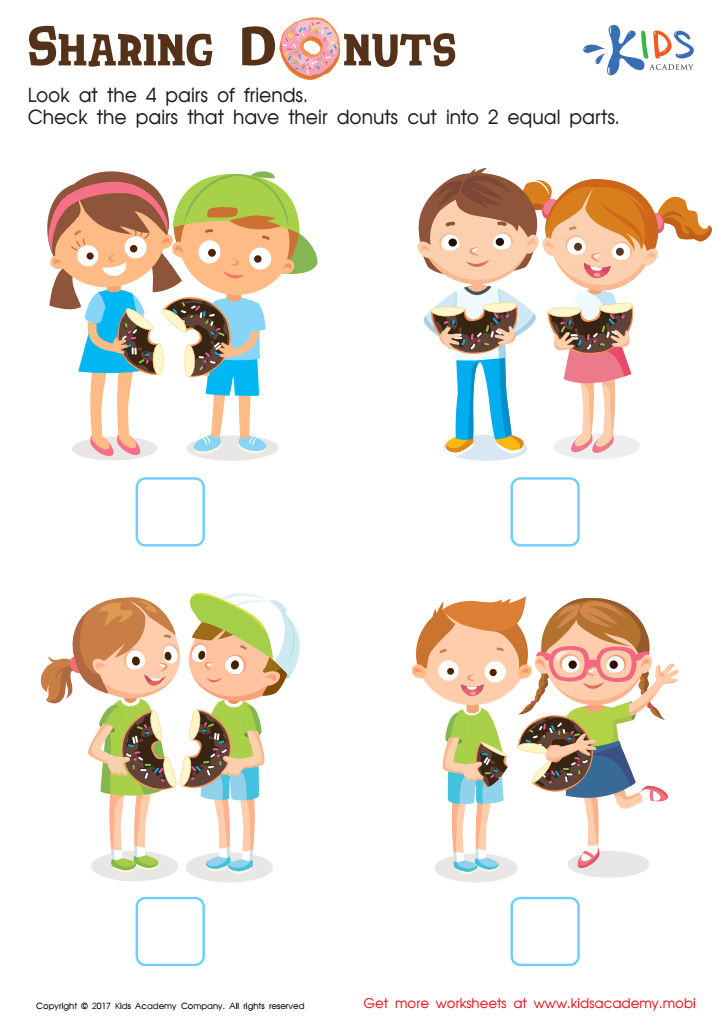
Sharing Donuts Worksheet
Get your kids to check which of the 4 pairs of friends in the worksheet have evenly-split donuts. No one likes being cheated out of a treat, so it's important to make sure the donuts are divided fairly. Plus, your kids will love the challenge!
Sharing Donuts Worksheet
Worksheet
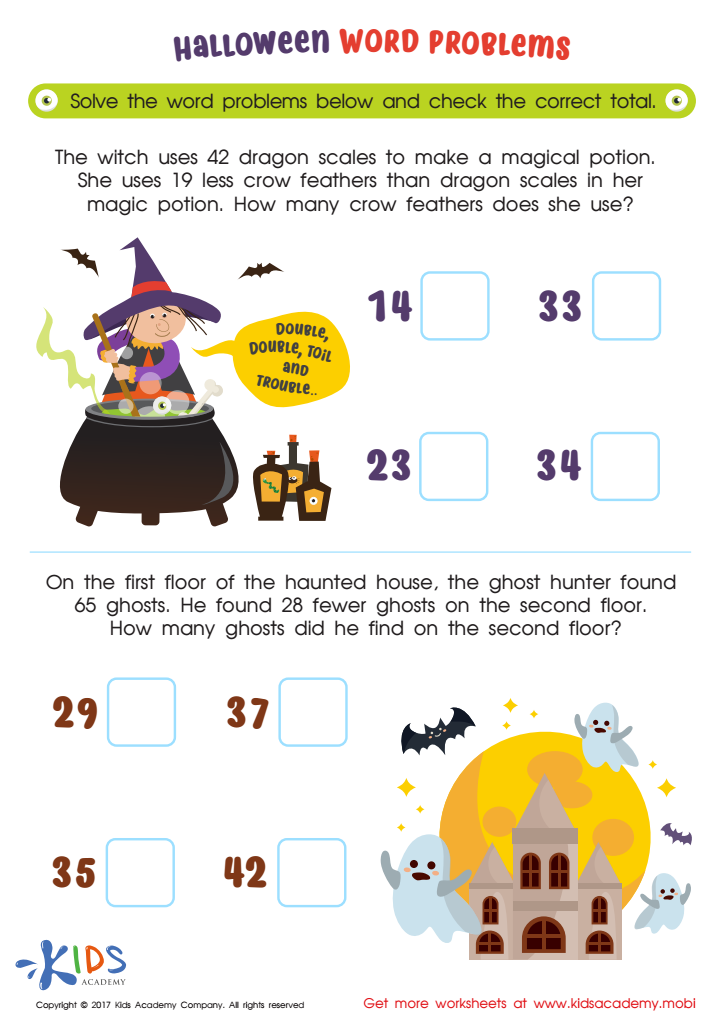
Halloween Word Problems Printable
Ghosts, witches, and other spooky characters make these problems exciting and interactive. Get ready to have some math fun!
Halloween Word Problems Printable
Worksheet
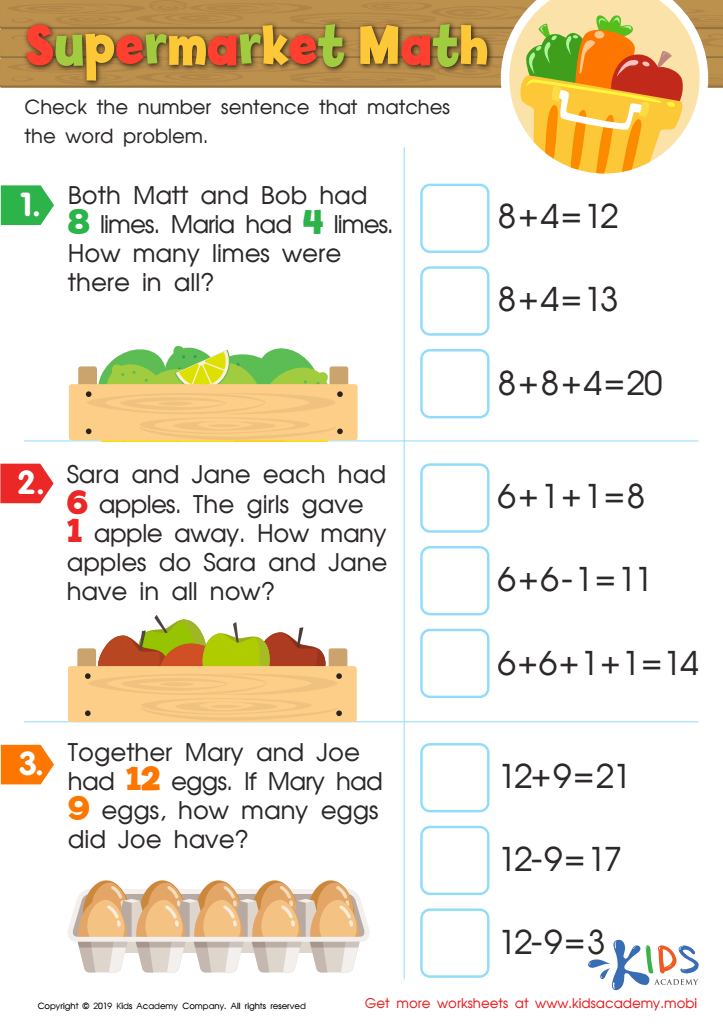
Supermarket Math Worksheet
Take your kids to the supermarket and ask what they're looking forward to buying. Help them solve the three questions in the worksheet by interpreting each one into an equation, then choose the right answer.
Supermarket Math Worksheet
Worksheet
Join Kids Academy for Free
Who is primarily going to use this learning content?







Introducing real-life applications to children aged 4-6 is crucial for several reasons. This approach helps bridge the gap between abstract concepts and tangible experiences, fostering a deeper understanding and retention of information. Young children are naturally curious and eager to explore the world around them, and when learning is connected to real-life scenarios, it becomes more meaningful and engaging.
For parents and teachers, embedding real-life applications in early education enhances cognitive development by stimulating problem-solving and critical thinking skills. For instance, using everyday activities like cooking to teach basic math concepts – counting, measuring, and following a sequence – can turn a mundane chore into a valuable learning experience. Additionally, incorporating real-world examples helps in developing social and communication skills. Simple tasks like grocery shopping can teach children about money, making choices, and health.
Real-life learning also nurtures practical skills that extend beyond the classroom. By solving real-world problems, children gain a sense of accomplishment and confidence that encourages lifelong learning. This hands-on approach to education cultivates curiosity and a love for discovery, equipping young learners with a solid foundation for academic success and personal growth. Through meaningful and authentic experiences, children can better connect to their environment and see the relevance of what they learn in their daily lives.








