Spelling skills improvement Worksheets for Ages 4-6
3 filtered results
-
From - To
Enhance your child's spelling abilities with our Spelling Skills Improvement Worksheets, designed specifically for ages 4-6. Our engaging, interactive worksheets foster essential phonetic awareness and vocabulary development while making learning enjoyable. Kids will practice letter recognition, word formation, and spelling through a variety of fun activities and exercises. These worksheets support early literacy skills and encourage children to express themselves confidently. Perfect for both home and classroom use, our resources are tailored to meet the developmental needs of young learners. Help your child build a strong foundation in spelling with our thoughtfully crafted worksheets today!
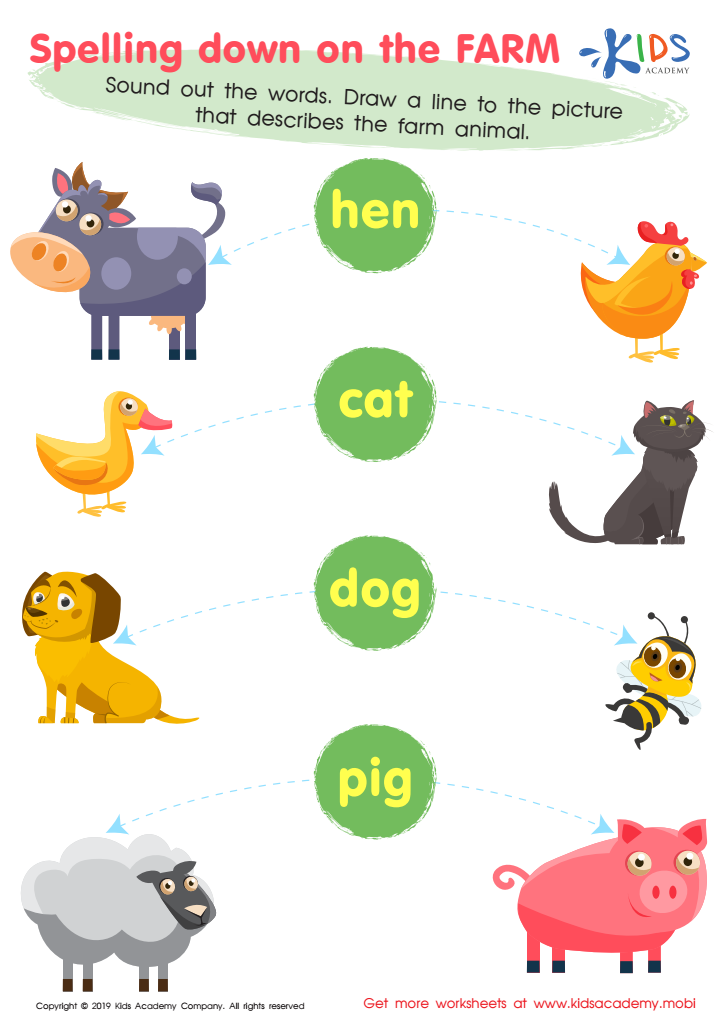
Spelling Down on the Farm Worksheet
 Assign to My Students
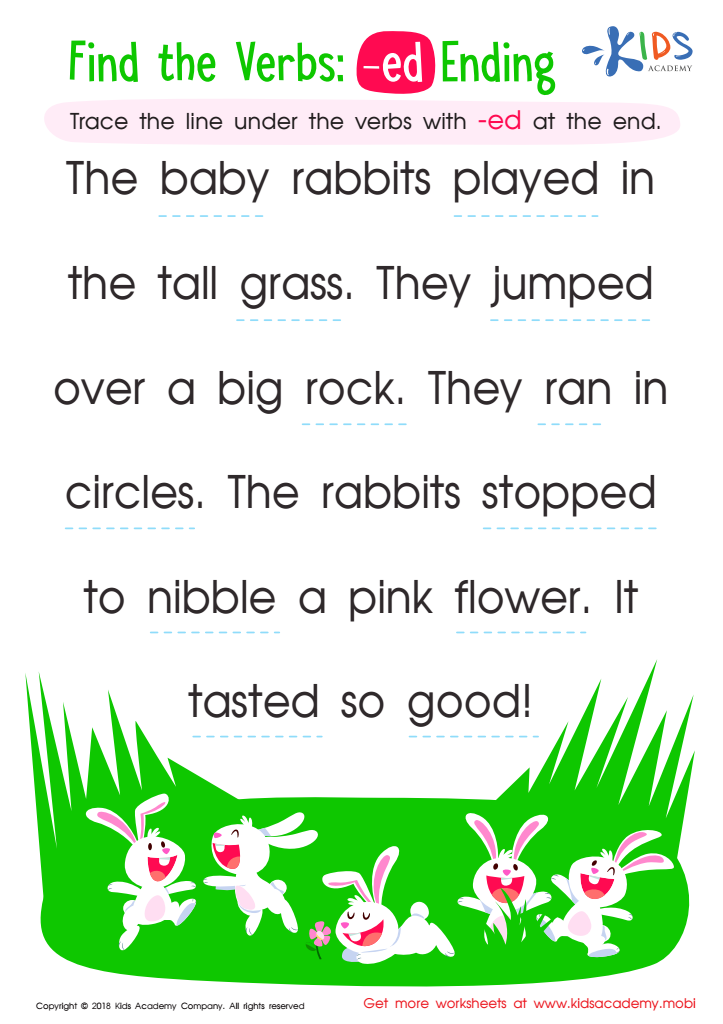
Find The Verbs: -ed Ending Worksheet
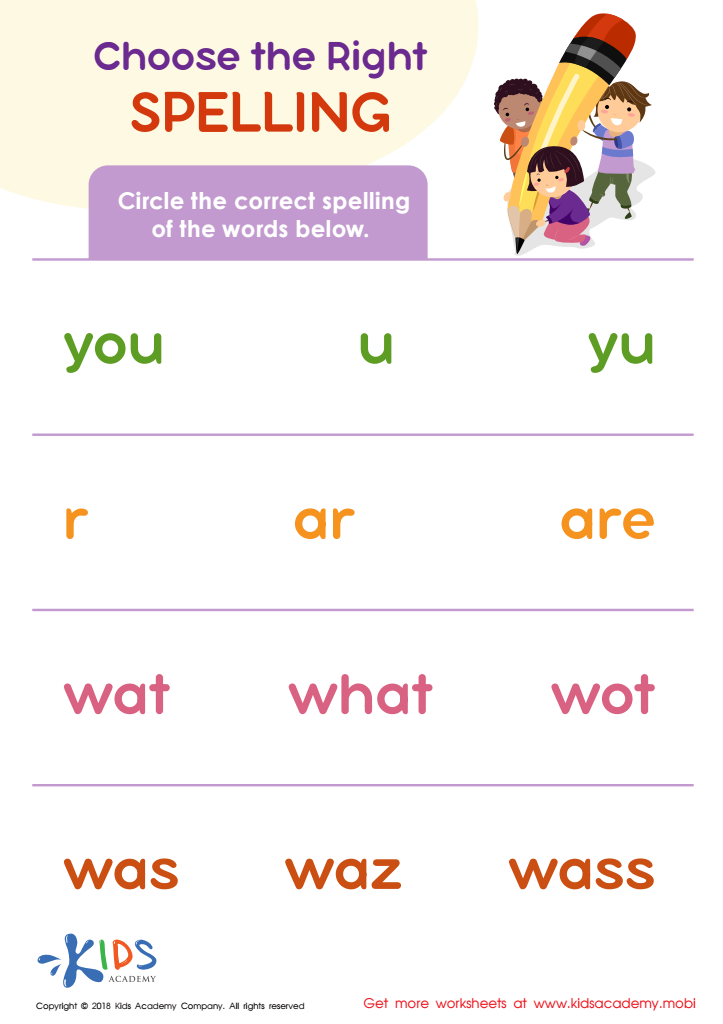
Choose the Right Spelling Worksheet






Spelling skills are foundational elements of literacy that significantly impact a child’s overall academic development. For children aged 4-6, the early stages of literacy instruction are crucial as they are beginning to connect sounds with letters and form words. Strong spelling skills enhance reading abilities and comprehension, allowing children to recognize familiar words quickly and accurately. This recognition fosters a love for reading, which is vital for lifelong learning.
Moreover, improving spelling skills helps develop fine motor skills through writing activities, contributing to a child’s cognitive and physical development. Successfully learning to spell reinforces self-confidence and motivates children to communicate their thoughts and ideas more effectively, both in writing and verbally.
Teachers and parents play an essential role in this process. They can provide engaging, age-appropriate spelling activities that make learning fun, such as games and songs. Encouraging a positive attitude toward spelling helps children feel empowered in their learning journey.
Ultimately, fostering strong spelling skills at a young age lays the groundwork for better academic performance in the future, shaping children into proficient readers and writers who can thrive in their education and personal lives. Thus, adult involvement and support are key in this developmental stage.








