Subtraction practice Worksheets for Ages 4-6 - Page 4
78 filtered results
-
From - To
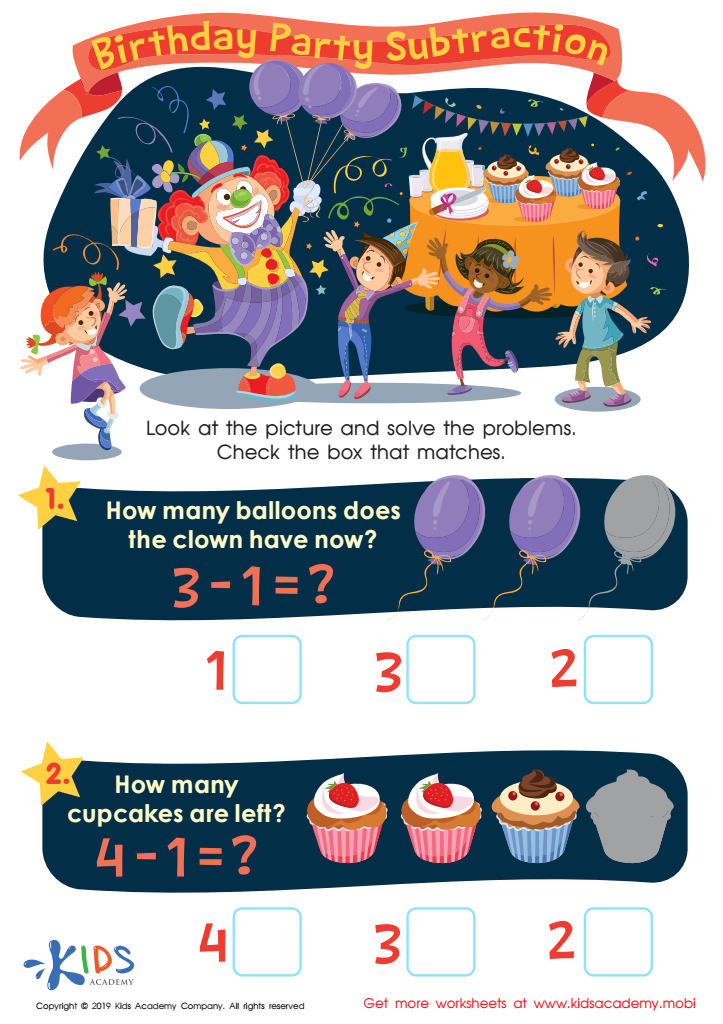
Birthday Party Subtraction Worksheet
 Assign to My Students
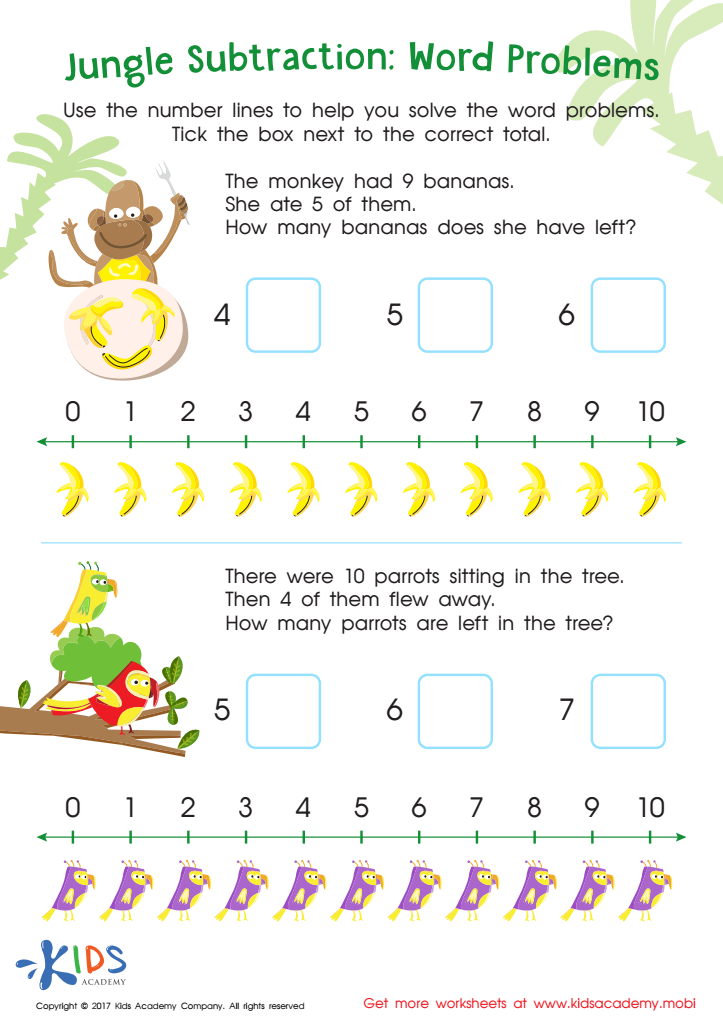
Jungle Subtraction Word Problems Substraction Worksheet
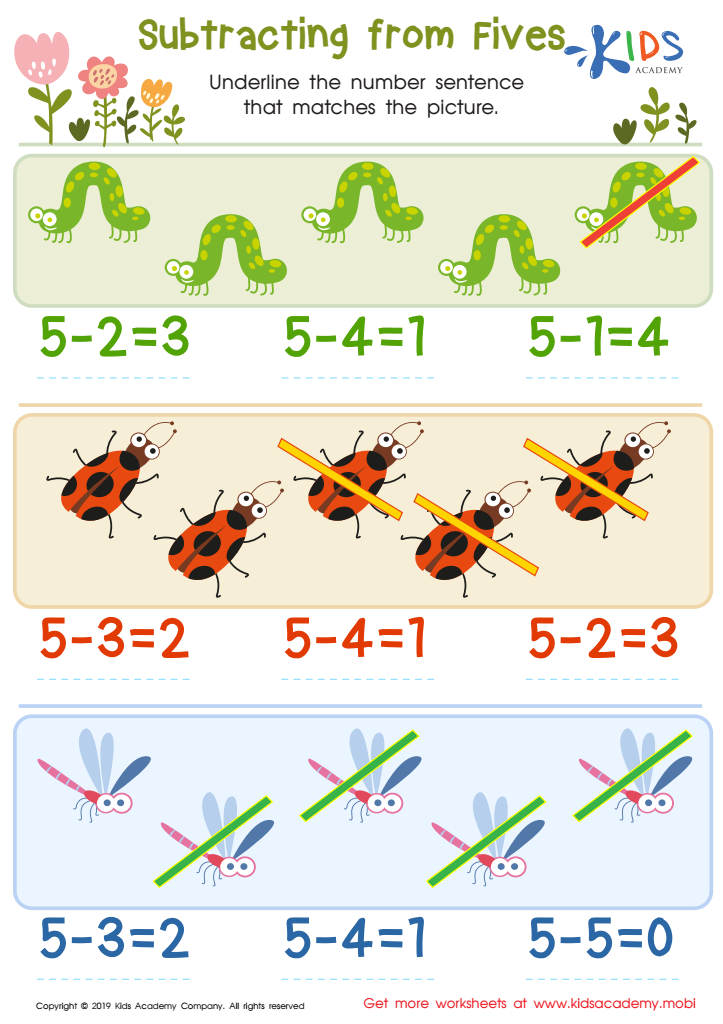
Subtracting From Fives Worksheet
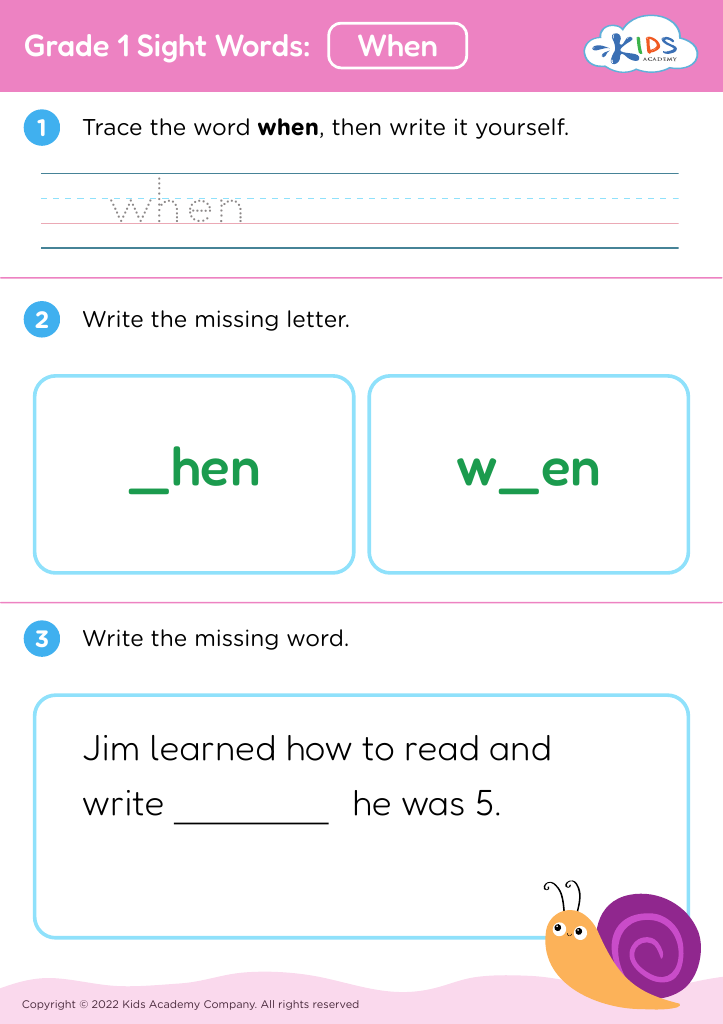








Subtraction practice for children aged 4-6 is fundamental in building a robust foundation for future mathematical learning. At this early age, young minds are highly receptive and capable of absorbing new concepts quickly. Practicing subtraction helps develop critical cognitive skills such as logical reasoning, problem-solving, and analytical thinking. These skills are not only essential for math but also transferable to other areas of learning and daily life.
Understanding subtraction also aids in comprehension of basic numerical relationships, which is crucial for more advanced arithmetic concepts. When children practice subtraction, they begin to grasp the idea of taking away, which is a precursor to future mathematical operations like multi-digit subtraction, division, and even algebra.
Moreover, engaging young learners in subtraction exercises boosts their confidence and reduces anxiety around mathematics. A nurturing environment, whether at home or in the classroom, where subtraction is practiced routinely and positively, allows children to view learning math as a fun and exciting challenge rather than a daunting task.
Parents and teachers thus play a pivotal role in early math education. Regular subtraction practice enables young children to develop a strong math foundation, bolsters their confidence, and fosters a lifelong appreciation and understanding of mathematics, setting them up for academic success.








