Understanding constellations Worksheets for Ages 4-6
3 filtered results
-
From - To
Discover the wonders of the night sky with our "Understanding Constellations Worksheets" designed specifically for children aged 4-6. These engaging worksheets introduce young learners to constellations in a fun and interactive way. Through colorful illustrations and simple activities, kids will enhance their knowledge of various star patterns while developing essential skills in literacy and critical thinking. Our worksheets encourage creativity and curiosity, making learning enjoyable through drawing, tracing, and matching games. Perfect for at-home learning or classroom activities, these resources inspire a love for astronomy and help children explore the beautiful mysteries of the universe right from an early age!
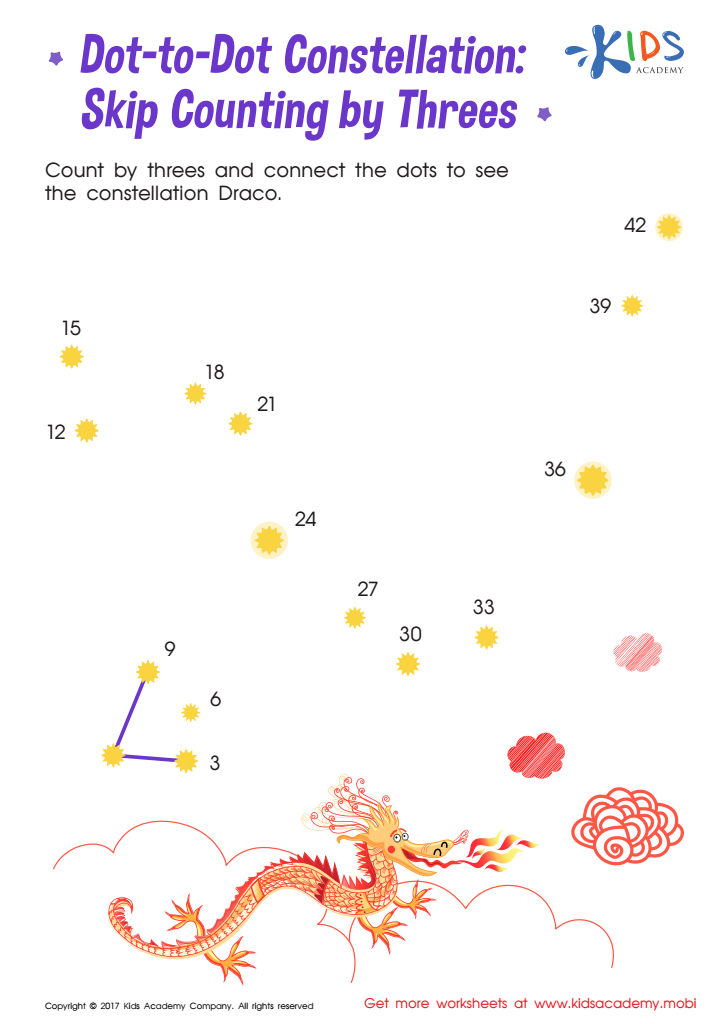
 Assign to My Students
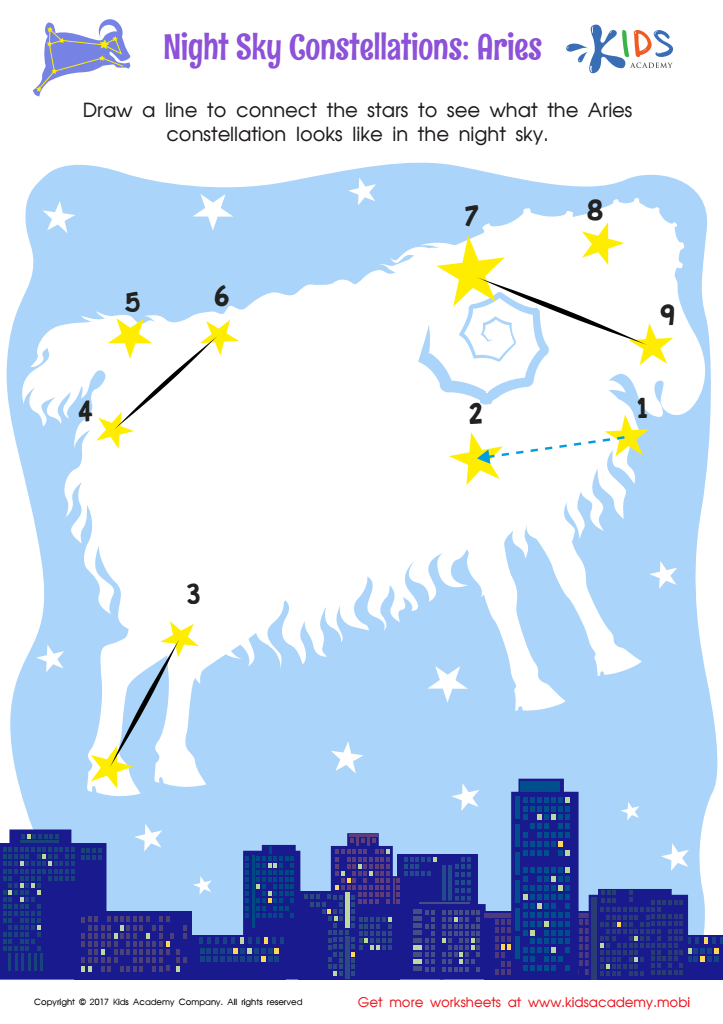
Night Sky Constellations: Aries Worksheet
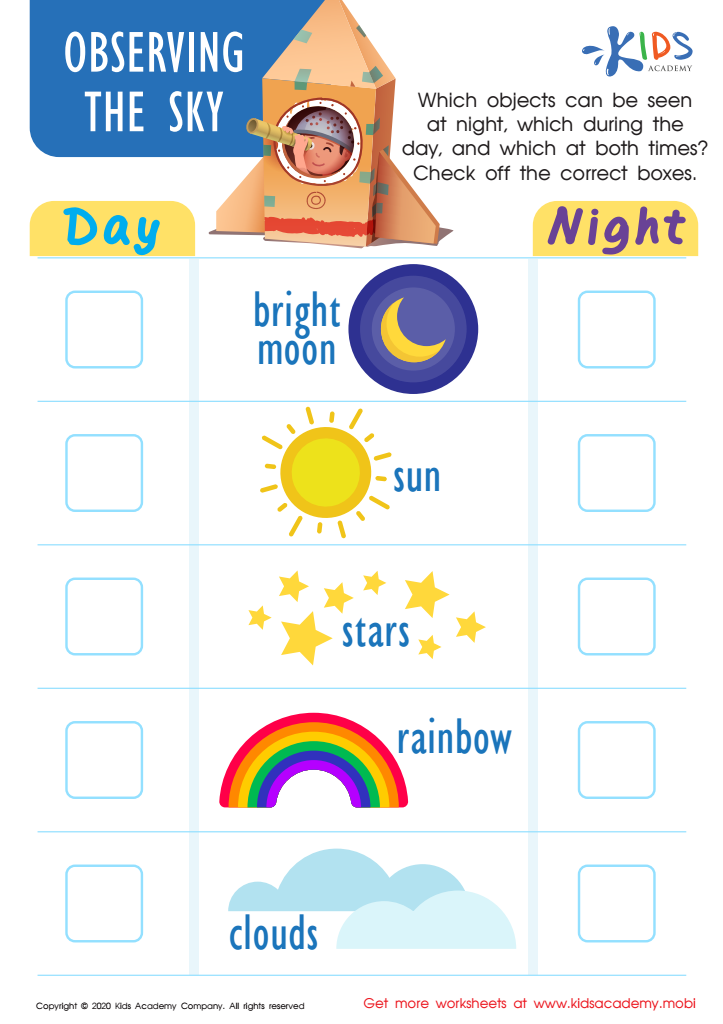
Observing the Sky Worksheet






.jpg)

Understanding constellations is essential for young children aged 4-6 as it cultivates curiosity and fosters a love for learning about the natural world. Engaging with the night sky allows children to enhance their observational skills and encourages them to ask questions about their surroundings. This age group is particularly adept at absorbing information through playful activities, and with constellations, parents and teachers can create exciting lessons that integrate storytelling, art, and imaginative play.
Furthermore, introducing constellations promotes early STEM skills, as children learn about patterns, shapes, and sizes. It offers an opportunity for them to explore concepts like mapping and spatial recognition in a tangible way. Moreover, discussing mythology and history related to various constellations can introduce cultural awareness, connecting children to different civilizations' stories and values.
Socially, exploring constellations can foster collaborative projects, where children work together to create their versions of constellations, share their findings, or even prepare star-gazing events for families. On a larger level, these activities help build critical thinking and literacy skills, as they often involve storytelling and imaginative interpretation. Overall, understanding constellations lays a foundation for lifelong learning and appreciation for the world beyond their immediate environment.








