Understanding equivalence Worksheets for Ages 4-6
3 filtered results
-
From - To
Introduce young learners, ages 4-6, to foundational math concepts with our "Understanding Equivalence Worksheets." These skill-building activities are designed to help children recognize and understand the idea of equivalence in a fun and engaging manner. Through colorful and interactive exercises, kids will learn to identify equal quantities, match sets, and understand basic equality concepts. Our worksheets make learning equivalence an enjoyable experience while fostering critical thinking and problem-solving skills. Perfect for early childhood education, these resources are an ideal way to give your child a head start in math. Explore our printable worksheets to boost your child's confidence and math abilities today!
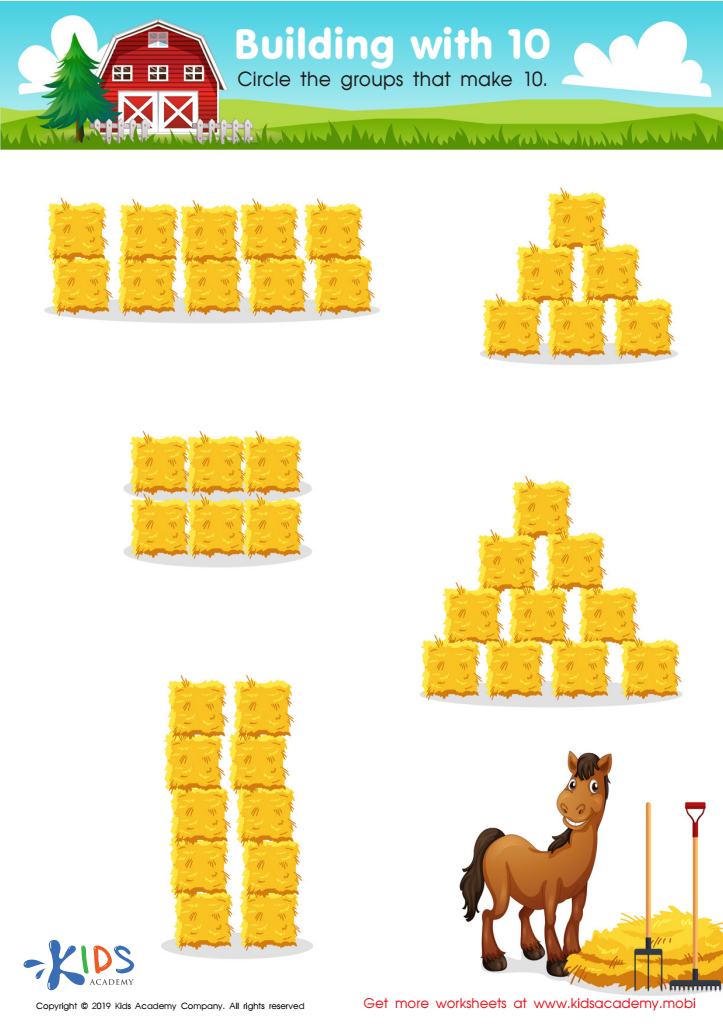
Building with 10 Worksheet
 Assign to My Students
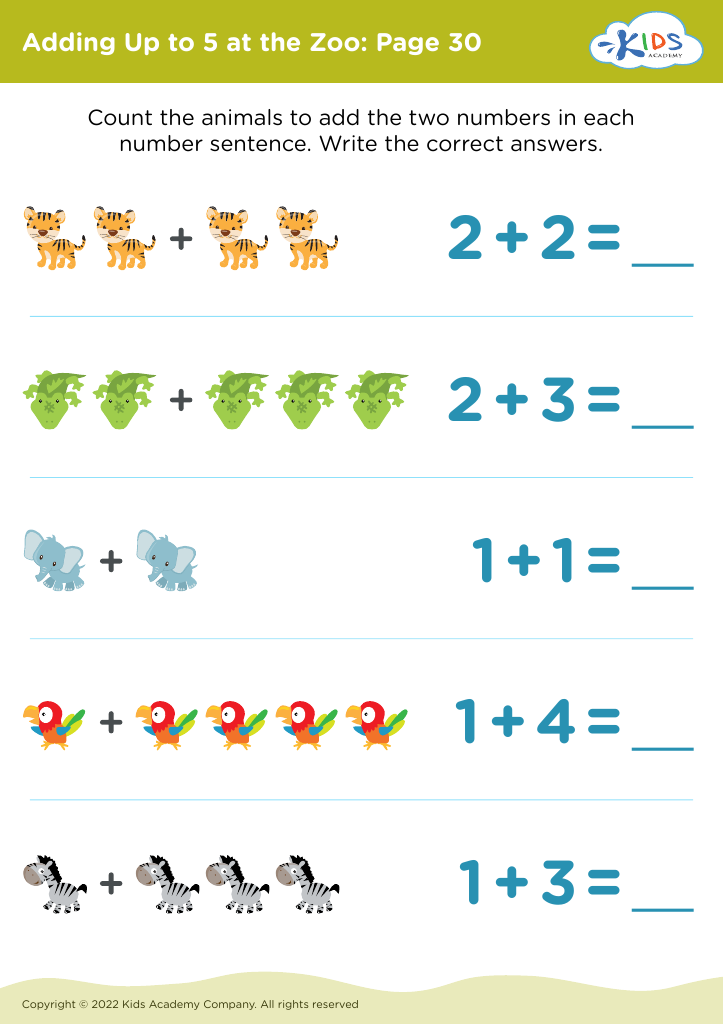
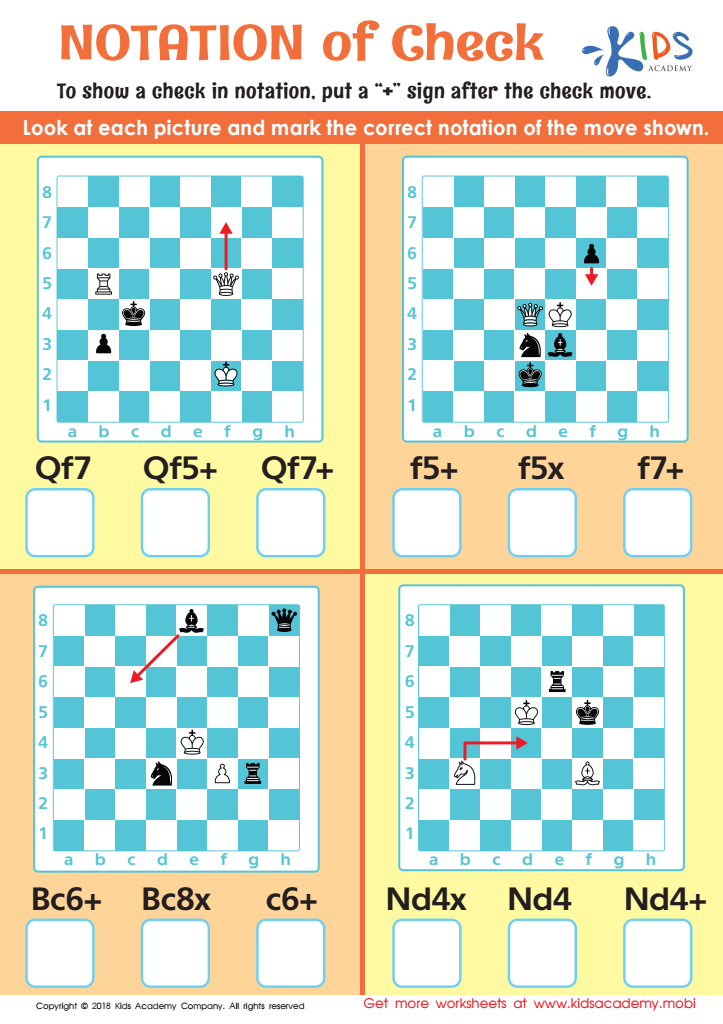
Notation of Check Worksheet







Understanding equivalence from a young age is crucial for children's cognitive development, particularly in mathematical thinking. For children aged 4-6, grasping the concept of equivalence helps lay the foundation for more complex math skills like addition, subtraction, and later on, algebra. Equivalence teaches children that different sets or groups can be equal even if they look different, fostering mental flexibility and problem-solving skills.
For example, understanding that three apples are equivalent to three oranges in quantity, despite being different items, helps children comprehend the principle of "same amount but different appearance." This fundamental skill is also essential in everyday life, such as sharing fairly with siblings or friends ('You get as many slices of cake as I do') and recognizing equal trading value ('Two small toys are the same as one big toy').
Teachers and parents play a pivotal role in nurturing this understanding through hands-on activities and real-life examples. Using educational games, puzzles, and everyday scenarios allows young minds to explore equivalence concretely. By doing so, we help children build confidence, improve critical thinking, and develop a positive attitude towards learning mathematics and life skills in general. Supporting their grasp of equivalence sets them on a pathway to academic success and meaningful real-world application.








