Understanding number sequence Worksheets for Ages 4-6
3 filtered results
-
From - To
Discover engaging "Understanding Number Sequence" worksheets designed for kids aged 4-6. These fun, educational resources from Kids Academy help young learners grasp vital counting and numerical order concepts through colorful activities and interactive exercises. Each worksheet is crafted to enhance foundational math skills, promote logical thinking, and build confidence. Perfect for both classroom and home use, these printables ensure that children develop a keen sense of number sequencing in an enjoyable and effective manner. Dive into our collection to support your child's early math journey with Kids Academy's expertly designed learning tools.
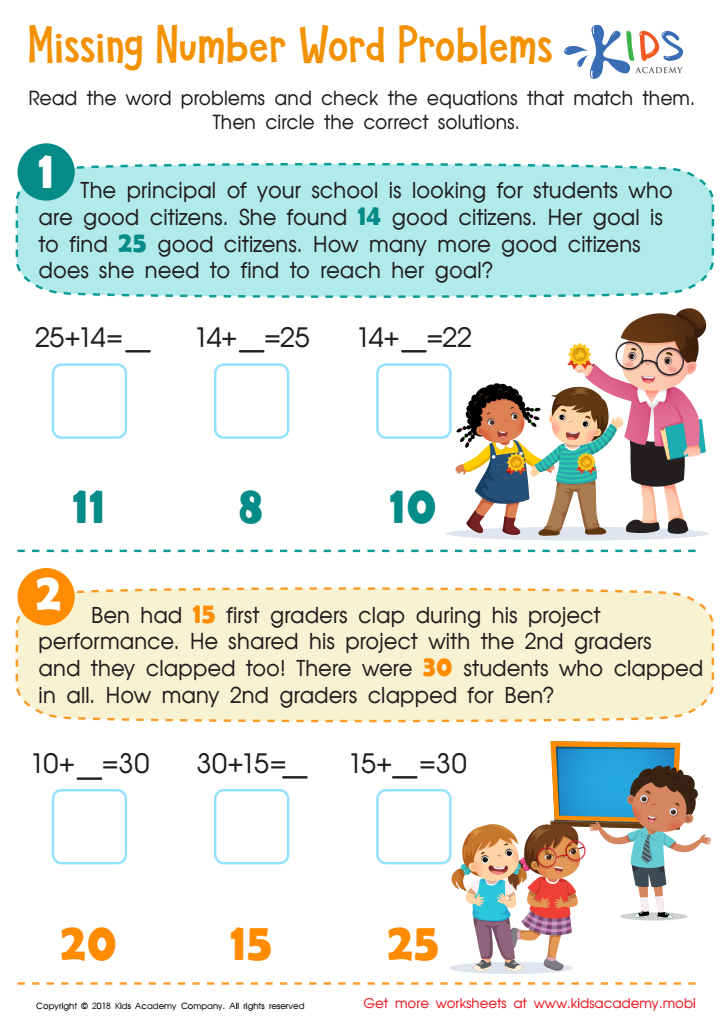
Missing Number Word Problems Worksheet
 Assign to My Students
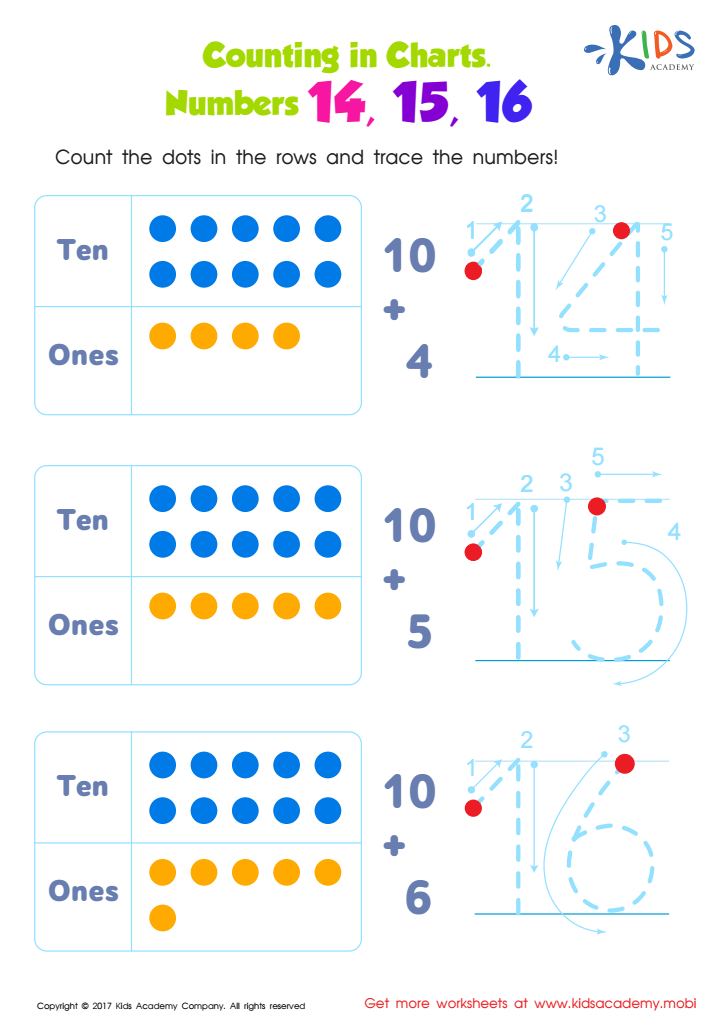
Number Tracing Worksheet


.jpg)



Understanding number sequences is crucial for young children, ages 4-6, because it lays the foundation for essential math skills they will use throughout their lives. At this age, children are developing cognitive skills, and grasping the concept of number sequences helps enhance their logical thinking and problem-solving abilities.
Number sequences teach children the order and pattern of numbers, which is fundamental for basic arithmetic operations like addition and subtraction. This understanding also aids in the development of more complex mathematical concepts such as multiplication, division, and even algebra later on. Early familiarity with number sequences fosters numerical fluency, enabling children to count forwards and backwards with ease and confidence.
In addition, recognizing number sequences supports other academic areas. For instance, it enhances attention to detail and improves memory as children practice recalling and predicting number patterns. This skill translates to better performance in areas like reading and following instructions, where sequences and patterns are also prevalent.
For parents and teachers, fostering an understanding of number sequences through games, activities, and consistent practice ensures that children build a solid math foundation. This not only makes future math learning more accessible and less intimidating but also encourages a positive attitude towards math that can contribute to academic success across multiple disciplines.








