
Understanding plant growth Worksheets for Ages 4-6
3 filtered results
Difficulty Level
Grade
Age
-
From - To
Subject
Activity
Standards
Explore our engaging “Understanding Plant Growth Worksheets” designed specifically for children ages 4-6! These worksheets are crafted to introduce young learners to the fascinating world of plants through fun, interactive activities. With colorful illustrations and simple concepts, children will discover how plants grow, the parts of a plant, and what they need to thrive. Perfect for preschool and early grade classrooms, our resources support early science education in a playful manner. Encourage curiosity and hands-on learning about nature while fostering critical thinking skills. Download our worksheets today to inspire your little ones on their journey of discovery!
Favorites
With answer key
Interactive
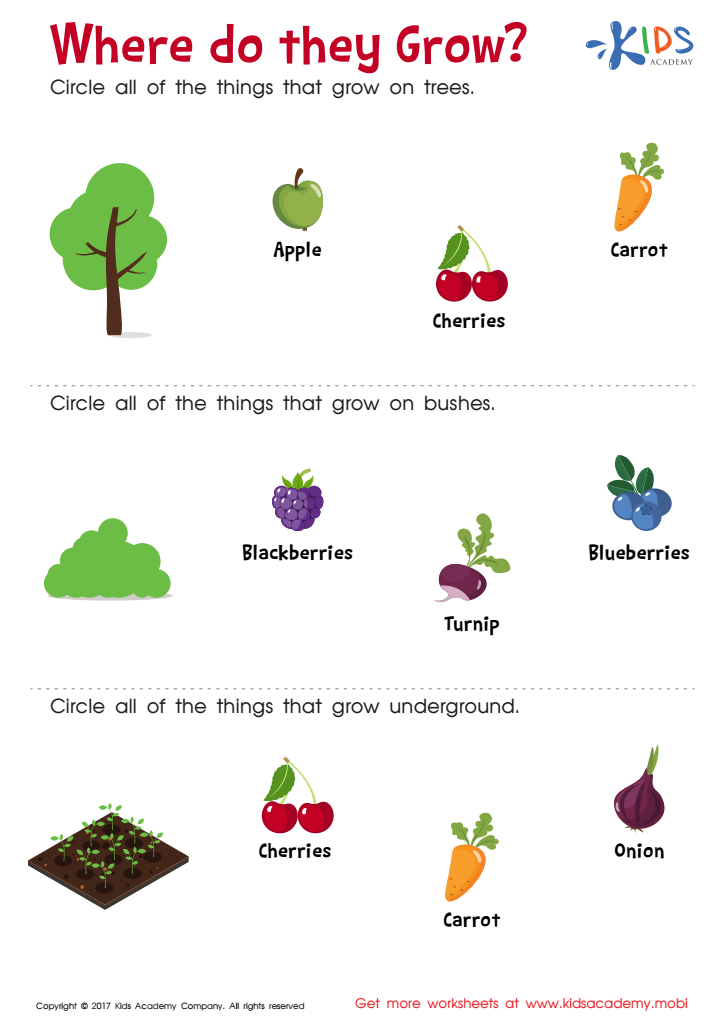
Where Do They Grow Worksheet
With this worksheet, your child can learn about apples, cherries, and blueberries and gain important science skills.
 Assign to My Students
Where Do They Grow Worksheet
Worksheet
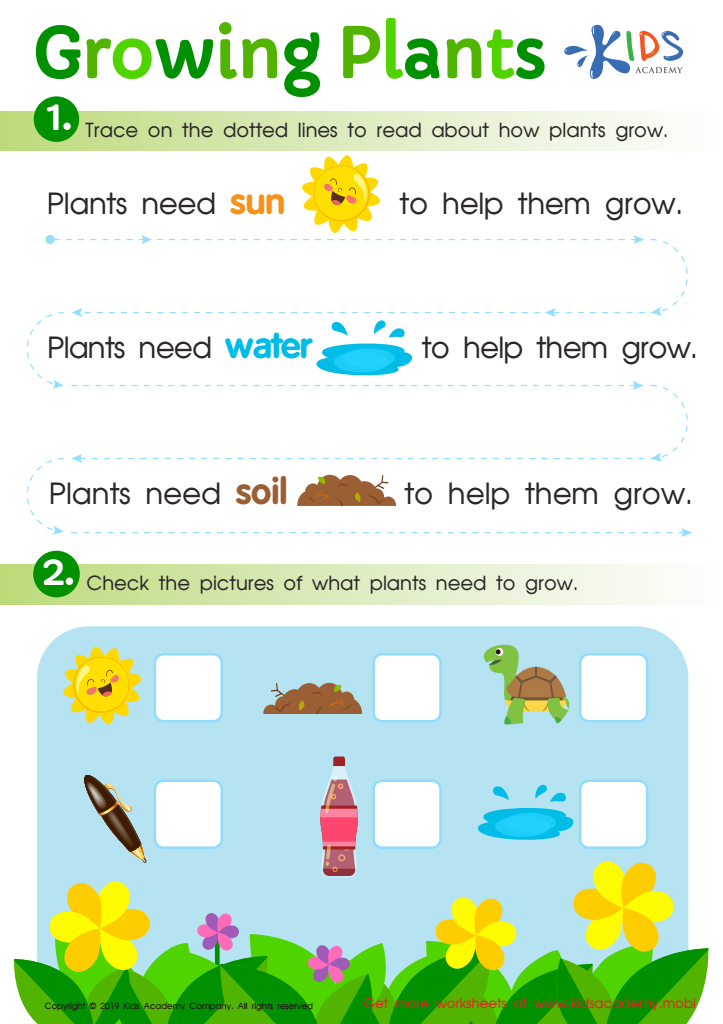
Growing Plants Worksheet
Young gardeners and scientists can learn about what helps plants grow with this fun PDF worksheet. Kids will trace lines to practice left-to-right patterning and use pictures from the rebus story to guide them. Learn that plants need sunshine, water and soil, then check off pictures of what each plant needs. It's an engaging and educational way to help their plants become big and strong.
Growing Plants Worksheet
Worksheet
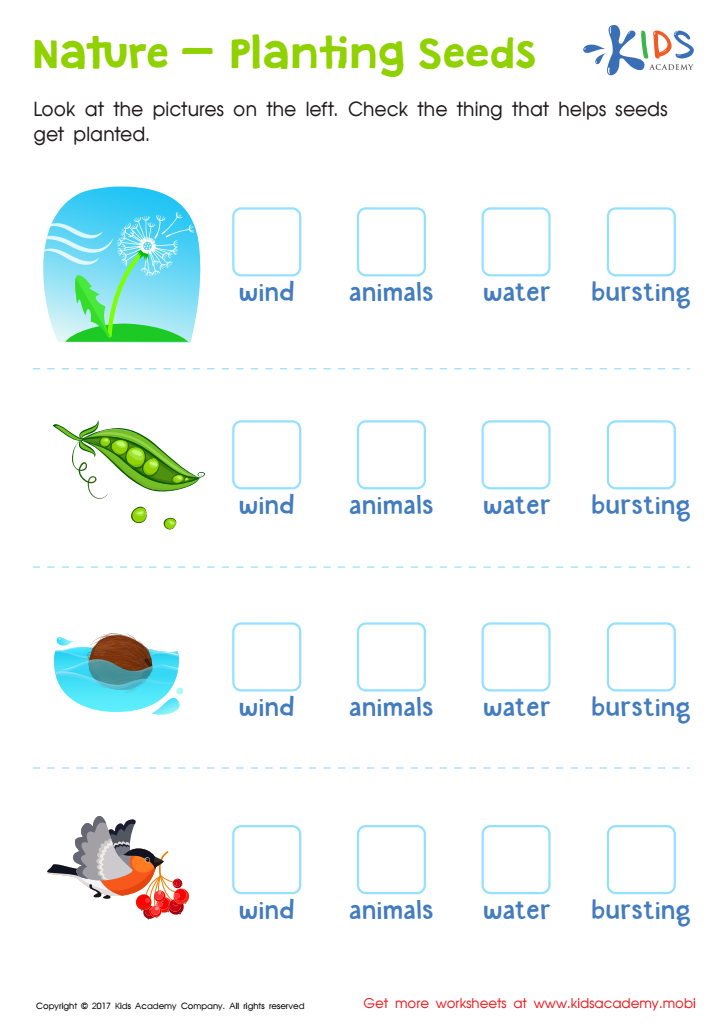
Nature Planting Seeds Worksheet
Help your child explore the fascinating cycle of plants and seeds with this worksheet. They'll learn how plants grow and how seeds travel to the ground. Challenge them to identify the right way each seed gets planted!
Nature Planting Seeds Worksheet
Worksheet
Join Kids Academy for Free
Who is primarily going to use this learning content?








Understanding plant growth is essential for children aged 4-6 as it fosters a lifelong appreciation of nature and the environment. At this young age, children are naturally curious, making it an ideal time to introduce concepts of growth and change. By engaging with plants, children develop observation skills, learning to notice differences in size, color, and health.
Moreover, teaching children about plant growth instills valuable lessons about responsibility and care. Watching a seed sprout into a plant provides a tangible example of nurturing, leading children to understand the importance of taking care of living things. Activities such as planting seeds can bolster fine motor skills, enhance critical thinking, and encourage inquiry-based learning.
In addition, understanding plant growth connects to fundamental concepts in science, fostering early STEM (Science, Technology, Engineering, Mathematics) skills. Children learn about life cycles, the needs of living organisms, and ecosystems in a hands-on, engaging manner.
Finally, talks of plants and food can promote healthy eating habits. Educating young ones about where food comes from encourages them to make nutritious choices as they grow. Thus, parents and teachers play a crucial role in guiding children’s exploration of the natural world through the lens of plant growth.








