
Understanding punctuation Worksheets for Ages 4-6
3 filtered results
Difficulty Level
Grade
Age
-
From - To
Subject
Activity
Standards
Discover our engaging "Understanding Punctuation" worksheets tailored for ages 4-6. These resources introduce young learners to essential punctuation marks like periods, commas, and question marks through colorful, interactive activities. Designed to make learning fun, our worksheets incorporate exercises that support preschool and kindergarten students in recognizing and using punctuation correctly in sentences. By practicing with our easy-to-follow prompts and playful illustrations, children will build a strong foundation for their reading and writing skills. Perfect for both classroom settings and at-home learning, our worksheets foster literacy development while sparking kids' interest in language. Explore our collection today!
Favorites
With answer key
Interactive
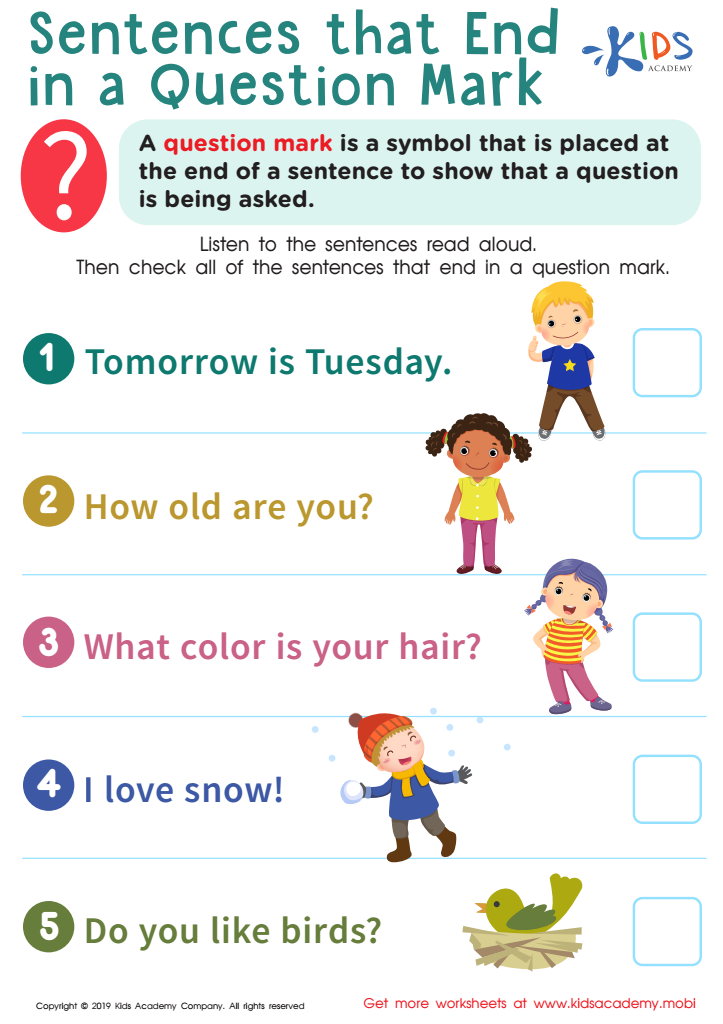
Sentences That End in an Question Mark Worksheet
Teach your students about the four most common punctuation marks - period, comma, question mark, and exclamation mark - with this worksheet. Show them how to use the question mark to indicate a sentence is a question. Then, have them check all sentences that end in a question mark.
 Assign to My Students
Sentences That End in an Question Mark Worksheet
Worksheet
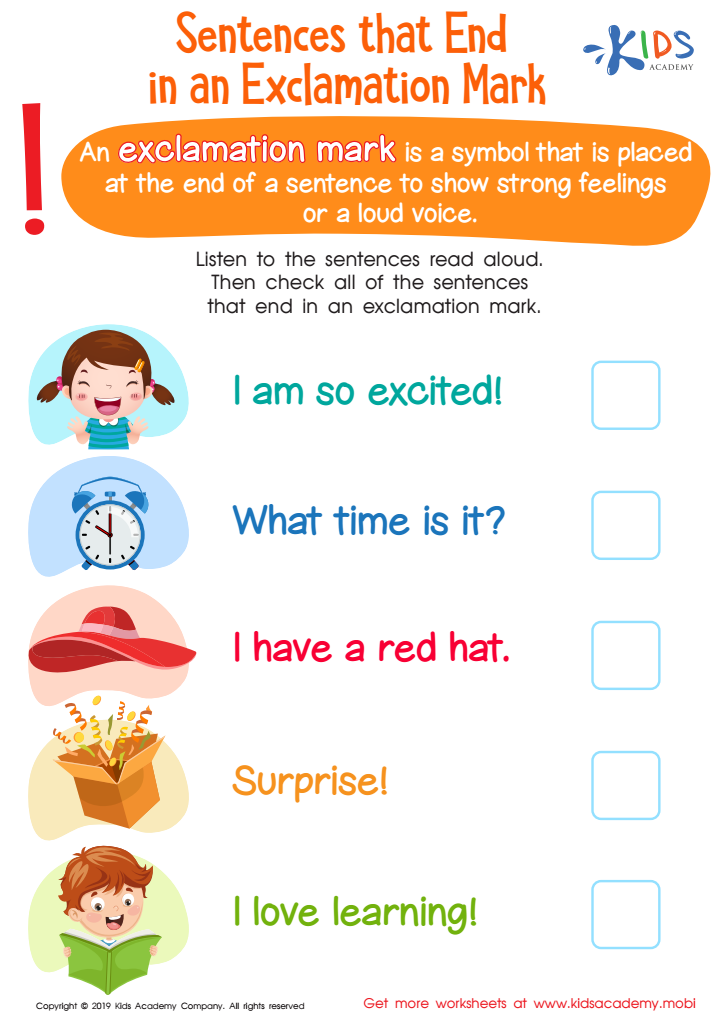
Sentences That End in an Exclamation Mark Worksheet
This worksheet is a great way to brush up kids' punctuation skills. Period, comma, question mark and exclamation mark are the first four punctuation marks they should learn. Exclamation marks show strong emotion or a noise. Use this printout to teach and test kids' understanding of exclamation marks.
Sentences That End in an Exclamation Mark Worksheet
Worksheet
Join Kids Academy for Free
Who is primarily going to use this learning content?







Understanding punctuation is essential for children aged 4-6 as it plays a crucial role in the development of early literacy skills. During this age, children are beginning to explore reading and writing, and learning about punctuation can significantly enhance their comprehension and communication abilities. Punctuation marks such as periods, question marks, and exclamation points help convey meaning and emotion, allowing children to interpret texts correctly and express their thoughts clearly.
Parents and teachers should care about teaching punctuation because it lays the groundwork for effective language skills. When children grasp how punctuation affects the rhythm and meaning of sentences, they become better readers, picking up on changes in tone and intent. It also aids their writing; using punctuation correctly helps them organize their ideas and convey messages effectively.
Incorporating playful activities that involve punctuation can make learning engaging. For example, using stories, songs, or illustrative visuals can help reinforce these concepts while making the experience enjoyable. By fostering a solid understanding of punctuation in young learners, adults can help children build confidence in their reading and writing, setting positive academic habits for the future. Ultimately, this understanding enhances their ability to communicate and connect with others effectively.








