
Understanding weather conditions Worksheets for Ages 4-6
3 filtered results
Difficulty Level
Grade
Age
-
From - To
Subject
Activity
Standards
Explore our engaging "Understanding Weather Conditions Worksheets" tailored for ages 4-6! These colorful and interactive worksheets are designed to introduce young learners to various weather phenomena through fun activities. Children will identify different weather types, practice vocabulary, and develop observational skills while recognizing how weather affects their daily lives. Our thoughtfully crafted resources include simple illustrations and activities that spark curiosity and encourage creativity. Perfect for home or classroom use, these worksheets will help young learners enhance their understanding of the world around them. Dive into the excitement of learning about weather and its wonders today!
Favorites
With answer key
Interactive
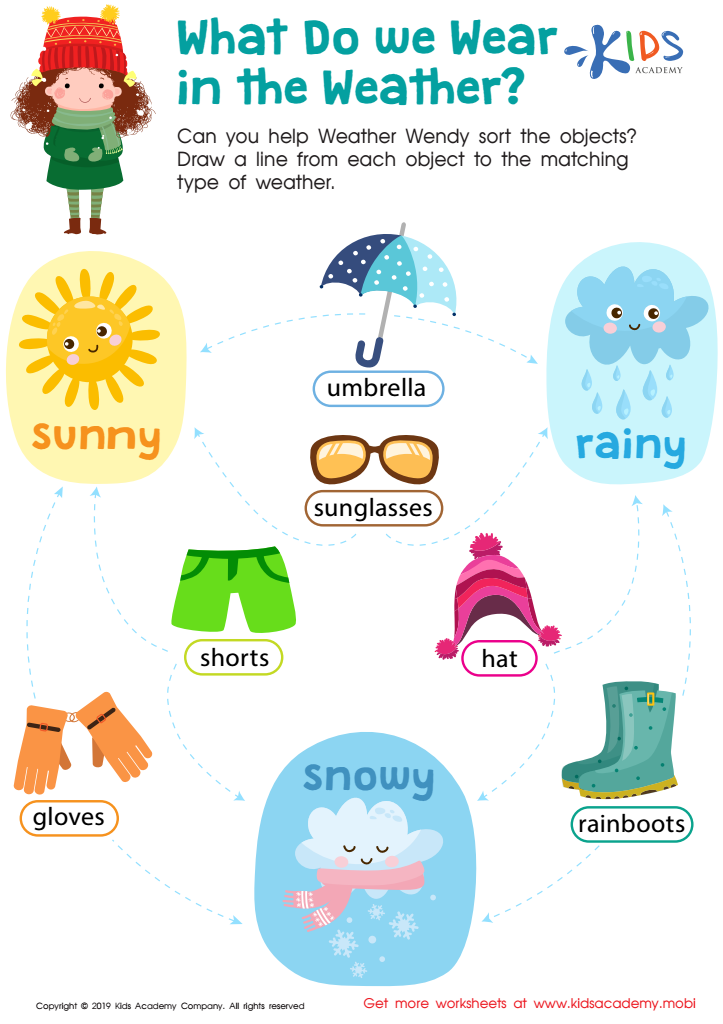
What Do We Wear in the Weather? Worksheet
This worksheet boosts young learners' everyday vocab with fun high-frequency weather words. They'll see and match familiar pictures to the words they read. Plus, it helps them develop fine motor skills. Perfect for preschoolers.
 Assign to My Students
What Do We Wear in the Weather? Worksheet
Worksheet
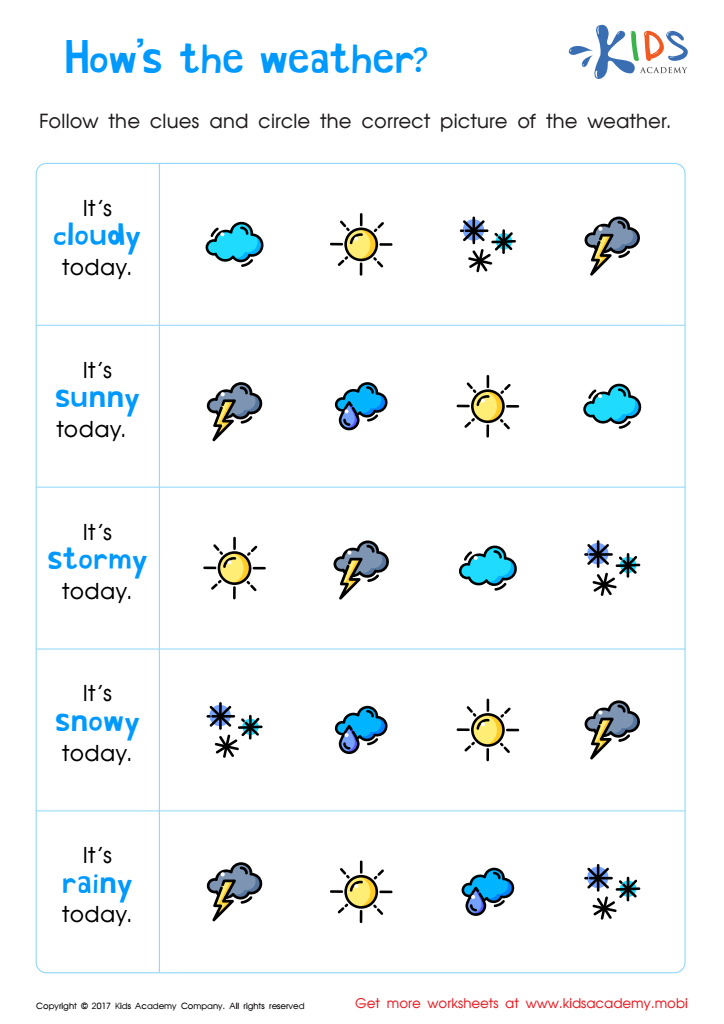
Hows the Weather Worksheet
Teaching kids about weather is a fun way to start science learning. This worksheet helps recognize symbols, literacy skills and make real world connections. Your child will love it!
Hows the Weather Worksheet
Worksheet
Join Kids Academy for Free
Who is primarily going to use this learning content?








Understanding weather conditions is vital for children ages 4-6 for several reasons. Firstly, it instills a sense of awareness and curiosity about the world around them. Introducing young learners to different weather types—like sunny, rainy, snowy, and windy—encourages them to observe their environment and ask questions, fostering critical thinking and inquiry skills.
Moreover, knowledge of weather helps children make safe and informed choices in their daily lives. For example, understanding the need for a raincoat during rainy days or applying sunscreen on sunny days teaches them self-care and responsibility. This practical knowledge empowers children to anticipate changes in weather, promoting independence.
Additionally, learning about weather can be integrated into various subjects, enhancing their learning experience. Early science lessons can include discussions about climate patterns or the water cycle, tying into math through measuring temperature or counting days of rain or sunshine.
Lastly, discussing weather bolsters social interactions, as children share experiences and observations with peers. For these reasons, it's crucial for parents and teachers to engage young children in weather education, laying the foundation for lifelong learning and awareness of their environment.








