
Underwater animal identification Worksheets for Ages 4-6
3 filtered results
Difficulty Level
Grade
Age
-
From - To
Subject
Activity
Standards
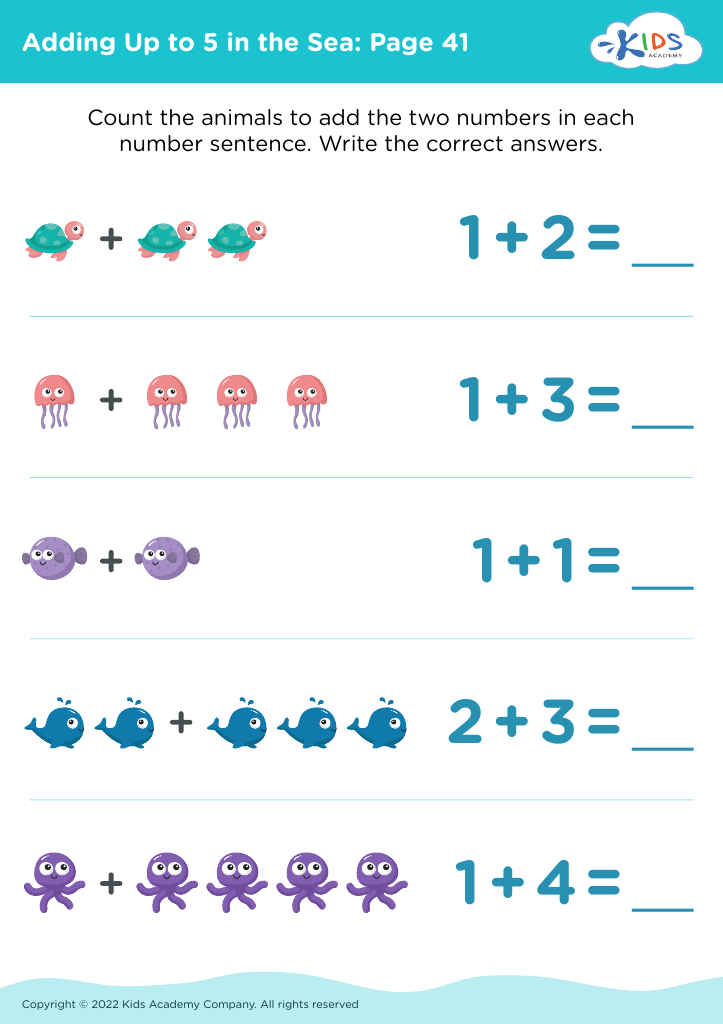
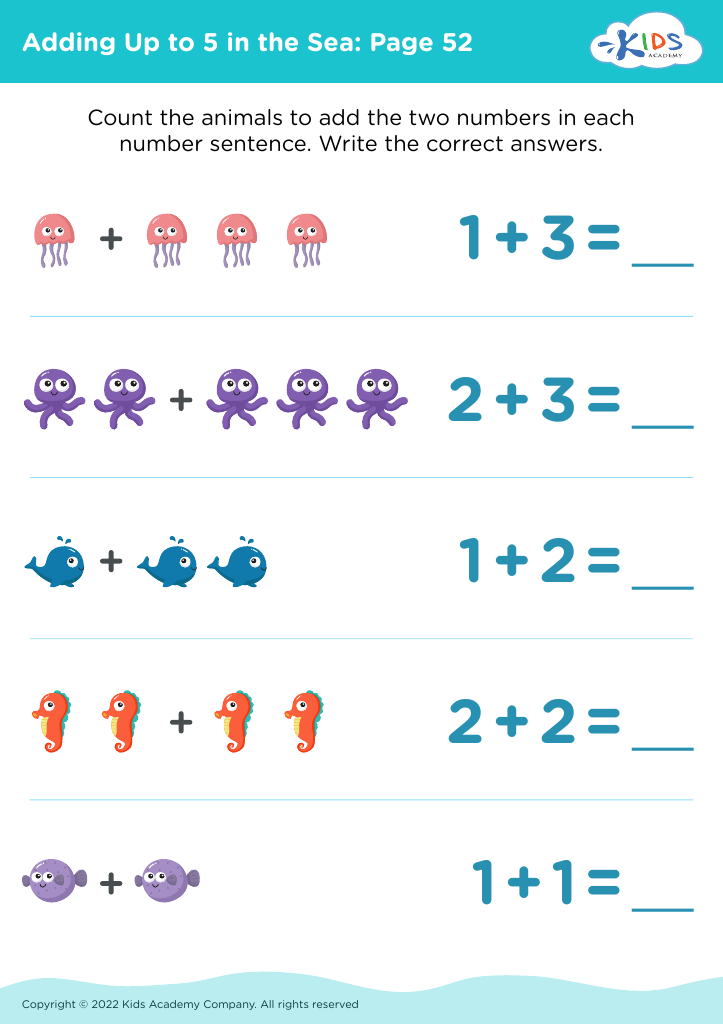
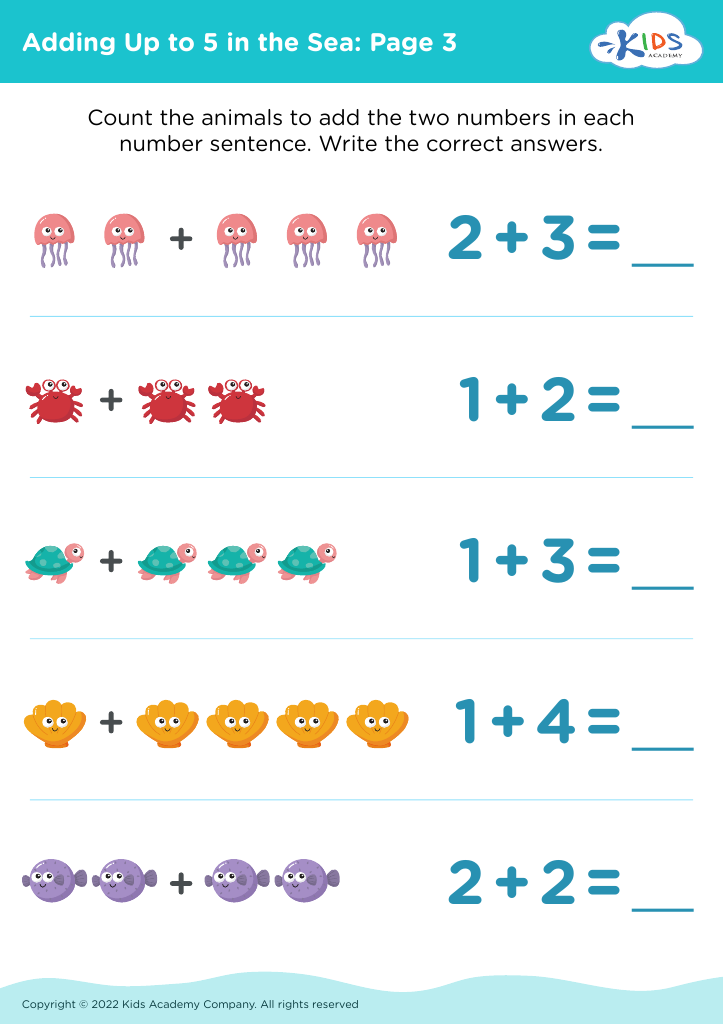
Explore the fascinating world of underwater creatures with our Underwater Animal Identification Worksheets designed for ages 4-6! These engaging worksheets foster early learning by introducing young children to various aquatic animals through fun activities. Each printable encourages students to recognize, name, and describe different species, enhancing their vocabulary and observational skills. Activities include colorful images, matching games, and easy-to-understand prompts that make learning enjoyable. Perfect for home or classroom use, our worksheets support cognitive development and stimulate curiosity about marine life. Dive into a sea of learning and let your little ones discover the wonders beneath the waves with ease!
Favorites
With answer key
Interactive
Join Kids Academy for Free
Who is primarily going to use this learning content?







Teaching underwater animal identification to children aged 4-6 is important for several reasons. At this age, children are naturally curious and eager to learn about the world around them. Introducing them to underwater animals not only nurtures this curiosity, but also provides an engaging way to complement their overall understanding of biodiversity and ecosystems.
Understanding different underwater animals fosters a sense of empathy and responsibility toward the environment. When children learn to identify creatures such as fish, dolphins, and sea turtles, they begin to appreciate the diversity of life and its importance in maintaining a healthy planet. This relationship with nature lays the groundwork for environmentally-conscious behaviors as they grow.
Additionally, underwater animal identification supports cognitive development. It enhances vocabulary, promotes observational skills, and encourages critical thinking as children learn to categorize and compare different species. Incorporating activities such as crafts, games, and storytelling around these animals makes learning interactive and fun.
Ultimately, fostering an appreciation for underwater ecosystems empowers children to become informed stewards of the planet. By enriching their educational experience with this knowledge, parents and teachers play a crucial role in developing the next generation of environmentally-conscious individuals.








