Visual learning stimulation Worksheets for Ages 4-6
3 filtered results
-
From - To
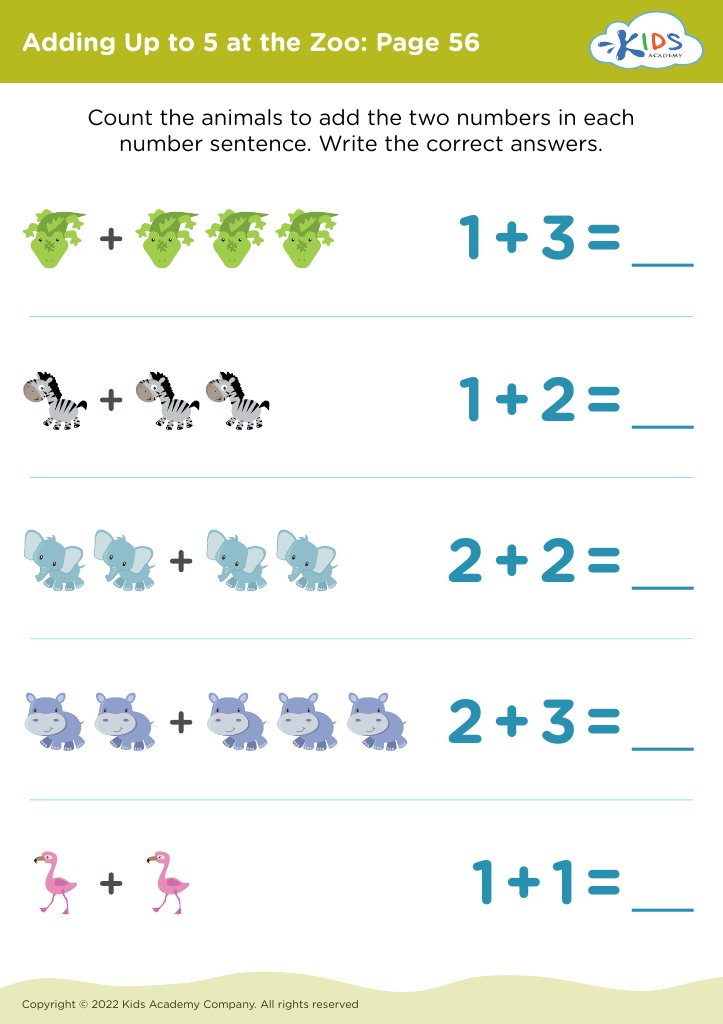
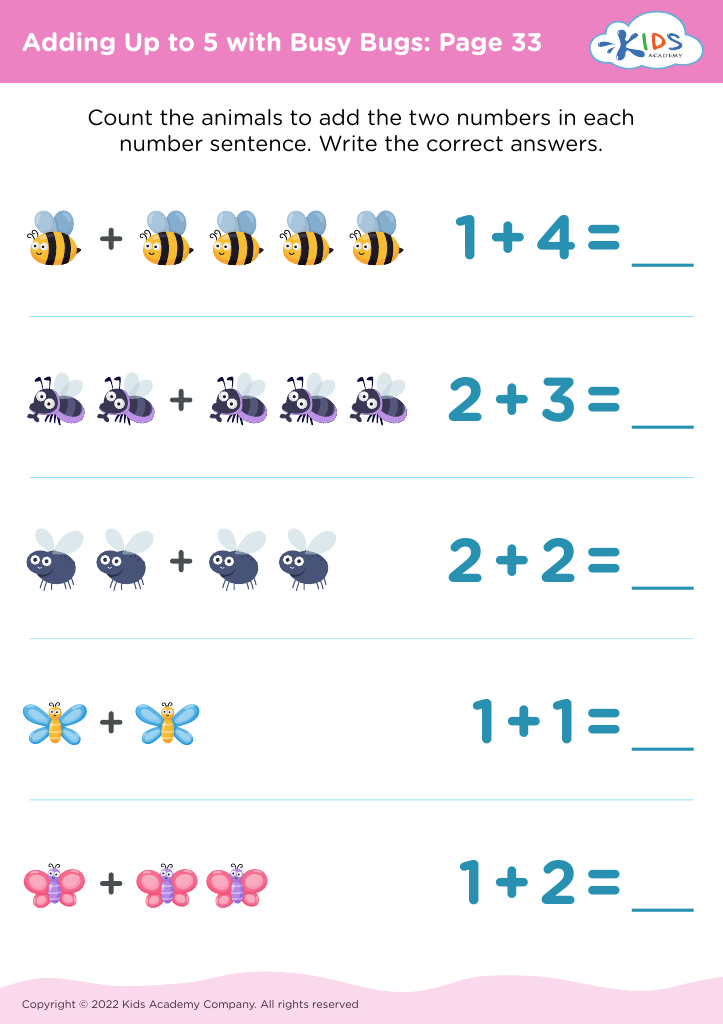
Unlock your child's potential with our Visual Learning Stimulation Worksheets for ages 4-6. Designed to captivate young minds, these worksheets are tailored to enhance visual learning skills through engaging activities. From vibrant puzzles to interactive matching games, each worksheet is crafted to develop critical skills such as pattern recognition, memory, and concentration. Perfect for parents and educators, these tools provide a fun and effective way to foster early learning and cognitive growth. Give your child the advantage they deserve with our expertly designed visual learning resources. Visit our website to explore the full collection today!
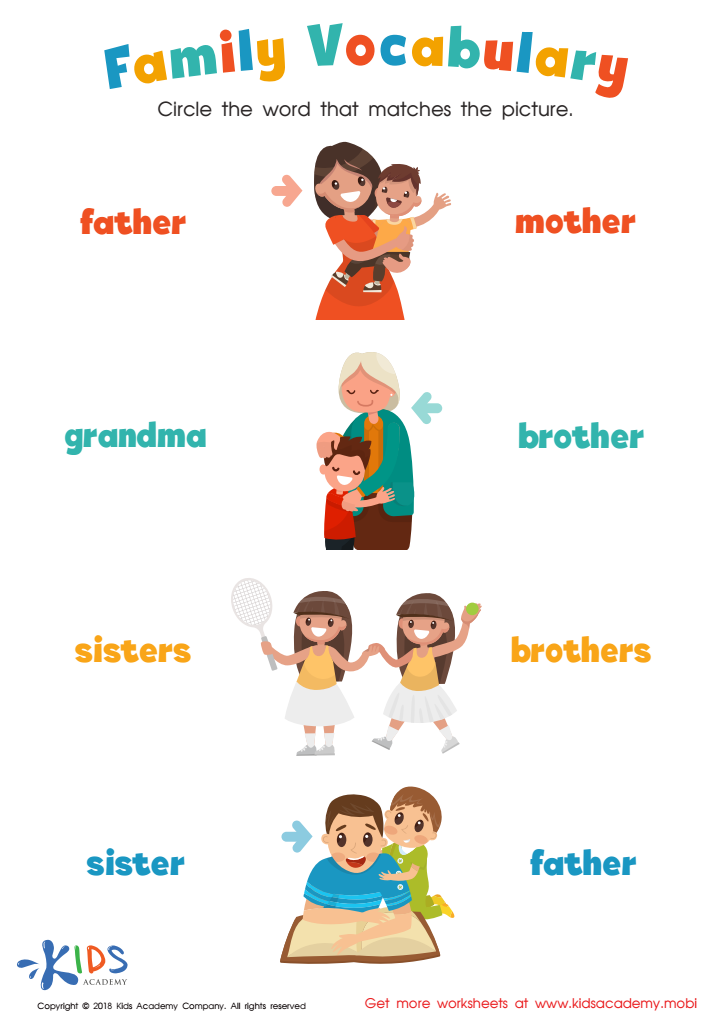
Family Vocabulary Worksheet
 Assign to My Students








Visual learning stimulation for ages 4-6 is crucial because it aligns with the developmental stage where children are most receptive to absorbing information through their senses. At this age, children are predominantly visual learners, meaning they understand and recall information better when it is presented visually. This period is marked by rapid brain development, and visual inputs can significantly enhance cognitive growth.
Visual aids such as colorful images, charts, and videos engage young learners more effectively than plain text or verbal descriptions. These tools capture children’s attention, making learning experiences more interactive and enjoyable. This engagement fosters a positive attitude towards learning and improves information retention.
Moreover, visual stimuli support the development of critical skills such as observation, pattern recognition, and spatial reasoning. By incorporating visual learning strategies, parents and teachers can nurture creativity, improve comprehension, and enhance memory in early learners. Additionally, visual learning helps expand vocabulary and introduce complex concepts in an accessible, kid-friendly manner.
Highly beneficial for children with diverse learning styles, visual learning ensures inclusivity and caters to different educational needs. By prioritizing visual learning stimulation, parents and teachers lay a strong foundation for future academic success, encouraging a lifetime love of discovery and knowledge in young minds.








