Weather identification Worksheets for Ages 4-6
6 filtered results
-
From - To
Explore our engaging Weather Identification Worksheets designed specifically for children ages 4-6! These printable resources help young learners recognize and understand different weather types, from sunny skies to rainy days. Colorful illustrations and simple activities make learning fun and interactive, encouraging discussions about the weather in everyday life. Perfect for parents and educators, these worksheets promote early literacy and critical thinking skills while fostering a love for nature and science. Whether used at home or in the classroom, our Weather Identification Worksheets provide a wonderful opportunity for children to explore and identify various weather conditions through playful learning experiences. Download yours today!
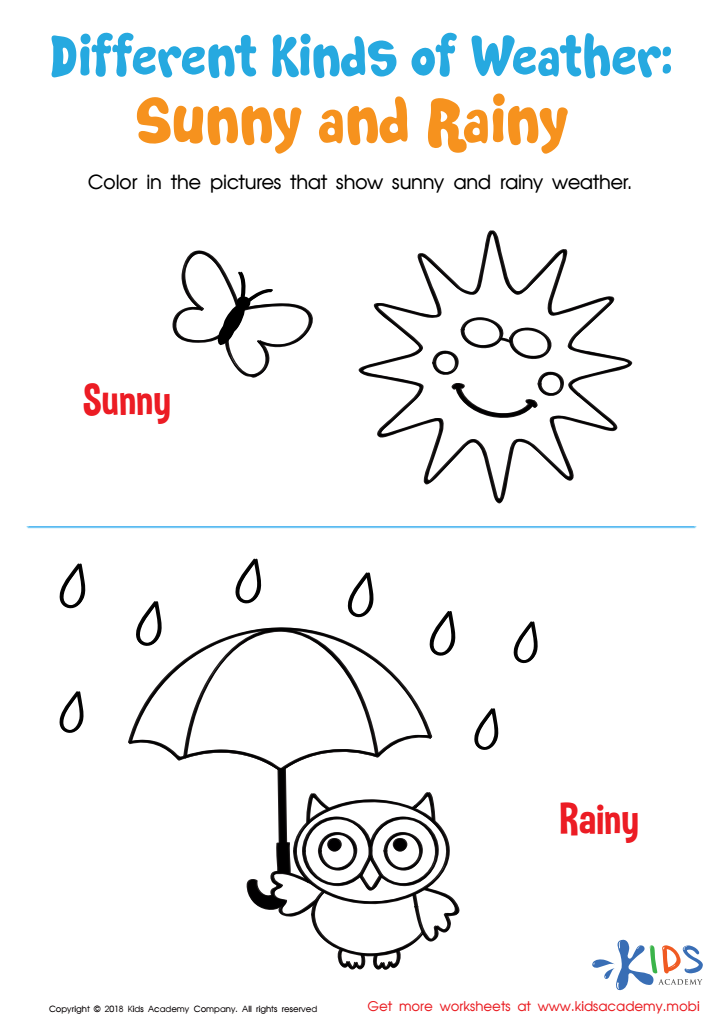
Different Kinds of Weather: Sunny and Rainy Worksheet
 Assign to My Students
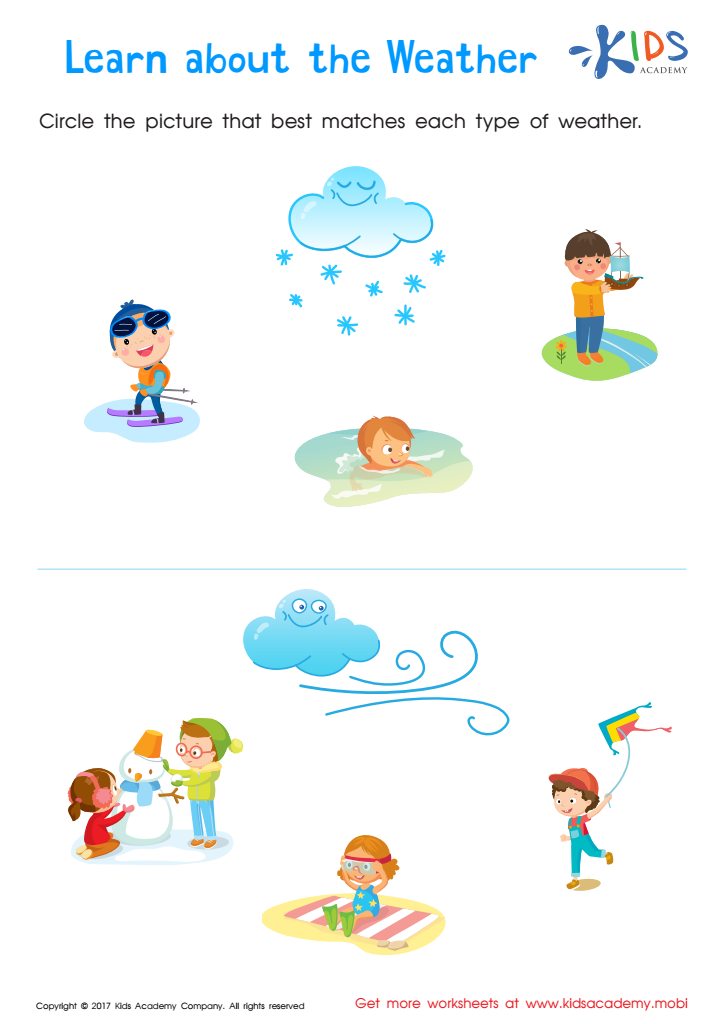
About the Weather Printable
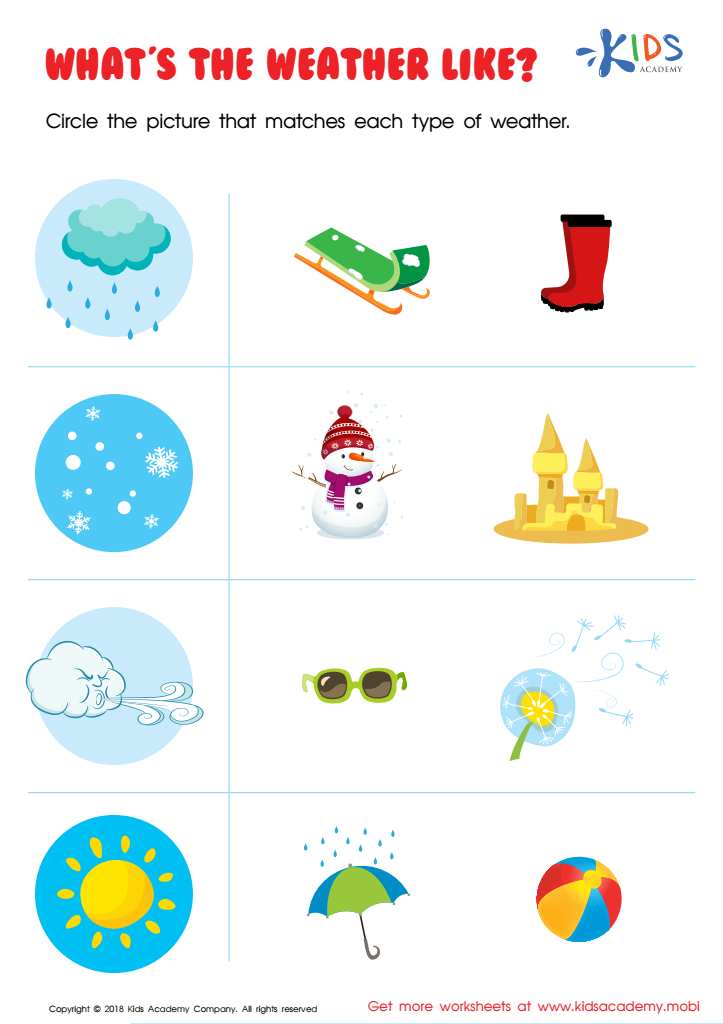
What's the Weather Like? Worksheet
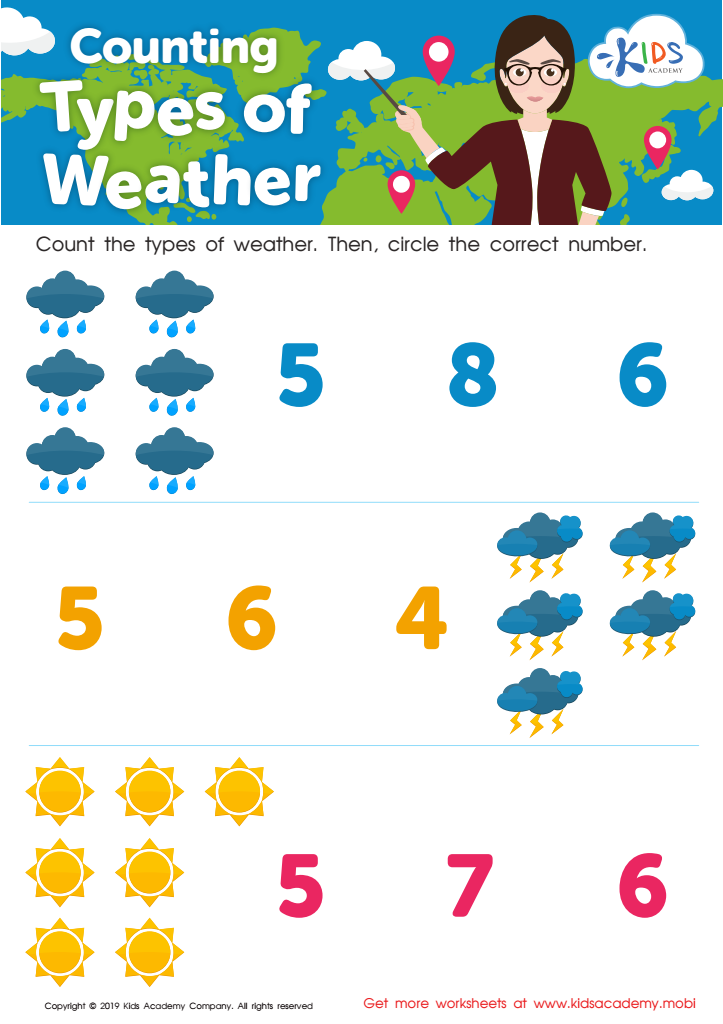
Counting Types of Weather Worksheet
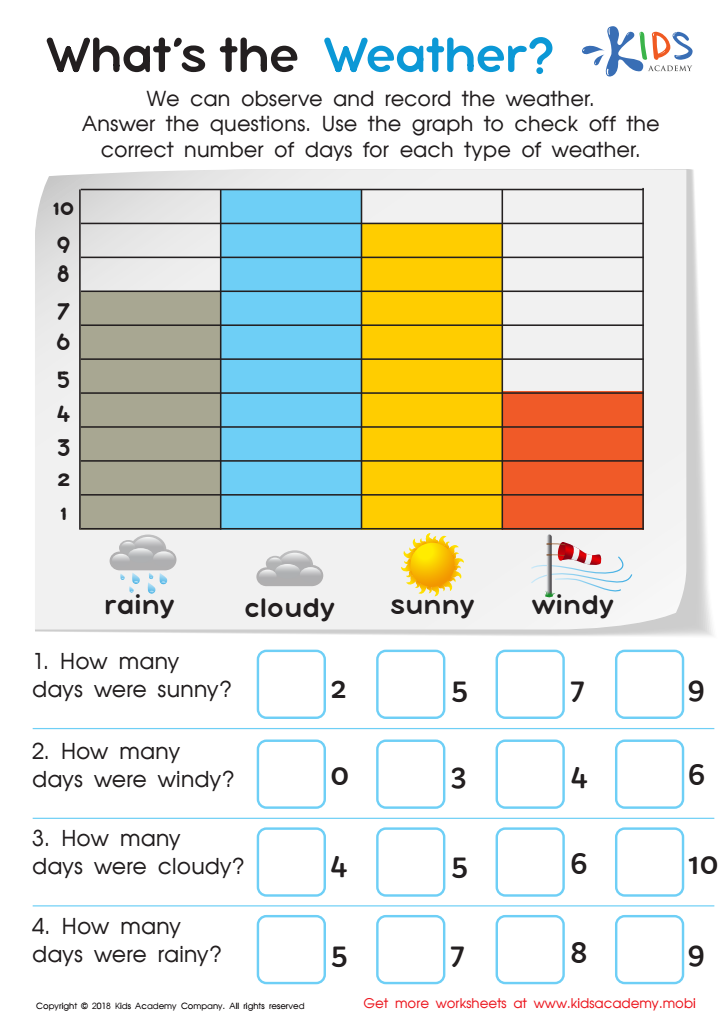
What's the Weather? Worksheet
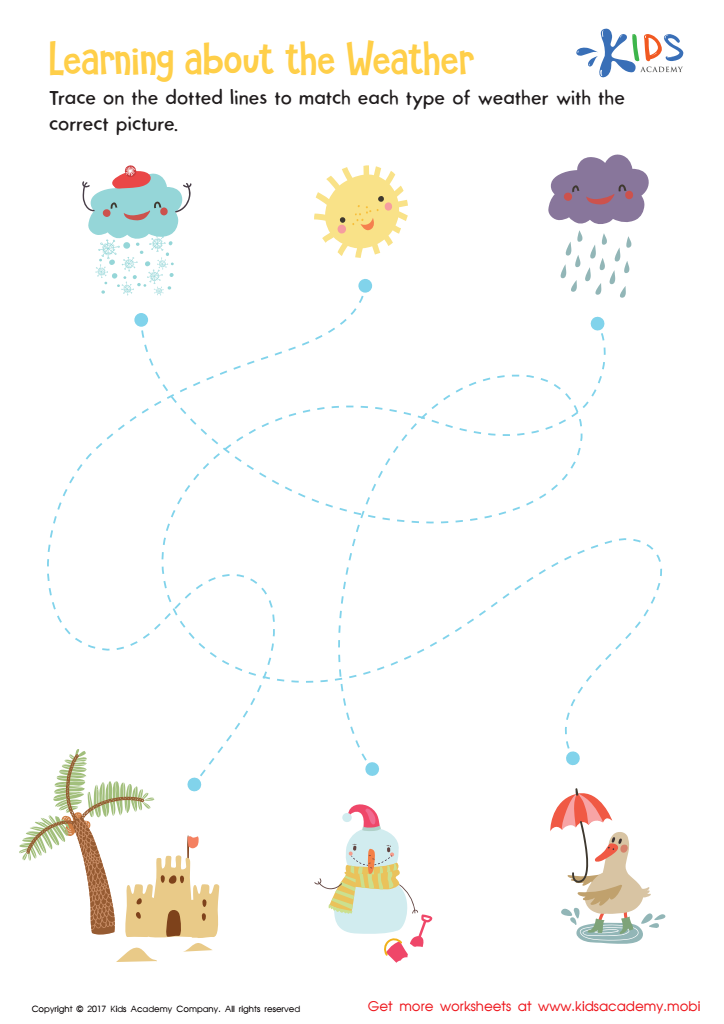







Weather identification is a crucial aspect of learning for children aged 4-6, and both parents and teachers should prioritize its importance for several reasons. Firstly, understanding different types of weather—like sunny, rainy, snowy, and windy—helps children develop a foundational knowledge of the world around them. This basic understanding can enhance their observational skills and encourage curiosity about nature.
Additionally, learning about weather promotes safety. Young children need to know how to dress appropriately or stay indoors during severe weather conditions, fostering a sense of responsibility and caution. Through interactive activities like art projects or simple discussions, children can express their observations, leading to enhanced communication skills.
Furthermore, incorporating weather education into daily routines helps with literacy and numeracy lessons, as they can learn to measure temperature or track weather patterns through charting. Engaging with weather promotes inquiry and critical thinking, essential skills for early development. Overall, weather identification not only enriches academic learning but also supports emotional and social growth while connecting young children with the environment, enhancing their wellbeing and sense of community. By prioritizing this learning, parents and teachers create a well-rounded educational experience in a child's formative years.








