
Word-picture association Worksheets for Ages 4-6
3 filtered results
Difficulty Level
Grade
Age
-
From - To
Subject
Activity
Standards
Unlock your child's creativity and learning with our engaging Word-Picture Association Worksheets, designed specifically for ages 4-6! These worksheets enhance vocabulary skills, encouraging young learners to connect words with corresponding images through fun and interactive activities. Each worksheet is filled with vibrant illustrations that captivate children's attention, making learning enjoyable and effective. Perfect for home or school use, these resources promote language skills, cognitive development, and visual recognition. Help your child boost their reading readiness and comprehension in an engaging way. Explore our collection now and watch your little one's confidence soar as they explore the world of words!
Favorites
With answer key
Interactive
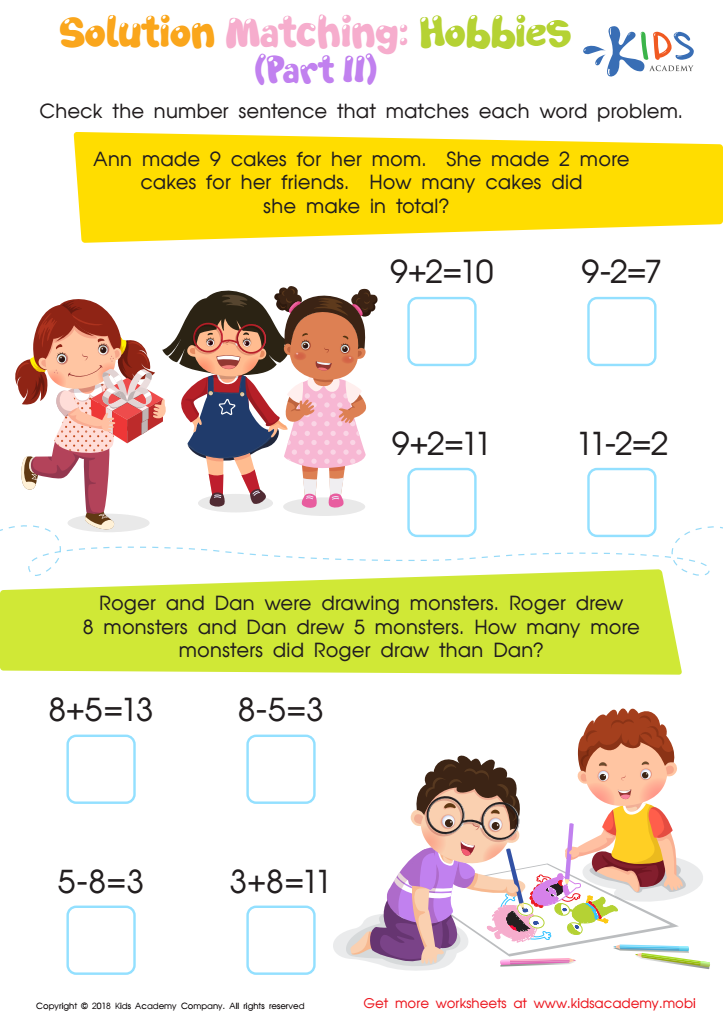
Solution Matching: Hobbies. Part 2 Worksheet
This fun printable worksheet has word problems featuring hobbies your children enjoy! With your child, read through each problem, understanding the numbers and key phrases indicating addition or subtraction. Then, match the correct equation with the solution by checking the box. Math problems are more enjoyable to solve when they’re realistic and engaging!
 Assign to My Students
Solution Matching: Hobbies. Part 2 Worksheet
Worksheet
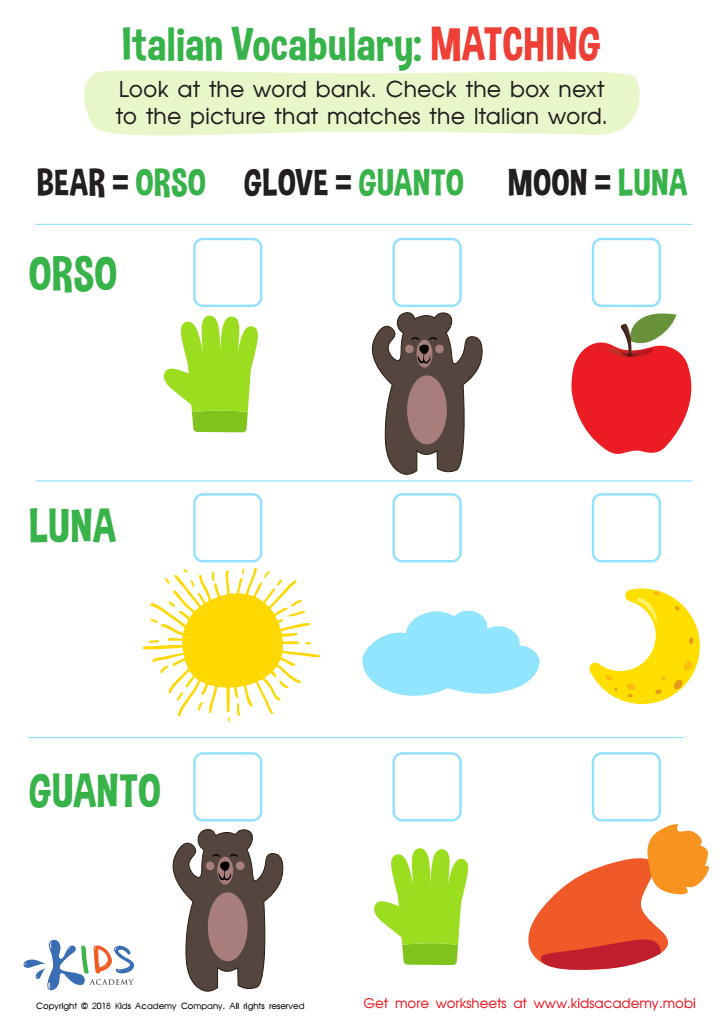
Italian Vocabulary Matching Worksheet
Start your kids young on their global journey with this free Italian worksheet. They'll easily match the pictures to the words and learn familiar, everyday phrases in a fun and colorful way. Give them this perfect foundation for exploring the languages of the world!
Italian Vocabulary Matching Worksheet
Worksheet
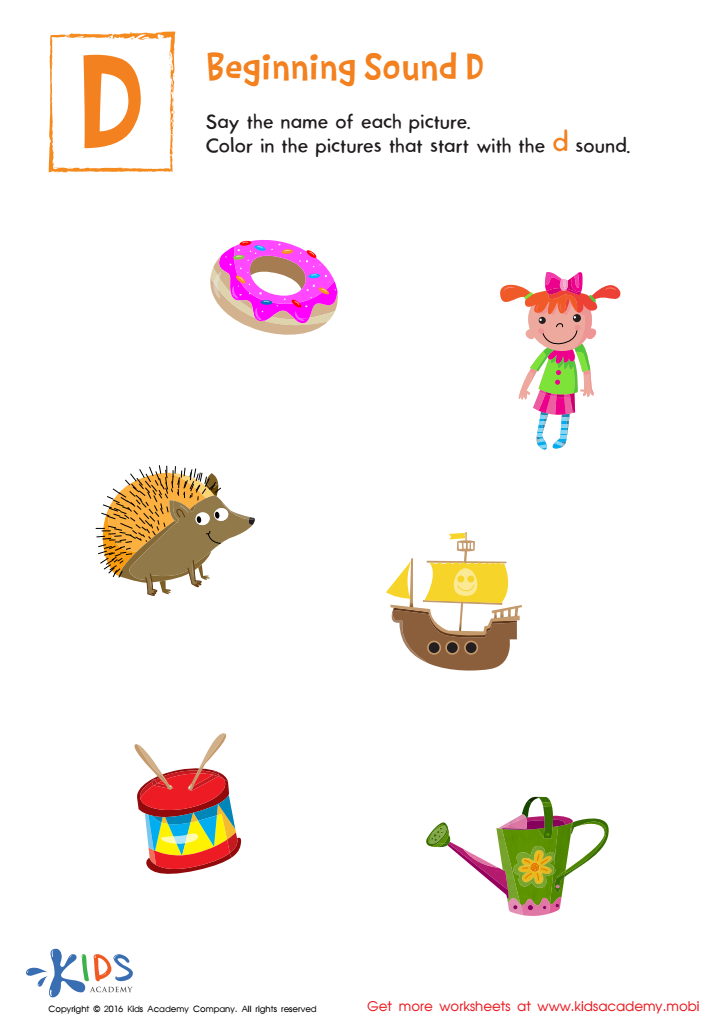
Beginning Sound D Worksheet
Reinforce phonics with this vibrant beginning sound d worksheet! Pictures help kids identify words beginning with 'd' and develop early reading skills. Sounding out each word increases literacy!
Beginning Sound D Worksheet
Worksheet
Join Kids Academy for Free
Who is primarily going to use this learning content?






Word-picture association is a vital skill for children aged 4-6, as it lays the foundation for literacy and cognitive development. At this stage, children are absorbing vast amounts of information through visual aids and language. By connecting words with pictures, children enhance their vocabulary and comprehension skills, making the learning process more interactive and enjoyable.
Parents and teachers should care about this association because it caters to varied learning styles, particularly visual learners. Engaging with both words and pictures allows children to create mental images, aiding their memory retention and understanding. This skill also encourages independent learning; as children can more easily decode words by associating them with corresponding images, fostering confidence in their reading abilities.
Moreover, word-picture association stimulates critical thinking and nurtures creativity. As children learn to infer meaning from visual contexts, they become more engaged in storytelling and discussions, enhancing their language proficiency. This can lead to improved social skills, as they communicate their ideas and experiences more clearly.
Ultimately, focusing on word-picture association equips children with essential tools for academic success and lifelong learning, making it imperative for parents and teachers to prioritize this vital component in early education.








