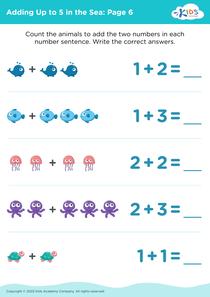
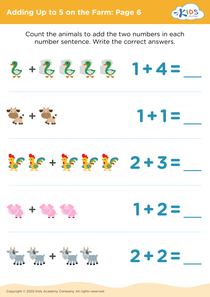
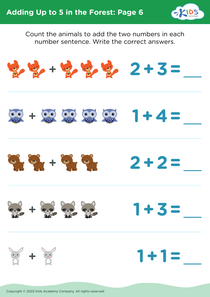
Basic addition practice Adding at the Zoo Worksheets for Ages 4-6
3 filtered results
-
From - To
Welcome to our "Basic Addition Practice: Adding at the Zoo Worksheets" ideal for children ages 4-6! These engaging worksheets transform math learning into a fun adventure, as young learners explore the zoo while mastering fundamental addition skills. They'll count and add various animals, fostering both their arithmetic abilities and their love for wildlife. Each worksheet encourages interactive practice, helping children build confidence while reinforcing essential math concepts. With colorful visuals and relatable themes, your little ones will enjoy hours of educational fun. Perfectly designed for early learners, these worksheets provide a solid foundation for their mathematical journey!
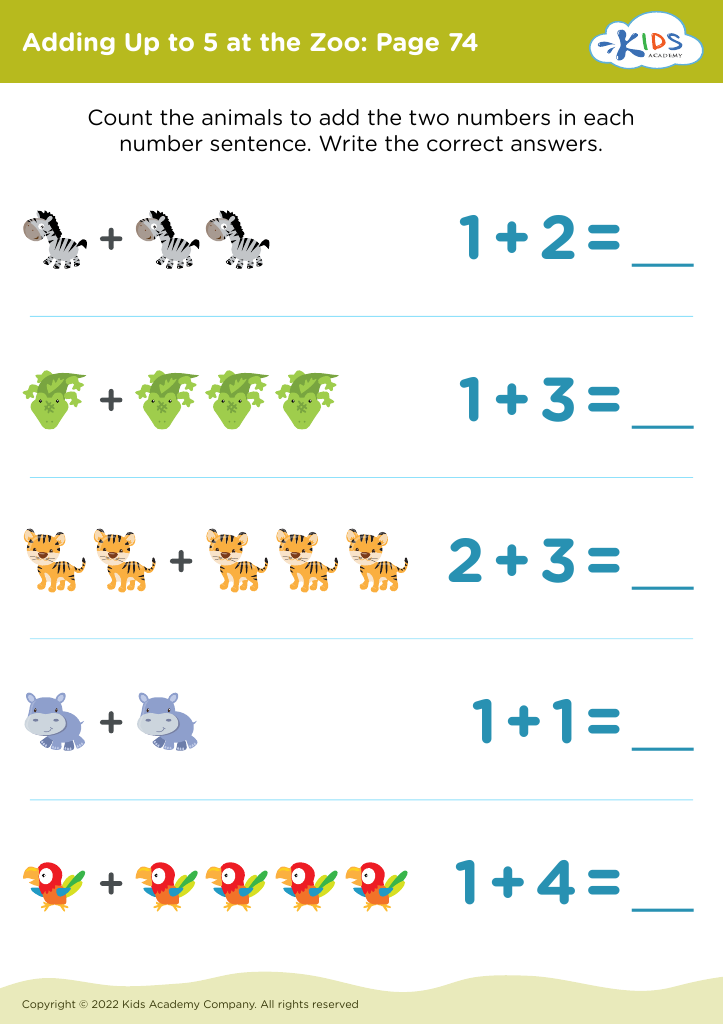
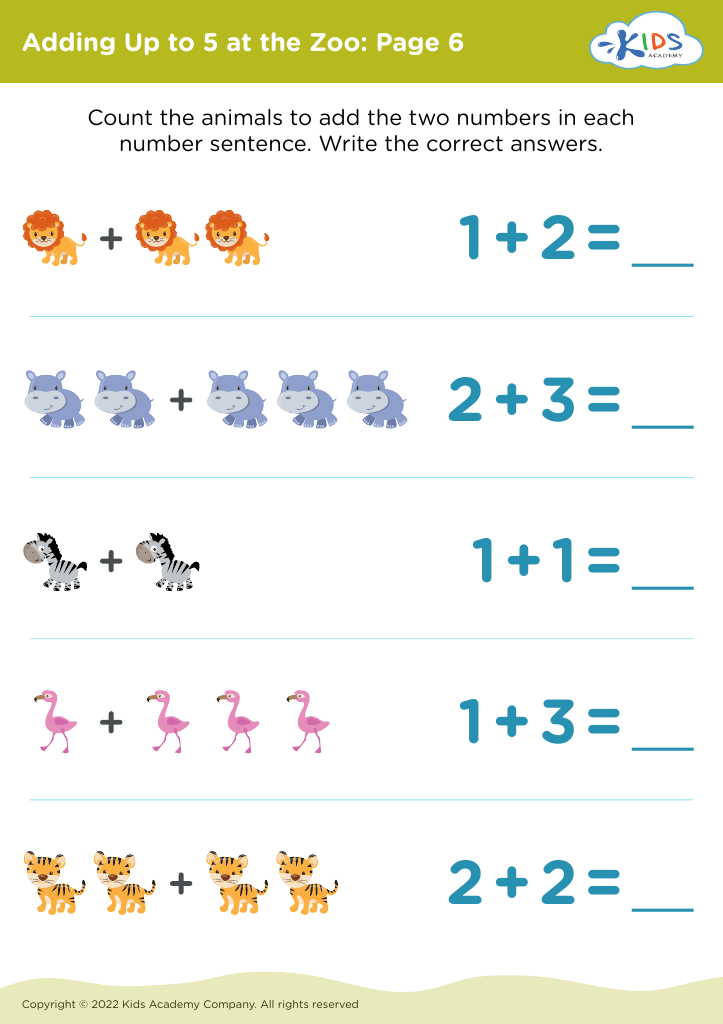
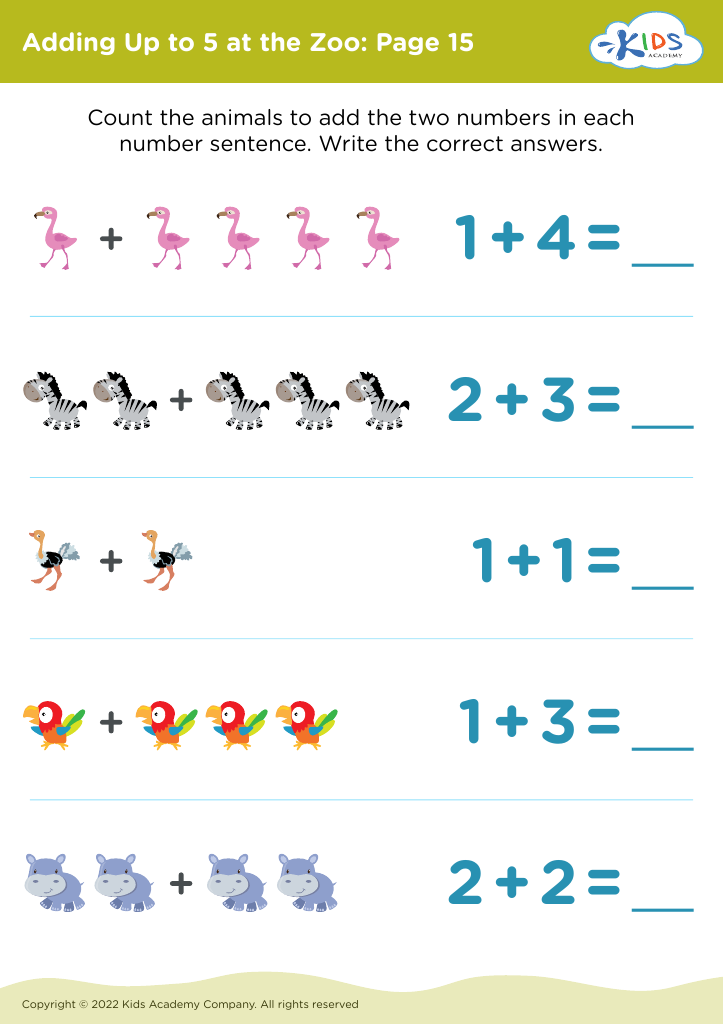



Parents and teachers should prioritize basic addition practice, such as the "Adding at the Zoo" activity for ages 4-6, because it provides essential foundational skills in mathematics while making learning enjoyable. At this age, children are naturally curious, and incorporating fun and engaging themes, like a zoo, captures their attention and cultivates a positive attitude toward math.
Mastering basic addition develops critical thinking skills and enhances problem-solving abilities, forming a basis for more advanced mathematical concepts later on. Activities like "Adding at the Zoo" also promote the use of visual aids and real-life contexts, helping children understand the practical relevance of math in everyday situations.
Additionally, such interactive learning experiences foster social skills through cooperative play and peer engagement, as children may work in groups or pairs. They build confidence as they successfully solve problems, enhancing their willingness to tackle new challenges.
Furthermore, early exposure to math reinforces cognitive development through pattern recognition and logical reasoning. Thus, parents and teachers should embrace fun and engaging math practices to ensure a well-rounded, early education that ignites a lifelong interest in learning.