Fine Motor Skills Adding at the Zoo Worksheets for Ages 4-6
4 filtered results
-
From - To
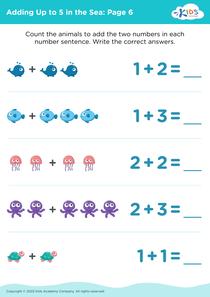
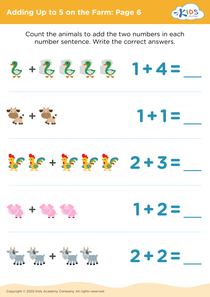
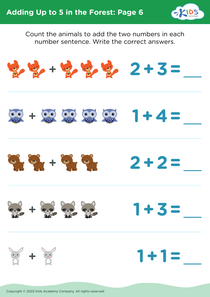
Introducing our "Fine Motor Skills Adding at the Zoo Worksheets," specially designed for children aged 4-6! These engaging worksheets combine the excitement of a zoo adventure with essential math practice, helping young learners enhance their fine motor skills while mastering addition. As children interact with colorful illustrations of zoo animals, they will enjoy hands-on activities that involve cutting, tracing, and coloring. Each worksheet is crafted to not only develop math abilities but also improve dexterity and hand-eye coordination. Perfect for at-home learning or classroom activities, these fun and educational resources are sure to inspire little mathematicians while they explore the animal kingdom!
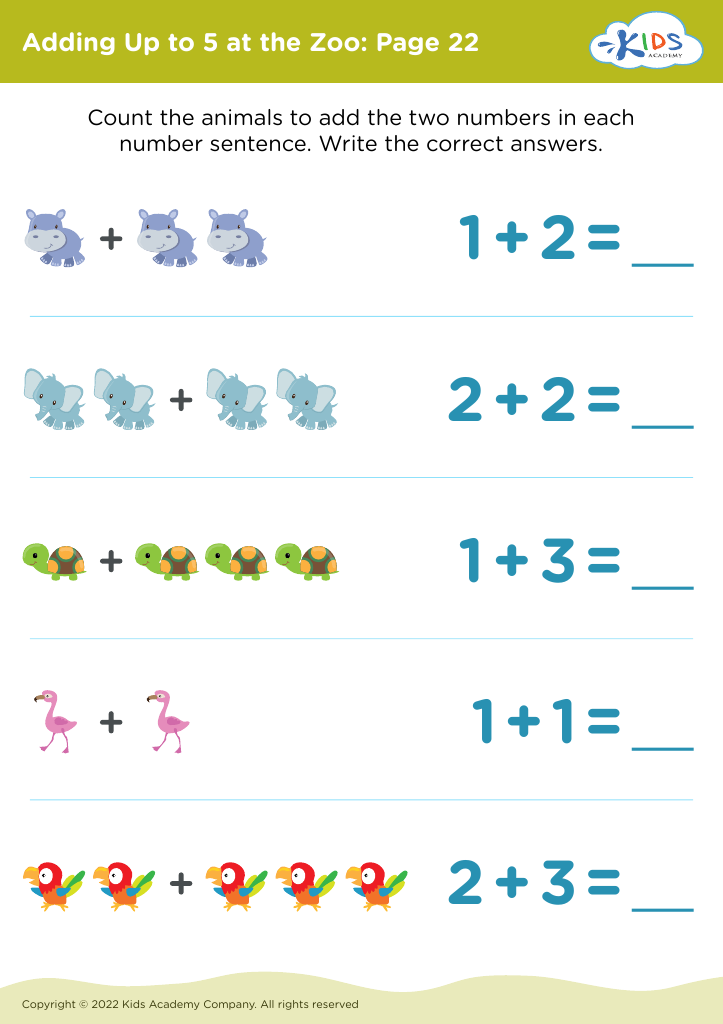
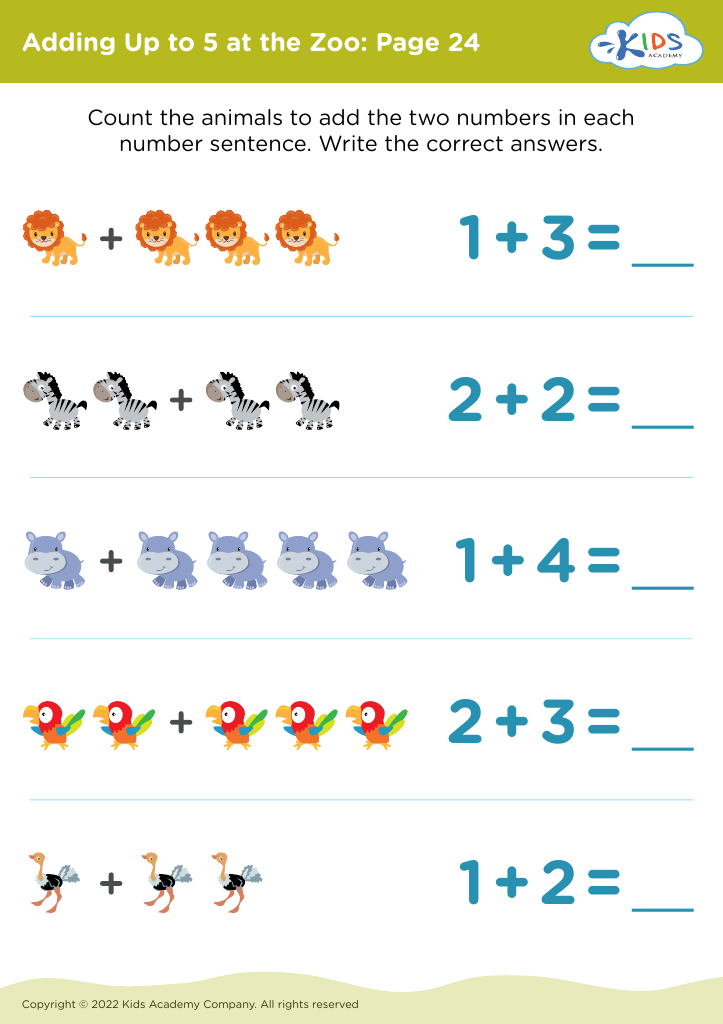
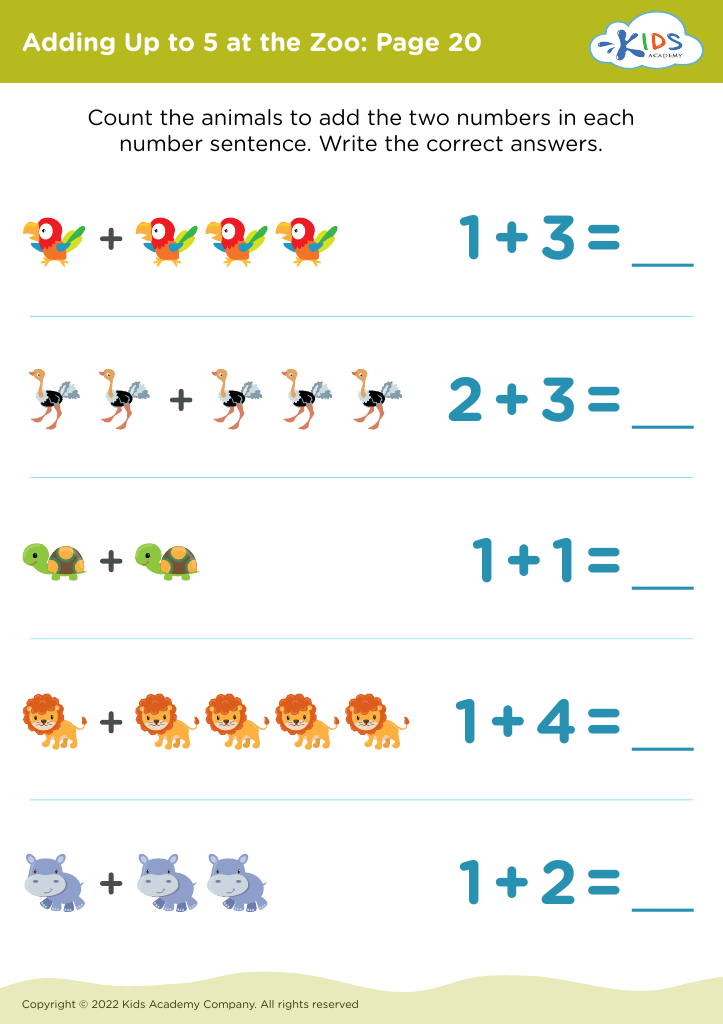
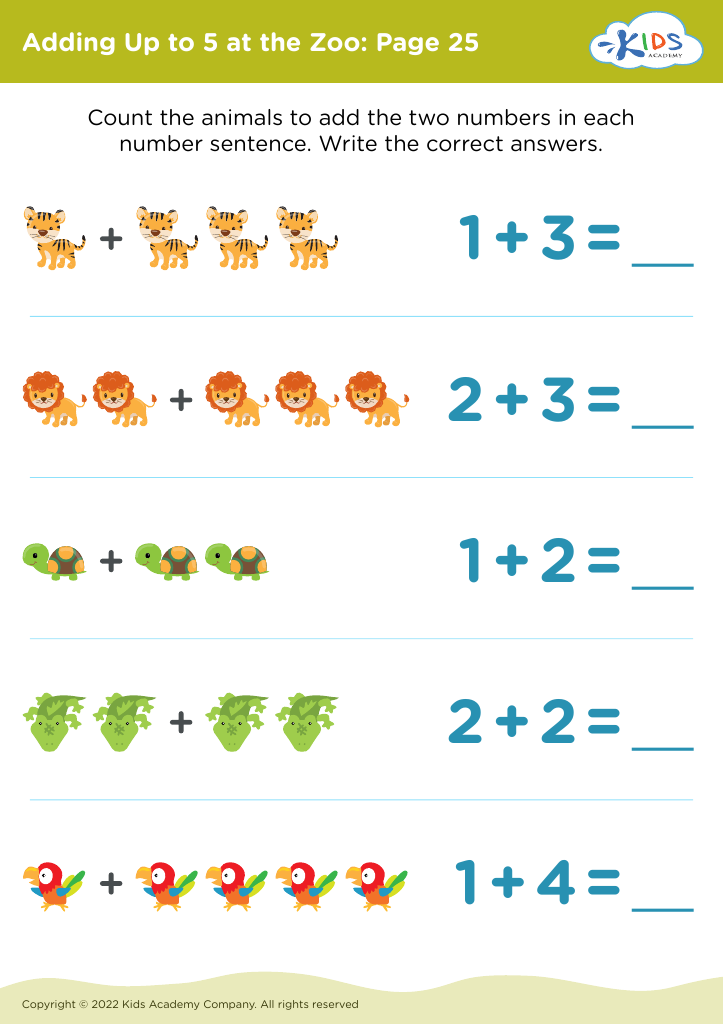



Fine motor skills are crucial for young children's development, particularly for ages 4-6, where foundational skills for everyday tasks are formed. Activities like "Fine Motor Skills Adding at the Zoo" not only enhance dexterity but also promote cognitive growth. By engaging in tasks that involve pinching, grasping, or threading—such as adding animal figures to a zoo scene—children strengthen the small muscles in their hands and fingers, which is essential for writing, using scissors, and self-care tasks.
Additionally, such activities incorporate basic math concepts, fostering numerical understanding as children practice counting and basic addition while manipulating objects. This playful approach makes learning enjoyable and memorable. Furthermore, integrating a theme like the zoo captures children's interest, connecting math skills to tangible, relatable experiences. Parents and teachers should care about these activities because they support holistic development, bridging fine motor, social, and cognitive skills in a fun and engaging manner.
Promoting fine motor skills early on lays the groundwork for academic success, as well as independence in practical life skills. By fostering an environment that prioritizes these skills, we pave the way for confident, capable learners ready for future challenges.