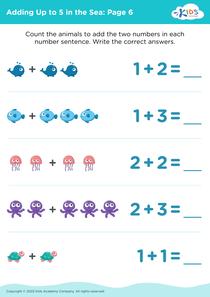
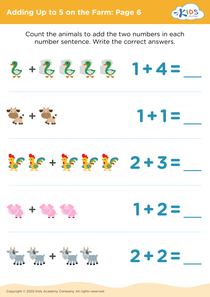
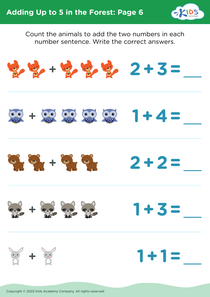
Fine motor skills (writing numbers) Adding at the Zoo Worksheets for Ages 4-6
3 filtered results
-
From - To
Enhance your child's fine motor skills with our "Adding at the Zoo Worksheets," designed for ages 4-6. These engaging worksheets combine fun zoo themes with essential math practice, allowing children to develop their number writing capabilities while reinforcing their addition skills. Each worksheet features vibrant animal illustrations that capture your child’s attention, making learning enjoyable. As children trace and write numbers, they strengthen their hand-eye coordination and dexterity. Perfect for preschool and kindergarten, these interactive activities are a fantastic way to motivate young learners in a playful, educational environment. Start your child's mathematical journey today with our captivating zoo-themed worksheets!
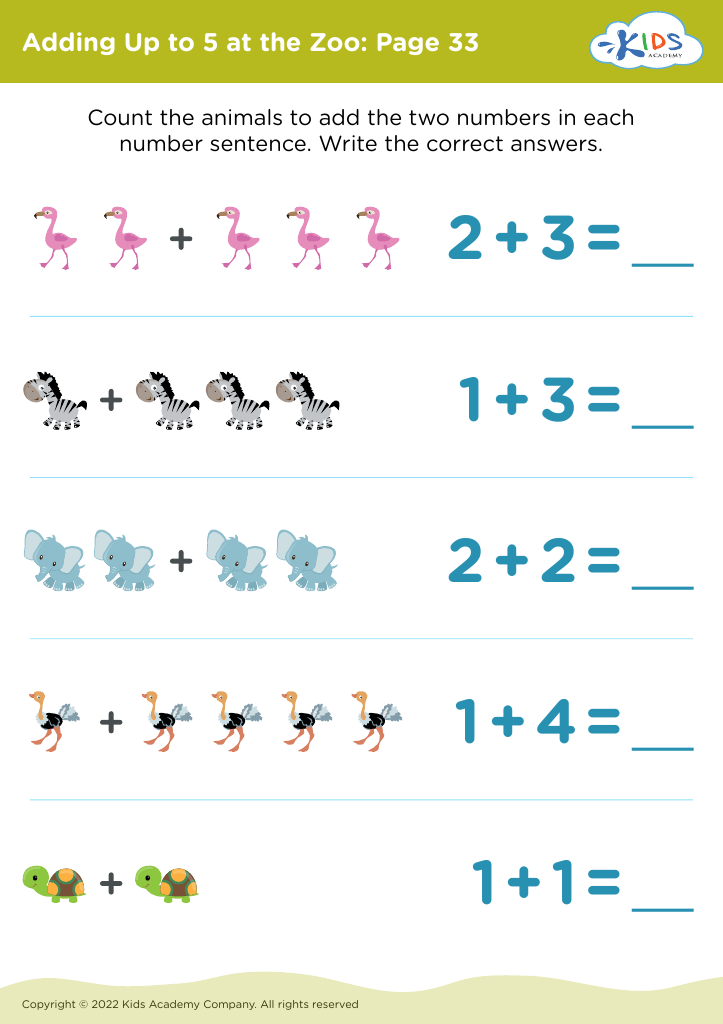
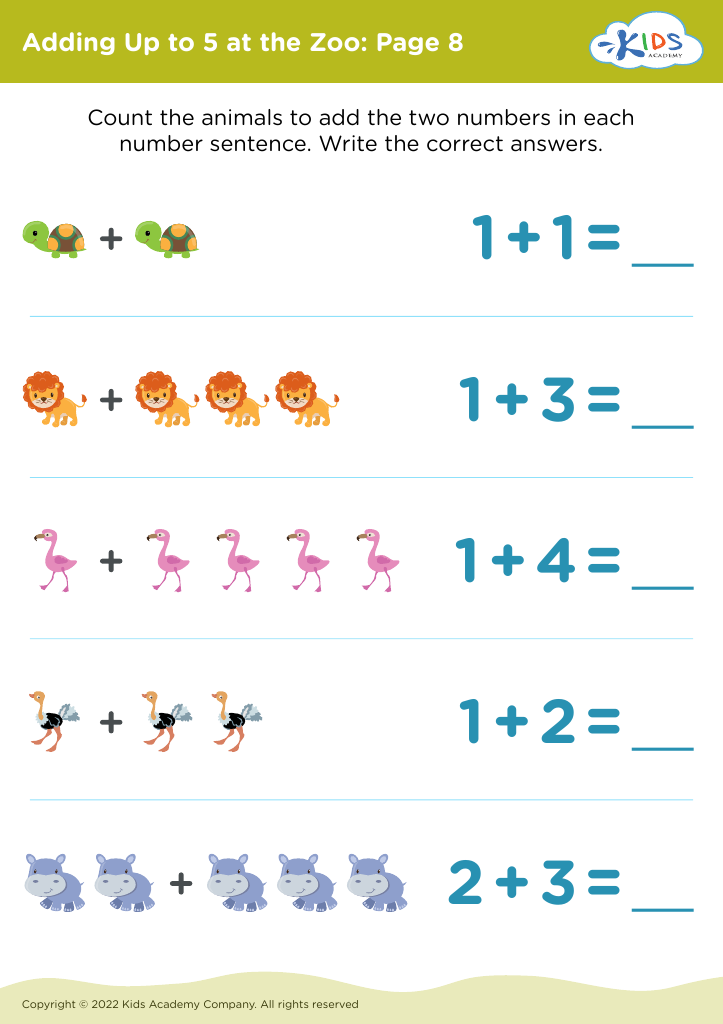
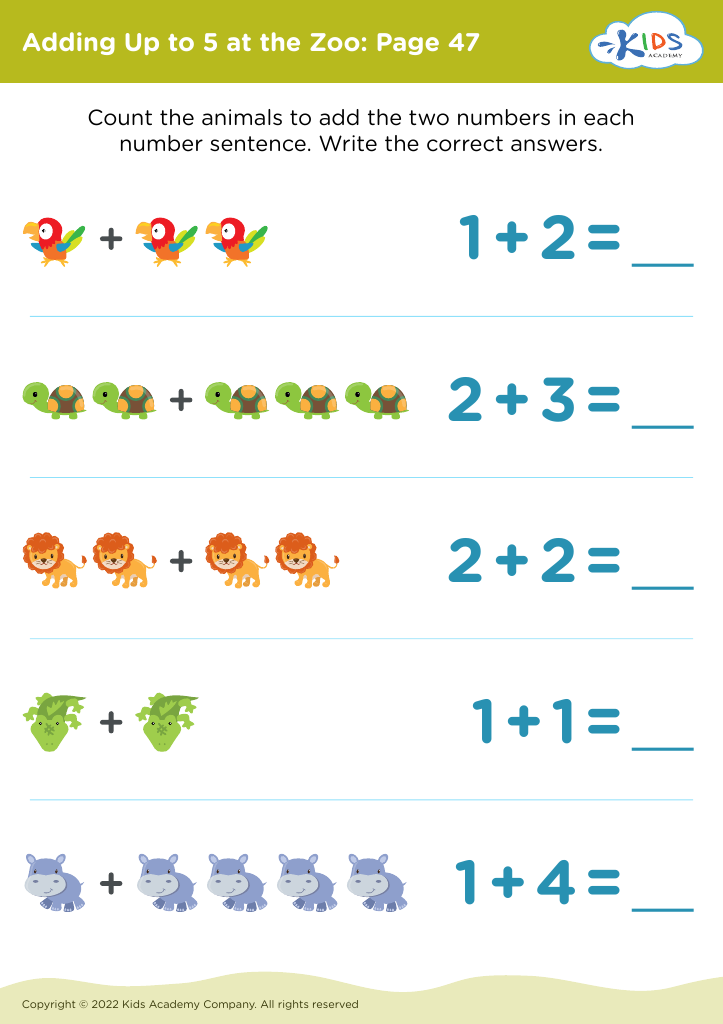



Fine motor skills are crucial for children's development, particularly in early education. For ages 4-6, writing numbers is an essential skill that lays the foundation for later academic success. Engaging activities like "Adding at the Zoo" not only make learning fun but also enhance fine motor skills by allowing children to practice writing numbers in context. This multi-sensory experience helps children associate numbers with real-world situations, reinforcing their understanding of both math and writing.
Parents and teachers should care about fine motor skills as they are key indicators of a child's readiness for more complex tasks. Writing numbers involves hand-eye coordination, finger dexterity, and grip strength—all foundational skills important for other activities like cutting, coloring, and even typing later on.
Furthermore, strong fine motor skills build confidence in children, allowing them to participate fully in classroom activities and social interactions. By incorporating playful approaches like counting animals at the zoo, educators can create an engaging learning environment that fosters creativity and curiosity while developing critical skills. In essence, nurturing fine motor skills through enjoyable activities paves the way for academic achievement and lifelong learning.