Hand-eye Coordination Adding at the Zoo Worksheets for Ages 4-6
3 filtered results
-
From - To
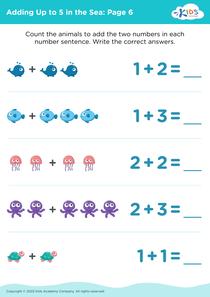
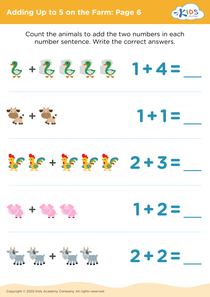
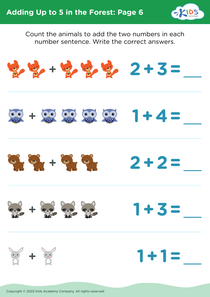
Discover our engaging Hand-eye Coordination Adding at the Zoo worksheets designed for children aged 4-6! These fun and interactive activities help young learners master basic addition skills while enhancing their hand-eye coordination. Each worksheet features colorful zoo animals and counting exercises, making math both enjoyable and educational. As kids draw, color, and problem-solve, they will develop crucial motor skills alongside their numeracy. Perfect for home or classroom use, these worksheets offer a playful approach to learning, making mathematics a thrilling adventure in the animal kingdom. Start your child's journey toward math mastery and fine motor skills today with our delightful zoo-themed activities!
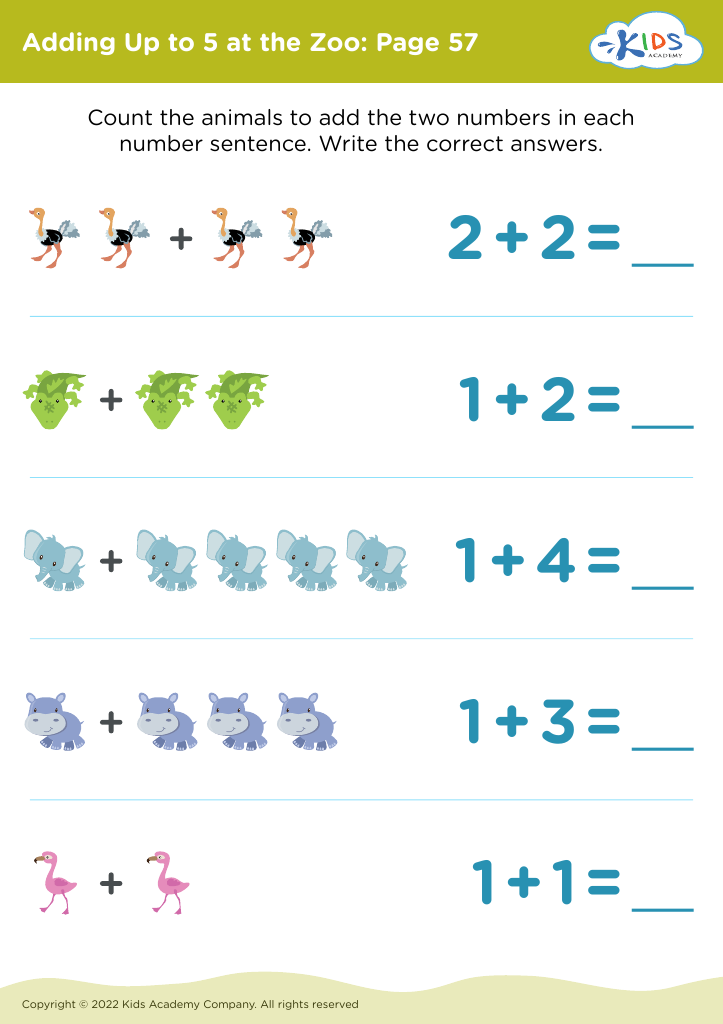
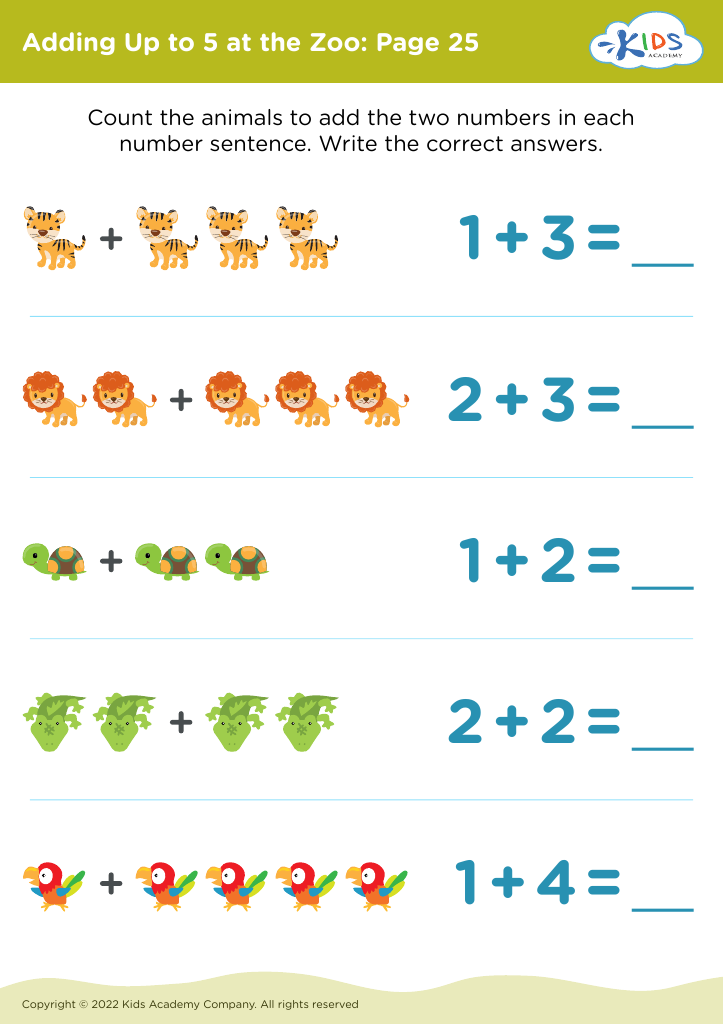
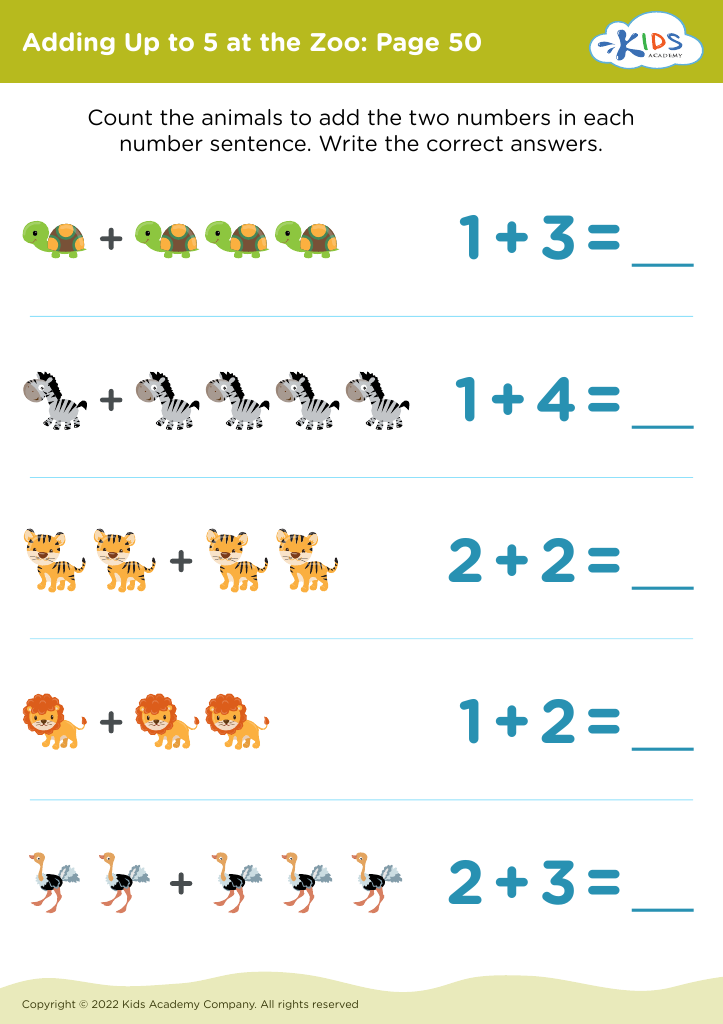



Hand-eye coordination is a vital skill that forms the foundation for various developmental milestones in young children. Teaching children activities like "Hand-eye Coordination Adding at the Zoo" engages them in a fun, interactive way and fosters critical cognitive and motor skills. For children aged 4-6, this type of activity combines physical movement with learning, promoting concentration, visual perception, and fine motor skills as they grasp tools like counting animals or adding them together.
Moreover, introducing mathematical concepts through engaging scenarios helps children connect learning to real-world applications, enhancing their understanding and making math less intimidating. At the zoo, children learn to identify animals, numbers, and basic addition while simultaneously improving their coordination as they move to find objects or manipulated counting aids.
Parents and teachers play a crucial role in integrating such playful, educational experiences into their activities. By doing so, they nurture not only academic skills but also encourage curiosity and a love for learning. Engaging in meaningful play contributes to social interactions, enhances communication, and strengthens relationships among peers. Thus, Hand-eye Coordination Adding at the Zoo is not only valuable for skill development but also for building a positive, collaborative learning environment.