Problem-Solving Skills Adding at the Zoo Worksheets for Ages 4-6
4 filtered results
-
From - To
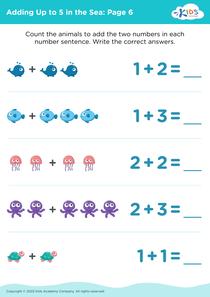
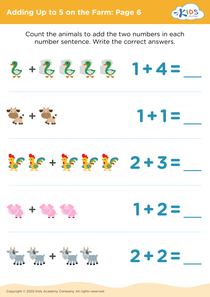
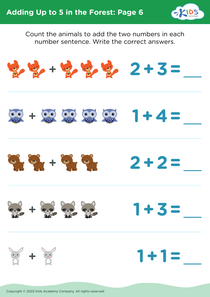
Enhance your child's problem-solving skills with our engaging "Adding at the Zoo" worksheets designed for ages 4-6! These fun and interactive worksheets feature colorful zoo-themed imagery, making math enjoyable for young learners. Children will solve addition problems by counting animals and developing a love for numbers in a playful context. Each worksheet incorporates critical thinking and engages students to tackle challenges while building early math proficiency. Perfect for classroom use or at-home learning, our resources aim to foster resilience and creativity in young minds. Discover the joy of learning through problem-solving at the zoo! Download your worksheets today!
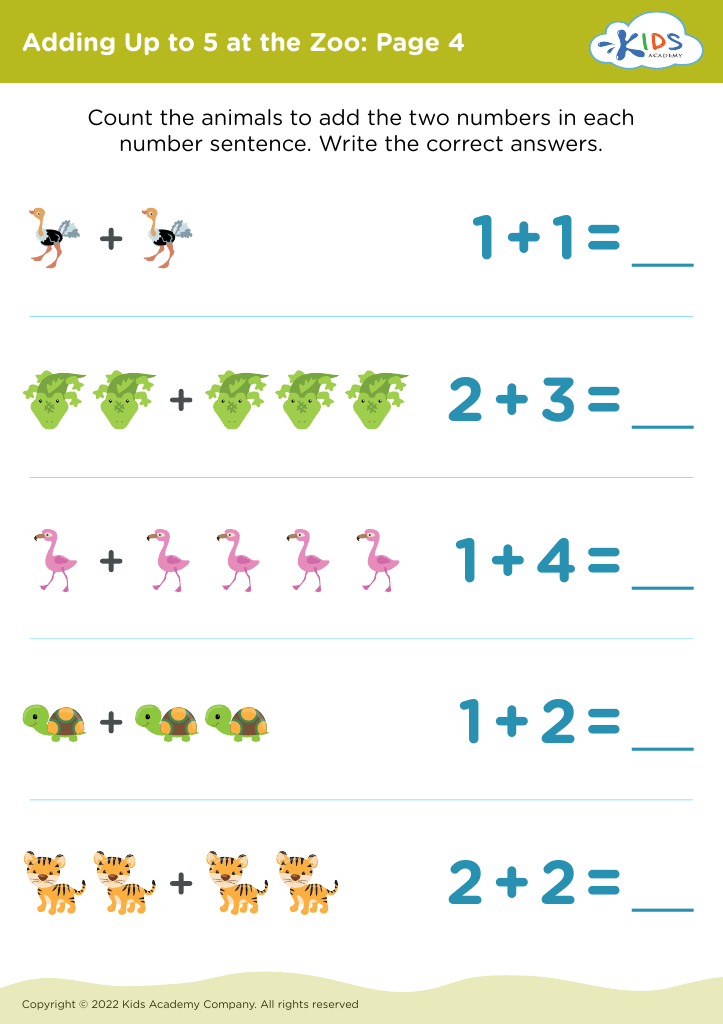
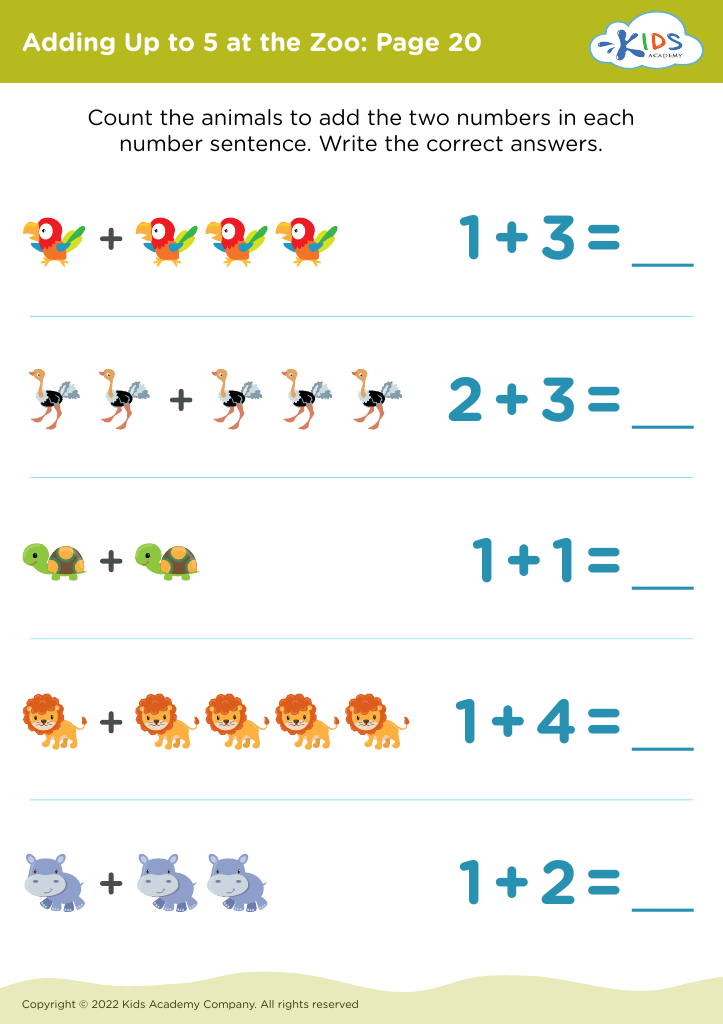
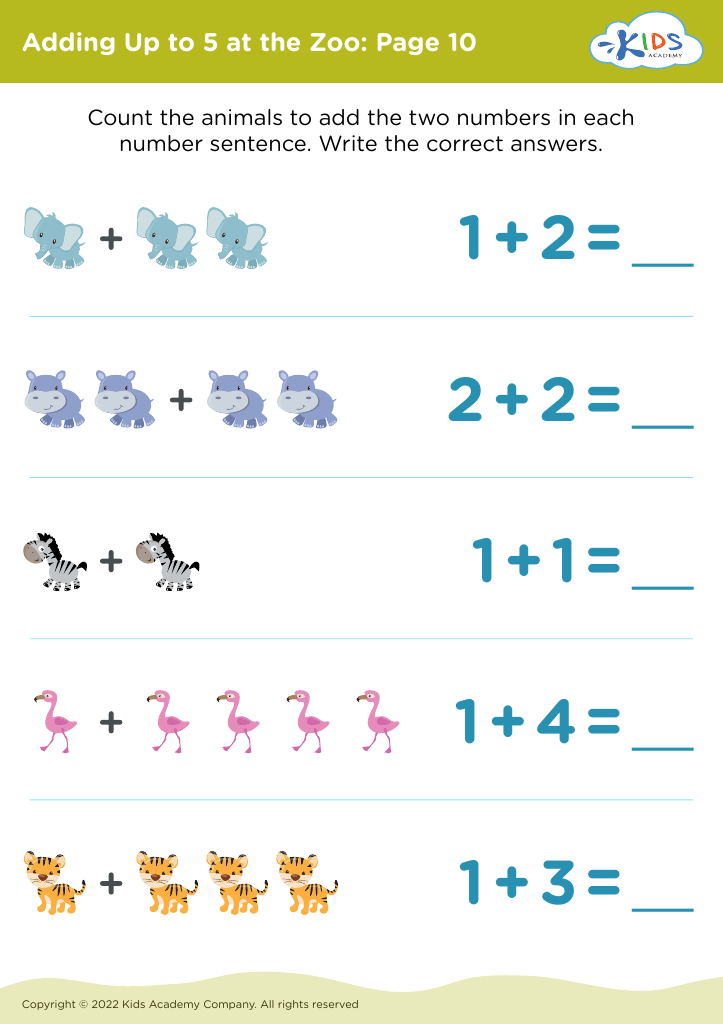
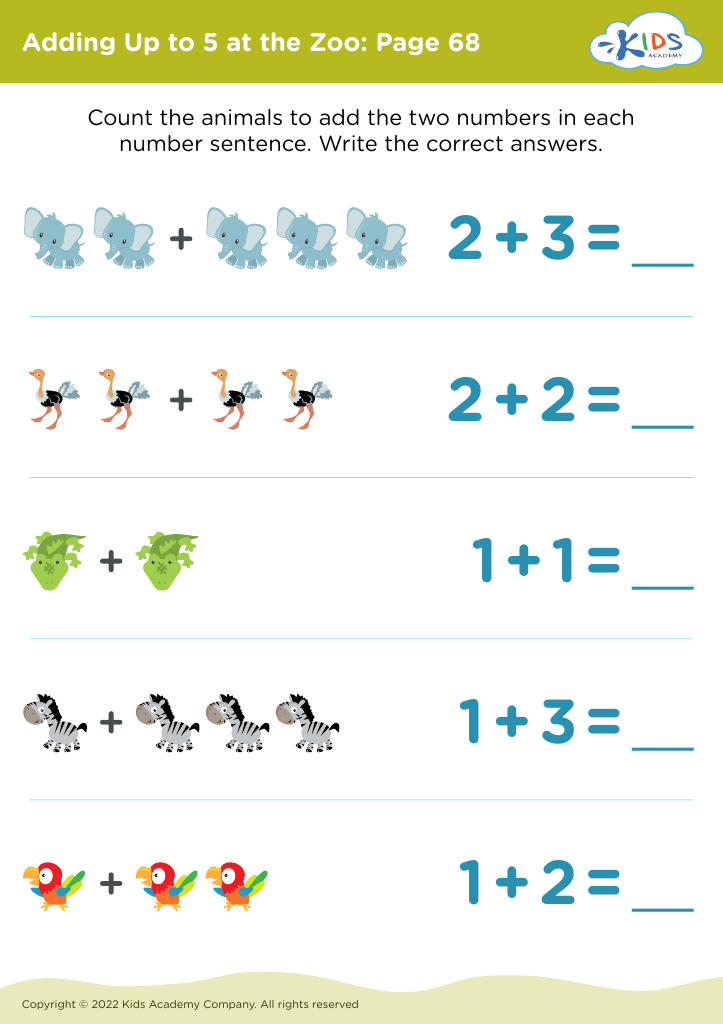



Problem-solving skills are essential for young children's cognitive and social development, and activities like "Problem-Solving Skills Adding at the Zoo" can significantly enhance these skills in a fun and engaging way. For children aged 4-6, the interactive nature of such activities introduces foundational math concepts, like addition, in a memorable context. When children visualize animals at a zoo and practice adding them together, they learn to contextualize math in real-world scenarios, making it more relatable and enjoyable.
Parents and teachers should care about fostering these skills because they cultivate critical thinking, creativity, and perseverance. These skills are not only vital for academic success but also prepare children for everyday challenges and future problem-solving. Moreover, integrating themes like a zoo captivates young learners' imaginations, promoting active participation and collaborative learning experiences.
By nurturing problem-solving abilities early on, educators empower children to become independent thinkers who approach challenges confidently. Additionally, the social aspect of collaborative problem-solving encourages communication skills and teamwork. Thus, engaging in activities like "Adding at the Zoo" goes beyond math; it shapes well-rounded individuals ready to tackle educational and life hurdles.