Filters

17 filtered results

Clear all filters
Favorites
With answer key
Interactive

17 filtered results

Difficulty Level

Grade


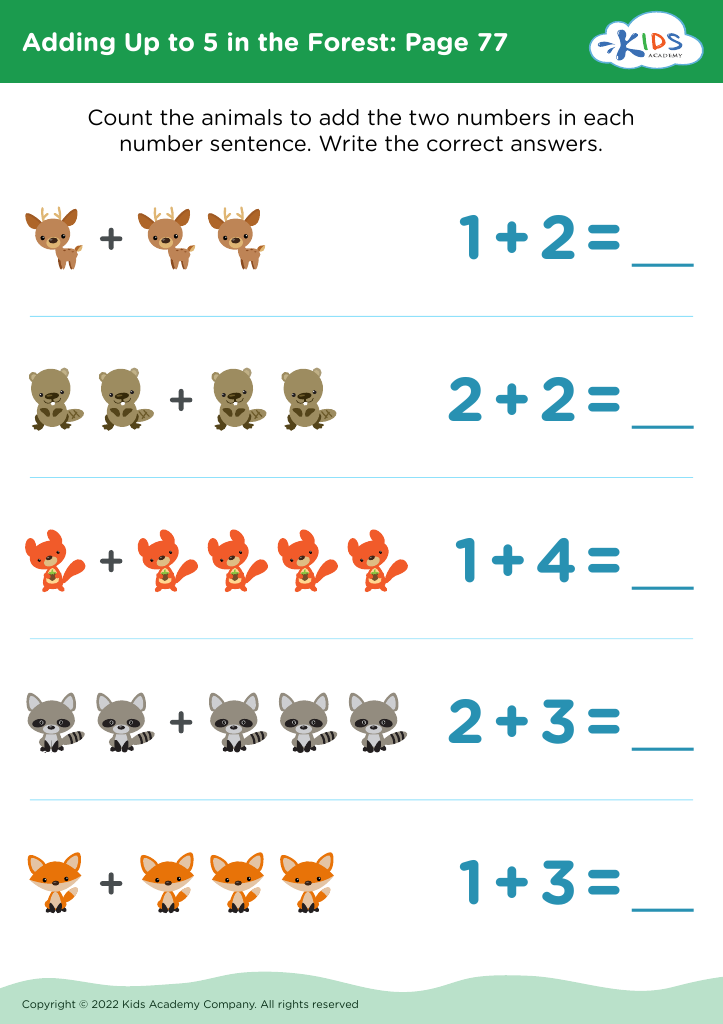
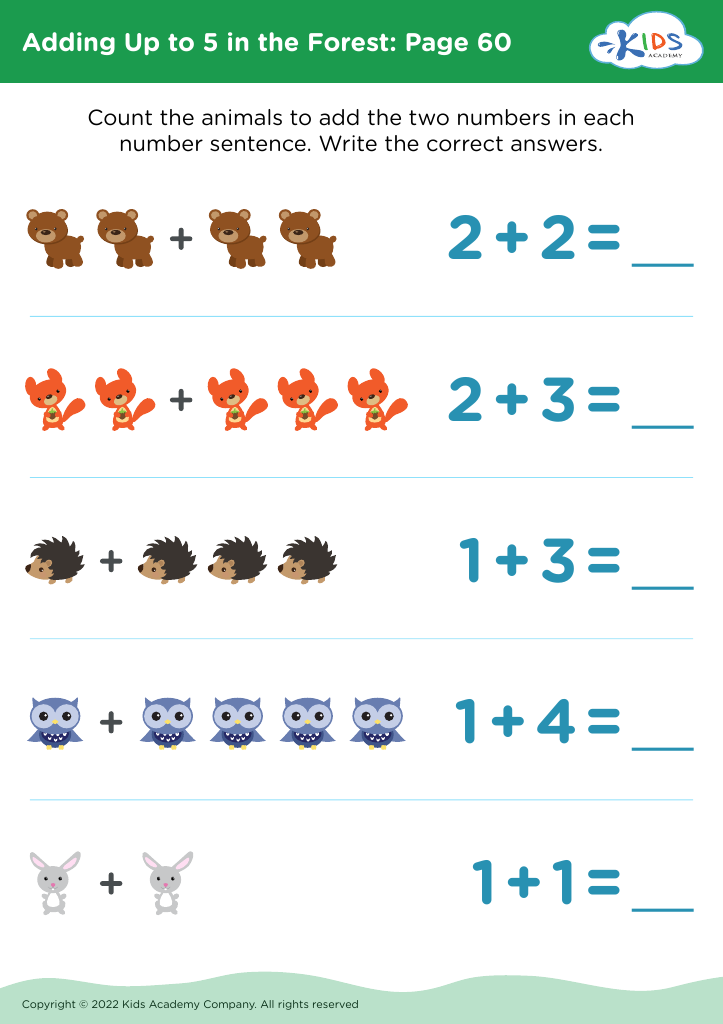
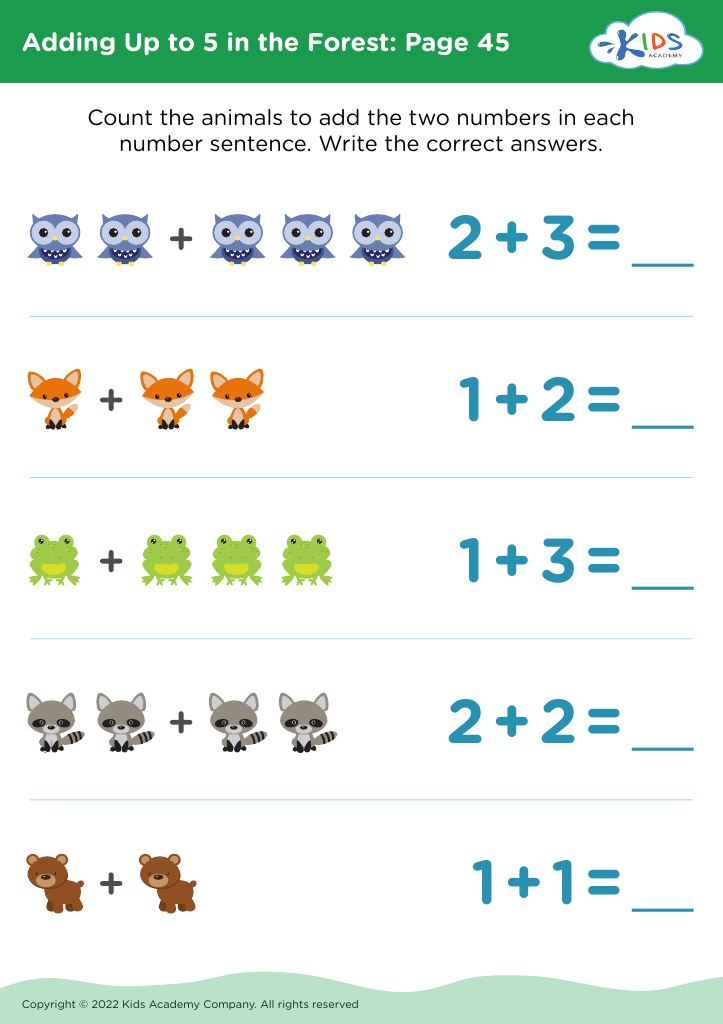
Welcome to our "Cognitive Development Adding in the Forest Worksheets," designed specifically for children ages 4-6! These engaging worksheets feature adorable forest-themed illustrations that captivate young learners while building essential math skills. Through fun activities, children will practice addition in a playful environment, enhancing their cognitive development and number recognition. Our worksheets promote critical thinking and problem-solving, providing a strong foundation for future math success. Ideal for both home and classroom use, these resources encourage interactive learning and make math enjoyable. Get ready to explore the wonders of addition in the forest and support your child’s growth with our educational tools!
Check out this FREE Trial Lesson on Adding in the Forest for age 4-6!

X

Favorites
With answer key
Interactive
  • 4-6
  • Cognitive Development
  • Adding in the Forest
Adding Up to 5 in the Forest: Page 77
Worksheet
Adding Up to 5 in the Forest: Page 60
Worksheet
Adding Up to 5 in the Forest: Page 45
Worksheet
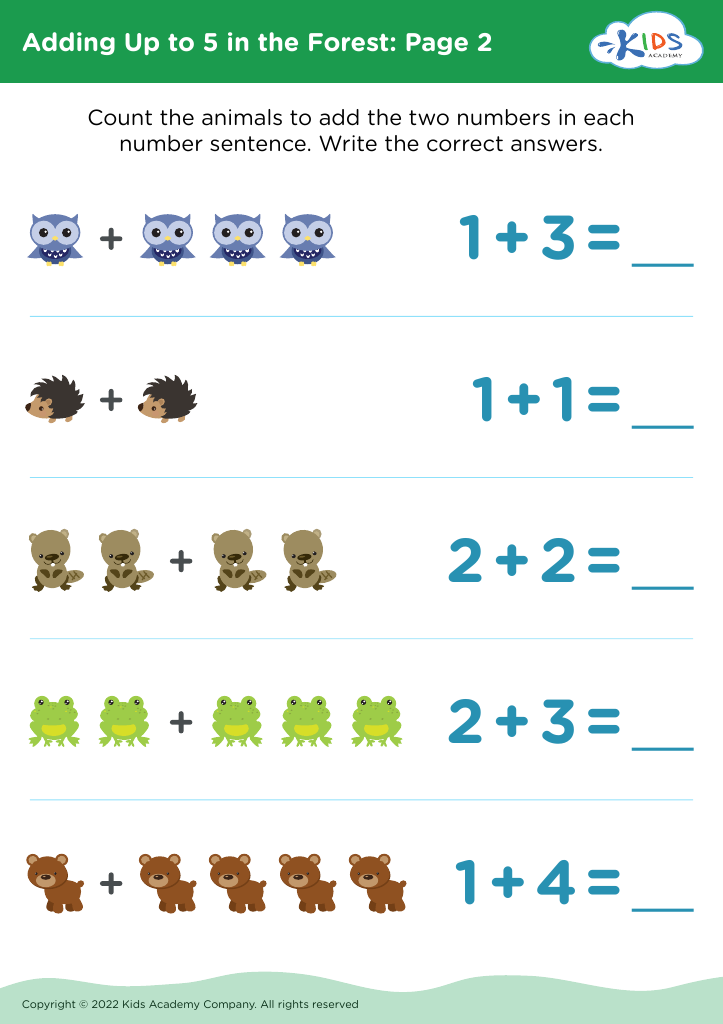
Adding Up to 5 in the Forest: Page 2
Worksheet
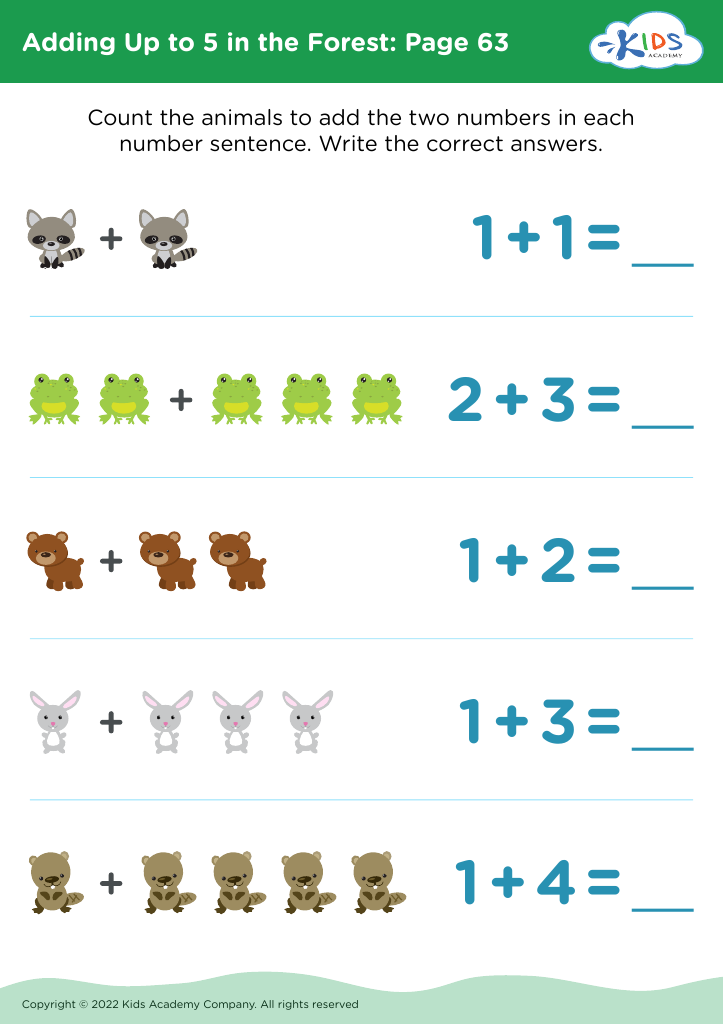
Adding Up to 5 in the Forest: Page 63
Worksheet
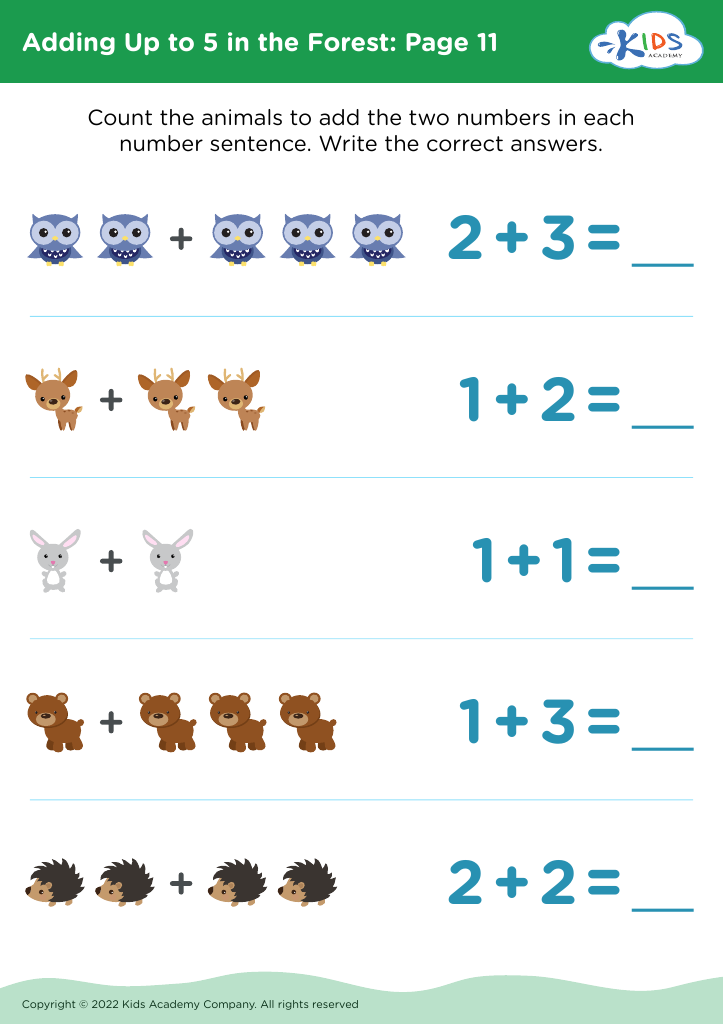
Adding Up to 5 in the Forest: Page 11
Worksheet
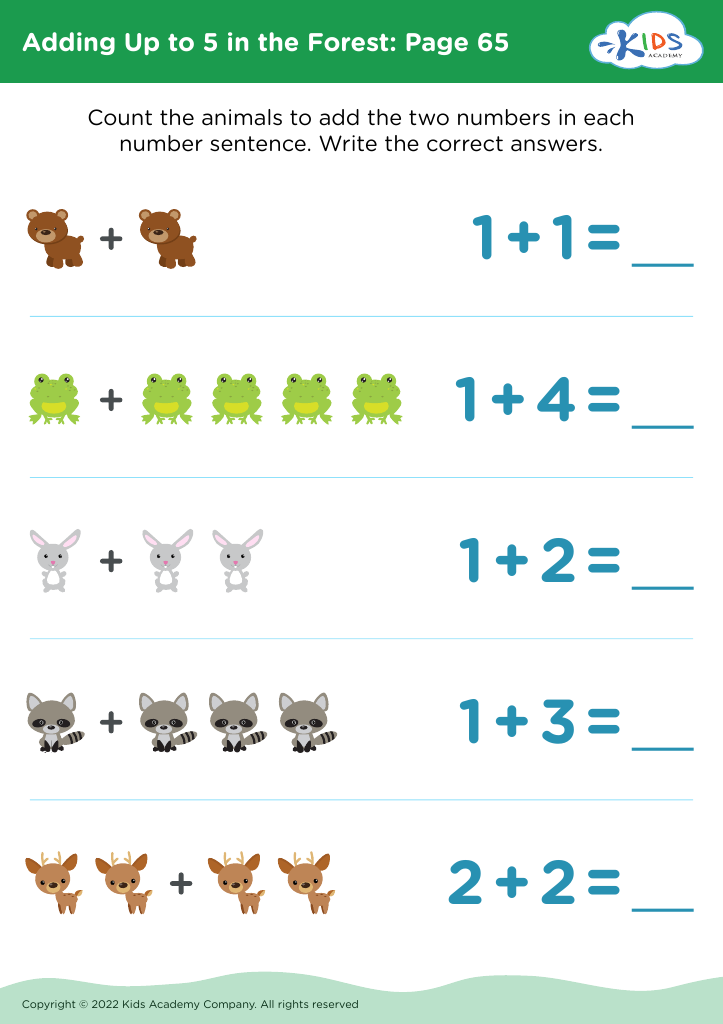
Adding Up to 5 in the Forest: Page 65
Worksheet
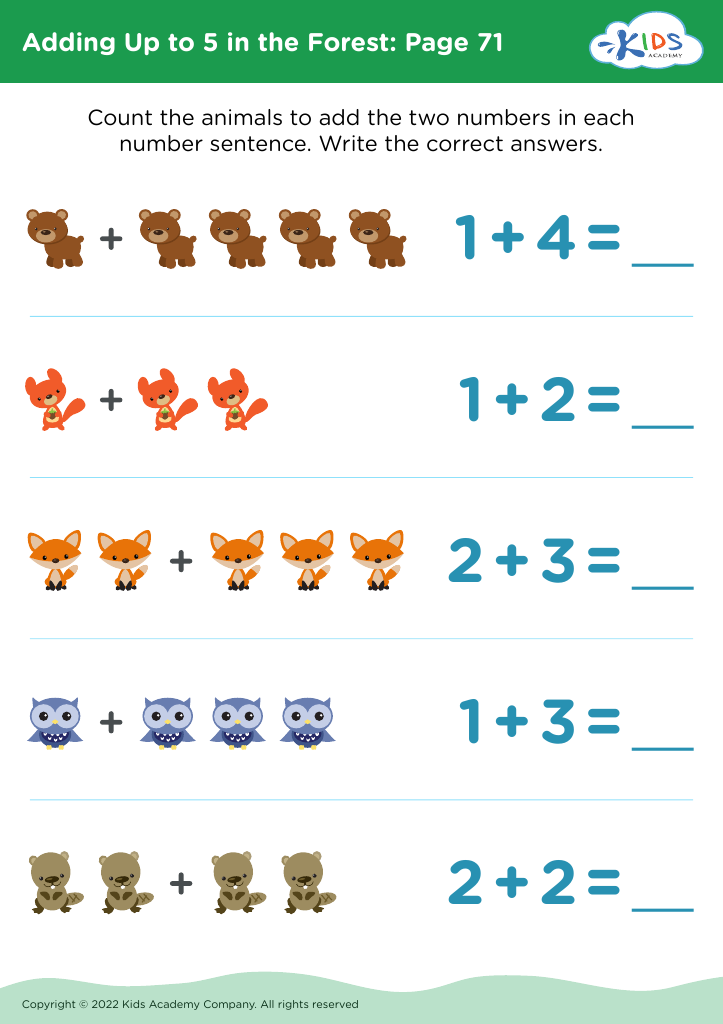
Adding Up to 5 in the Forest: Page 71
Worksheet
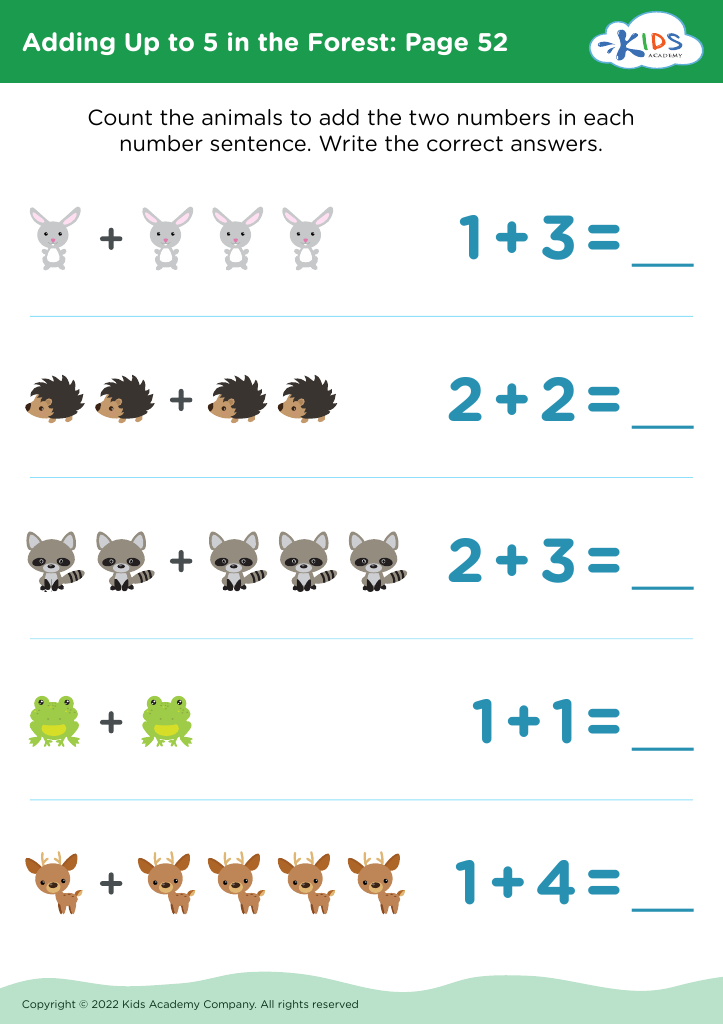
Adding Up to 5 in the Forest: Page 52
Worksheet
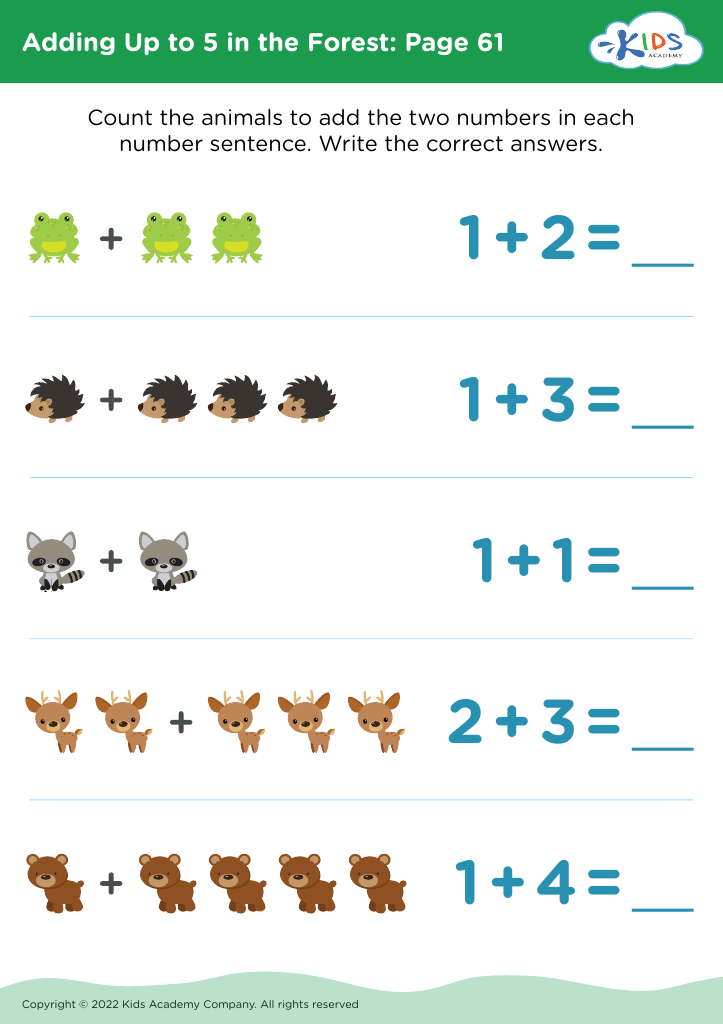
Adding Up to 5 in the Forest: Page 61
Worksheet
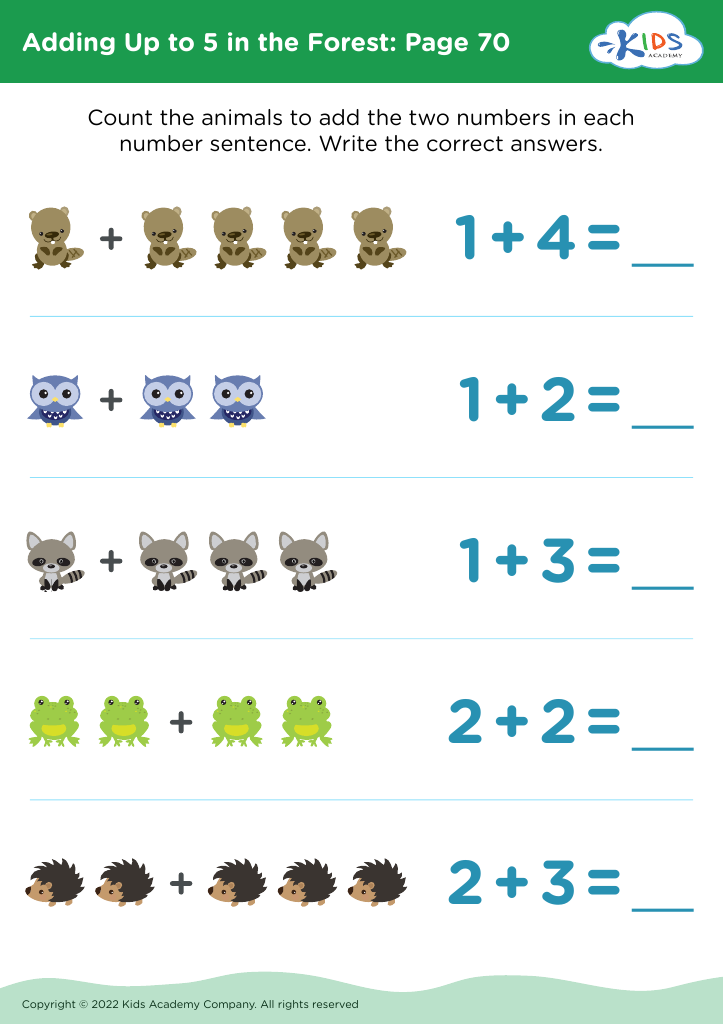
Adding Up to 5 in the Forest: Page 70
Worksheet
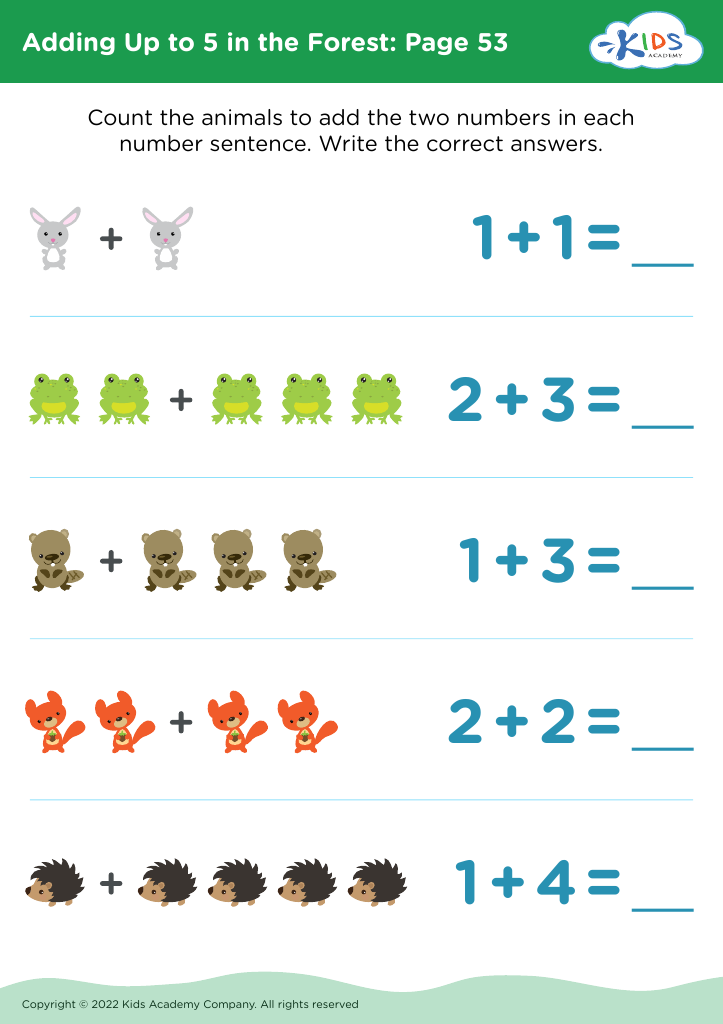
Adding Up to 5 in the Forest: Page 53
Worksheet
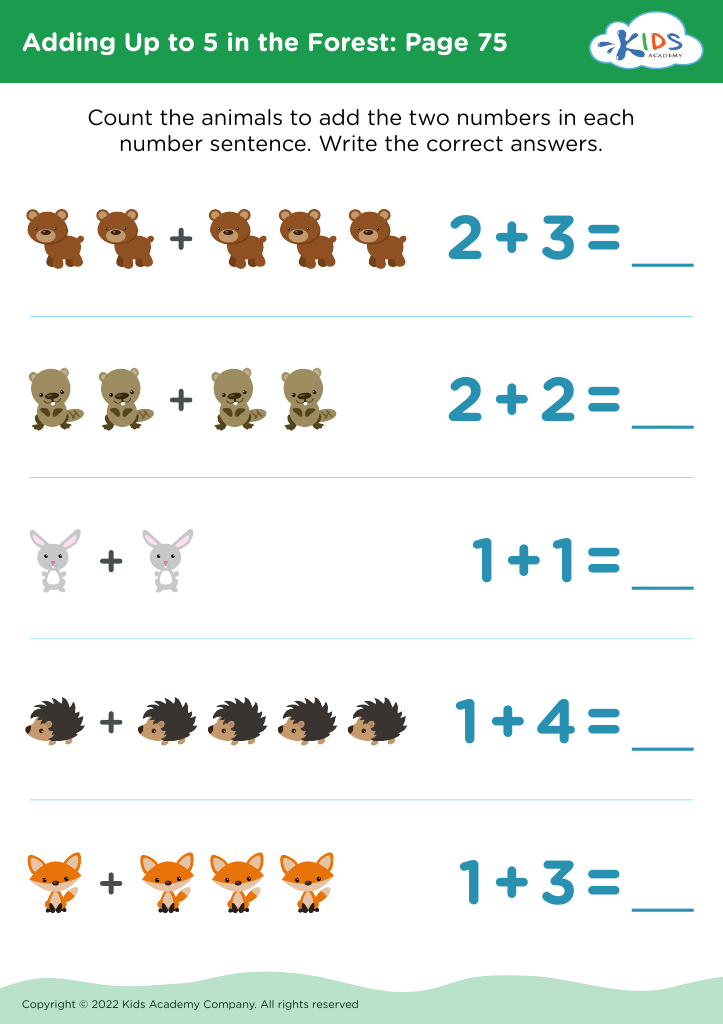
Adding Up to 5 in the Forest: Page 75
Worksheet
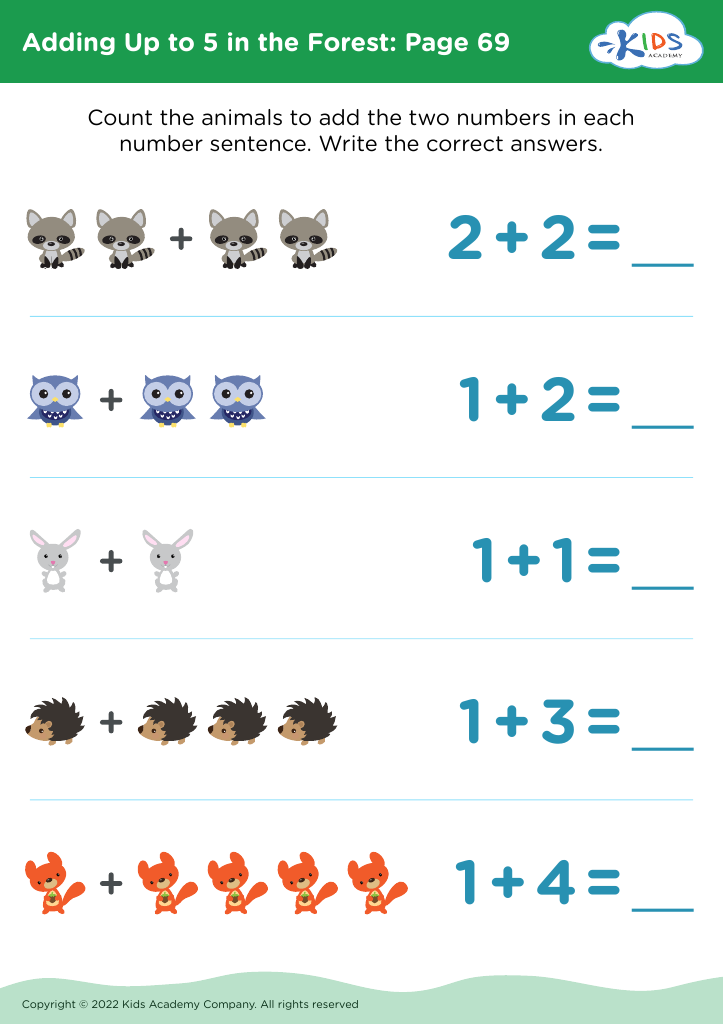
Adding Up to 5 in the Forest: Page 69
Worksheet
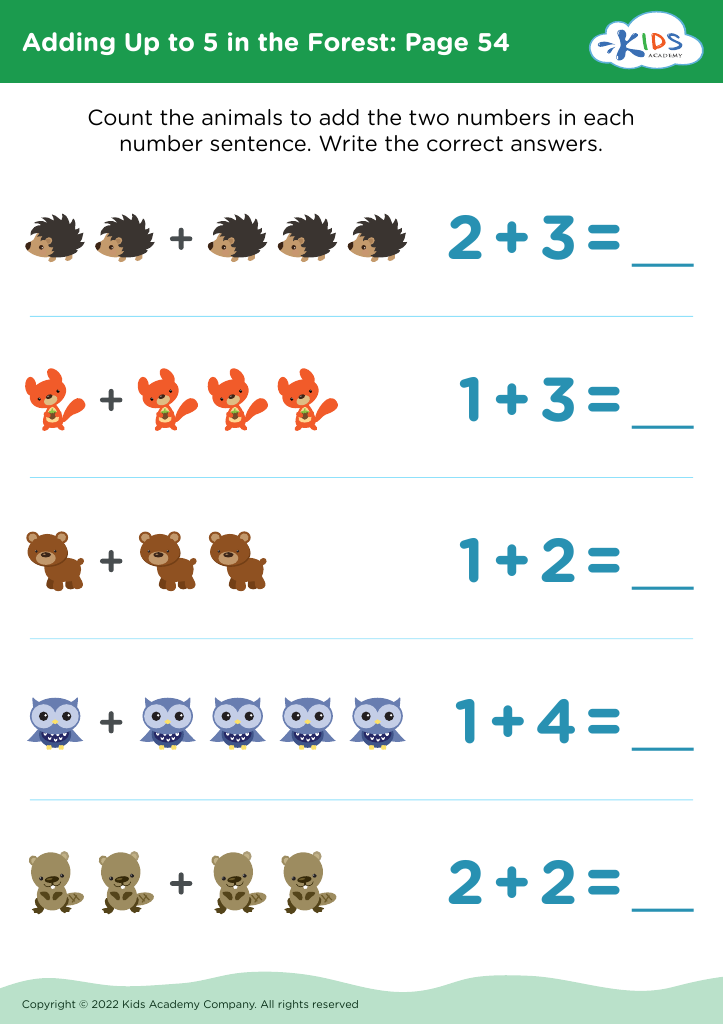
Adding Up to 5 in the Forest: Page 54
Worksheet
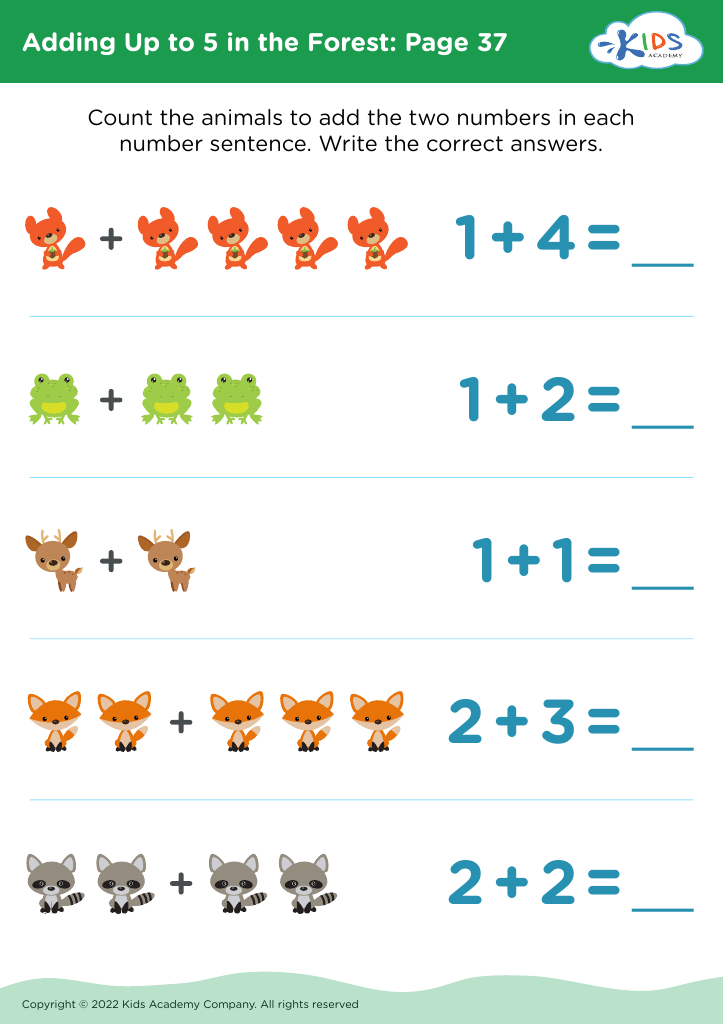
Adding Up to 5 in the Forest: Page 37
Worksheet
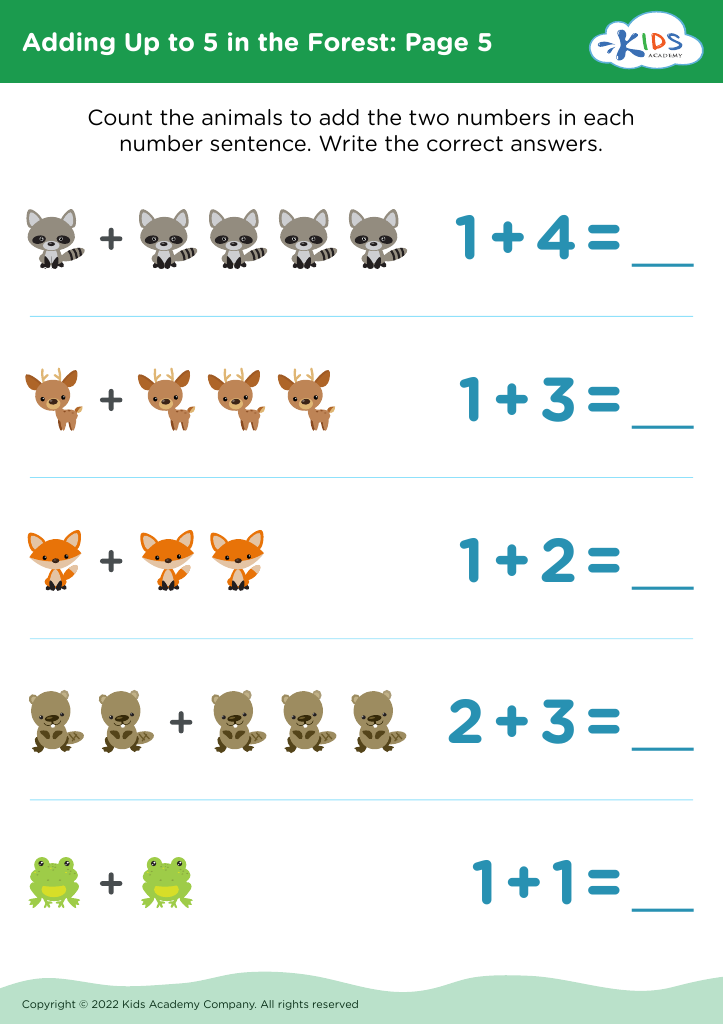
Adding Up to 5 in the Forest: Page 5
Worksheet


Cognitive development during early childhood, particularly in ages 4 to 6, is crucial as it lays the foundation for future learning, problem-solving, and critical thinking skills. The "Adding in the Forest" activity is an engaging way to support this development while connecting children with nature.

Through playful interactions in a natural environment, children experience hands-on learning that promotes awareness of numbers and basic arithmetic concepts. By counting different elements in the forest, like leaves or pine cones, children learn to associate numbers with tangible objects, enhancing their understanding of quantity and fostering skills like estimation and comparison. When parents or teachers involve kids in these activities, they stimulate curiosity and strengthen cognitive processes such as memory and attention span.

Moreover, exploring the forest contextually enriches the learning experience; it encourages creativity as children imagine various scenarios, such as developing stories around the creatures they find. This nurtures their social-emotional health, as cooperation and interaction with peers enhance communication skills. Ensuring that parents and teachers promote cognitive development through innovative activities like "Adding in the Forest" is essential, as it helps mold the children's intellectual abilities while fostering a love for the outdoors.