Fine motor skills (writing numbers) Adding in the Sea Worksheets for Ages 4-6
4 filtered results
-
From - To
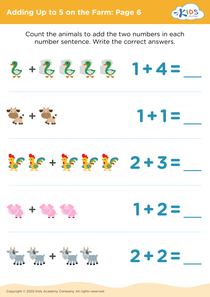
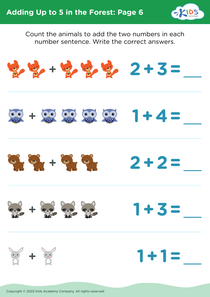
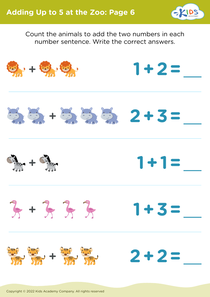
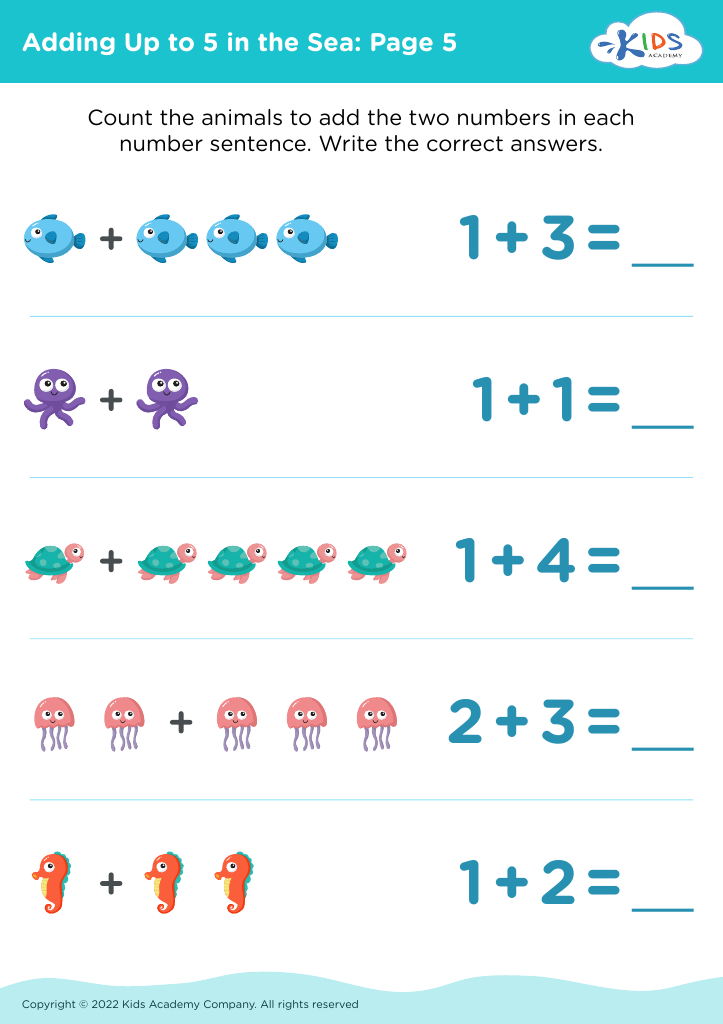
Introduce your little ones to the enchanting world of the sea with our "Adding in the Sea Worksheets" specifically designed for children aged 4-6! These engaging worksheets blend number writing and basic addition with fun marine themes, perfect for developing fine motor skills. Each activity under the sea effortlessly fosters your child’s coordination and dexterity while sparking a love for learning math. Kids will enjoy counting colorful sea creatures and writing numbers, transforming math practice into an underwater adventure. Enhance their fine motor skills and set a solid foundation for their math journey. Dive in and explore today!
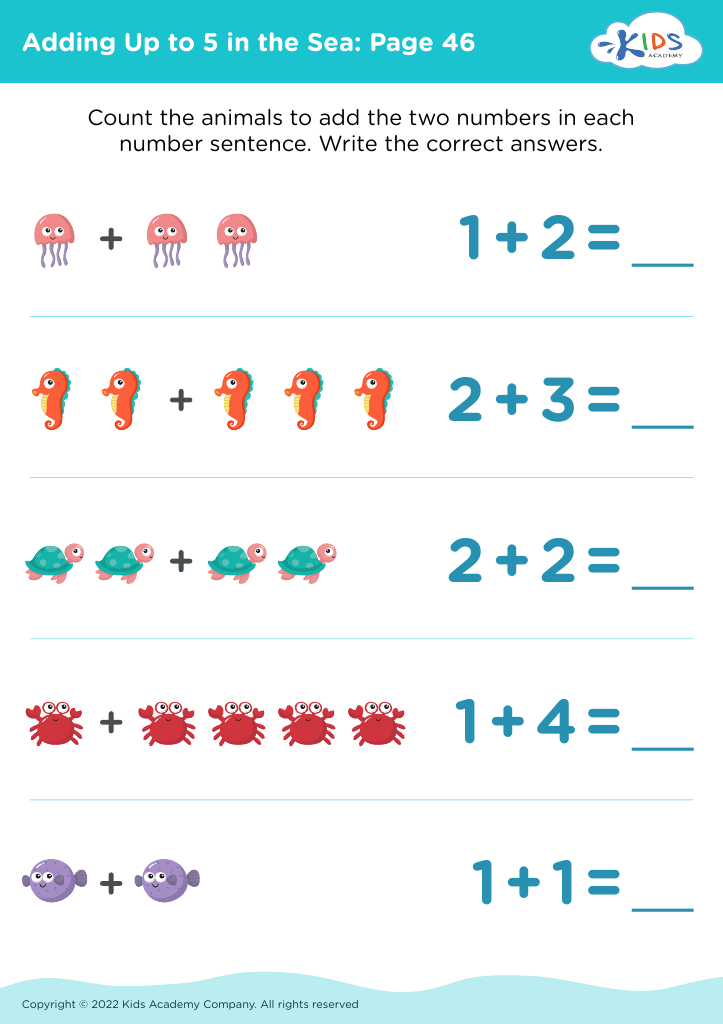
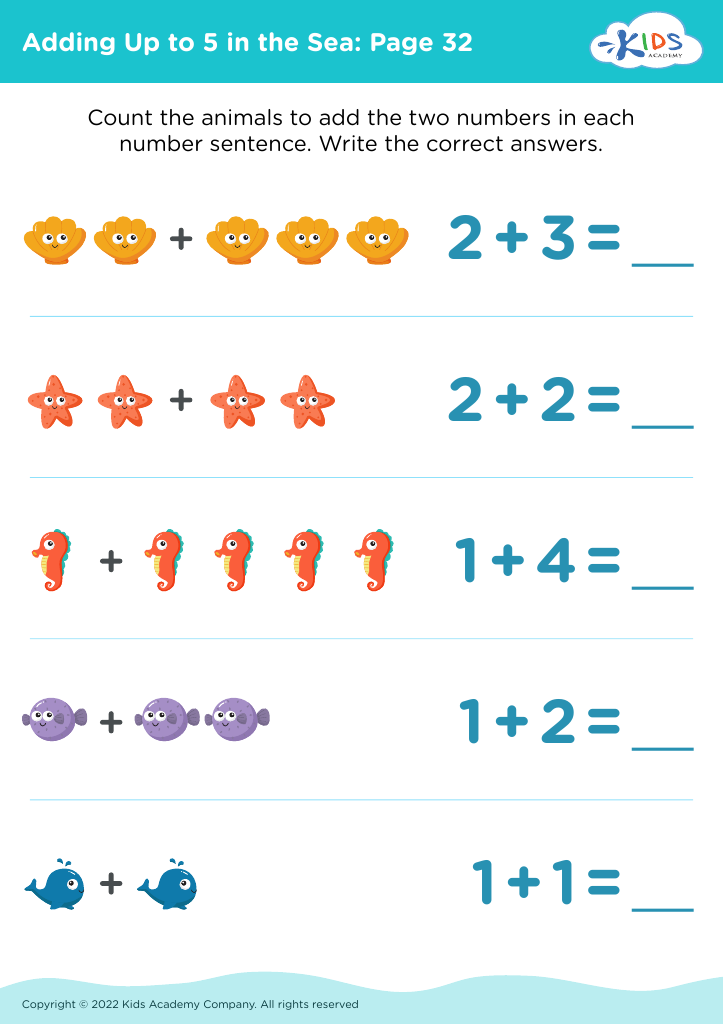
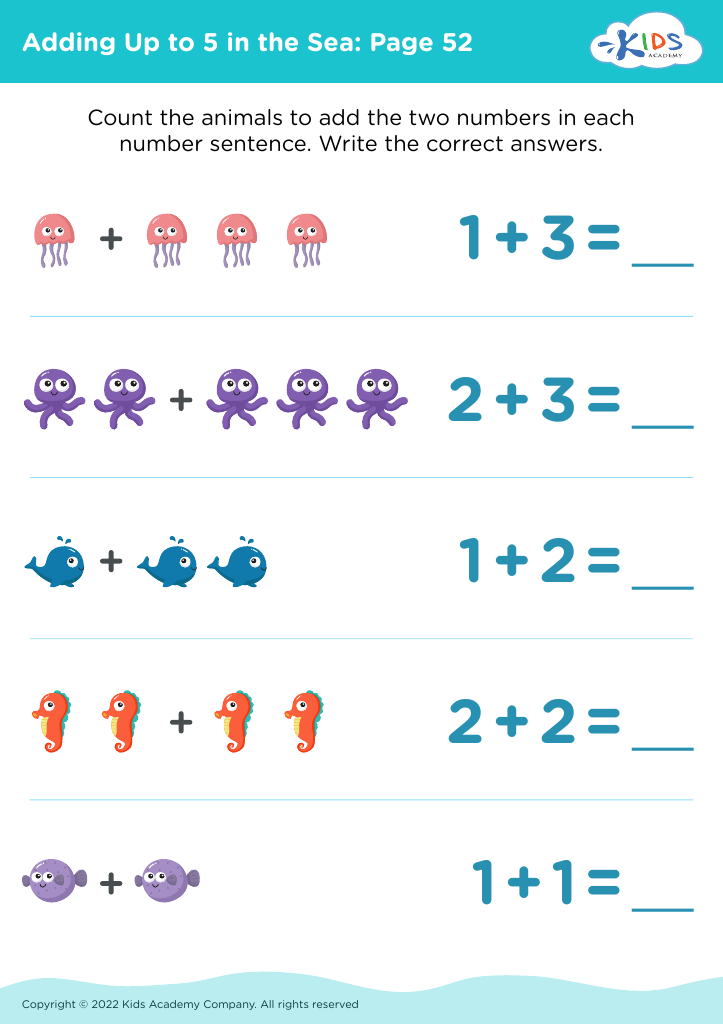



Fine motor skills are crucial for the overall development of children, particularly between the ages of 4-6. These skills involve the use of small muscles in the hands, fingers, and wrists, which are essential for performing tasks like writing, buttoning clothes, and using utensils. Writing numbers, specifically, is a fundamental activity that not only aids in academic success but also enhances cognitive development and hand-eye coordination.
Engaging young children in fine motor activities such as "Adding in the Sea," where they practice writing numbers and solving simple addition problems, can make learning both fun and effective. This creates a strong foundation for mathematical concepts and boosts their confidence as they see their progress. Hands-on activities like this are particularly effective because they provide a multi-sensory experience, promoting active engagement and better retention of knowledge.
Furthermore, developing fine motor skills early prepares children for more complex tasks as they grow, making everyday activities easier and less frustrating. For teachers and parents, supporting and encouraging these skills can lead to better academic outcomes, increased independence in tasks, and overall development of essential life skills. Prioritizing fine motor skills provides children with the tools they need for successful future learning and personal growth.