Improving concentration Adding in the Sea Worksheets for Ages 4-6
4 filtered results
-
From - To
Boost your child's concentration skills with our "Adding in the Sea" worksheets designed for ages 4-6! These engaging activities combine fun ocean themes with essential math concepts, helping little learners stay focused while they practice addition. Each worksheet features colorful illustrations and simple problems tailored to capture the attention of young minds. By using these interactive worksheets, children will not only enhance their math abilities but also develop their concentration and problem-solving skills. Dive into a world of learning that is both educational and entertaining, ensuring your child enjoys every step of their mathematical journey! Perfect for home or classroom use.
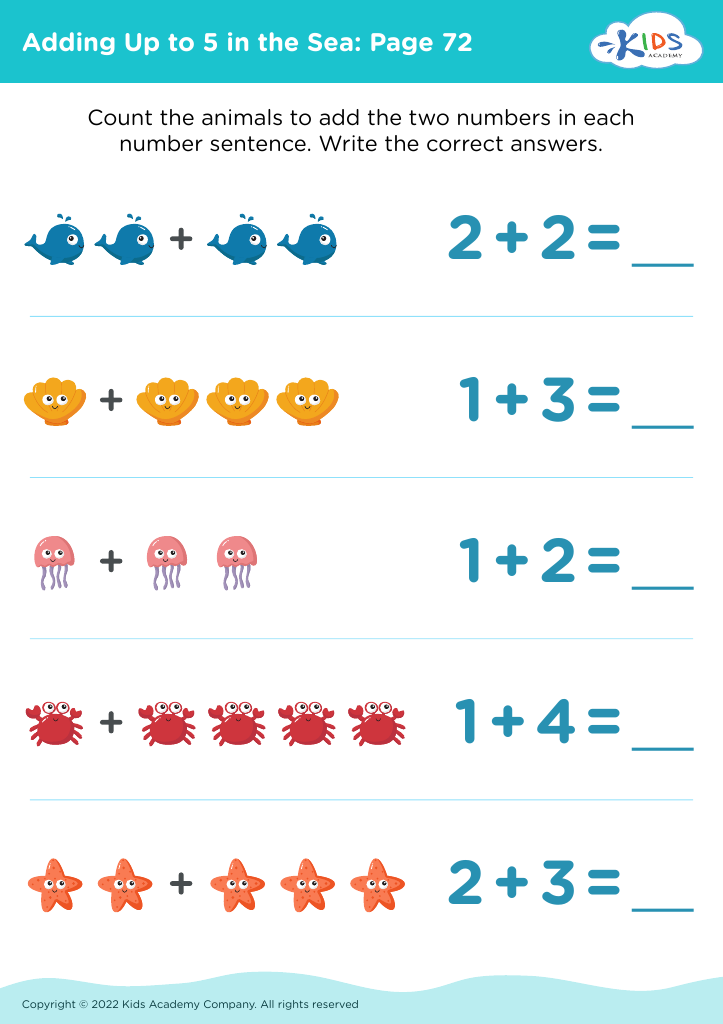
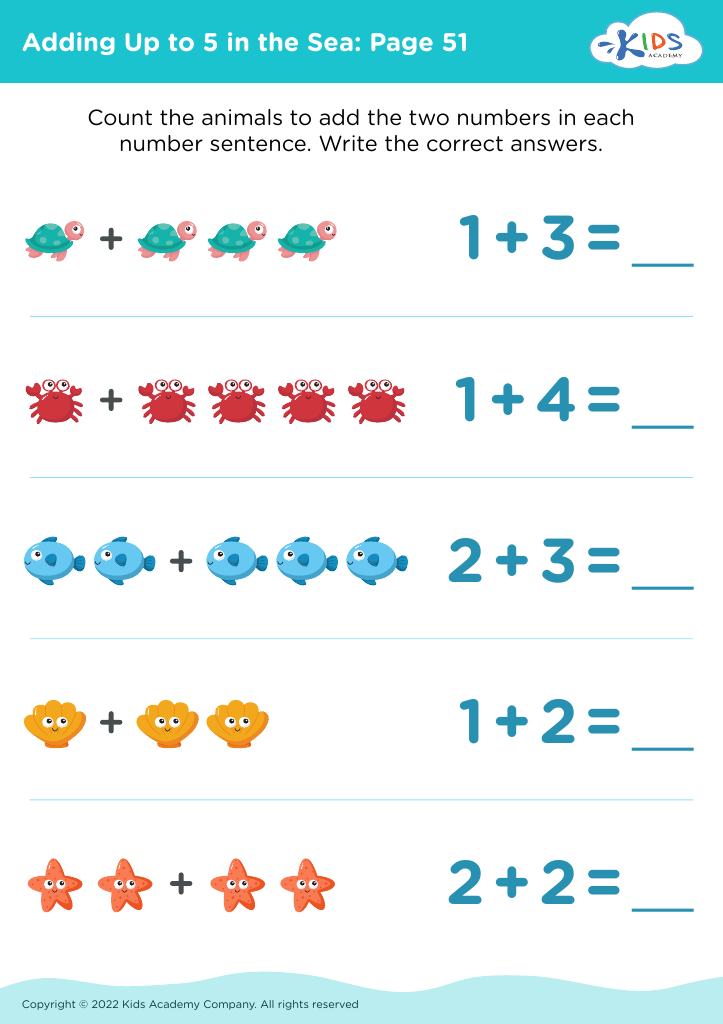
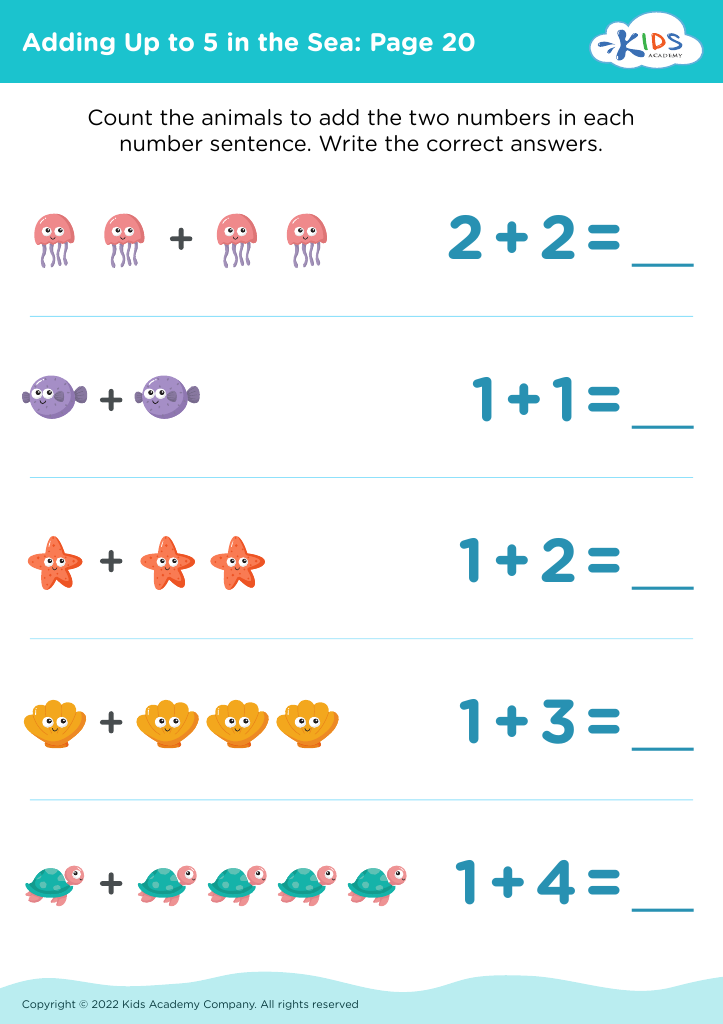
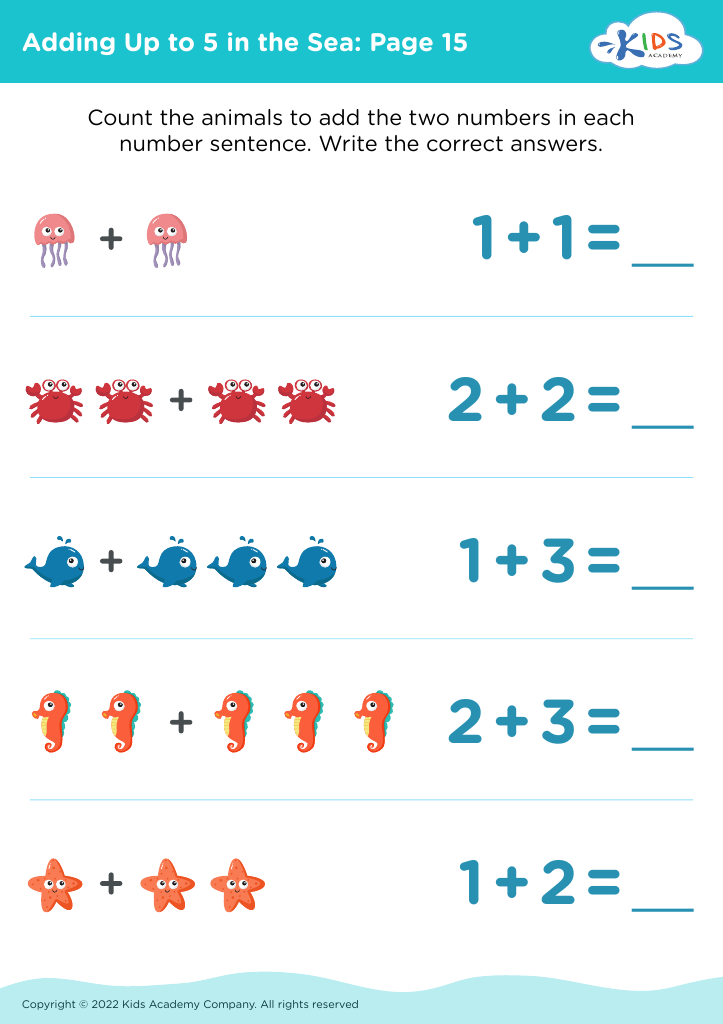



Improving concentration, especially through engaging activities like "Adding in the Sea," is crucial for children aged 4-6, as it lays the groundwork for their cognitive and social development. At this young age, children's ability to focus directly impacts their learning outcomes, work habits, and interactions with peers. By introducing concepts like addition in a playful, themed context—such as under the sea—parents and teachers can captivate young minds and make learning enjoyable.
Incorporating fun activities helps reinforce mathematical concepts and encourages active participation, which fosters deeper understanding. When children engage in a focused game related to their interests, they develop skills necessary for problem-solving and critical thinking. Furthermore, consistent practice in concentration also enhances a child’s ability to follow instructions and engage in group settings, which is vital for their social development.
In the early years, habits are formed, and concentrating well during educational activities will benefit children as they progress to more complex learning tasks. By prioritizing concentration-focused activities like "Adding in the Sea," parents and teachers play a pivotal role in building a strong educational foundation, nurturing not only academic skills but also essential life skills like patience, perseverance, and teamwork.