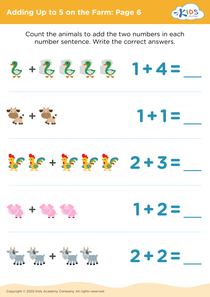
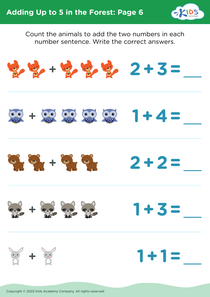
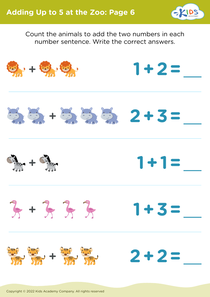
Sea creatures identification Adding in the Sea Worksheets for Ages 4-6
3 filtered results
-
From - To
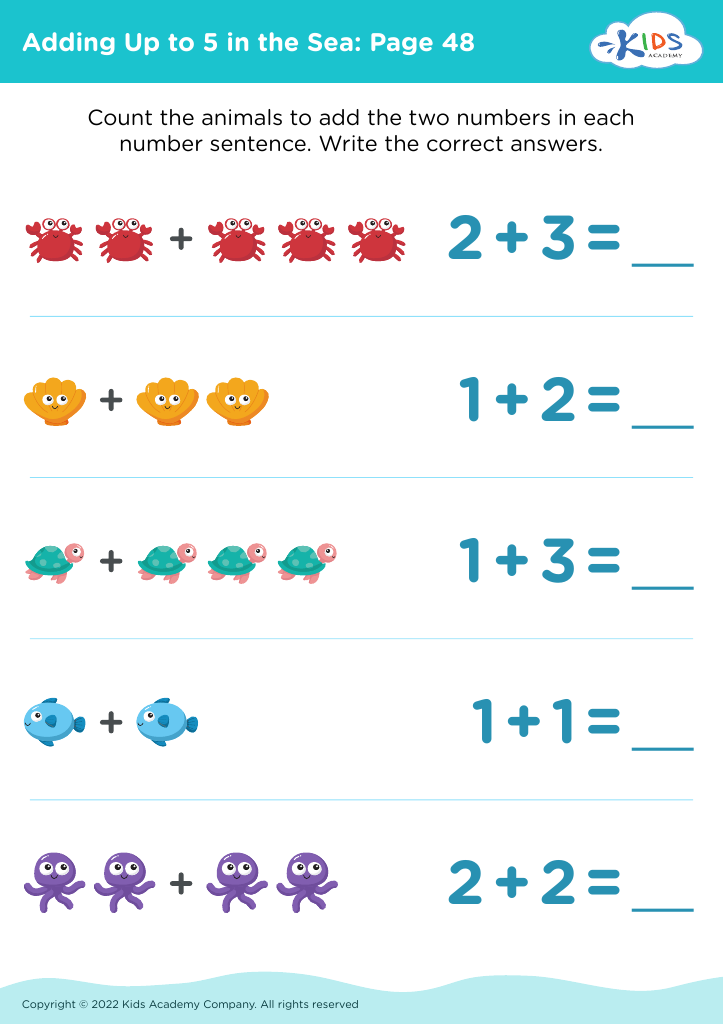
Discover the wonders of the ocean with our "Sea Creatures Identification" worksheets, designed specifically for children aged 4 to 6. These engaging activities not only introduce young learners to various sea animals but also incorporate fun addition exercises set against a colorful underwater backdrop. As kids identify cute sea creatures while practicing their math skills, they enhance their knowledge of marine life through enjoyable and interactive learning. Perfect for early grades, these worksheets promote cognitive development and creativity, making learning math an adventurous swim through the sea's vibrant ecosystem. Dive in and watch your child thrive with these enriching resources!
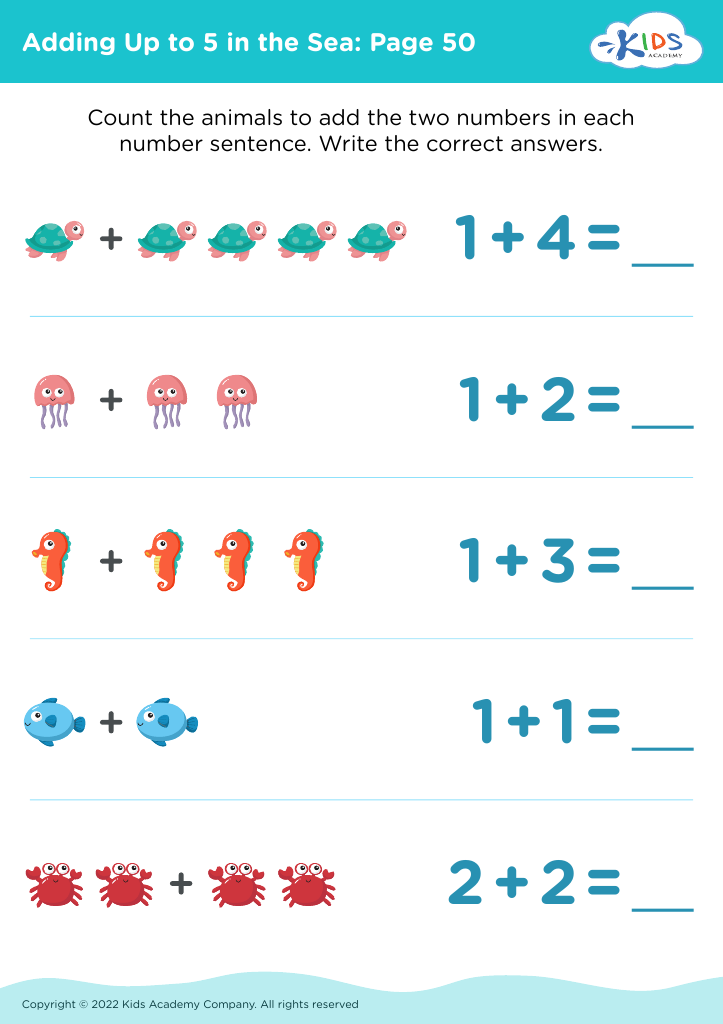
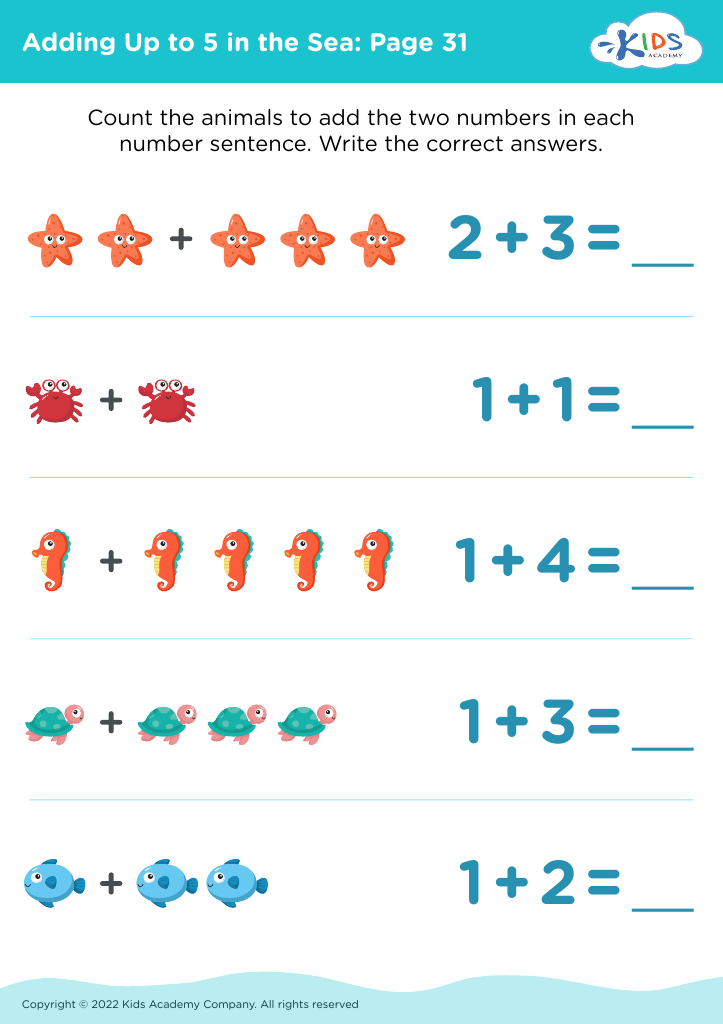



Parents and teachers should care about sea creature identification for several reasons, especially for children aged 4-6. First, learning about sea creatures can spark curiosity and wonder about the natural world. At this age, kids are eager to explore and discover. Introducing them to sea life can make learning fun and engaging.
Understanding the diverse range of sea creatures—like starfish, fish, and crabs—helps develop children’s observation skills. They learn to notice differences in colors, shapes, and sizes, which enhances their cognitive abilities and vocabulary.
Additionally, identifying sea creatures fosters a sense of responsibility towards the environment. When children understand how important these creatures are to ocean ecosystems, they become more likely to care about conservation efforts and protecting marine life.
Learning through activities like sorting or matching sea creature cards can help improve fine motor skills and critical thinking. Song and storytime that feature sea creatures can encourage imagination and language development.
Overall, introducing sea creature identification in an engaging way to young children lays the foundation for a lifelong love of science, nature, and learning, while also promoting environmental stewardship.