Animal recognition Adding on the Farm Worksheets for Ages 4-6 - Page 2
31 filtered results
-
From - To
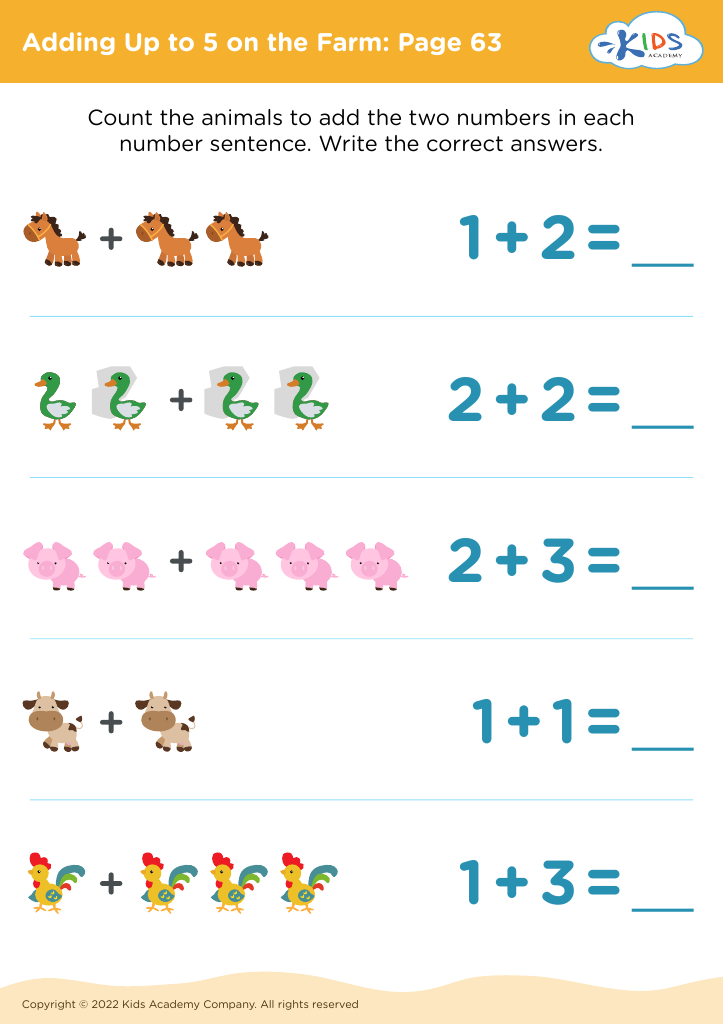
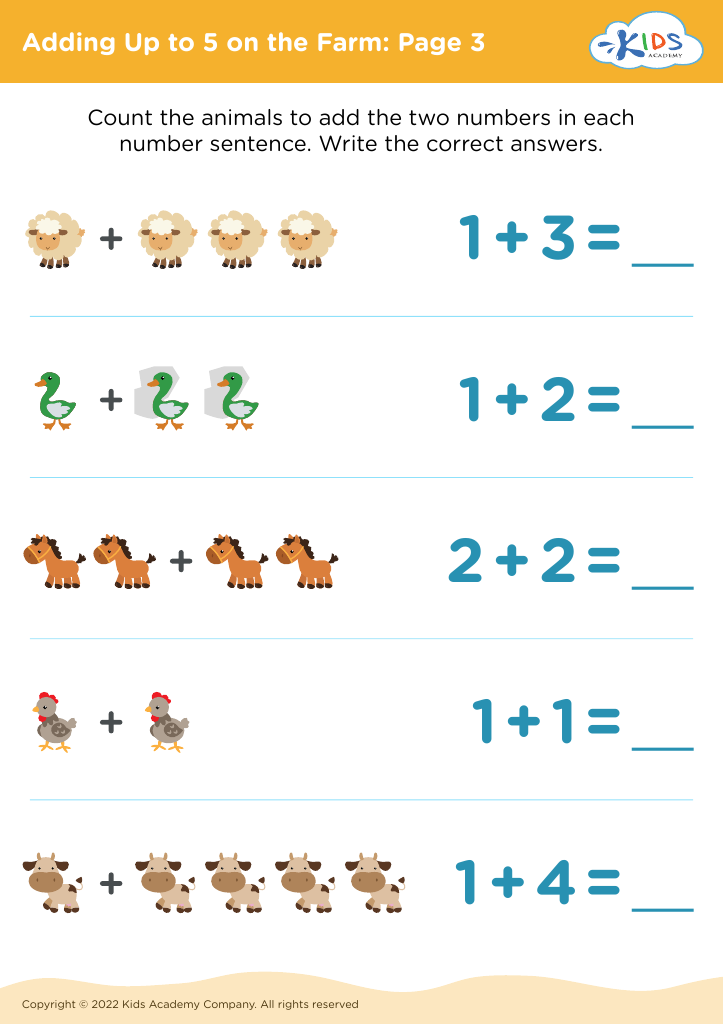
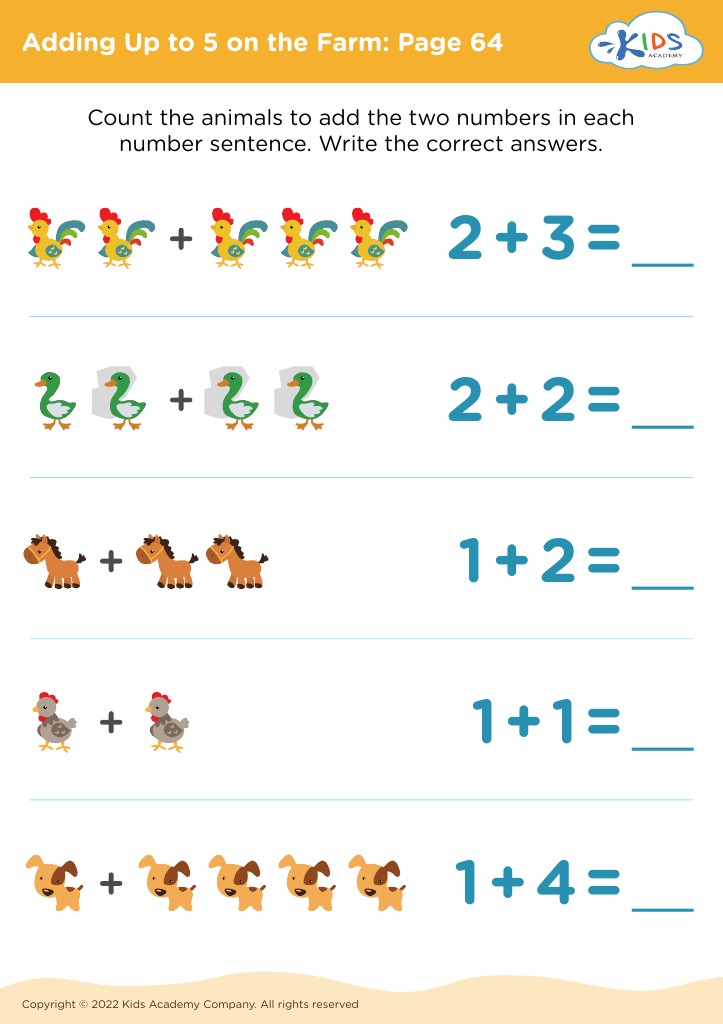
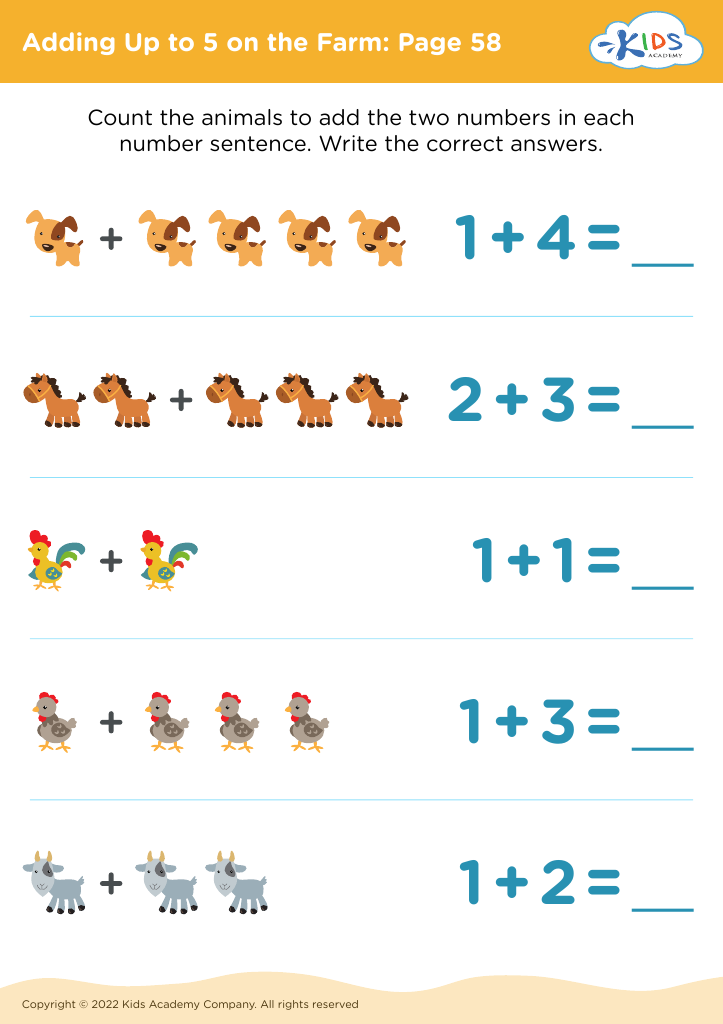
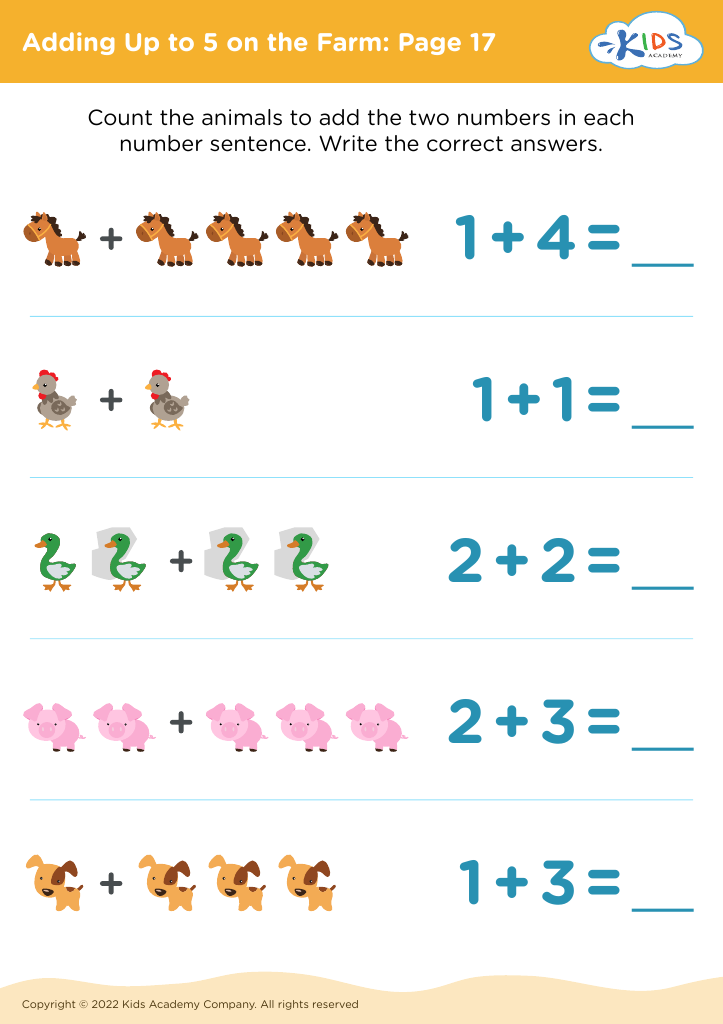
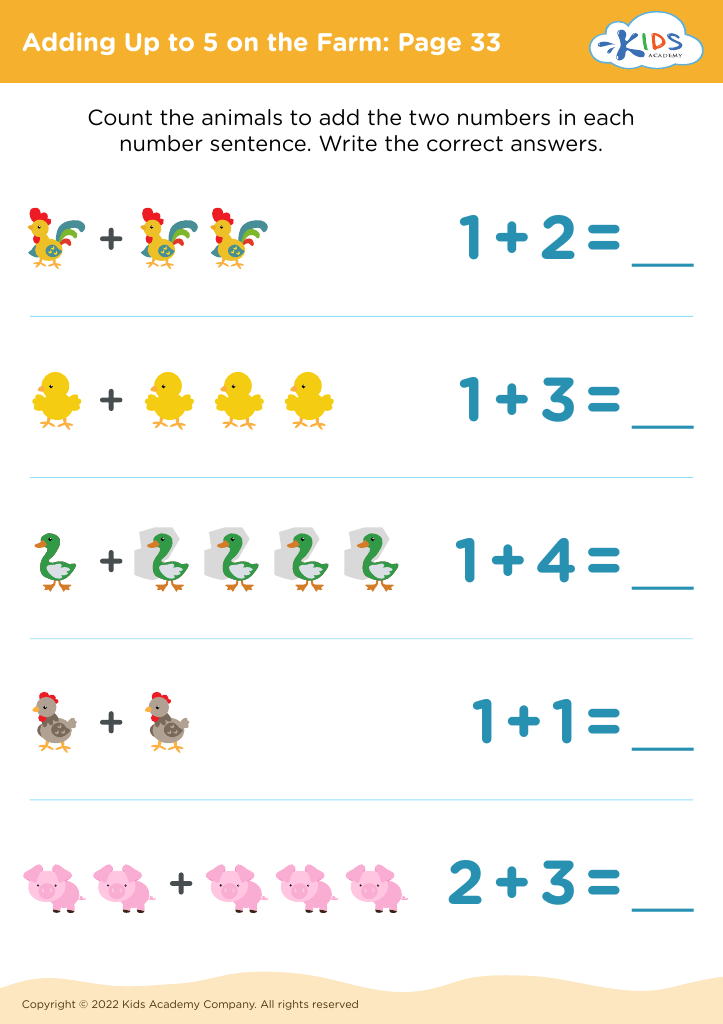
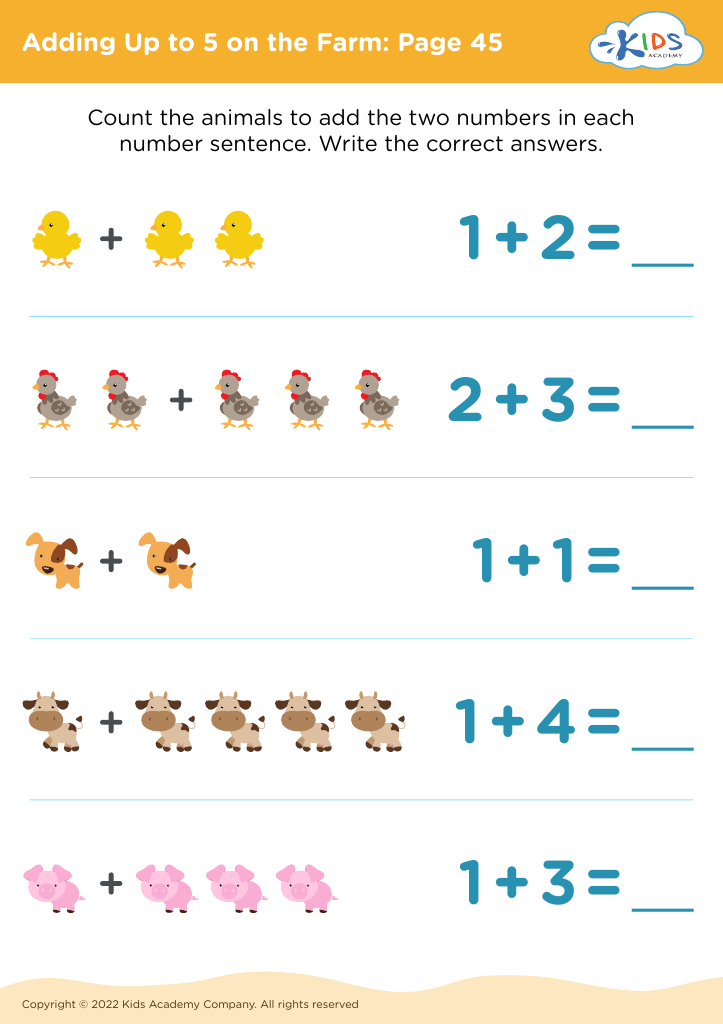



Animal recognition is a vital part of early childhood education, especially for children ages 4-6. Teaching young learners to identify different farm animals fosters curiosity and a sense of connection with the world around them. Understanding animal characteristics, sounds, and roles on a farm stimulates cognitive development and enhances vocabulary skills.
For parents and teachers, introducing concepts about farm animals also serves social and emotional learning. Kids can engage in story-telling, role-playing, or hands-on activities that encourage cooperation and empathy—a key component in building interpersonal skills. When children learn about animals, they also develop a sense of responsibility and care for living beings.
Additionally, the farm setting provides an opportunity to explore themes such as food sources, ecosystems, and seasonal changes. This knowledge fosters a greater appreciation for agriculture and ecology, laying a foundation for more complex concepts as they grow.
Moreover, interactive activities—like visiting a farm or storytelling about animals—enhance engagement and retention. Ultimately, emphasizing animal recognition in early education helps children develop a well-rounded understanding of nature, promoting curiosity and lifelong learning.